AI Towel Design Generator
A towel is the one textile in the house whose surface fights the design. Terry pile is a field of loops standing three to five millimetres proud of the cloth, pointing in every direction, and it swallows thin lines and small type the way fleece does — which is why a printed beach towel and a woven bath towel are not the same product with a different picture on them, but two different manufacturing routes with different rules. This AI towel design generator works in six of those routes: an all-over printed beach towel, a woven-border bath towel set, a flat-weave tea towel, a kids hooded towel, a Turkish peshtemal and an embroidered monogram. Pick the towel type first, describe your motif and palette, and see it on a real product mockup in about twenty seconds at up to 4K.
Try It Now — Free
Choose the towel type first, because the towel decides what the artwork can be. Then use the details box for your motif, palette and who it is for. Every preset already carries the physical limits of its own blank — an all-over print that survives a sheared velour face, a woven border that only a loom can make, a chunky kids motif with no hairline detail, and stitching kept to a single initial.
AI Towel Design Generator
Pick a towel type, describe your motif and colours, and see it on a real product mockup
Towels From the AI Towel Design Generator
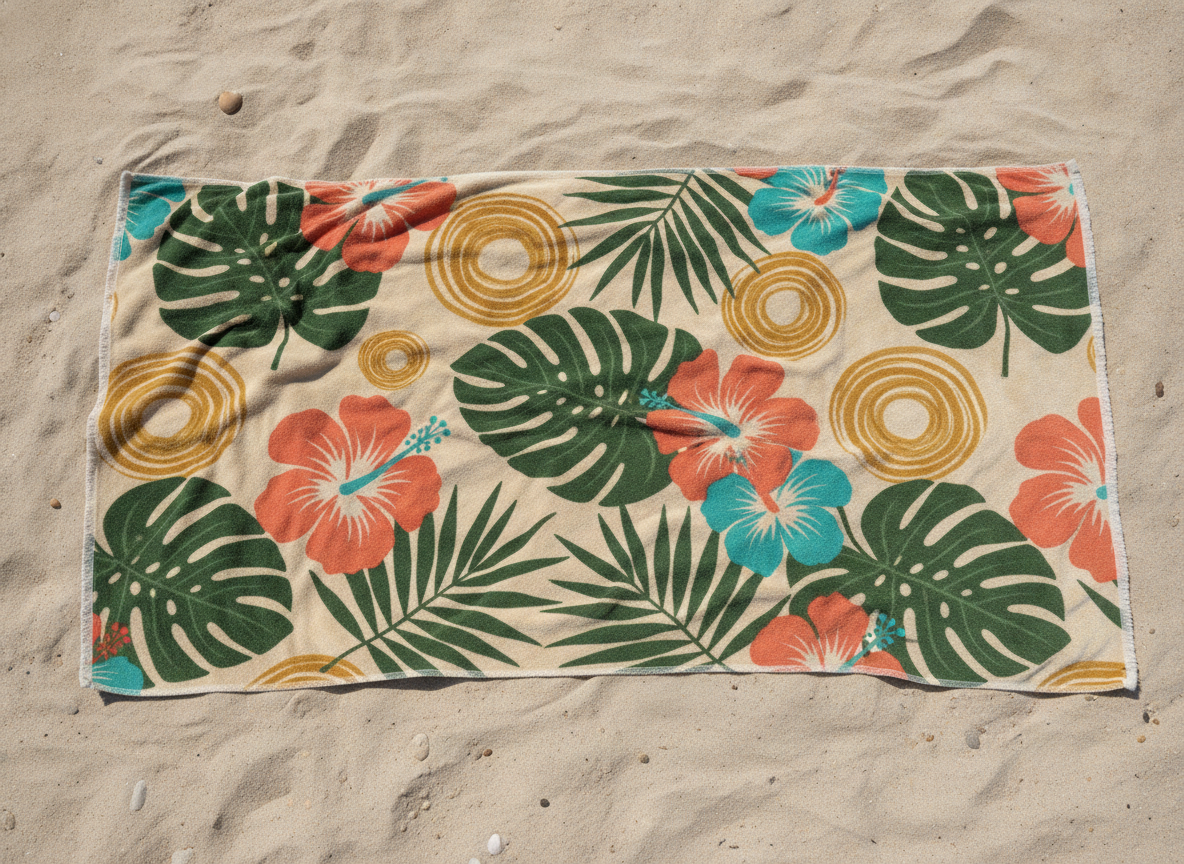
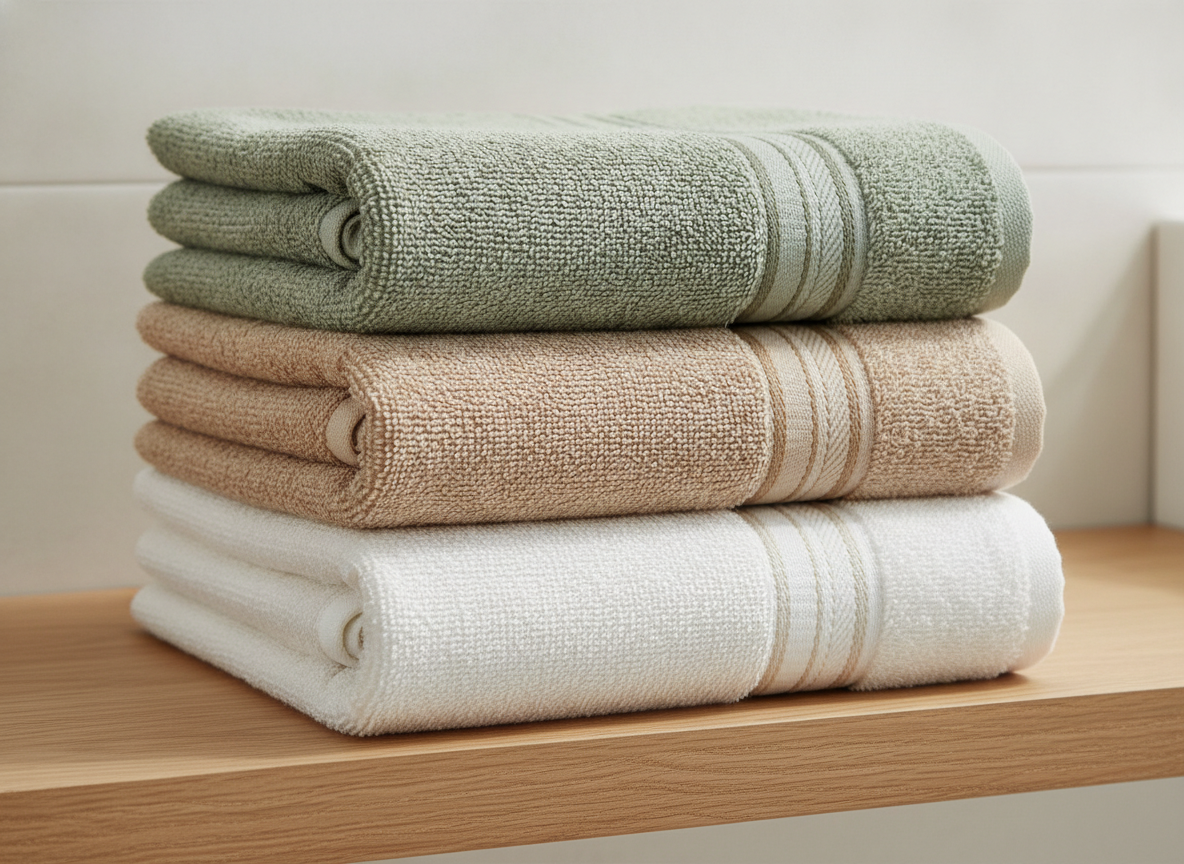
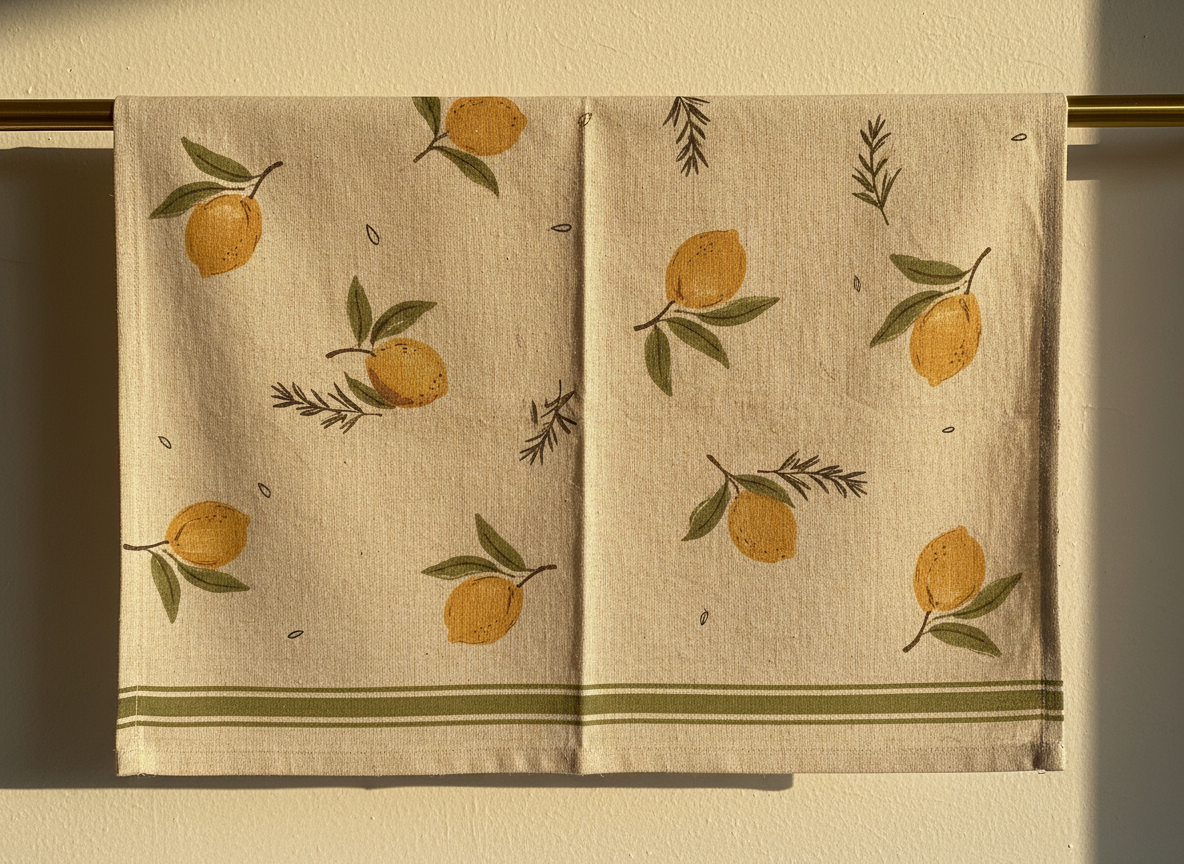
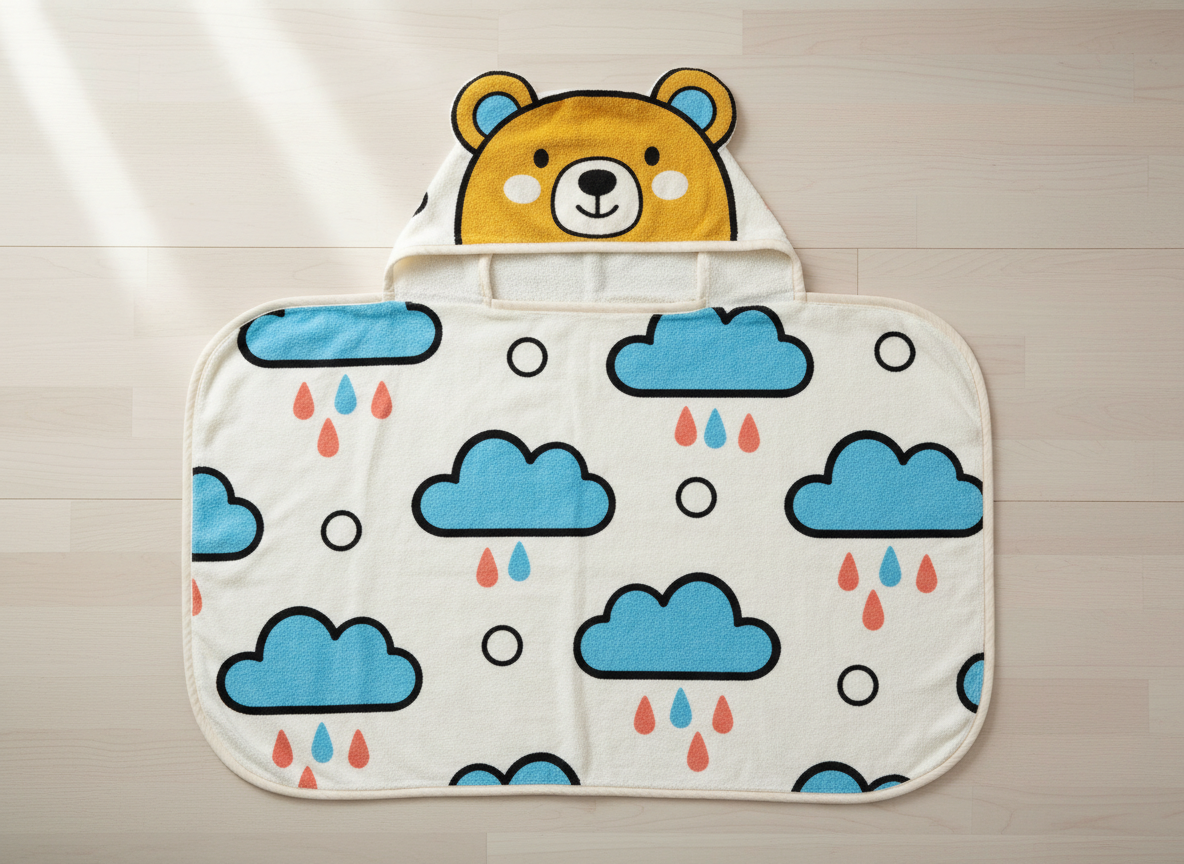
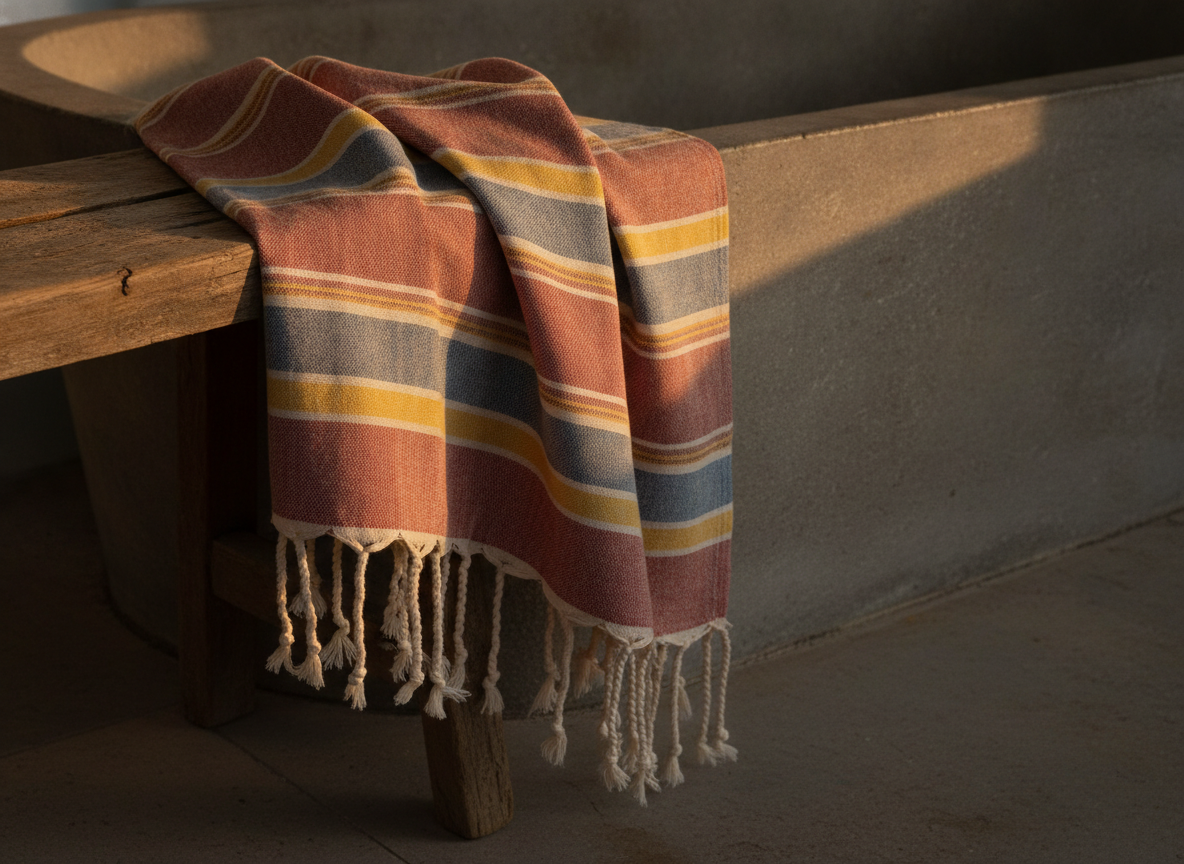
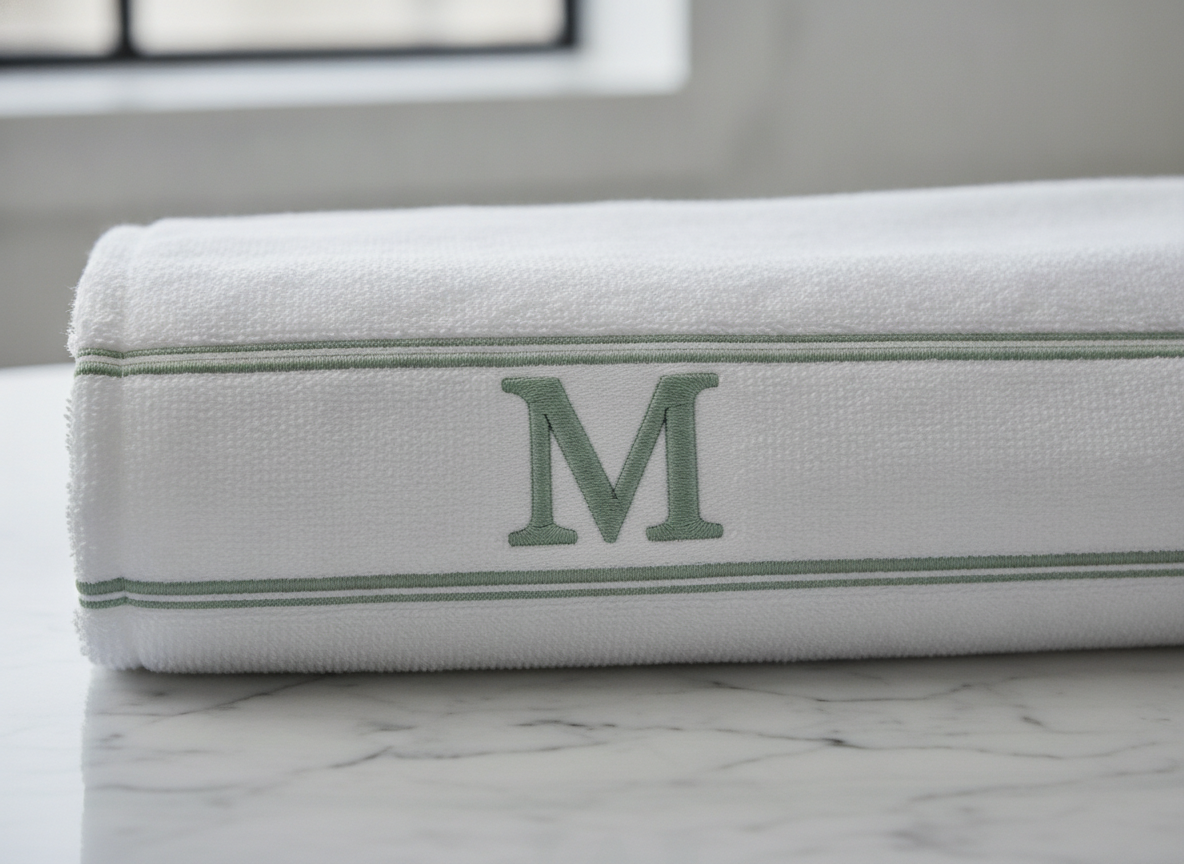
Beach towel, bath towel set, tea towel, kids hooded towel, Turkish peshtemal and embroidered monogram — six towels made four different ways
How the AI Towel Design Generator Works
Three steps from an idea to artwork a towel supplier can actually work from
Pick the Towel, Not the Picture
Every other decision follows from which towel it is, because the towel decides how the decoration gets on there. A beach towel is printed: the face is sheared flat into velour precisely so it can hold an image, and it takes photographic colour edge to edge. A bath towel is usually not printed at all — its pattern is woven in as a dobby or jacquard border while the cloth is made, which is why hotel and department-store towels are plain fields with a band near the hem rather than pictures. A tea towel is flat-woven with no pile, so it behaves like paper and holds fine detail better than any other towel. A peshtemal gets its stripes from dyed yarn on the loom. A monogram is stitched, not printed. Choose the preset that matches what you intend to have made and the artwork comes back inside that route’s limits, rather than looking like a print you will later be told cannot be woven.
Describe the Motif, the Palette and the Scale
Name one motif and give it a size. Terry pile is a lawn of loops that scatters light and breaks up anything narrow, so a design built from shapes the size of your palm survives it and a delicate line drawing does not — the rule of thumb that works is nothing thinner than about two millimetres at finished size, which on a thirty by sixty inch beach towel is far chunkier than it sounds on a screen. Name four or five colours and stop; towels are bought in sets and a tight palette is what makes three of them look like a family. Then say who it is for and where it lives, because that changes the answer more than taste does: a holiday-let wants a mid-tone that hides suncream and hard water, a kids towel needs motifs chunky enough to read after a hundred hot washes, and a gift set wants a colour that flatters the tile in someone else’s bathroom.
Generate, Then Take It to a Supplier
Each design lands in about twenty seconds at up to 4K on a photographed towel, so you can judge scale, contrast and whether the motif still reads against pile rather than only against white. Use it two ways. As a sample it is the mockup you put in front of a client, a buyer or a customer poll before anybody commits to a run. As a brief it is what you hand to whoever makes it: a print-on-demand service wants flat artwork sized to its exact towel template at 150 DPI or better, a woven-border mill wants the border band and a colour count, and an embroiderer wants a digitised stitch file rather than a picture. Ask for the flat artwork on a plain background when you need the working file, and restate the finished proportions, since these presets generate at four by three and a beach towel is one by two.
Why Use an AI Towel Design Generator
Six things that decide whether a towel design survives the pile, the process and the wash
The Pile Eats Fine Detail
Terry cloth is not a surface, it is a field of loops standing three to five millimetres proud of the base weave and pointing in random directions. Every one of them catches light on one side and shadows on the other, which is why a towel looks soft in a photograph and why anything narrow printed on it goes fuzzy. Hairline strokes disappear, a fine crosshatch turns to grey mush, a subtle gradient bands, and type below about half an inch closes up into a smudge. This is the same failure mode as fleece and stitched embroidery, and it has the same fix: design in shapes rather than lines, keep nothing thinner than roughly two millimetres at finished size, and let colour do the work that detail would do on paper. It is also why printed beach towels have a sheared velour face — the loops on the printed side are cut flat at the mill specifically so the image has something to sit on, at the cost of some absorbency on that face.
Printed Means Polyester, Woven Means Cotton
This is the fact that saves the most wasted work, and almost nobody designing a first towel knows it. Full-colour printing on textiles in print-on-demand is dye sublimation, and sublimation only bonds to polyester — it will not hold on cotton. So a photographic all-over beach towel is a polyester or microfibre velour face, very often with a cotton loop back so it still dries you, and it prints vividly. A 100% cotton bath towel cannot be sublimated, which is why its decoration is either woven in on the loom as a dobby or jacquard border, dyed as yarn before weaving, or embroidered afterwards. That is a manufacturing fact, not a style choice, and it is the reason the presets here are split by towel type: asking a mill for a photographic print on cotton terry, or asking a print-on-demand service for a woven border, gets the same answer either way. Decide the route first and the artwork follows.
One Side Prints, and White Is Not an Ink
Sublimation prints one face. The back of a printed beach towel stays plain — usually white cotton loops — so design for the side that shows and do not plan a two-sided product unless the supplier specifically offers double-sided printing at a higher price. The second rule catches people even more often: sublimation cannot print white. Anywhere your artwork is white, what you are actually seeing is the blank fabric underneath, which is fine on a white towel and impossible on a coloured one. There is no white ink to lay down first, so a pale motif on a dark ground has to be built by printing the dark ground around it, and any area you leave empty comes out the colour of the blank. Sublimated colour also dries slightly duller and a touch darker than a backlit screen suggests, and pile scatters light further, so a design that is already dark loses more than you expect. Design to the process and you skip the round where the supplier explains what is not possible.
A Beach Towel Is Bigger Than Your File
Standard sizes are worth holding in your head, because every supplier scales to physical inches. A beach towel is around 30 by 60 inches, a bath towel 27 by 52, a bath sheet 35 by 60, a hand towel 16 by 28, a tea towel 18 by 28, and a kids hooded towel around 30 by 30. Take the biggest of those at a modest 150 DPI and you need roughly 4,500 by 9,000 pixels — several times more than 4K in each direction. Two ways round it, and the choice matters. Either build the design as a seamless repeat, which tiles to any towel size at any resolution and is how most textile artwork is actually supplied, or generate one large composition and enlarge it before sending. Aspect ratio deserves the same care: a beach towel is a 1:2 rectangle, so a square or four by three file stretched to fit turns circles into ovals and pulls every motif out of shape. Compose to the finished proportion instead of cropping later.
Towels Are the Most Abused Textile You Own
Nothing else in the house is washed as hot, as often, or as harshly. A towel goes through 60 degree washes, sometimes bleach, a tumble dryer and years of use, and the design has to still be there afterwards. Sublimated colour is dye bonded into the fibre rather than a layer sitting on top, so it cannot crack or peel and it survives that treatment better than any screen print — but it does fade slowly under strong sun and repeated bleaching, which is a real consideration for poolside and holiday-let stock. Woven and yarn-dyed patterns fade least of all, since the colour is the yarn. Two practical consequences for the design itself: high-contrast artwork ages more gracefully than a pale wash, because the ten percent of colour it loses is less visible, and a mid-tone ground hides the suncream, mascara and hard-water marks that a white towel advertises. Fabric softener, incidentally, coats the fibres and ruins absorbency — worth putting in a listing, since buyers blame the towel.
Free to Start, $9.98 to Go Further
You can generate towel designs free without a credit card, which is enough to find out whether a motif survives pile at towel scale before you pay for a sample or a designer’s time. Paid plans start at $9.98 for real work: running one motif across a beach towel, a hand towel and a tea towel so a gift set coordinates, testing a palette in three colourways against the tile of a specific bathroom, or the repeated passes it takes to get the scale of a repeat right for thirty by sixty inches. Output reaches 4K with no watermark and is cleared for commercial use, which is what matters once designs go to a print-on-demand supplier or onto stock you have paid for. Against a custom towel sample at twenty to forty dollars and a week or two of shipping — or a mill minimum of several hundred units for a woven border — seeing a dozen directions before choosing one changes which towel gets made.
Frequently Asked Questions
Common questions about using an AI towel design generator
Design the Towel in Twenty Seconds
Pick a towel type, describe your motif and colours, and see it on a real product mockup at up to 4K — beach, bath set, tea towel, kids hooded, Turkish peshtemal or monogram. Powered by Nano Banana Pro. Free to start, plans from $9.98.
Designing for a Surface Made of Loops: the AI Towel Design Generator
Towels look like the easiest print-on-demand product on the shelf and are quietly one of the fussiest. The reason is the pile. Every other blank you design for — a poster, a tote, a phone case — is a flat surface that shows you what you drew. Terry cloth is thousands of loops standing several millimetres proud of the cloth in random directions, and it treats a design the way a lawn treats a footprint: big shapes survive, fine lines vanish. An AI towel design generator is useful mainly because it lets you find that out in twenty seconds instead of finding it out when a sample arrives. You describe the motif and the palette, the design comes back on a photographed towel, and the motif that was too delicate is obvious immediately rather than two weeks and forty dollars later.
The six presets are split by towel type rather than by art style because towels are made four different ways and the method decides what the artwork can be. Printing means polyester, since dye sublimation bonds to polyester and not to cotton — that is why a photographic beach towel has a sheared velour face and why the same design cannot simply be ordered on a cotton bath towel. Weaving means the pattern is built on the loom as a dobby or jacquard border, which is what a real cotton bath towel has and why hotel towels are plain fields with a band near the hem. Yarn dyeing is where a peshtemal gets its stripes. Stitching is how a monogram happens, and it needs a digitised file rather than a picture. Pick the route first and the artwork lands inside its limits.
Two habits improve almost every towel design. Design in shapes rather than lines, keeping nothing thinner than about two millimetres at finished size, because that single rule is what separates a design that reads across a beach towel from one that turns to fuzz. And decide the palette for the towel’s life rather than for the screenshot — mid-tones hide suncream, hard water and the general indignity of being the most-washed textile in the house, while a pale ground advertises all of it. Towel type, motif, palette: three decisions, and the supplier does the rest.
What the AI Towel Design Generator Will Not Do
It will not make a towel, and it will not produce a production-ready file. What you get is artwork shown on a real towel, which is what you need for judging scale and contrast against pile and for a listing photo while you test demand — but a print-on-demand supplier wants a flat file at its exact template dimensions and finished proportions, a mill wants a border spec and a colour count, and an embroiderer wants a stitch file. Preparing those is a separate step. Generate the design you like, run it again asking for the flat artwork on a plain background, then clean it up with the AI background remover and enlarge it with the 4K image upscaler so the detail survives being scaled to thirty by sixty inches.
It will not guarantee the finished towel either, because cloth is not pixels. Sublimation dries slightly duller and darker than a backlit screen suggests, it cannot print white at all, it prints one face only, and the pile will always soften whatever you put on it — so approve a physical sample before a production run. For neighbouring jobs there are better fits: the AI pattern generator is the place to work on a seamless repeat itself, the AI embroidery design generator covers stitched artwork and what digitising can hold, the AI shower curtain design generator, the AI blanket design generator and the AI pillow design generator carry the same palette onto the rest of the house, and the AI mockup generator places a finished design into styled shop photography. For any lettering, text in images explains what type the model can reliably set.
Within those limits the work is yours to use. Output reaches 4K with no watermark and is cleared for commercial use, which covers Etsy and Shopify listings, print-on-demand shops, homeware lines, hotel and holiday-let projects and client jobs alike. Keep other people's property out of it — licensed characters, team logos and the style of a specific named living artist — because towels attract exactly those requests. If you are selling for children, check the product safety and labelling rules for your market before ordering stock. Know that in the United States purely AI-generated images are not registrable for copyright, so selling the towel is fine but stopping an imitator may not be. It is free to start with no credit card and plans begin at $9.98. Pick a towel type, name your motif, and see it before you order the sample.
Try the AI towel design generator free today. Pick one of six towel types, describe your motif and colours, and see it on a real product mockup at up to 4K. No credit card required to start. Paid plans from $9.98.