
AI Blanket Design Generator
A blanket is the one piece of printed fabric in a house that is almost never seen flat. It gets thrown over the end of a bed, bunched on a sofa arm, wrapped around somebody on a cold evening — so the pattern has to survive being folded in half, draped at an angle and read from two metres away, and the print has to keep working when the fabric is fleece, sherpa or woven rather than paper. This AI blanket design generator builds artwork around those constraints and shows it on a real product mockup in about twenty seconds, at up to 4K, in six styles: geometric throw, watercolour floral, minimalist stripe, kids print, luxe velvet and boho tie-dye. Pick a style, describe your motif and palette, and see the blanket before you order a single sample.
Try It Now — Free
Pick the blanket style first, then use the details box for your motif, your palette and who it is for. Every preset already carries what a throw cares about — a pattern that still reads when the blanket is folded or draped, a palette that survives a hundred wash cycles, and a scale that fits fifty by sixty inches rather than a phone screen.
AI Blanket Design Generator
Pick a blanket style, describe your motif and colours, and see it on a real product mockup
Throws From the AI Blanket Design Generator
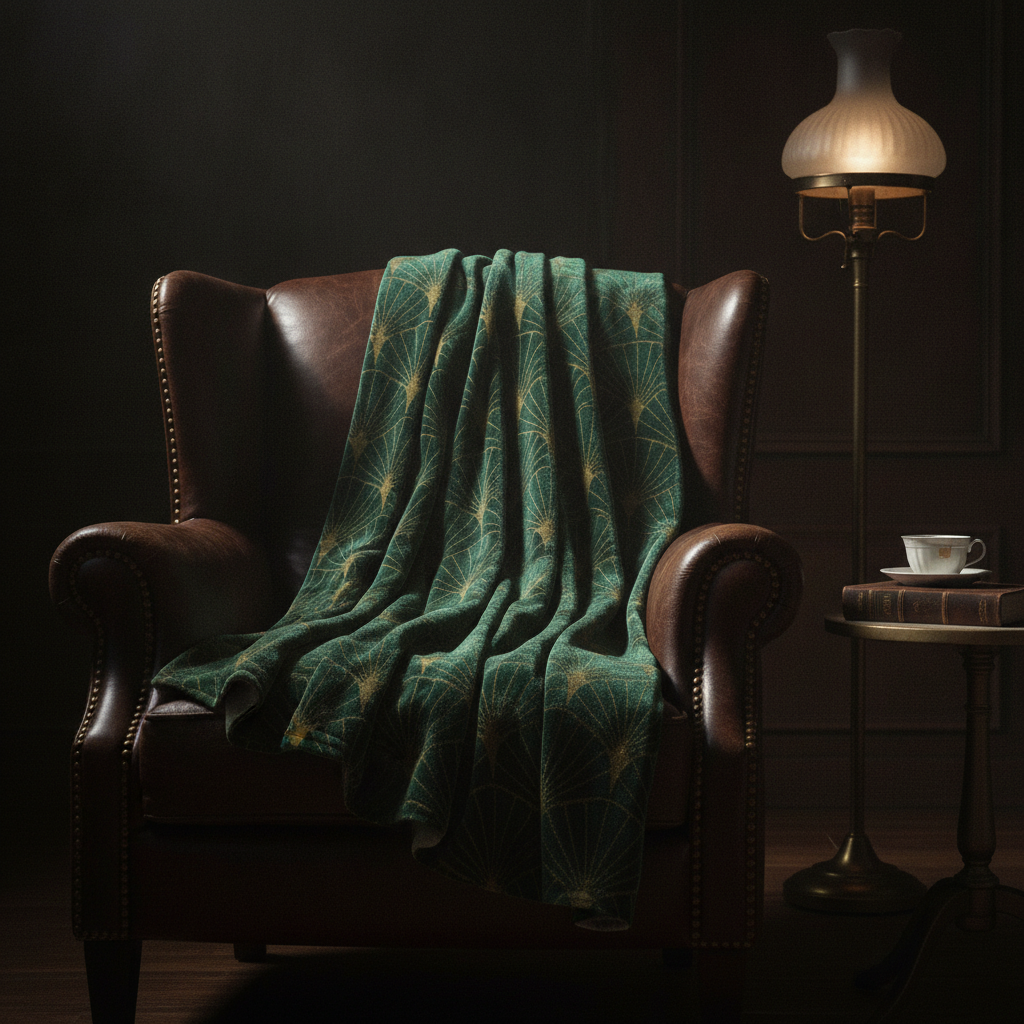
Geometric throw, watercolour floral, minimalist stripe, kids print, luxe velvet and boho tie-dye — the six formats that cover almost every blanket anybody actually buys
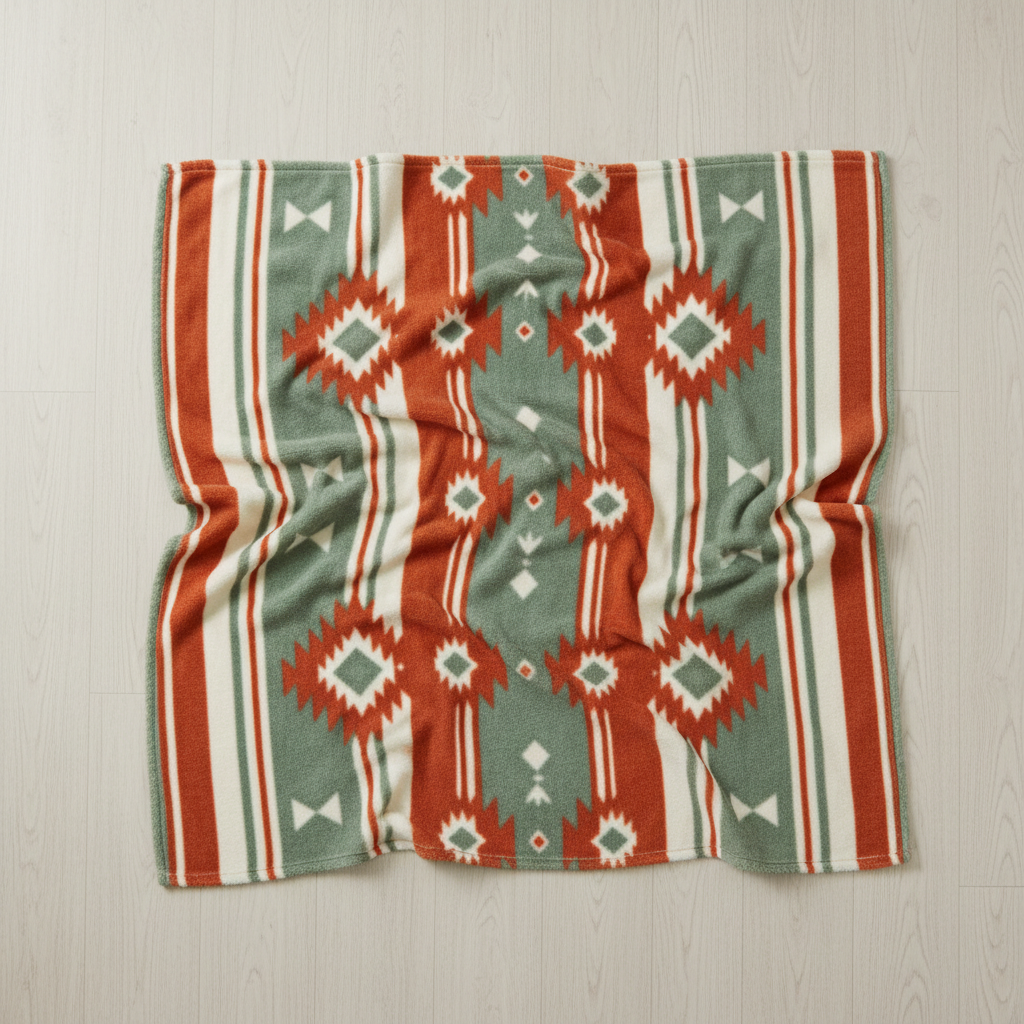
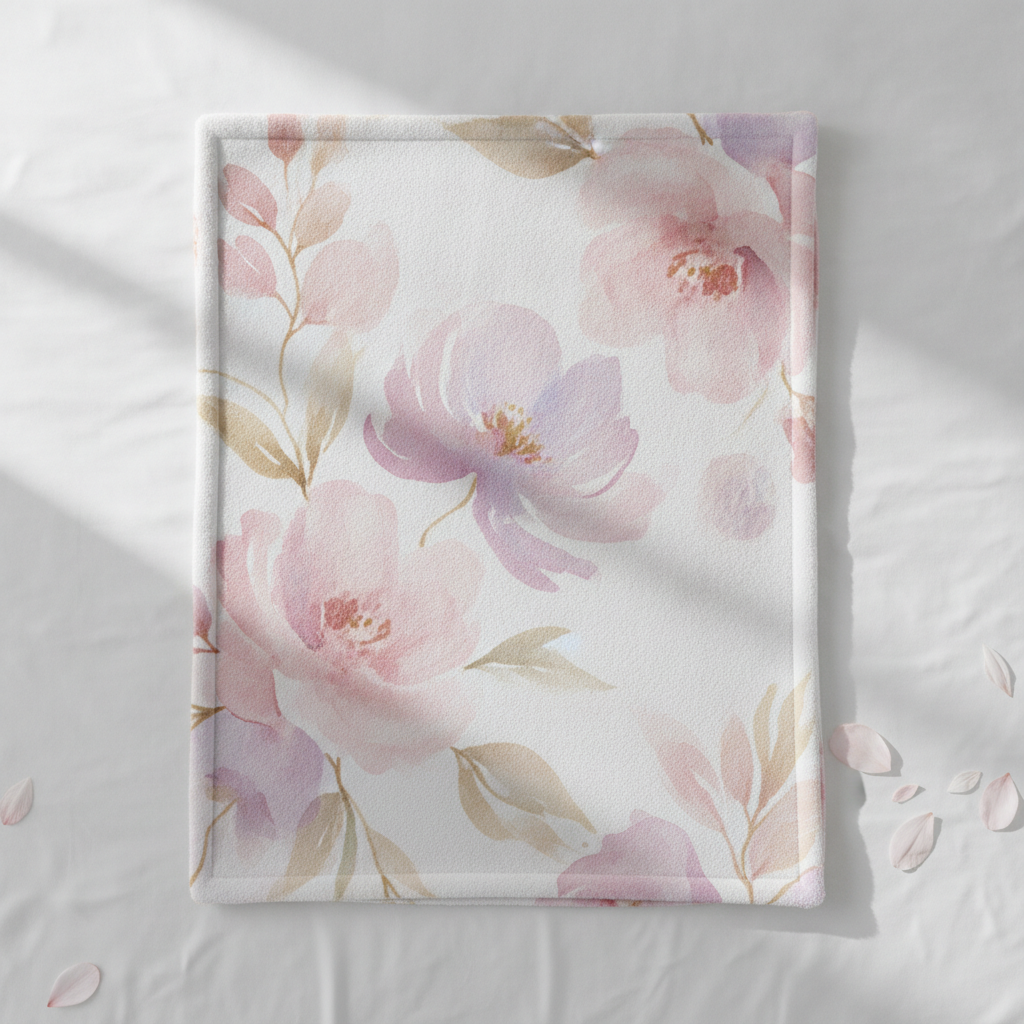
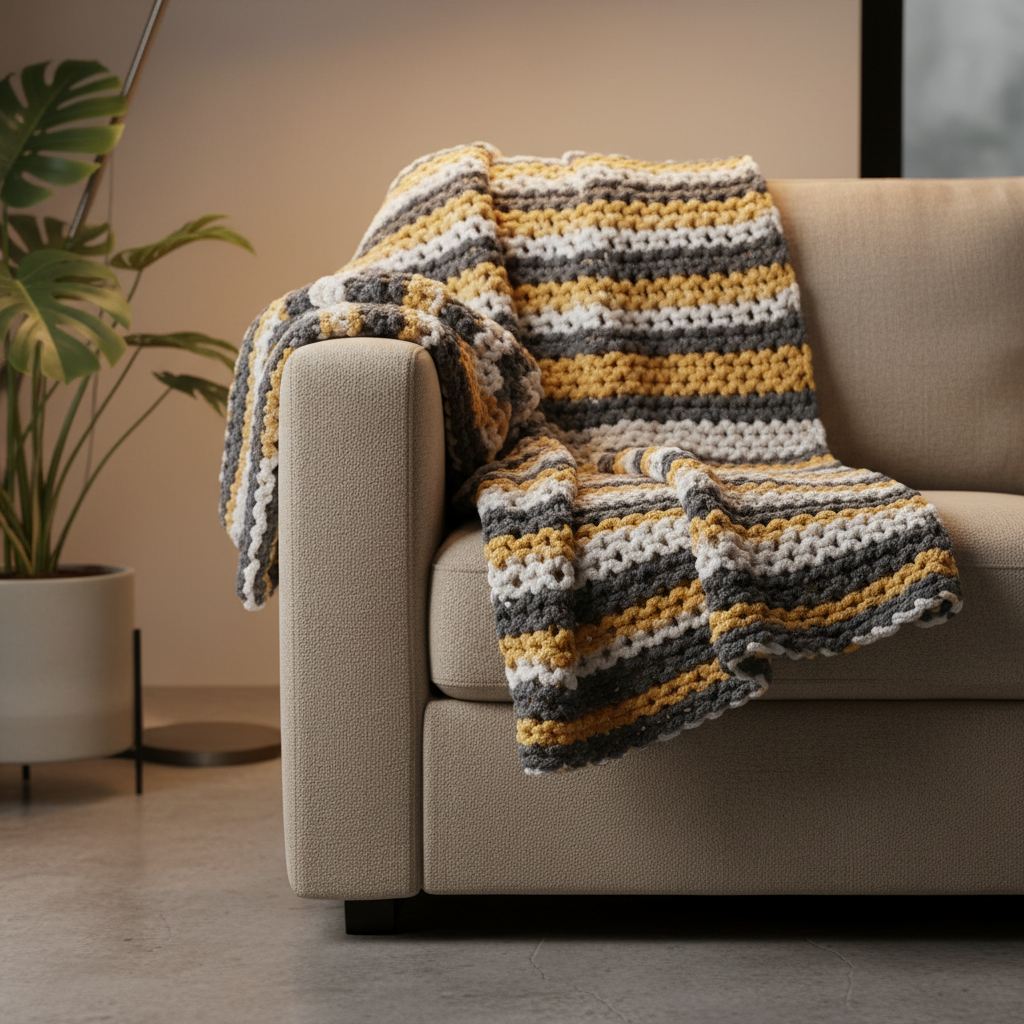
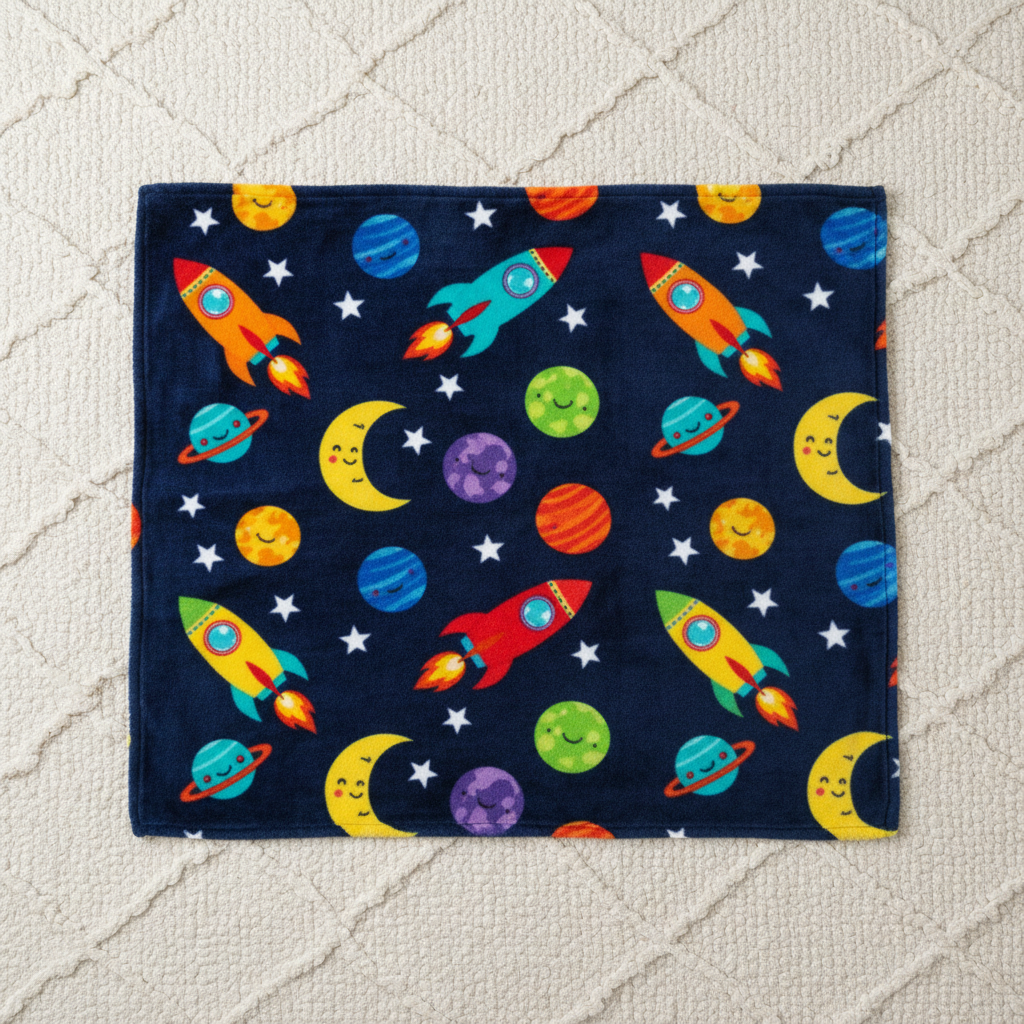

How the AI Blanket Design Generator Works
Three steps from an idea to artwork a print-on-demand supplier or a mill can work from
Pick the Fabric, Because It Decides the Artwork
A blanket is not one product, and the fabrics behind it accept completely different designs. Sublimated fleece and minky are the workhorses of print-on-demand: polyester takes dye-sublimation ink beautifully, so they will hold photographic colour, soft gradients and fine detail, and they are the only options that let you print a full-bleed illustration edge to edge. Sherpa is fleece on one face and shaggy pile on the other, which means the design only exists on one side and the pile side softens everything by a few millimetres. A woven throw builds the pattern from dyed yarn on a loom, so it gives you hard edges, stepped diagonals and a limited colour count — no gradients, no photographs, no soft watercolour bleed at all. Velvet and chenille sit in between and shift colour with the direction of the nap. Choose the fabric first and you stop designing watercolours for a loom that cannot weave one.
Describe the Motif, the Palette and the Scale
Three things carry a blanket design. Name one motif and its scale rather than a scene, because a throw is fifty by sixty inches and mostly seen bunched — a tossed all-over repeat whose element is the size of a palm reads perfectly when the blanket is folded over a sofa arm, while a single centred illustration disappears the moment somebody picks it up. Name four or five colours and stop, because a woven throw charges you per yarn colour and even on a printed blanket a tight palette is what makes a design look designed rather than busy. Then say who it is for and where it lives, since that changes the answer more than people expect: a nursery blanket wants soft mid-tones that hide milk stains, a camp throw wants saturated colour that survives a fire pit, and a bed throw has to answer to bedding it did not choose.
Generate, Then Take It to a Supplier
Each design arrives in about twenty seconds at up to 4K, shown on a real product mockup so you can judge scale, contrast and whether the pattern still works draped rather than flat. Use it two ways. As a sample, it is the mockup you put in front of a client, a supplier or a customer poll before anyone commits to a print run. As a brief, it is what you hand to whoever makes it: a print-on-demand service wants a flat artwork file sized to each of their blanket templates at 150 DPI or better, a mill wants a seamless repeat tile with the colour count stated, and a cut-and-sew maker wants the design plus a hem allowance. Ask for the flat artwork on a plain background rather than the photographed throw when you need the working file, and restate your blanket proportions, because these presets generate square.
Why Use an AI Blanket Design Generator
Six things that decide whether a blanket design survives folding, washing, and the machine that has to print it
A Blanket Is Almost Never Seen Flat
Every other printed textile gets judged flat — a tea towel on a rail, a rug on a floor, a poster on a wall. A blanket does not. It spends its life folded in thirds at the end of a bed, bunched over the arm of a sofa, or wrapped around somebody with only a third of the surface visible and most of that at an angle. This is why so many blanket designs that look striking as a flat file arrive as a disappointment: a single large centred illustration is beautiful in a mockup and invisible in a living room, because the part you framed the whole design around is the part that ends up inside the fold. The fix is structural rather than decorative. Use an all-over pattern or a tossed repeat so every square foot of the blanket carries something, keep the strongest colour distributed rather than pooled in the middle, and check your design folded in half and in thirds before you approve it.
Scale Is the Decision People Get Wrong
Blankets are far bigger than the screen you design them on and the mismatch catches almost everyone. A standard throw is 50 by 60 inches — about 127 by 152 centimetres — and queen and king bed blankets run to 90 by 90 inches and beyond, so a motif that looks nicely detailed in a browser window arrives the size of a dinner plate, and a delicate texture that reads as subtle on screen turns into visual noise across four feet of fleece. Work the other way round: pick either a repeat whose individual element is roughly the size of a palm, or a bold banded structure that organises the whole surface, and check it against a sofa rather than against the frame. Generating the design already draped on a real throw is precisely what makes that judgement possible in seconds instead of after a sample has shipped.
Blankets Are Rectangles, and There Are Several
Almost every blanket sold is a rectangle in a small set of standard sizes — a 50 by 60 inch throw, a 60 by 80 twin, an 80 by 90 queen and a 90 by 90 king, plus baby blankets around 30 by 40. That matters because a design generated as a square does not survive being stretched into a throw: a circular motif turns into an oval, an even repeat turns into a squashed one, and a border that was equal on four sides ends up thick at the ends and thin at the sides. Treat what you get here as the motif, the density and the colourway, then rebuild it at the real proportions before anything is printed — or ask for the design at your target aspect ratio directly in the details box. If you plan to sell one design across several sizes, build it as a seamless repeat rather than a placed composition, because a repeat rescales to every size in the range and a placed layout has to be redrawn for each one.
Every Fabric Has a Different Colour Rule
Colour behaves differently on each blanket fabric and getting it wrong costs a sample round. Dye-sublimation onto polyester fleece or minky is the most forgiving process in print-on-demand: it will take photographs, gradients and fine detail, colours come out bright, and the ink dyes the fibre so the print does not crack or peel. It also cannot print white — white is simply the fabric showing through — and it will not sublimate onto cotton at all, which is why almost every printed throw on the market is polyester. Woven and knitted throws are the opposite: every colour is a separate yarn with its own cost, five to eight is a comfortable range, and a gradient is not available at any price. Minky and sherpa pile softens everything by a few millimetres, so fine linework closes up. Match the design to the process at the start and skip the round where the supplier explains what you cannot have.
A Blanket Gets Washed, and It Shows
A throw is the one piece of decor in a room that goes through a washing machine regularly, and this is where a beautiful file meets an unhappy review. Sublimated polyester holds its colour extremely well because the dye is in the fibre rather than on top of it, but the fabric itself pills where it rubs and the pile flattens with every cycle, which visibly softens fine detail over a few months. A pale solid ground shows every stain, and blankets attract exactly the stains you would expect — coffee, milk, pets, sunscreen. Mid-tone and multi-coloured patterns hide all of it, which is not a coincidence: it is a large part of why traditional throws are patterned edge to edge. Design for the life the blanket will have. A pale minimal throw is right for a styled bedroom shoot and a bad recommendation for a family sofa or a nursery.
Free to Start, $9.98 to Go Further
You can generate blanket designs free without a credit card, which is enough to find out whether a motif holds up at throw scale before you pay for a sample or a supplier’s time. Paid plans start at $9.98 for real work: testing one design in six colourways to match a customer’s room, building a collection that shares a palette across throw, twin and queen sizes, or the repeated passes it takes to get the scale of a repeat right for 50 by 60. Output reaches 4K without a watermark and is cleared for commercial use, which is what matters once designs are going to a print-on-demand supplier or onto stock you have paid for. Against a custom blanket sample costing forty dollars and taking two weeks to arrive, seeing twelve directions on a real mockup before choosing one usually changes which blanket gets made.
Frequently Asked Questions
Common questions about using an AI blanket design generator
Design the Throw in Twenty Seconds
Pick a style, describe your motif and colours, and see it on a real blanket mockup at up to 4K — geometric, watercolour floral, minimalist stripe, kids print, luxe velvet or boho tie-dye. Powered by Nano Banana Pro. Free to start, plans from $9.98.
Fifty by Sixty Inches of Pattern: the AI Blanket Design Generator
Designing a blanket used to start with the most expensive step. You briefed a designer or picked something from a supplier’s catalogue, ordered a sample, waited two weeks and paid for the privilege — and only when the parcel arrived did you find out that the motif was too small to read across a sofa, or that the palette argued with every piece of bedding you owned. An AI blanket design generator inverts that order. You describe the fabric, the motif and the palette, and the design arrives on a photographed throw in about twenty seconds, which makes the deciding cheap and leaves only the making expensive. On a product where a single sample costs forty dollars and takes a fortnight, trying a dozen directions before choosing one is worth far more than it costs.
The six presets exist because the fabric dictates the artwork. Sublimated fleece and minky are the print-on-demand workhorses and will take photographic colour, soft gradients and fine detail, which is what makes a watercolour floral or a full-bleed kids print possible at all. Sherpa carries the design on one face only. A woven throw builds the pattern from dyed yarn on a loom, so it gives hard edges, stepped diagonals and a handful of colours with no gradients anywhere — which is exactly why a minimalist stripe suits it and a tie-dye does not. Velvet and chenille shift colour with the direction of the nap, which is what makes an art deco repeat look expensive on them. And every one of those fabrics softens fine linework by a millimetre or two, which is the single most common reason a design that looked crisp on screen arrives looking muddy.
Two habits improve nearly every blanket design. Design for the fold, because a throw lives bunched on a sofa arm and folded at the end of a bed, and a pattern that carries across the whole surface will always beat one composition placed in the middle. And commit to a scale — a repeat whose element is about the size of a palm, or a bold banded structure that organises all fifty by sixty inches — since the delicate motif floating in the middle of four feet of fleece is the one that reads as an accident. Fabric, motif, palette: three decisions, and the supplier does the rest.
What the AI Blanket Design Generator Will Not Do
It will not make a blanket, and it will not produce a production-ready file. What you get is artwork shown on a throw, which is what you need for judging scale, contrast and drape and for a listing photo while you test demand — but a print-on-demand supplier wants a flat file at their exact template dimensions with a safe margin, a mill wants a seamless repeat tile with a stated colour count, and preparing those is a separate step. Generate the design you like, run it again asking for the flat artwork on a plain background, then clean it up with the AI background remover and enlarge it with the 4K image upscaler so the detail survives being scaled up to ninety inches.
It will not guarantee the finished blanket either, because fleece is not pixels. Sublimation ink sits slightly duller on a pile surface than it looks on a backlit screen, minky and sherpa blur any detail below about two millimetres, a woven version of a design always steps its diagonals, and no sublimation process can print white — so always approve a physical sample before a production run. For neighbouring jobs there are better fits: the AI pattern generator is the place to work on a seamless repeat itself, the AI pillow design generator and the AI rug design generator carry the same palette onto the cushions and the floor, the AI tote bag design generator takes the motif onto a different print-on-demand product, the AI bedroom design generator shows the room the throw has to live in, and the AI mockup generator places a finished design into styled shop photography. For any lettering, text in images explains what type the model can reliably set.
Within those limits the work is yours to use. Output reaches 4K with no watermark and is cleared for commercial use, which covers Etsy and Shopify listings, print-on-demand shops, craft fairs, homeware lines, hotel and interior projects and client jobs alike. Keep other people's property out of it — licensed characters, team logos and the style of a specific named living artist — because blankets attract exactly those requests. Check the AI policy of whichever marketplace you sell through, and know that in the United States purely AI-generated images are not registrable for copyright, so selling the blanket is fine but stopping an imitator may not be. It is free to start with no credit card and plans begin at $9.98. Pick a fabric, name your motif, and see the throw before you order the sample.
Try the AI blanket design generator free today. Pick one of six blanket design styles, describe your motif and colours, and see it on a real product mockup at up to 4K. No credit card required to start. Paid plans from $9.98.