
AI Dining Room Design Generator
The dining room is one table, six chairs and a light fitting, which sounds like the easiest room in the house until you try to picture a different one in it. This AI dining room design generator answers the part you cannot picture: photograph the room from the doorway, pick a style — modern minimal, Scandinavian, rustic farmhouse, mid-century modern, coastal or moody formal — and get a photorealistic redesign of the same room, with your window, door and ceiling height kept, at up to 4K in about twenty seconds.
Try It Now — Free
Upload one landscape photo taken from the doorway with the table cleared, every light on and the curtains open, pick a style, and the redesign comes back in about twenty seconds at up to 4K. Stand back far enough to get the whole table, a stretch of floor around it and the window in one frame — a photo shot from the head of the table gives the model almost nothing to work with.
AI Dining Room Design Generator
Upload a photo of your dining room, pick a style, and see a photorealistic redesign of the same room in seconds
Upload a photo of your dining room taken from the doorway with the table cleared and the lights on, then select a style below
Rooms From the AI Dining Room Design Generator
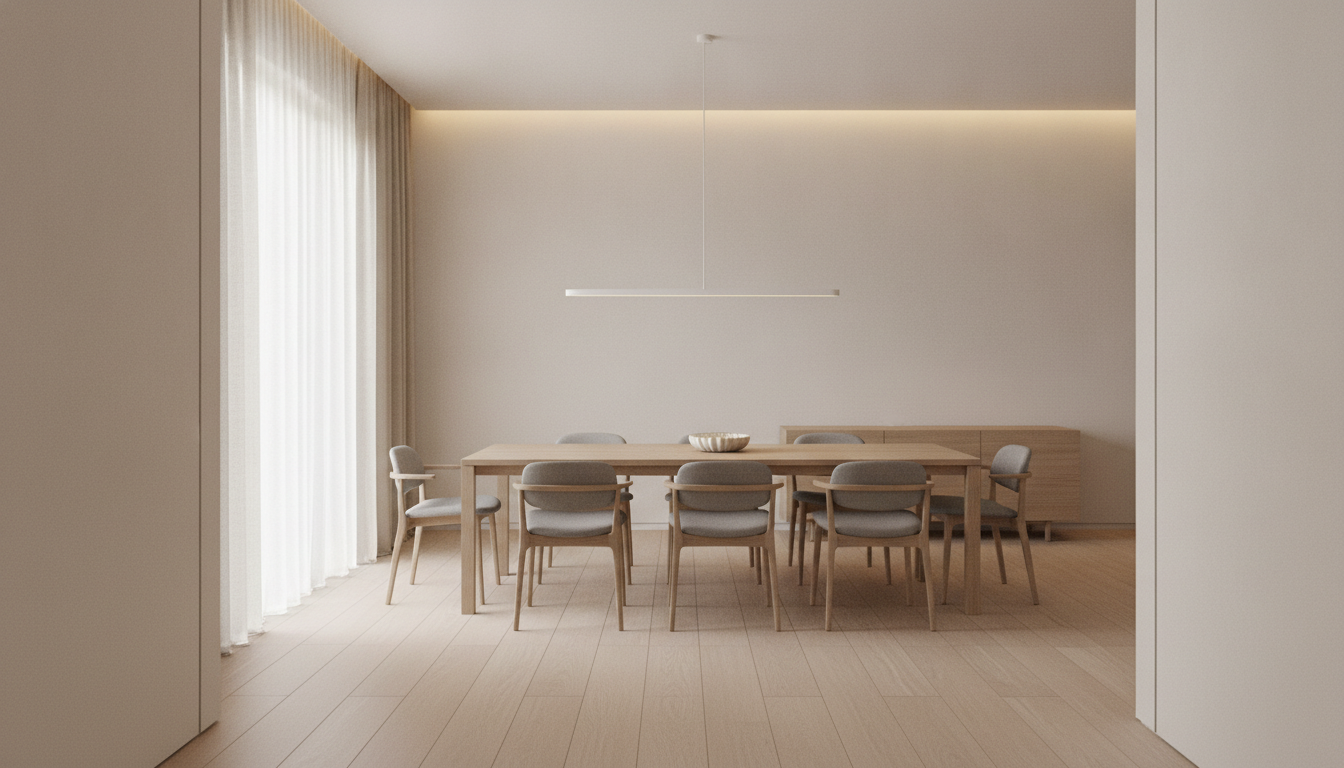
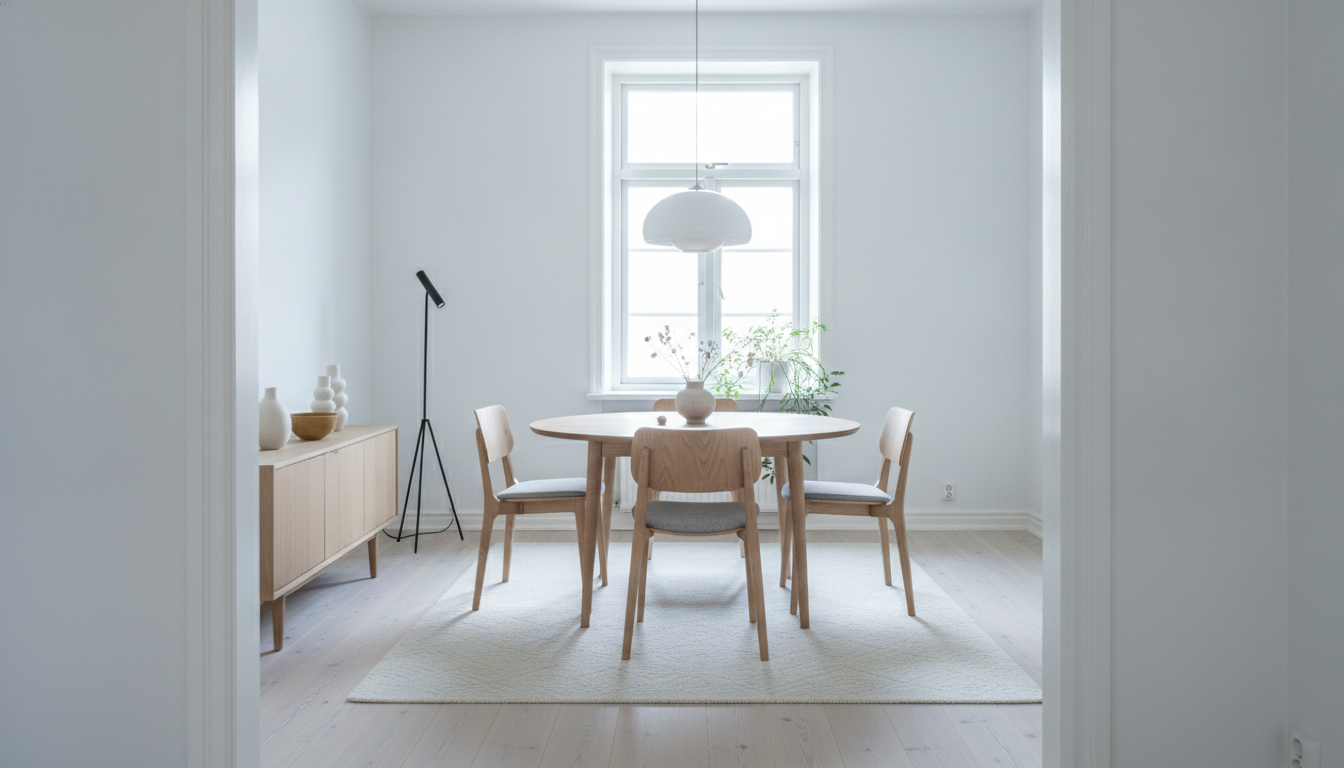
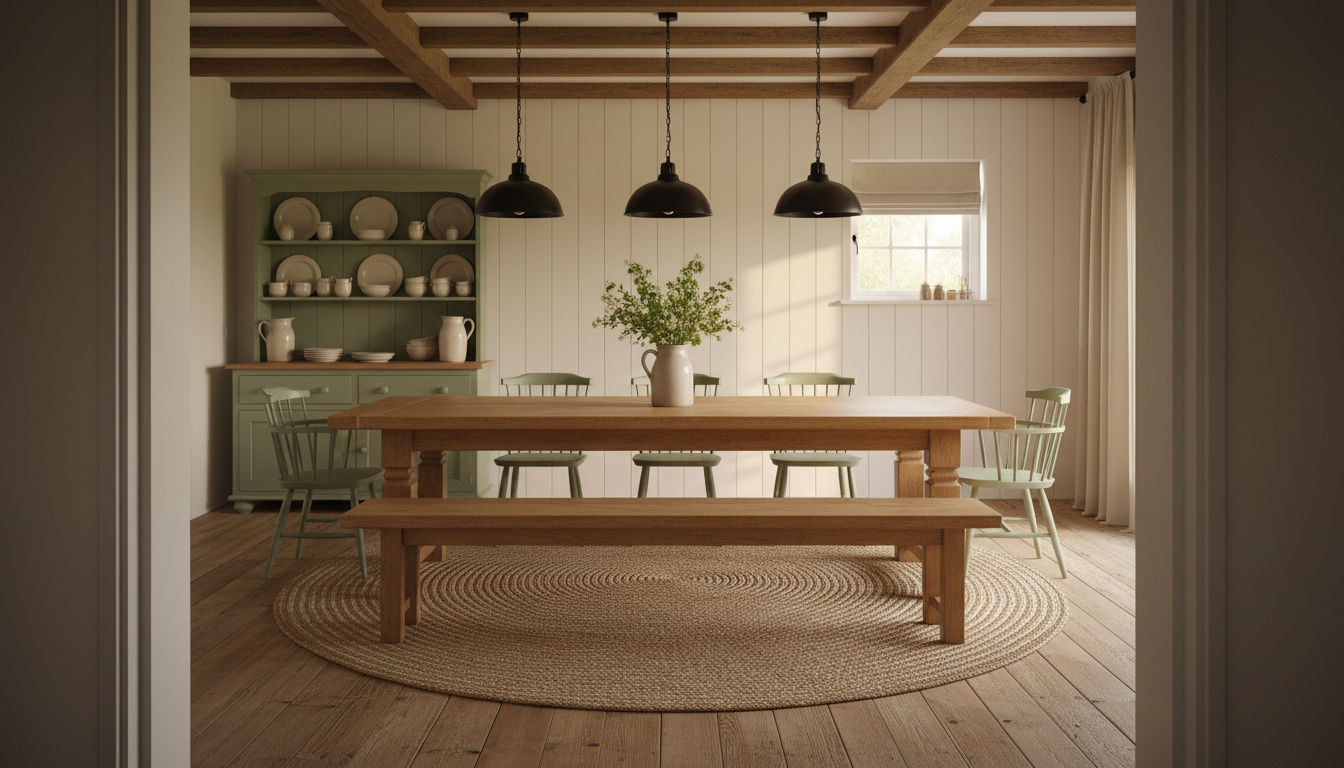
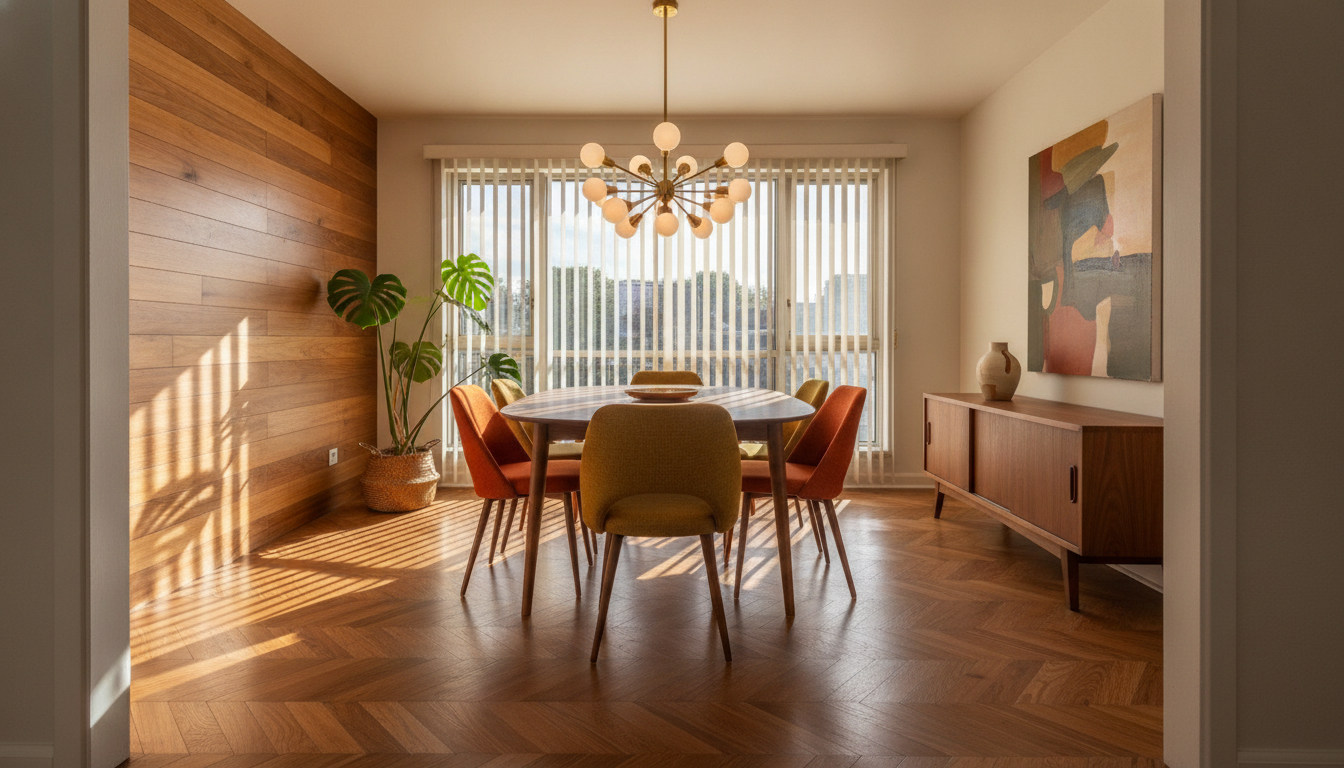
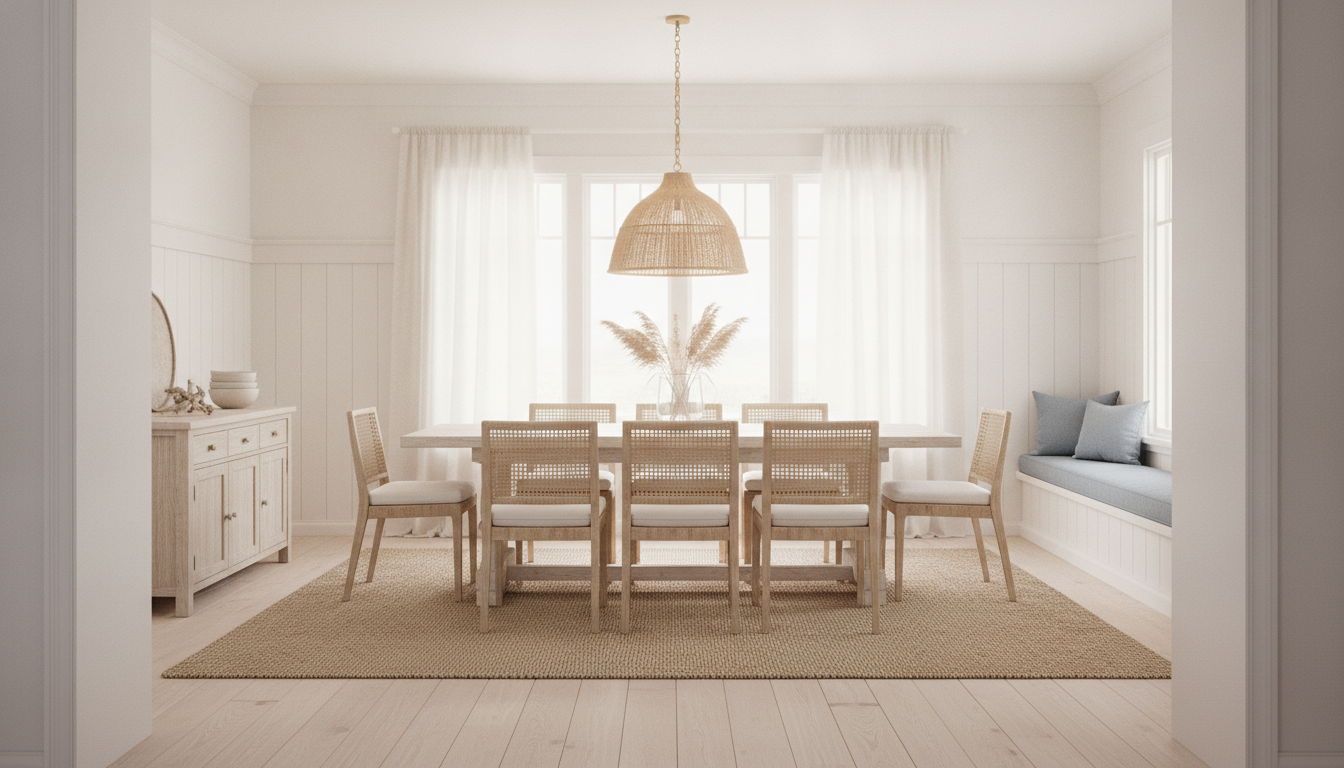
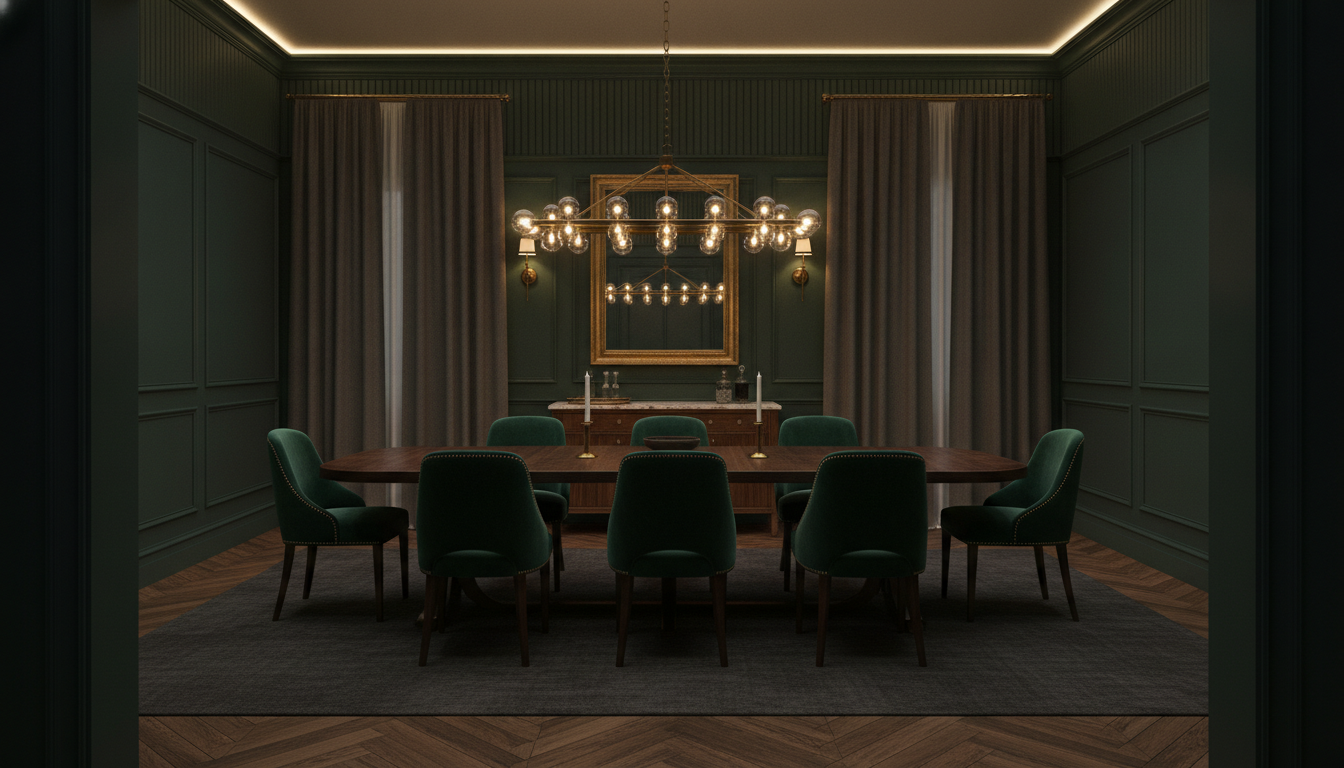
Modern minimal, Scandinavian, rustic farmhouse, mid-century modern, coastal and moody formal — six genuinely different dining rooms, not six colour filters
How the AI Dining Room Design Generator Works
Three steps from the dining room you have to the dining room you are considering
Photograph the Room From the Doorway
Stand in the doorway, hold the phone level at about chest height, and take one landscape photo that includes the whole table, a stretch of floor around it and the window. Clear the table completely — a fruit bowl, post and a laptop charger are all things the model will try to keep, and they are exactly what makes a render look like a cluttered version of the room you already have. Turn every light on, but leave the table, chairs and sideboard where they are: that furniture is what gives the model its scale cues.
Pick a Dining Room Style
Six presets, each a full scheme rather than a colour swap. Modern Minimal is off-white plaster, pale oak and a thin-edged table under one slim linear pendant. Scandinavian is white walls, blonde ash and a round table with moulded plywood chairs. Rustic Farmhouse is whitewashed shiplap, a chunky refectory table with benches and three black iron domes. Mid-Century Modern is walnut panelling, herringbone parquet and a brass sputnik chandelier. Coastal is chalky white panelling, bleached timber and rattan. Moody Formal is inky green fluting, emerald velvet and brass. Each preset sets the walls, flooring, table, seating, lighting and palette together.
Compare, Regenerate, Then Buy With Confidence
The render comes back in about twenty seconds at up to 4K. Run the same photo through two or three styles and put the results side by side — that comparison is where the decision actually gets made, and it costs you a minute. If a render moves the window, invents a doorway or seats ten people at a table that fits six, generate again; the instruction to hold the room layout is in every preset and a second pass usually lands it. Then use the image as a brief for a decorator, a furniture shortlist or a paint order, not as a measured drawing.
Why Use an AI Dining Room Design Generator
Six reasons a render of your own dining room beats another folder of saved photos
Your Dining Room, Not a Showroom
Every dining room in a catalogue is a generous rectangle with the table dead centre, a window on the long wall and nothing else in it. Yours has a radiator where the sideboard should go, a door that swings into the fourth chair, or it is the far end of the living room rather than a room at all. Because this works image-to-image, every preset instructs the model to hold your room shape, window and door positions, ceiling height and proportions and change only the finishes and furniture. What comes back is your dining room in that style, which is the only version of the question worth answering.
Six Schemes, Not Six Filters
A warm colour grade is not an interior style. Each preset changes the wall finish, the flooring, the table shape, the seating, the light fitting and the palette at once, because that is what actually separates these looks: farmhouse is a chunky refectory table with benches under three iron domes, mid-century is an oval walnut top on splayed legs beneath a brass sputnik, moody formal is emerald velvet high backs against inky green fluted panelling. They are different schemes with different material lists, which is why the six results look like six dining rooms rather than one dining room photographed under six lamps.
The Table and the Light Fitting Are the Whole Room
A dining room is a small number of large decisions, which is what makes it unusually well suited to this. Get the table shape, the seating and the pendant right and the room is essentially finished; get them wrong and no amount of styling rescues it. A round table for four and a long refectory for eight change how the same floor area reads, and a low-hung linear pendant does something completely different to three iron domes in a row. Seeing those combinations rendered into your actual room, with your actual ceiling height above them, is a far better test than imagining them from a product page.
A Brief Your Decorator Can Read
Describing what you want in words is where dining room makeovers go wrong, because "warm but not fussy" means something different to everyone. A photorealistic image of your own room showing the wall finish, the floor, the table shape and the lighting removes most of that ambiguity in one go. Send it to a decorator, to a joiner quoting on panelling, or to a shop when you are trying to describe the chairs you have in your head. Output is up to 4K with no watermark and cleared for commercial use, so stagers and small studios can put it straight into a proposal.
Sellers, Hosts and Small Restaurants
A dated dining room is the room that makes a whole house feel older than it is, and it is often the cheapest one to change — paint, a light fitting and six chairs. Rendering it in two or three styles shows a seller what a light refresh would realistically do before they commit to it, and gives an agent something concrete to talk about at a viewing. Cafe and small restaurant owners use the same trick on a dining area before signing off on a refit. If the room is completely empty rather than dated, the AI virtual staging tool is the closer fit — it furnishes bare rooms rather than restyling furnished ones.
Free to Start, $9.98 to Go Further
You can render your dining room free without a credit card, which is enough to see whether the style you have been saving actually suits your space. Paid plans start at $9.98 for the point where you are working properly — running all six styles on the same photo, testing a scheme across the dining room, kitchen and living room so the ground floor reads as one house, or producing a set of renders for a client. Against a designer's day rate, or a table bought on a hunch and then lived with, the maths is not close.
Frequently Asked Questions
Common questions about using an AI dining room design generator
See Your Dining Room in a New Style
Upload one photo from the doorway, pick a style, and get a photorealistic redesign of the same room at up to 4K — modern minimal, Scandinavian, rustic farmhouse, mid-century modern, coastal or moody formal. Powered by Nano Banana Pro. Free to start, plans from $9.98.
Your Room in Six Styles: the AI Dining Room Design Generator
The dining room is the room people most often describe as nearly finished. There is a table, there are chairs, there is a light hanging over the middle of it, and none of them were chosen at the same time or for the same reason. The table came with the house or with a previous flat, the chairs were bought because they were in stock, and the pendant is whatever the last owner left behind. Nothing about it is wrong enough to force a decision, which is exactly why the decision never gets made, and why the folder of saved photos keeps growing instead.
That is the job an AI dining room design generator does, and it is a genuinely different task from generating a room out of nothing. Text-to-image will happily invent a beautiful dining room, but it will invent one you cannot build, in a room you do not have, usually twice the size with the window on a better wall. Working image-to-image means the model has to keep something — the geometry, the openings, the ceiling — while changing everything else, and every preset here is written to make that boundary explicit. The result is a render you can actually reason about, because the thing being tested is the scheme, not the room.
Six presets cover the schemes people decorate dining rooms around. Modern Minimal is off-white plaster, wide pale oak and a long thin-edged table under one slim linear pendant, with a lot of deliberate empty floor. Scandinavian is white walls and blonde ash around a round table with moulded plywood chairs. Rustic Farmhouse layers whitewashed shiplap, reclaimed boards, a chunky refectory table with benches and three black iron domes. Mid-Century Modern is walnut panelling over herringbone parquet with an oval top on splayed legs and a brass sputnik chandelier. Coastal is chalky tongue and groove, bleached timber, rattan seating and a rope pendant. Moody Formal is inky green fluting, emerald velvet high backs, a polished walnut table and brass throughout. Each sets the walls, floor, table, seating, lighting and palette together, because that is what makes them different rooms rather than different filters.
Getting a Good Render, and What This Tool Will Not Do
A good render is mostly decided by the upload. Shoot from the doorway, hold the phone level, get the whole table and the window in one landscape frame, and clear the table completely first — anything left on it survives into the render. Turn every light on, but leave the furniture in place, because it gives the model the scale cues it needs. Then run the same photo through two or three styles and compare them side by side; that comparison, not any single render, is what actually settles the decision. If you want the same treatment elsewhere on the ground floor, the AI kitchen design generator and the AI living room design generator are written around those rooms, the AI interior design generator gives a whole-home view, and the AI bedroom design generator covers upstairs.
Three limits are worth stating plainly. First, a render is an impression, not a drawing — there are no real dimensions in it, nothing is to scale, and the furniture is invented rather than pulled from any catalogue, so it cannot be measured off, ordered from or handed to a joiner as a specification for wall panelling. That applies to seat counts too: a render that comfortably seats eight is not evidence that eight will fit. Second, the layout usually holds but occasionally drifts: a window slides along a wall, a doorway appears, a radiator vanishes. Always check the render against your original photo, and generate again if the geometry has moved. Third, if the dining room is empty rather than dated, this is the wrong tool — the AI virtual staging tool is built to furnish bare rooms, and note that property listings in many markets require staged images to be disclosed as virtually staged.
Within those limits the renders are yours to use. Output reaches 4K with no watermark and is cleared for commercial use, which matters for decorators building a proposal, hosts preparing a listing, and small studios who want to show a client three directions before the first meeting rather than after it. If you would rather generate a dining room from a written description than restyle a photograph, the text-to-image generator handles that. It is free to start with no credit card and plans begin at $9.98. Clear the table, take one photo from the doorway, and see what your dining room could look like.
Try the AI dining room design generator free today. Upload one photo of your dining room, pick one of six styles, and download a photorealistic redesign of the same room at up to 4K. No credit card required to start. Paid plans from $9.98.