AI Sock Design Generator
A sock is a tube that changes shape three times between the cuff and the toe, and the artwork has to survive all of it — stretched flat over the calf, folded around the ankle, then hidden inside a shoe except for the two inches everybody actually sees. Most sock designs fail for reasons that have nothing to do with taste: a pattern drawn on a flat rectangle, detail finer than a knit stitch can hold, or a motif that lands squarely on the heel. This AI sock design generator builds artwork around how socks are really made and shows it on a real product mockup in about twenty seconds, at up to 4K, in six styles: athletic performance, novelty all-over print, argyle dress, cosy cable knit, team colours and kids pastels. Pick a style, describe your motif and palette, and see the pair before you order a single dozen.
Try It Now — Free
Pick the sock style first, then use the details box for your motif, your palette and who the pair is for. Every preset already carries what a knitted product cares about — a motif scaled to survive the stretch over a calf, a colour count a knitting machine can actually feed, and clean solid zones where the heel and toe have to be reinforced.
AI Sock Design Generator
Pick a sock style, describe your motif and colours, and see the pair on a real product mockup
Pairs From the AI Sock Design Generator
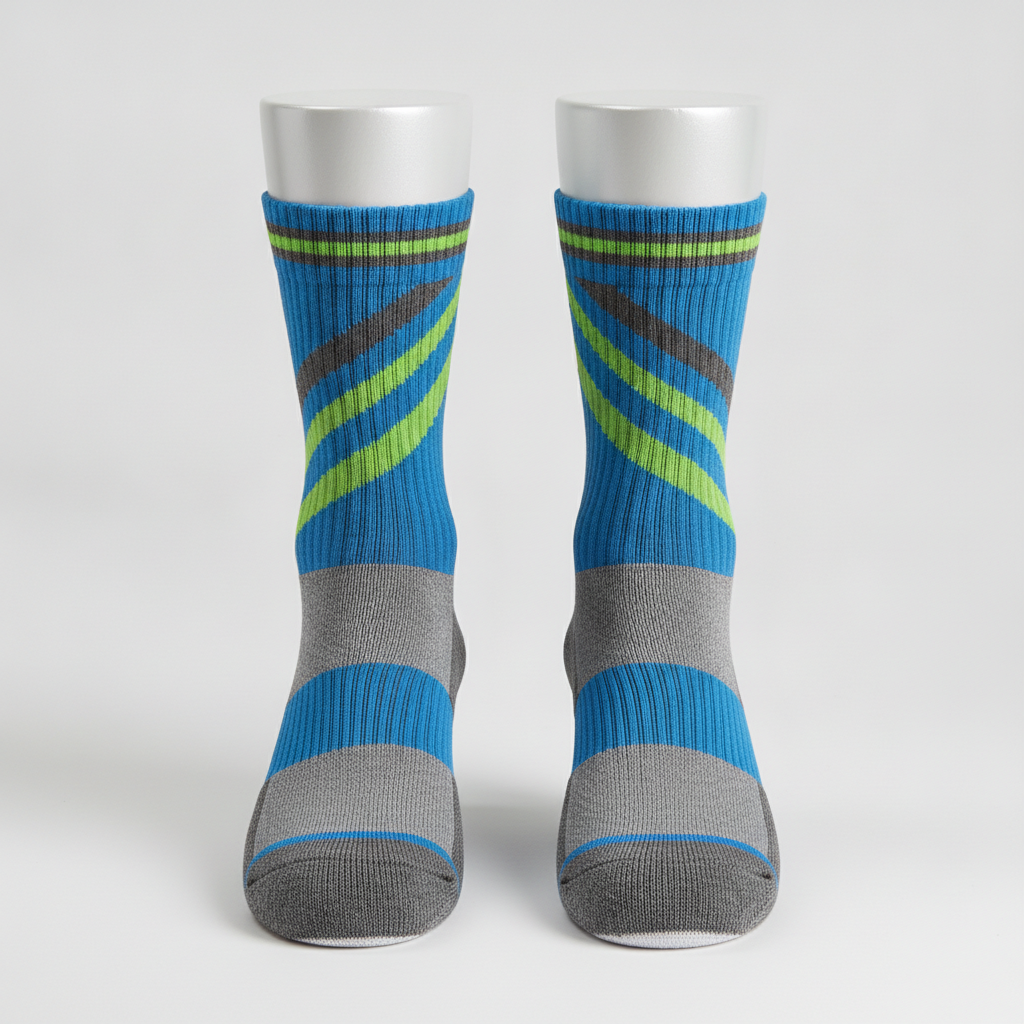
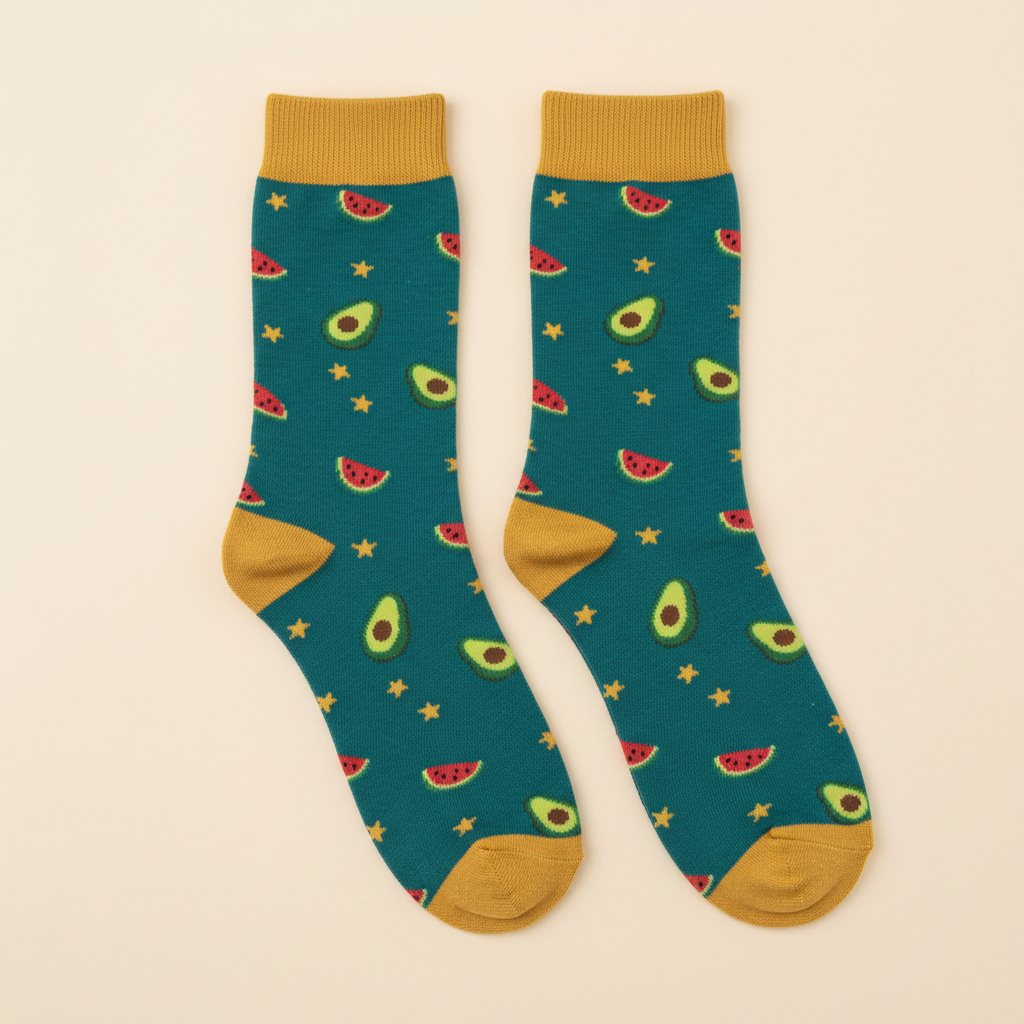
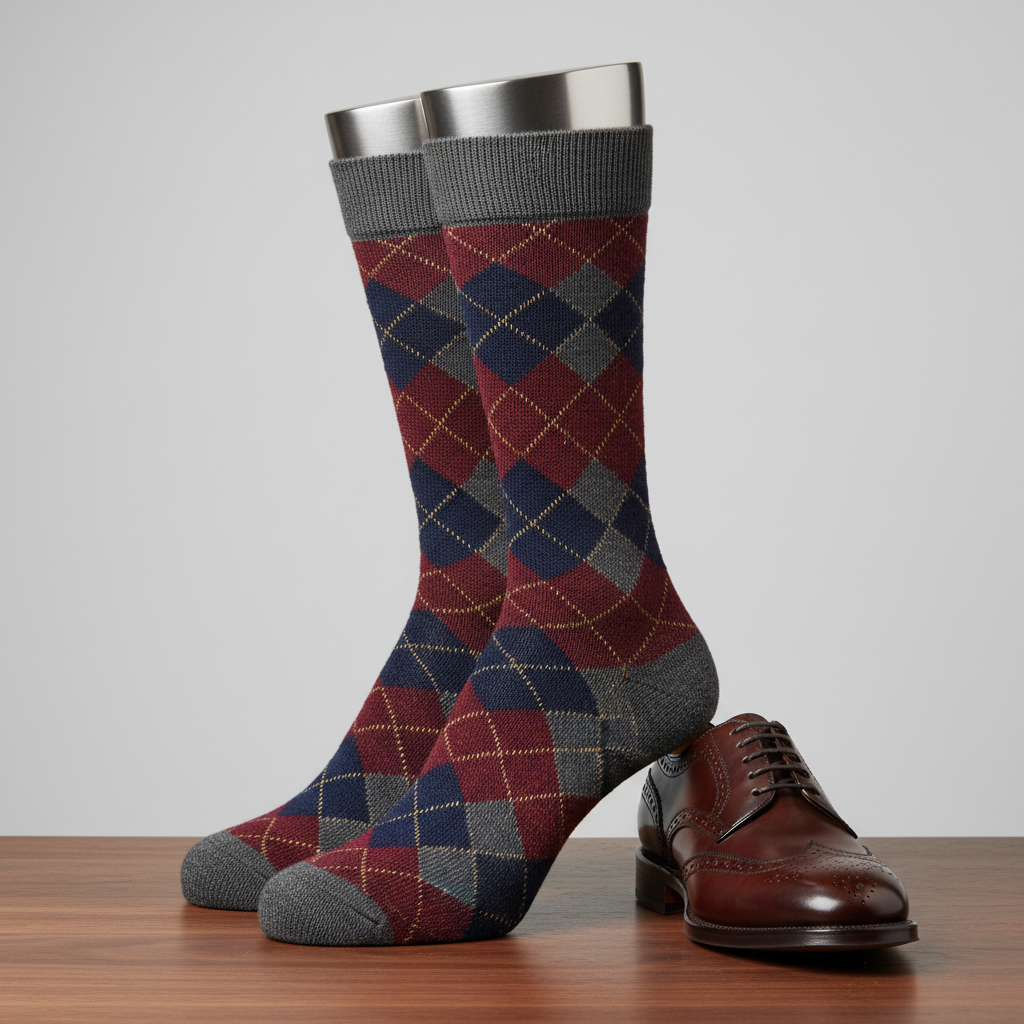
Athletic performance, novelty all-over print, argyle dress, cosy cable knit, team colours and kids pastels — the six formats that cover almost every sock anybody actually buys
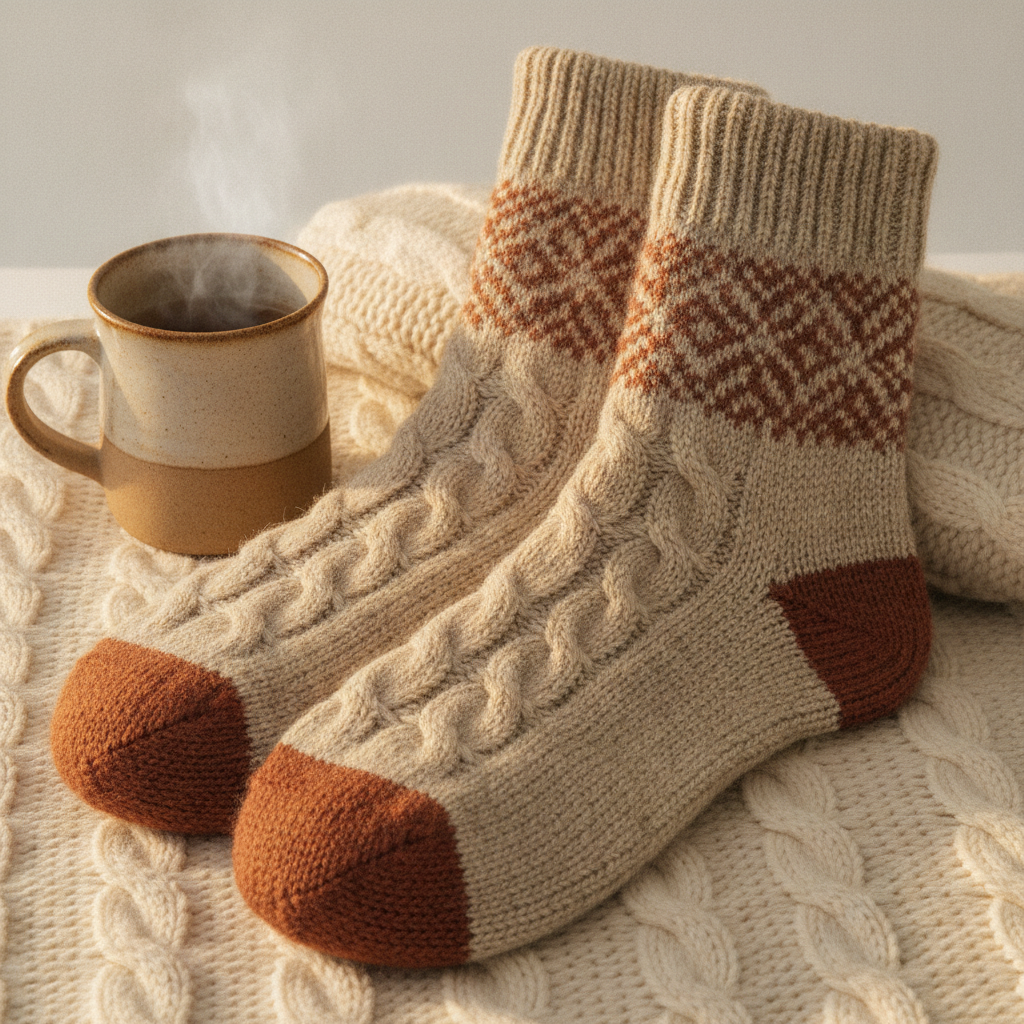
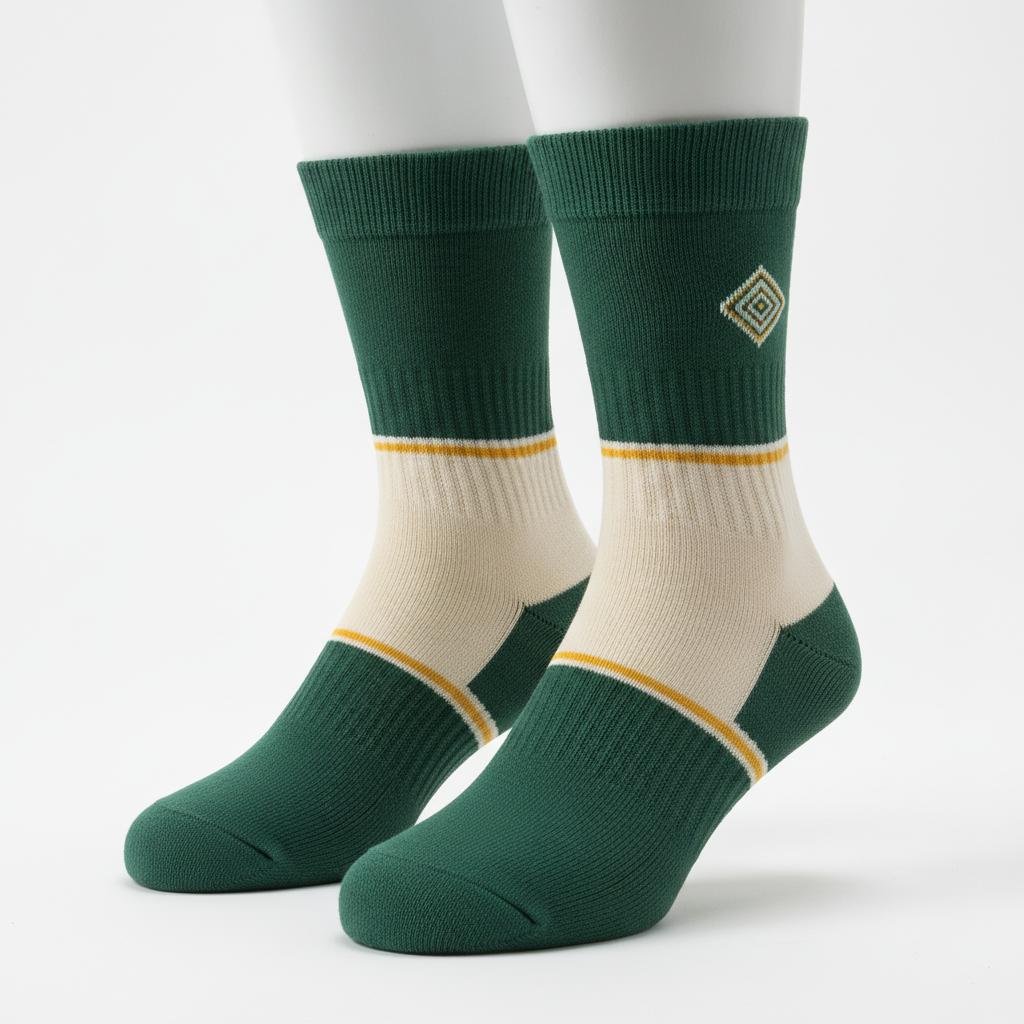
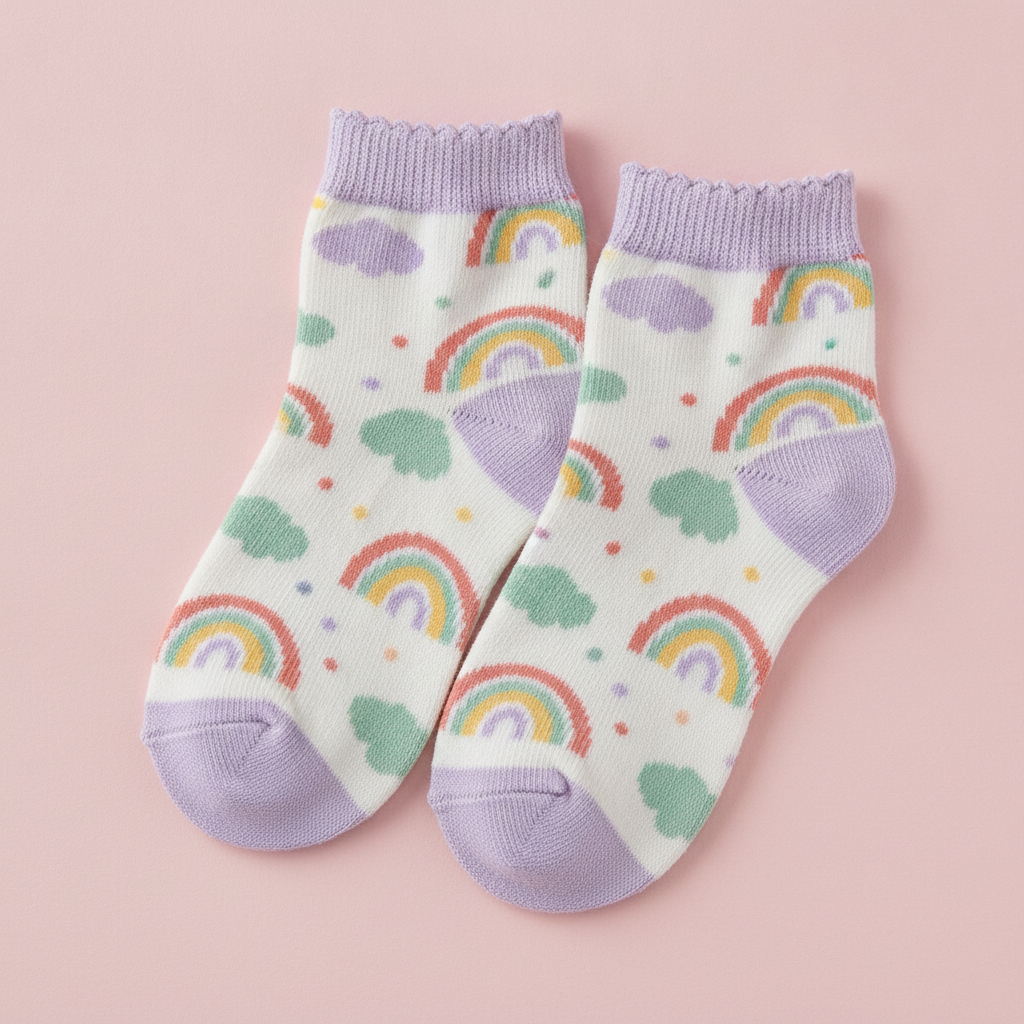
How the AI Sock Design Generator Works
Three steps from an idea to artwork a knitting mill or a print-on-demand supplier can work from
Pick the Process, Because It Decides the Artwork
Socks are made two completely different ways and they accept opposite designs. A knitted sock is built stitch by stitch on a circular machine, so the pattern is literally made of yarn: colours are limited to what the machine can feed on one round — commonly four, sometimes six — every diagonal is stepped by the stitch grid like pixel art, and gradients do not exist. That is why argyle, stripes, jacquard motifs and cable textures are the classic sock languages; they are what a knitting machine is good at. A sublimated sock is the opposite. A white polyester blank is printed with dye that turns to gas under heat, so it takes photographs, gradients, unlimited colours and edge-to-edge coverage, at the cost of only working on synthetic fabric and washing out slightly paler than the file. Choose the process first and you stop drawing watercolours for a machine that knits in four colours.
Describe the Motif, the Palette and the Wearer
Three things carry a sock design. Name one motif and its scale rather than a scene — a sock leg is roughly 20 by 20 centimetres of visible area once it is on a foot, and a repeating motif around two to four centimetres across is the sweet spot: big enough to read from standing height, small enough that the repeat reads as a pattern rather than a picture cut in half. Name four or five colours and stop, because on a knitted sock every extra colour is another yarn feed and another cost, and because the two colours people actually judge are the cuff and the leg. Then name the wearer and the occasion, since that decides more than aesthetics: dress socks want fine gauge and muted tones, sport socks want a cushioned sole and high contrast, wedding and team socks want exact colours matched to something else, and kids socks want thick shapes and a forgiving palette.
Generate, Then Take It to a Maker
Each design arrives in about twenty seconds at up to 4K, shown on a real product mockup so you can judge scale, contrast and how the motif behaves around the ankle. Use it two ways. As a sample, it is the mockup you put in front of a client, a team captain, a manufacturer or a customer poll before anyone commits to a minimum order. As a brief, it is what you hand to whoever makes it: a knitting mill wants a flat design mapped onto their sock template with the colour count and the gauge stated, and a print-on-demand supplier wants a flat file sized to their specific sock template with bleed. Ask for the flat artwork on a plain background rather than the photographed mockup when you need the working file, and expect to redraw the motif onto the real template — the mockup shows the idea, not the production file.
Why Use an AI Sock Design Generator
Six things that decide whether a sock design survives the stretch, the stitch grid, the shoe and the minimum order
A Shoe Hides Most of Your Design
Socks are the only garment designed to be mostly invisible. Once shoes are on, what a stranger sees is the cuff and the few centimetres of leg above the shoe line, plus whatever flashes when the wearer sits down and crosses their legs. That single fact reorders everything. The strongest colour and the clearest motif belong high on the leg where they will actually be seen, not on the instep where a trainer covers them. The heel and the toe are usually reinforced in a solid contrast yarn for durability, so any artwork crossing them gets amputated. And the cuff is the one zone every buyer looks at in a shop, on a shelf and in a listing thumbnail, which is why so many good sock designs are simply a strong cuff and a calm leg. Design from the shoe line up and you get a sock people notice.
A Knit Stitch Is Your Pixel
A knitted sock has a resolution, and it is much lower than a screen. Machines are rated by needle count — 96 or 108 needles for a chunky sock, 144 for a standard crew, 168 to 200 for fine dress socks — and each needle makes one stitch, so the leg is a grid of roughly 100 to 200 stitches around by a few hundred rows high. Everything you draw gets snapped to that grid. Curves become staircases, thin lines vanish or thicken to a full stitch, and small text turns into a smudge. This is why the classic sock motifs are all chunky and geometric: they were designed for the grid rather than fighting it. The practical rule is that no element should be smaller than about four stitches across, which on a standard crew sock means nothing finer than roughly half a centimetre. Sublimated socks escape this entirely — but only sublimated ones.
The Tube Stretches, and the Pattern With It
A sock is knitted narrower than the leg it goes on and then stretched into shape, which distorts every design in ways a flat mockup file never shows. The leg pulls widest around the calf, so a circular motif drawn as a circle arrives as a horizontal oval, and a pattern that looked evenly spaced flat opens up into visible gaps of background there. The ankle does the opposite and bunches. Experienced sock designers compensate by drawing motifs slightly tall so they relax into round, keeping repeats dense enough that stretch reveals more pattern rather than more empty ground, and putting any single hero motif on the outer ankle where distortion is mildest. Judging that is exactly what a mockup on a real foot form is for — the distortion is obvious there and invisible on a flat rectangle.
Minimum Orders Make the Mockup Valuable
Custom knitted socks are a minimum-order product. A mill will rarely run below about 50 pairs for a simple design and often wants 100 to 200 per colourway, plus a setup and sampling charge and a lead time measured in weeks, because a machine has to be programmed and threaded for your design specifically. That is a real amount of money committed to a design nobody has held yet. Print-on-demand sublimated socks remove the minimum but charge far more per pair, which changes the maths rather than removing it. Either way, the cheap step is deciding and the expensive step is making — so trying twelve directions on a mockup before choosing one, and showing that mockup to the team, the client or a customer poll, is worth many times what it costs.
Socks Come in Pairs, and in Zones
Two structural quirks catch first-time sock designers. The first is that a sock has named zones with different jobs — cuff, leg, ankle, instep, heel, sole and toe — and several are not free real estate. The heel and toe are reinforced, often in a different yarn, and the sole is frequently cushioned terry, so a design that runs continuously from cuff to toe usually cannot be made as drawn. The second is that socks are sold in pairs, and pairs raise questions a single mockup hides: a crest on the outer ankle needs mirroring so it faces outward on both feet, a design that reads correctly on the left may read backwards on the right, and deliberately mismatched pairs are a legitimate style choice but must be an explicit decision. Look at the pair, not the sock.
Free to Start, $9.98 to Go Further
You can generate sock designs free without a credit card, which is enough to find out whether a motif survives the stretch and the stitch grid before you pay a mill or a sampling fee. Paid plans start at $9.98 for real work: testing one design across six colourways for a team or a client, building a gift-box collection that shares a palette across several pairs, or the repeated passes it takes to get the scale of a repeat right for a crew sock. Output reaches 4K without a watermark and is cleared for commercial use, which is what matters once designs go to a manufacturer or onto stock you have paid for. Against a sampling round costing a few hundred and taking weeks, seeing a dozen directions on a real mockup first usually changes which sock gets made.
Frequently Asked Questions
Common questions about using an AI sock design generator
Design the Pair in Twenty Seconds
Pick a style, describe your motif and colours, and see it on a real product mockup at up to 4K — athletic performance, novelty print, argyle dress, cosy cable knit, team colours or kids pastels. Powered by Nano Banana Pro. Free to start, plans from $9.98.
Twenty Centimetres of Knitting: the AI Sock Design Generator
Designing socks used to start with the most expensive step. You briefed a designer or sent a rough sketch to a mill, paid a setup and sampling charge, waited weeks for a knit-down, and only when it arrived did you find out that the motif was too fine for the gauge, or that the pattern opened into gaps once the leg stretched over a calf. An AI sock design generator inverts that order. You describe the process, the motif and the palette, and the design arrives on a photographed mockup in about twenty seconds, which makes deciding cheap and leaves only the making expensive. On a product with a minimum order of 50 to 200 pairs, trying a dozen directions before choosing one is worth far more than it costs.
The six presets exist because the process dictates the artwork. A knitted sock is built stitch by stitch on a circular machine, so it works in a limited number of yarn colours per round, steps every diagonal onto the stitch grid and cannot produce a gradient at all — which is exactly why argyle, stripes, jacquard motifs and cable textures became the classic sock languages. Fine gauge dress machines hold more detail than a chunky 96-needle cabin sock. A sublimated polyester sock behaves like paper instead and takes photographs, gradients and unlimited colours edge to edge, which is what most print-on-demand socks actually are. Team socks are a colour-matching job more than a drawing one, and kids socks want thick shapes and nothing fine anywhere.
Two habits improve nearly every sock design. Design from the shoe line up, because a shoe hides the instep and toe and the cuff is what a buyer judges in a listing thumbnail. And commit to a scale — a repeating motif around two to four centimetres across reads from standing height and survives the stretch, while a delicate little detail simply disappears into the knit. Process, motif, palette: three decisions, and the mill does the rest.
What the AI Sock Design Generator Will Not Do
It will not knit a sock, and it will not produce a factory-ready file. What you get is artwork shown on a product mockup, which is what you need for judging scale, stretch and contrast and for a listing photo while you test demand — but a mill wants the design mapped onto their template with the gauge and colour count stated and the heel, toe and cuff zones marked, and a print-on-demand supplier wants a flat file sized to their own sock template with bleed. Preparing those is a separate step. Generate the design you like, run it again asking for the flat artwork on a plain background, then clean it up with the AI background remover and enlarge it with the 4K image upscaler so the motif survives being rebuilt at production size.
It will not guarantee the finished pair either, because yarn is not pixels. Knitted colour lands slightly deeper and warmer than a backlit screen suggests, the stitch grid steps every curve, a sublimated sock washes out a shade paler than the file, and the whole design changes shape the moment a leg goes into it — so always approve a physical sample before a production run. For neighbouring jobs there are better fits: the AI pattern generator is the place to work on a seamless repeat itself, the AI t-shirt design generator and the AI hat design generator carry the same palette across the rest of an apparel drop, the AI sneaker design generator covers what the socks disappear into, the AI tote bag design generator extends a gift range, the AI logo generator builds the crest before you knit it, and the AI mockup generator places a finished design into styled shop photography. For any lettering, text in images explains what type the model can reliably set.
Within those limits the work is yours to use. Output reaches 4K with no watermark and is cleared for commercial use, which covers Etsy and Shopify listings, print-on-demand shops, gift ranges, club and corporate merchandise, wedding parties and client jobs alike. Keep other people's property out of it — licensed characters, club crests and the style of a specific named living artist — because socks attract exactly those requests. Check the AI policy of whichever marketplace you sell through, and know that in the United States purely AI-generated images are not registrable for copyright, so selling the socks is fine but stopping an imitator may not be. It is free to start with no credit card and plans begin at $9.98. Pick a process, name your motif, and see the pair before you commit to the minimum order.
Try the AI sock design generator free today. Pick one of six sock design styles, describe your motif and colours, and see the pair on a real product mockup at up to 4K. No credit card required to start. Paid plans from $9.98.