
AI Zen Garden Design Generator
See the raked gravel before you order the stone. This AI zen garden design generator turns a description into a finished garden photographed where it stands, in about thirty seconds — a raked gravel and rock garden, a moss and stepping stone courtyard, a bamboo fence and water basin, a modern minimalist bed, a garden lit at dusk and a small corner feature. All six results are below exactly as they came back, including the stone basin that turned up in four frames nobody invited it to.
Design a Zen Garden FreeTry the AI Zen Garden Design Generator — Free
Pick a build, then use the box for what is specific to your garden — gravel colour and rake pattern, how many rock groups, moss or lawn or paving around it, what the edging is, what closes the boundary and whether you want a basin and lantern at all. Each preset already carries the rock bedding written as geology, the connections written as connections, the wear pinned to named places, the low camera and the no-lettering list, all tightened after reviewing what came back the first time.
AI Zen Garden Design Generator
Choose a build, name your gravel, rocks, planting and boundary, and get a photorealistic zen garden laid where it stands. Up to 4K.
Six Builds From the AI Zen Garden Design Generator, Shown Exactly As They Came Back
Nothing here was regenerated or retouched. Each caption says what the prompt asked for and what actually arrived, because the gap between those two is the part nobody publishes.
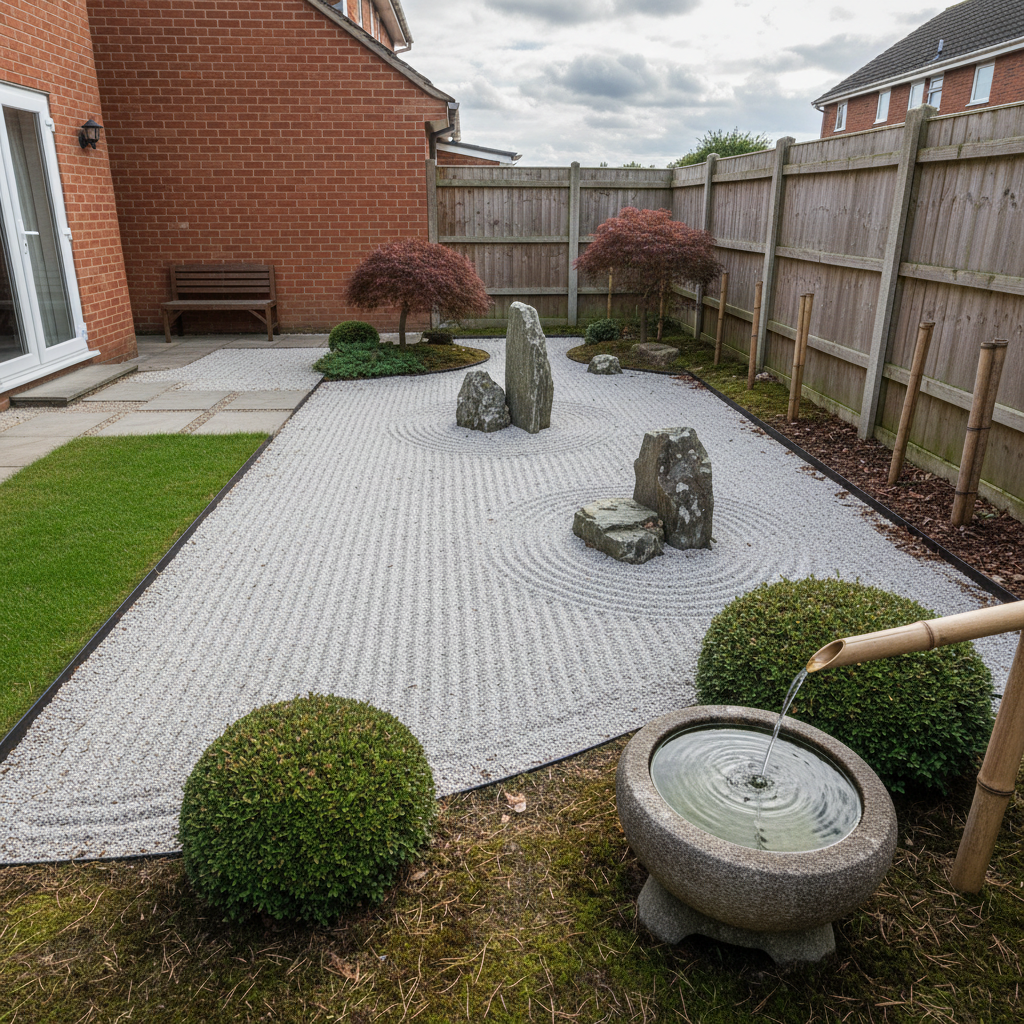
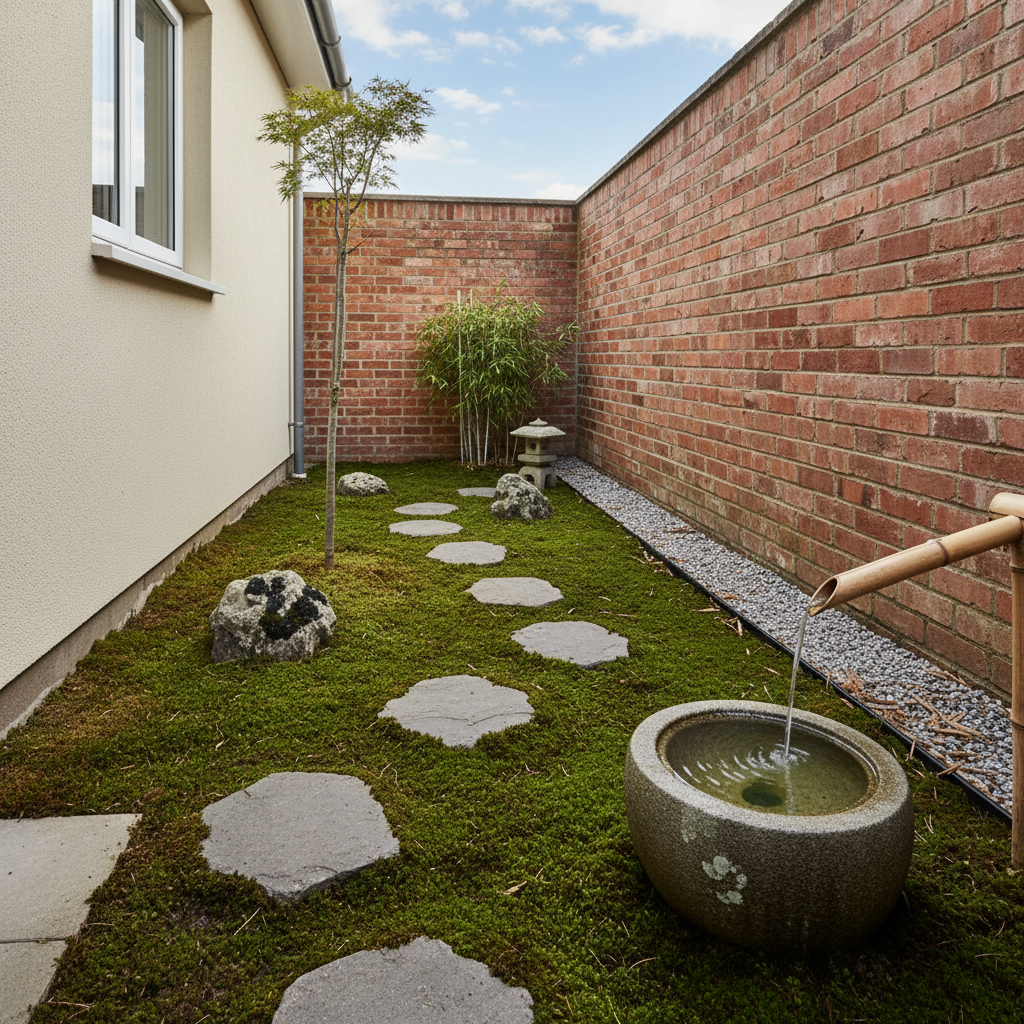
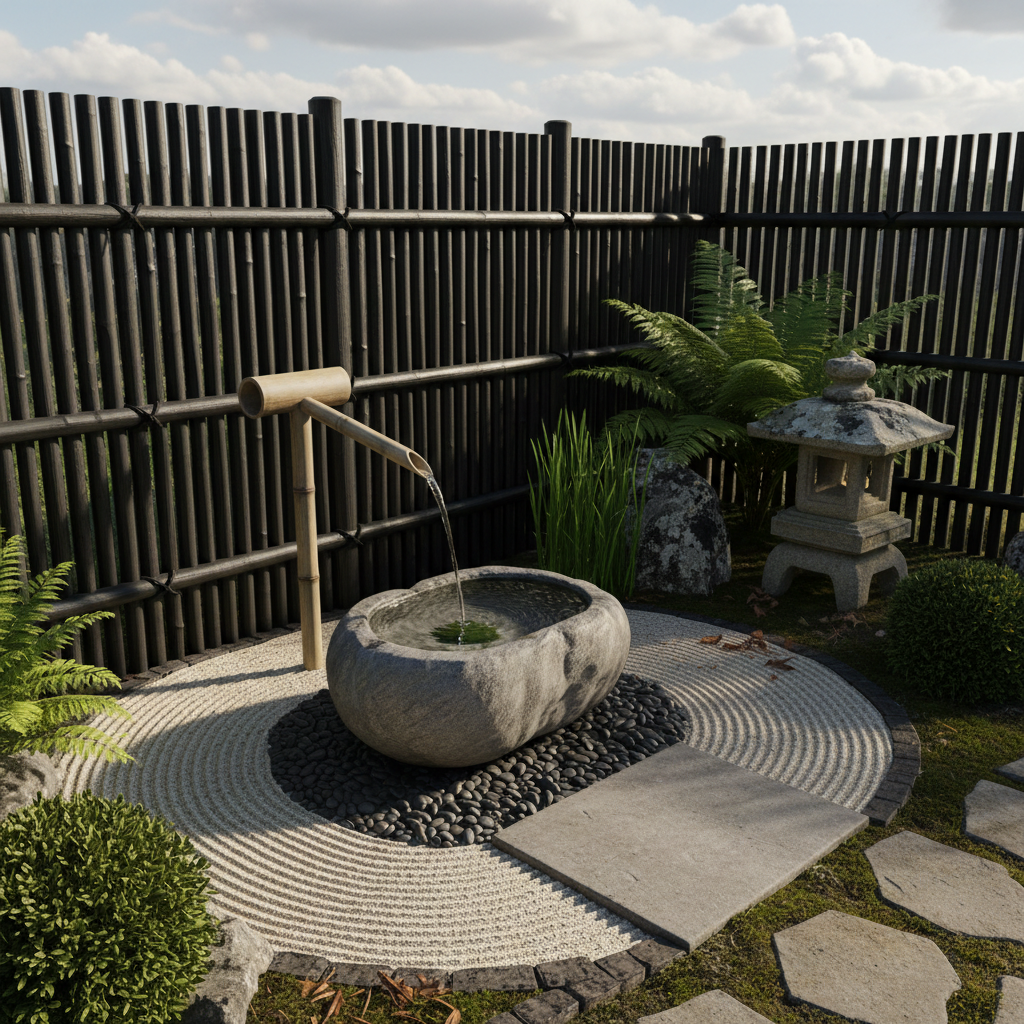
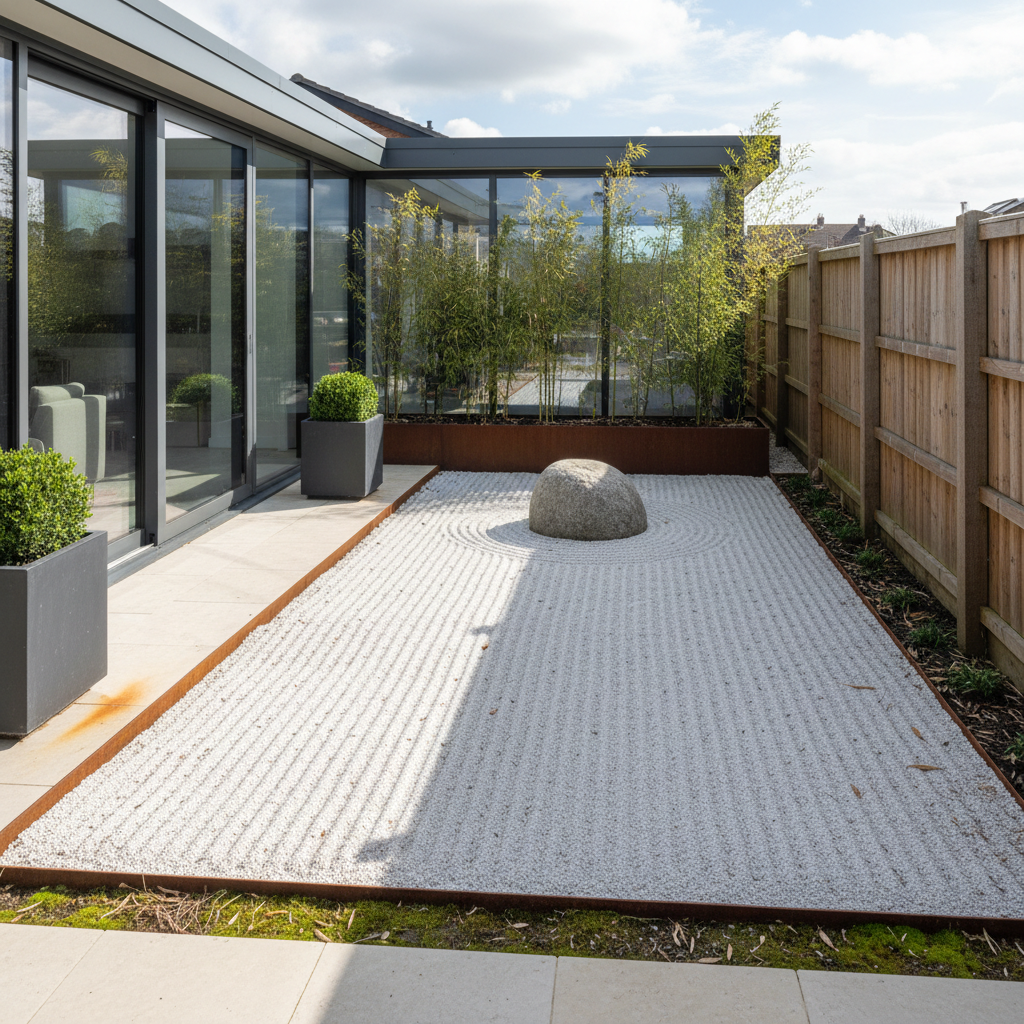
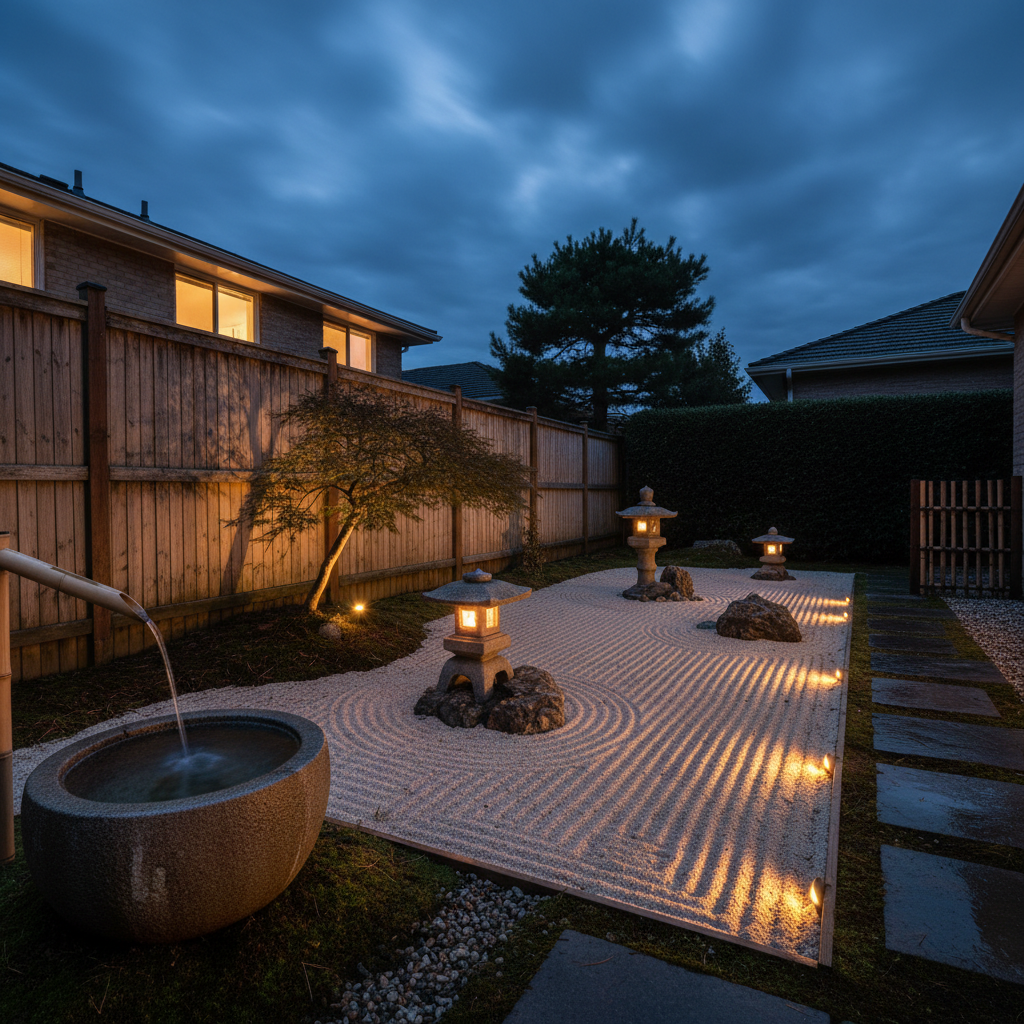
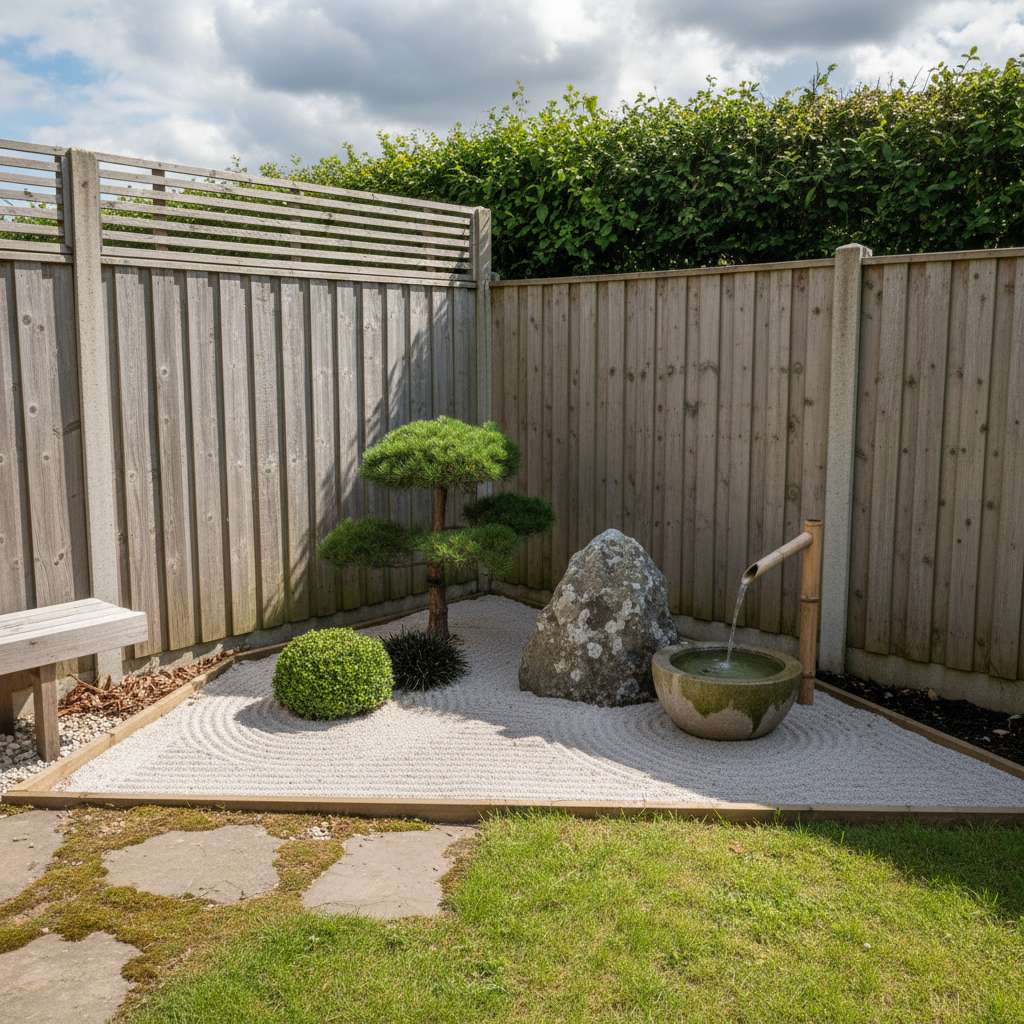
What the AI Zen Garden Design Generator Gets Right and Wrong
A zen garden is a simple layout with four genuinely hard ideas in it — how a rock meets the ground, how high the camera stands, which props arrive whether you asked or not, and whether anything is allowed to look its age — and almost every result above turns on one of those.
Bed the rocks, do not place them
Say the lower part of each rock is buried, that it rises out of the gravel with no visible flat base and no shadow slot under it, and that the rake follows its perimeter round in rings. Written that way every rock in six results reads as an outcrop. Ask for rocks on gravel and you get stones sitting on a tray.
The camera comes down only when the space forbids it
Four of six results are above head height, because a raked pattern is only legible from above and every photograph of one is taken that way. The two that came down were a narrow side passage and a corner tight against a fence — geometry did what the words could not. Pick the build if you want the viewpoint.
Ban the recess, not the writing in it
The stone lantern came back plain, lichened and completely uncarved because the prompt deleted the carved panel, the cut cartouche and the plaque recess as objects rather than banning the characters that usually sit in them. This is the fix for every badge, plate and inscription this site has lost to before.
A zen garden ships with a default kit
A stone basin and bamboo spout appeared in four of six frames when one preset asked for them, and lanterns did much the same. The neighbours of a subject arrive unless they are named and deleted, so the presets now say no basin, no spout, no deer-scarer, no fountain and no lantern on the builds that should have none.
Wear survives “minimal” if it has an address
Rust bled off the corten edging and stained the paving, moss took the paving joints, grit washed out of the bed — on the frame described as modern and minimalist, where ageing is usually cancelled silently. It survived because every piece of it was pinned to a named place rather than asked for in general.
Counted things still drift, sizes can be pinned
Seven stepping stones became eight, four path lights became six, a pair of rocks became one. But the small corner genuinely came back small, because the brief banned the bigger version by name and wrapped the bed in lawn. Ban the scale you do not want instead of quoting measurements.
How It Works
Pick the build closest to your garden
A raked gravel and rock garden, a moss and stepping stone courtyard, a bamboo fence and water basin corner, a modern minimalist bed beside a glass extension, a garden lit at dusk or a small corner feature in a lawn. Each preset already carries the rock bedding, the fixings, the wear, the camera and the no-lettering list, so you start from a brief rather than a blank box.
Add what is specific to your layout
Gravel colour and grade, straight furrows or rings, how many rock groups and how tall the leading stone is against something you already own, moss or lawn or paving at the edges, what the edging is made of — plus the fence, wall, hedge or house you would actually see behind it, and whether you want a basin and lantern at all.
Generate, zoom in and send it on
About thirty seconds later you have a photograph of it laid and kept. Crop in before you judge it — a carved character on a lantern, a rock with a flat base and a rake pattern that stops short are all things you only see at full size — then download up to 4K and send it to a landscaper or a stone yard.
Built for the Way People Actually Plan a Zen Garden
Rocks drawn as outcrops
Buried at the base, no flat foot, no shadow slot, with the gravel banked against the whole perimeter and raked into rings that follow it. It is the difference between a rock garden and a delivery of boulders, and it held in every one of the six results.
Stepping stones bedded in
Set down into the moss or the grass with their top faces barely proud of the surface and the greenery lapping over every edge. Written as a connection they arrive bedded; written as objects they end up stacked on top like slabs on a shelf.
Water that meets its stone
The basin fills to one single level all the way round the inside of the hollow, clear enough to show the cut stone floor beneath, with a green algae bloom and a chalky line at its usual height and a thin unbroken stream dimpling the surface where it lands.
Wear pinned to named places
Furrows trodden flat where people step in, leaves banked along the downwind edge, gravel pushed out over the moss, lichen on the shaded face of every rock, timber silvered on the sunny side and green at the foot. Named that way it survives even on a minimalist bed.
Real contained edges
Steel, corten or timber edging with gravel banked against the inner face and lawn, moss or paving hard against the outer one, so the bed reads as laid and retained rather than as chippings tipped onto a lawn and spread about.
Nothing carved, nothing branded, nobody in it
Lantern and basin inscriptions, nameplates, nursery labels, printed gravel sacks, house numbers and meter box lettering are all deleted as objects, and so is every head, arm, hand and foot. All six came back as empty private gardens with plain uncarved stone.
AI Zen Garden Design Generator FAQ
Related Design Tools
AI Pond Design Generator
The wet version of the same decision. Worth running side by side if the basin is really a stand-in for a koi pond, or if the gravel garden is what you do instead of digging.
AI Patio Design Generator
The surface the gravel has to meet. Slab sizes, laying patterns, edges and steps, for when the paving is the part you are actually designing and the zen bed is what it runs into.
AI Fence Design Generator
What closes the background of every frame on this page. Bamboo screens, close-boarded panels, slatted timber and hedging, including the black bamboo most zen gardens end up needing.
See the Raked Gravel Before You Order the Stone
Six builds — a raked gravel and rock garden, a moss and stepping stone courtyard, a bamboo fence and water basin, a modern minimalist bed, a garden lit at dusk and a small corner feature — each photographed where it stands in about thirty seconds, in your garden and in your light. Up to 4K. Free to start, from $2.99.
Design a Zen Garden FreeAn AI Zen Garden Design Generator for Homeowners, Landscapers and Anyone Staring at a Difficult Corner
A zen garden is the easiest garden to describe and the hardest to picture, because almost everything that makes one work is a relationship rather than an object. The stone yard sells you rock by the tonne. The landscaper quotes membrane, sub-base and chippings by the square metre. Neither of them can tell you whether three groups of rock will look composed or scattered in your particular rectangle, how much moss you can carry on a dry sunny side, or whether the gravel should run to a lawn edge or to paving. That is the gap an AI zen garden design generator fills: describe the rake, the rock, the planting and the boundary, and about thirty seconds later you have a photograph of it laid and kept for a few years. Every preset on this page is written that way, and the six results above are shown exactly as they came back, failures included.
The six builds cover the shortlist a real garden actually has. A full raked gravel and rock garden, which is what most people mean by the phrase. A moss and stepping stone courtyard, which is what a narrow side passage is genuinely good for and almost nothing else is. A bamboo fence with a stone basin and a lantern, which is the corner people build when they want the sound of water more than the space. A modern minimalist bed in corten and near-white chippings, which is what a zen garden becomes when it sits against a glass extension. A garden lit at dusk, because the lanterns are most of the reason people build one. And a small corner feature in a lawn, because a large share of these are one triangle of gravel where two fences meet rather than a whole garden.
The pattern in what came back is worth more than a feature list. Anything written as a connection arrived as one: rocks bedded into the gravel as outcrops with no flat base and the rake following their perimeter, in all six results; stepping stones set down into moss and lawn with the greenery lapping over their edges; edging strips holding gravel against grass with a real contained line; water meeting the inside of a basin at one level with a stream that actually lands in it. The ageing held too, pinned to named places — furrows trodden flat at the entry point, leaves banked along the fence, lichen on the shaded face of every rock, rust bleeding off corten onto pale paving — and it held on the frame described as modern and minimalist, which is exactly where wear instructions usually get deleted without a word. Nobody appeared in any frame, no lettering appeared anywhere, and the stone lantern came back genuinely uncarved because the inscription was banned as a recess rather than as writing.
What failed is narrow, repeatable and worth knowing before you start. The camera is the big one: four of six results sit above head height, because a raked gravel pattern is only fully legible from above and every photograph ever taken of one is composed that way. Naming eye level does nothing; the two frames that came down did so because a narrow passage and a tight corner physically blocked the high view, so choose the build if you want the viewpoint. The default kit is the second: a stone basin and bamboo spout walked into four of six frames when only one preset asked for them, which means the props of a subject have to be deleted by name like any other unwanted neighbour. Counted runs still drift — seven stepping stones became eight, four path lights became six, a pair of rocks became one — though stated scale finally landed once the bigger version was banned by name and the bed was hemmed in with lawn. Inside those limits an AI zen garden design generator is a genuinely good half hour before you order a ton of granite: the layout argument gets settled, the household agrees on something it can point at, and the landscaper gets a photograph instead of a paragraph.