
AI Pond Design Generator
See the water in before you dig the hole. This AI pond design generator turns a description into a finished pond photographed where it sits, in about thirty seconds — a stone-edged koi pond, a wildlife pond with a gravel beach, a formal reflecting pool, a two-step rock waterfall, a raised patio pond and a lit pond at dusk. All six results are below exactly as they came back, including the spouts that refused to stay in the wall.
Design a Pond FreeTry the AI Pond Design Generator — Free
Pick a build, then use the box for what is specific to your garden — the shape you have pegged out on the lawn, the stone your supplier stocks, whether there are fish, what grows in the margins, the lawn, deck or paving that meets the water, and the fence, hedge or house behind it. Each preset already carries the edge construction, the waterline written as a real connection, the low camera position and the no-lettering list, all tightened after reviewing what came back the first time.
AI Pond Design Generator
Choose a build, name your shape, edging, planting and the surface that meets the water, and get a photorealistic garden pond with no liner in sight. Up to 4K.
Six Builds From the AI Pond Design Generator, Shown Exactly As They Came Back
Nothing here was regenerated or retouched. Each caption says what the prompt asked for and what actually arrived, because the gap between those two is the part nobody publishes.
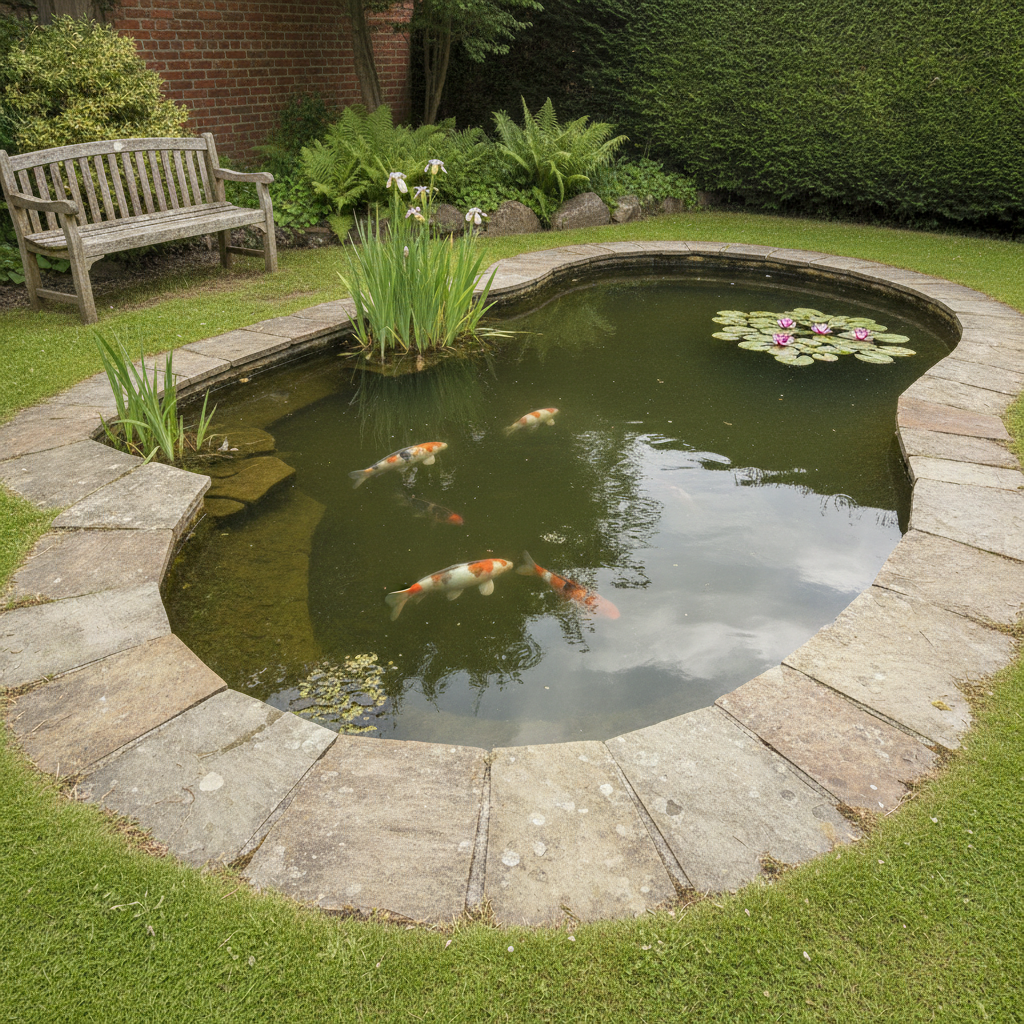
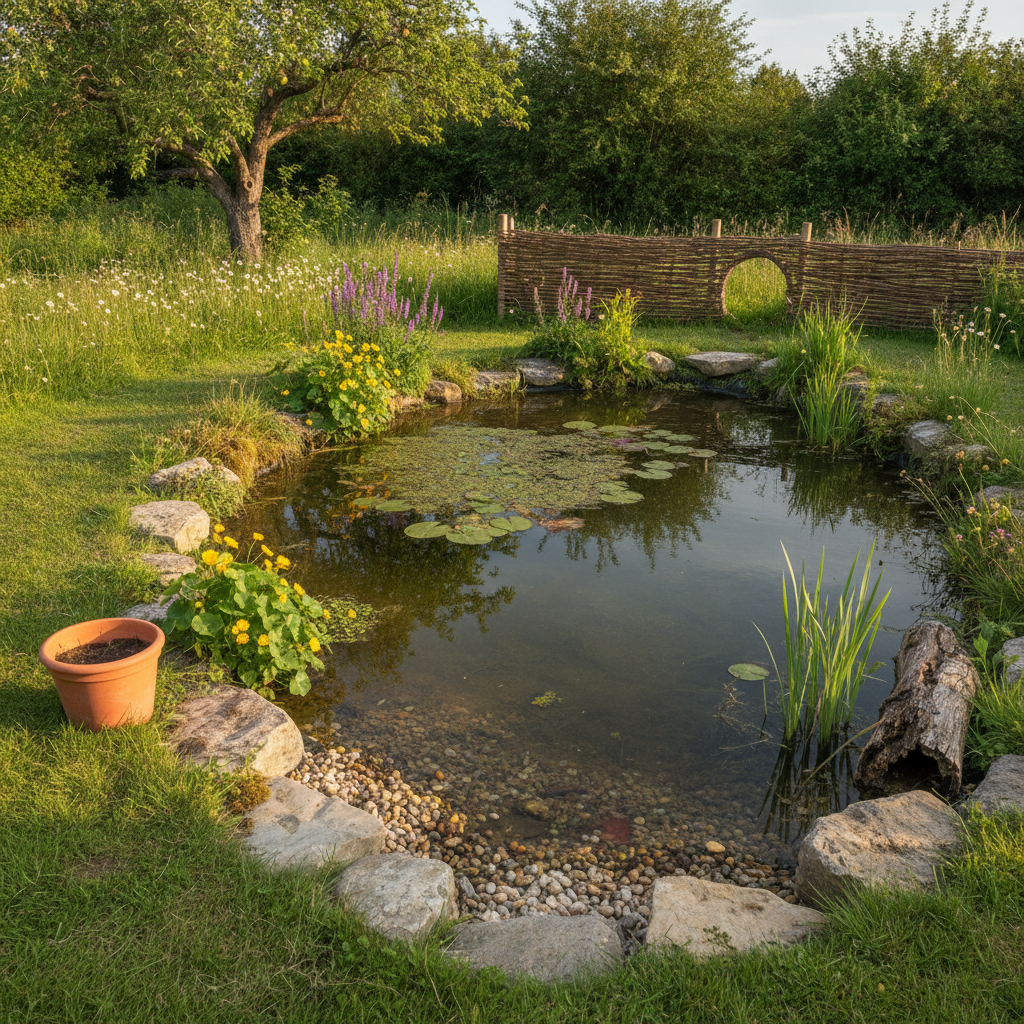
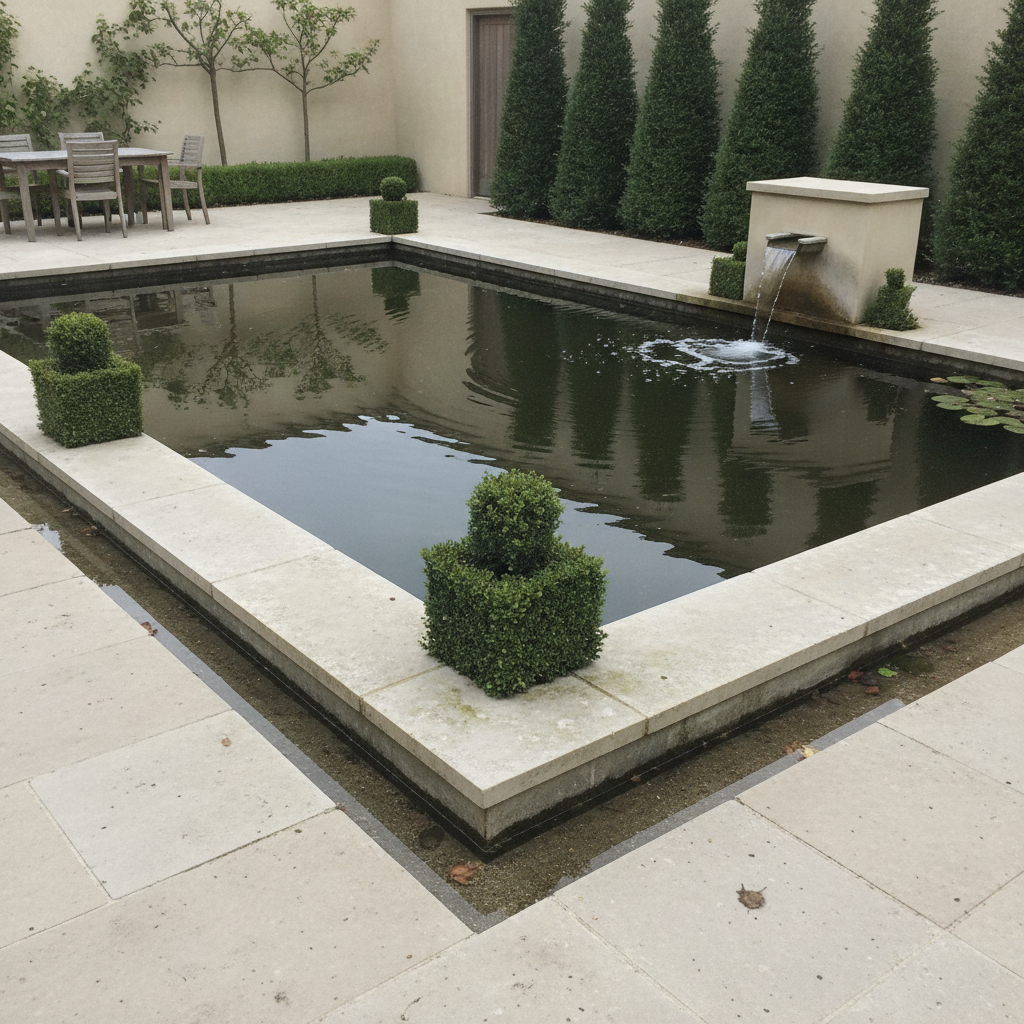
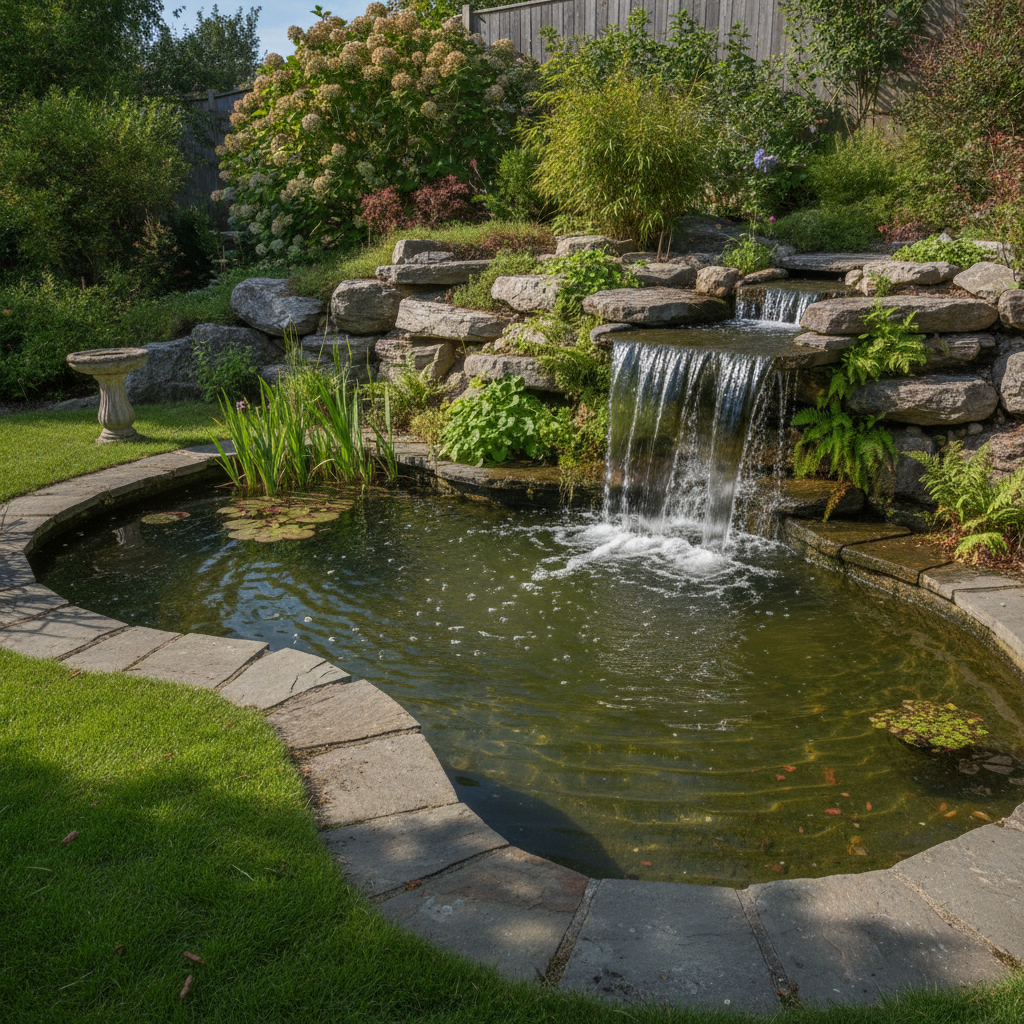
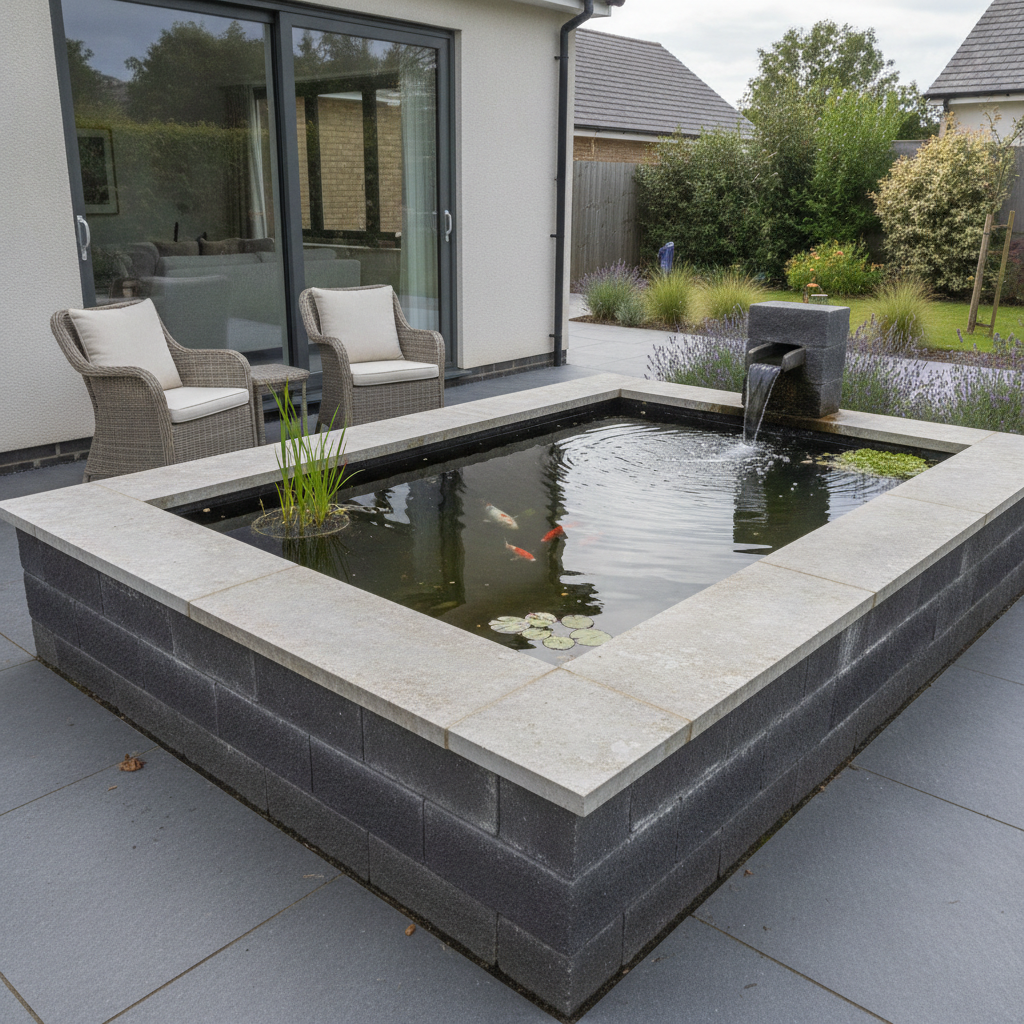
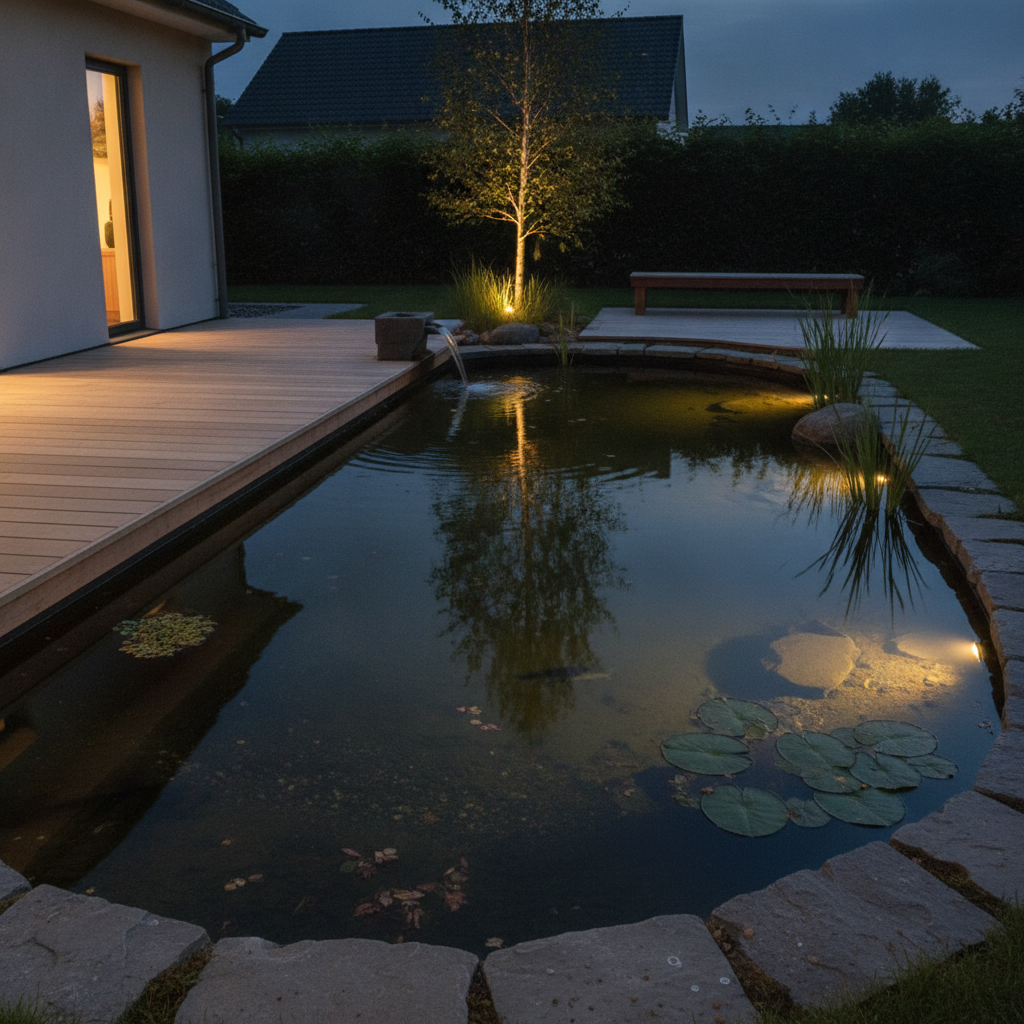
What the AI Pond Design Generator Gets Right and Wrong
A pond is a simple object with two genuinely hard ideas in it — the line where water meets stone, and the height the camera is standing at — and almost every failure in the six results above comes back to one of those, to size, or to a fitting that would not stay attached to its wall.
Write the waterline as a connection
Say the water touches the inner face of every edge stone all the way round, that the stones overhang it slightly with a shadow line under the lip, and that no liner, fold or bare soil rim is visible anywhere. Without that sentence you get a black plastic rim, because that is what most pond photographs contain. It is the one instruction that turns a hole with water in it into a pond.
Fight the camera upward drift
Water gets photographed from above, so the viewpoint rises no matter what height you ask for. Do not name a height — name what a low camera would show: the far bank and the garden filling the upper frame, sky above them, the water at a glancing angle so it reads as a mirror. Then ban the alternative out loud: no drone view, no upstairs window.
Small things arrive large
Size drifts upward on every subject and it drifts hardest on small details. A hedgehog-sized gap in a woven hurdle came back as an arch a person could walk through. For anything genuinely small, measure it against a brick or a hand span and say what it is too small for, rather than giving a dimension nobody can picture.
Fittings will not stay in their wall
A spout asked for as a cut in a wall arrived twice as a freestanding pier standing in front of that wall. Anything built into something else has to be written as geometry: flush with the face, part of that wall, not a separate block, with the water running down the face itself. The same goes for planters — say the base stands flat on the paving.
Pin the wear to named places
A general request for weathering is silently overruled on smooth modern stone. Attach it instead: a stain band on the stones just above the water, algae film just below it, moss in the shaded joints, silt and sunken leaves in the shallows, duckweed drifted into one corner. Pinned that way it survived even on pale limestone in flat grey light.
Describe moving water as an impact
Asking for a waterfall gets you a generic curtain of white. Say the water leaves the flat lip of a named stone as an unbroken sheet touching it across its width, and lands making white water and rings of ripples at the exact point of impact while the far end of the pond stays calm. Broken and still water in one frame is what sells the photograph.
How It Works
Pick the build closest to your garden
A stone-edged koi pond, a wildlife pond with a gravel beach, a formal reflecting pool, a rock waterfall, a raised patio pond or a lit pond at dusk. Each preset already carries the edge construction, the waterline, the wear and the camera, so you start from a brief rather than a blank box.
Add what is specific to your pond
The shape pegged out on your lawn, the coping your supplier stocks, whether there are fish, what is rooted in the margins, whether water falls into it, and the lawn, deck or paving that runs up to the edge — plus the fence, hedge or house behind it.
Generate, zoom in and send it on
About thirty seconds later you have a photograph of it dug, filled and planted. Crop in before you judge it, then download up to 4K and send it to a landscaper, or hold it up against the patch of lawn it is meant to replace.
Built for the Way People Actually Plan a Garden Pond
Three edges, drawn differently
Flat stone coping with an overhang, a pea gravel beach that slopes under the water with no edge line at all, and square-cut limestone with a shadow line running the perimeter. The edge is where formal, natural and wildlife ponds actually differ, so the presets keep them genuinely apart.
Water that meets the stone
The surface written as one level plane touching the inner face of every edge stone, the stones bedded into the ground and the lawn running unbroken up to them. It is why none of the six results shows a black liner rim, which is the default failure on this subject.
Planting rooted in the water
Irises, rushes, marsh marigold and loosestrife with their stems passing through the surface rather than floating beside it, and lily pads lying flat on the water with their stems going down into it — the difference between a planted pond and plants near a puddle.
Falls, spouts and still water
Unbroken sheets leaving a named lip, white water and ripple rings at the point of impact, and calm reflective water at the far end of the same pond. Moving water described as an event rather than a feature is what makes the frame read as a photograph.
Fish below the surface
Koi and small orange and white fish drawn under the water with their shapes softened and broken by it and by the sky lying across the surface, instead of sitting on top of the water like stickers, which is where they land without the instruction.
Nothing branded, anywhere
Ponds come surrounded by stamped slabs, nursery labels, pump badges, printed fish-food tubs and pebble bags. Every one of those is enumerated and banned by name, which is why all six frames came back without a single legible character in them.
AI Pond Design Generator FAQ
Related Design Tools
AI Backyard Design
For everything around the water. Lawn, planting, seating and lighting, when the question is what the whole garden becomes rather than how the pond is edged.
AI Patio Design Generator
The surface that usually meets the water on the near side. Slabs, pavers, edges and layouts, for when the terrace is the part you are actually designing.
AI Landscape Generator
For the wider scene the pond sits in. Slopes, borders, trees and sight lines, when you are deciding where the water goes before you decide what it looks like.
See the Water In Before You Dig the Hole
Six builds — a stone-edged koi pond, a wildlife pond with a gravel beach, a formal reflecting pool, a two-step rock waterfall, a raised patio pond and a lit pond at dusk — each photographed where it sits in about thirty seconds, in your garden and in your light. Up to 4K. Free to start, from $2.99.
Design a Pond FreeAn AI Pond Design Generator for Homeowners, Wildlife Gardeners and Anyone Pricing a Water Feature
A pond is the one garden project you cannot undo cheaply. Once the hole is dug, the liner is in and the stone is bedded, changing your mind about a formal rectangle versus a soft natural shape means starting again. The supplier sells it as a liner size and a pump flow rate. The forums sell it as a cross-section with shelves and underlay. None of that tells you what buff sandstone coping looks like curving round water with koi under it and the lawn running up to the edge, which is the only version of the pond anyone in the house has an opinion about. That is the gap an AI pond design generator fills: describe the shape, the edge, the planting and the surface that meets the water, and about thirty seconds later you have a photograph of it dug, filled and weathered. Every preset on this page is written that way, and the six results above are shown exactly as they came back, failures included.
The six builds cover the shortlist a real garden actually has. A stone-edged koi pond, which is what most people picture and what most contractors quote first. A wildlife pond with a gravel beach, which is the cheapest to build and the one that actually brings frogs, newts and hedgehogs in. A formal reflecting pool, which is less about water than about the reflection of whatever stands behind it. A rock waterfall and stream, which is how you get sound as well as surface. A raised patio pond, which is the answer for a small courtyard and the safest option where there are young children. And a lit pond at dusk, because the hours you actually sit out beside water are the ones after the sun has gone.
The pattern in what came back is worth more than a feature list. The edge is the solved half: water touching the inner face of every stone, coping overhanging with a real shadow line under the lip, stones bedded into the ground with lawn and paving running unbroken up to them, a gravel beach sloping under the surface with no edge line at all, and not one visible liner in six frames on a subject where black plastic is the default outcome. Planting is solved too, and sometimes better than asked: marginals rooted with their stems passing through the surface, lily pads flat on the water with stems going down, fish softened and broken by the water rather than pasted on it. So is the age. A stain band above the waterline, algae film below it, moss in the joints, silt and sunken leaves in the shallows and duckweed drifted into one corner all survived — including on pale limestone in flat grey light, where minimal modern surfaces normally delete every trace of wear. And the no-lettering list held on all six, which is rare.
What failed is narrow, repeatable and worth knowing before you start. The camera rises: water is photographed from above so often that the viewpoint drifts up toward a drone shot unless you describe what a low camera would see rather than naming a height. Small things arrive large, the way they always do — a hedgehog gap became an archway. Fittings refuse to stay in their walls: a spout asked for as a cut in a wall arrived twice as a freestanding pier, so anything built into something else has to be written as geometry rather than as a relationship. Objects wander in unasked, including a blue bin-shaped thing standing in a lavender border that only appears when you zoom. And the flip side of that last point is the most useful habit this page can give you: crop into every frame at full resolution before you call a defect, because the stamped lettering scattered across the stones in the dusk image turns out, at 100%, to be lichen. Inside those limits an AI pond design generator is a genuinely good hour to spend before you spend on an excavator: the shape gets settled, the household agrees on something it can point at, and the landscaper gets a photograph instead of an argument.