
AI Swing Set Design Generator
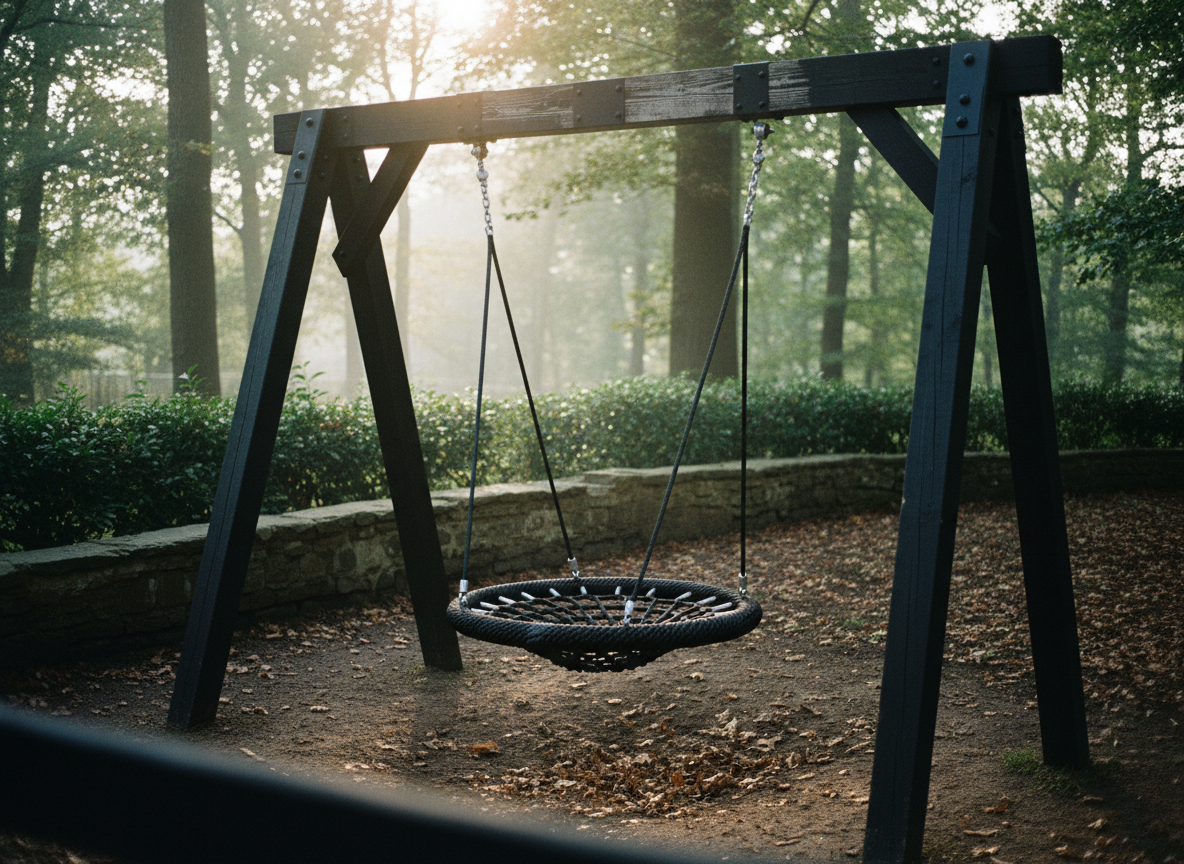
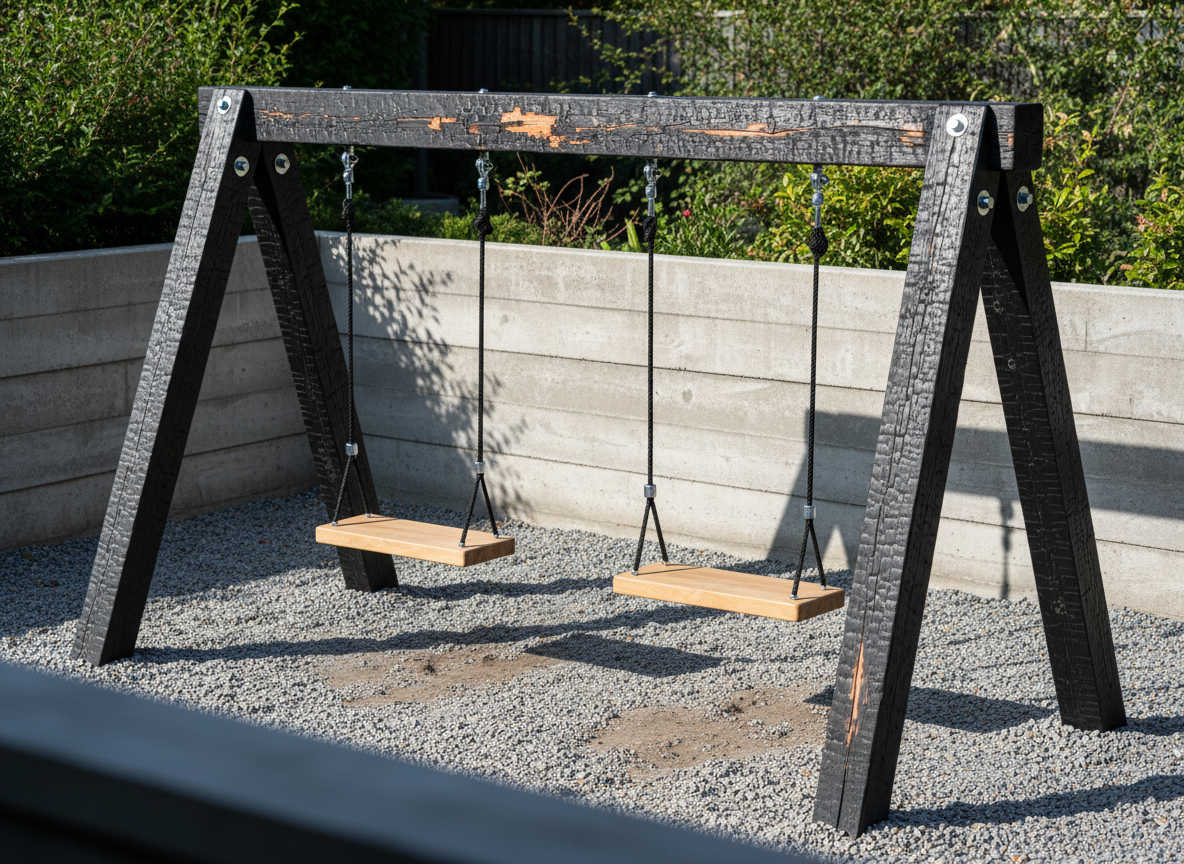
See the frame standing in your garden before you buy a single length of timber. This AI swing set design generator turns a description into one real swing set photographed in a real garden, in about thirty seconds — a rough sawn oak A-frame on a lawn, galvanised scaffold tube on concrete pads, a plank seat hung from an oak branch, a painted frame with a climbing ladder built into one end, a woven nest swing at a woodland edge and a charred larch frame on gravel. All six results are below exactly as they came back, including the one that ignored the number of seats it was given.
Design a Swing Set FreeTry the AI Swing Set Design Generator — Free
Pick a frame, then use the input for what is specific to yours — how many seats, how much room you have between the fence and the washing line, whether it stands on grass, bark or gravel, and what goes behind it. Each preset already carries the camera held level with the seats, every joint written as a connection named at both ends, the seat count tied to a pair of bolts so it actually holds, the wear pinned to a second object so it does not drift, and every sign, plaque, warning notice and plant label banned as an object rather than as lettering.
AI Swing Set Design Generator
Choose a frame, name your timber, your beam, your seats and what they hang from, and get a photorealistic swing set shot in a real garden. Up to 4K.
Six Frames From the AI Swing Set Design Generator, Shown Exactly As They Came Back
Nothing here was regenerated or retouched. Each caption says what the prompt asked for and what actually arrived, because the gap between those two is the part nobody publishes.
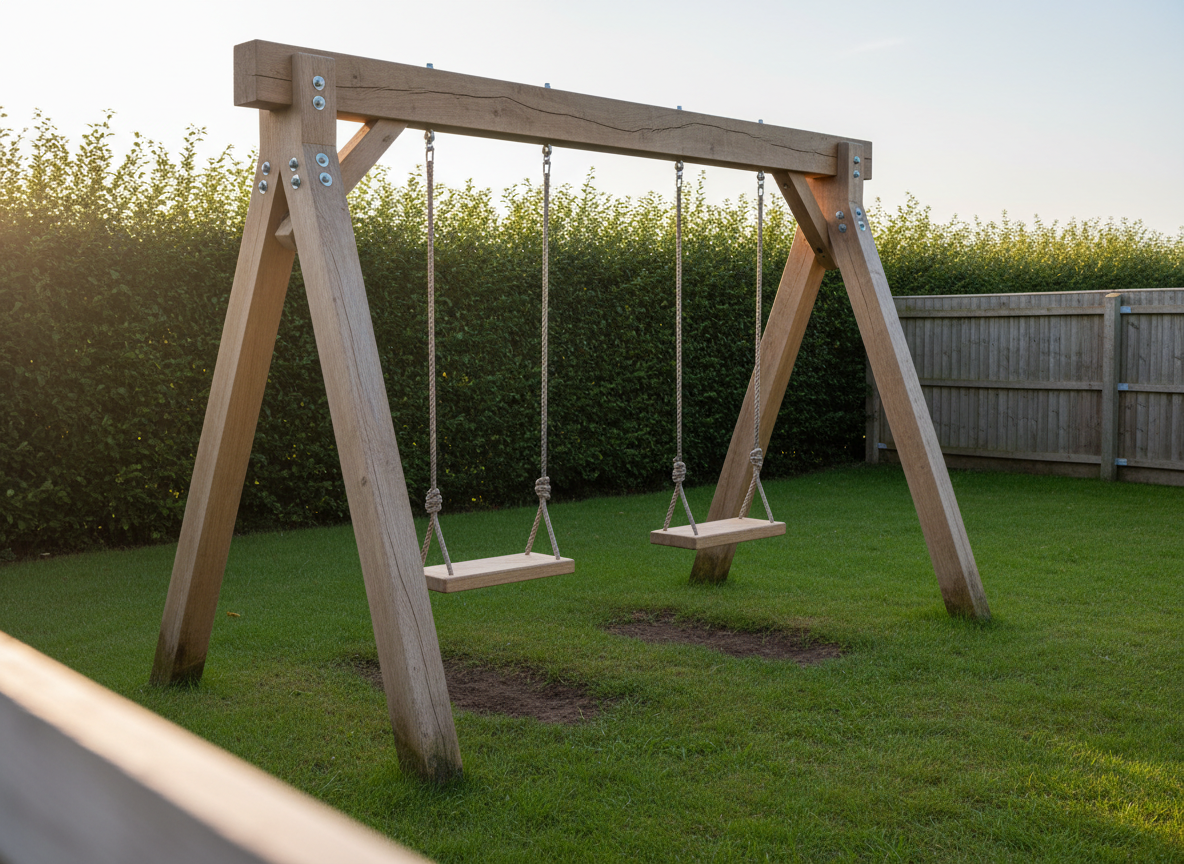
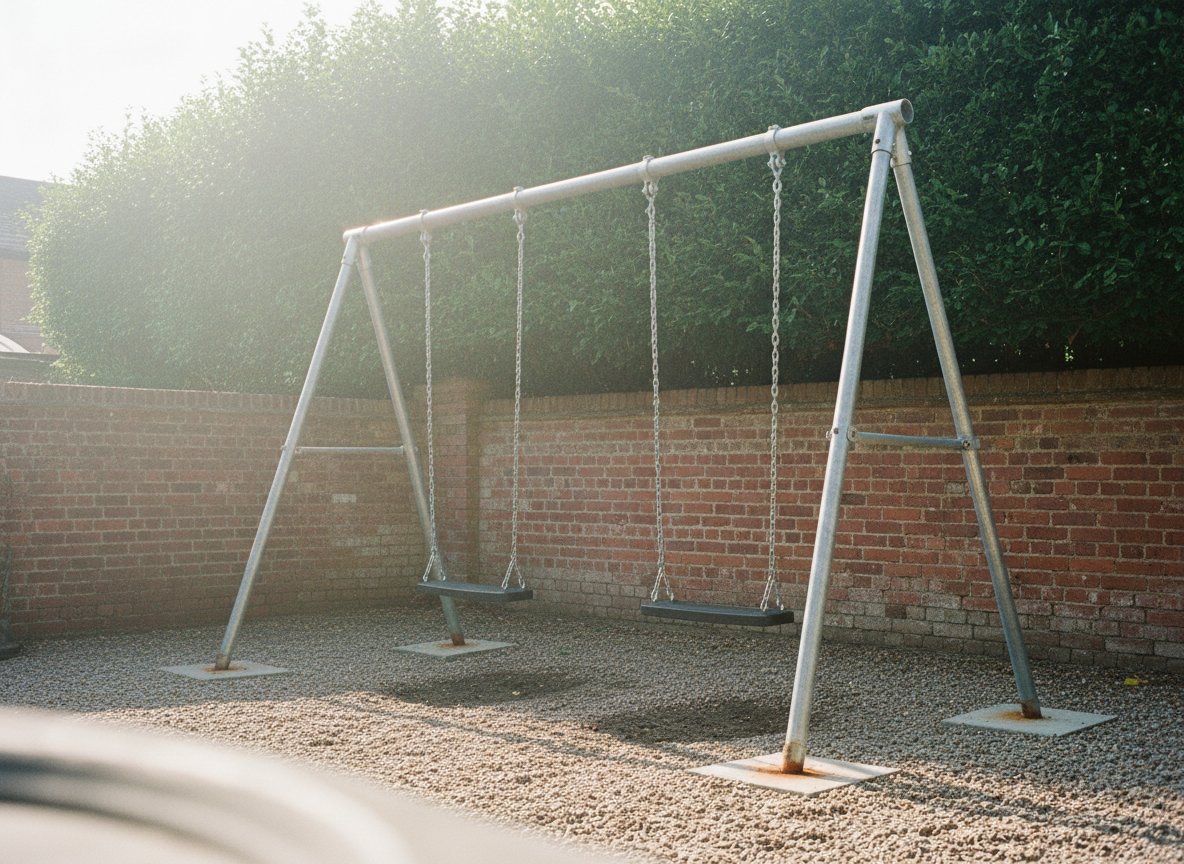
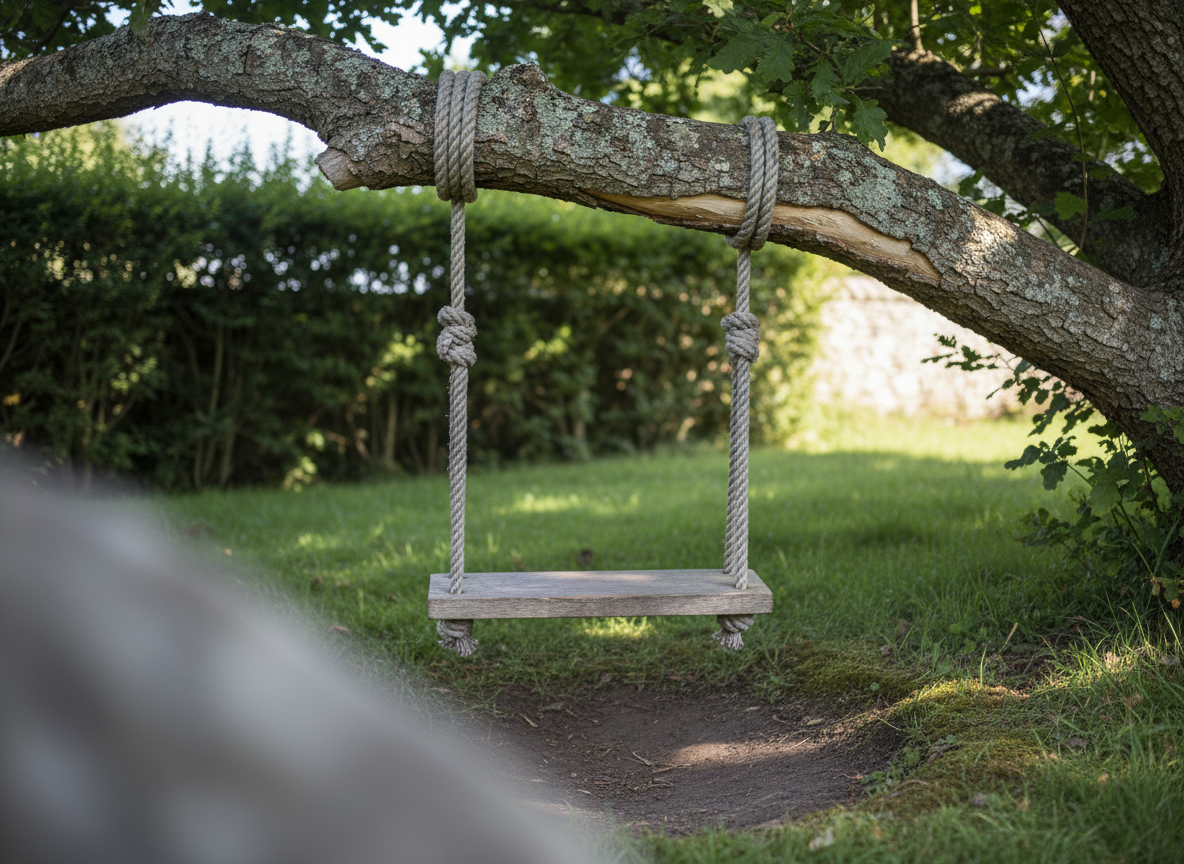
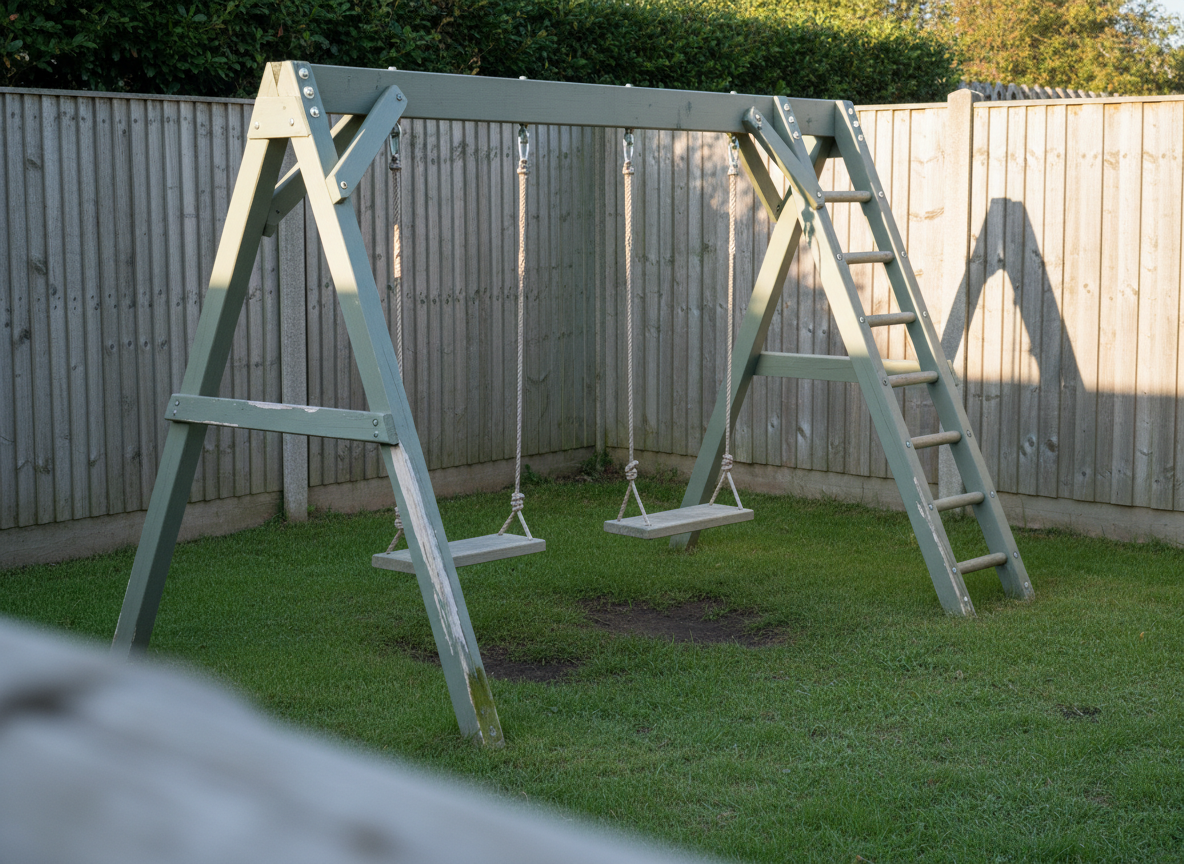
What the AI Swing Set Design Generator Gets Right and Wrong
A swing set is the first subject on this site that is taller than a person and hangs half of itself from a beam. The height solved one long-running problem outright; the hanging created a new one.
A count needs a reason that constrains the middle
Two seats held three times out of three, because the reason given was two pairs of eye bolts through the beam, one pair to each seat — a reason about the inside of the thing. Five ladder rungs became seven, because the reason only fixed the lowest rung and the highest and left the span between them free. Anchor the ends and the model fills the gap with whatever looks right.
The normal form of a product beats your number
One frame asked for exactly one seat, one and no more, and two arrived — a swing set has two swings. Another asked for four ropes gathering into a single ring on a single strap, and got the two separate hanging points a nest swing really has. When your geometry disagrees with how the thing is usually made, expect the usual version.
Moving joints default to catalogue hardware
Three presets described a rope meeting a beam or a seat as plain joinery — over an eye bolt and back, through a bored hole, onto a clamped plate — and one of them banned the shackle by name. All three came back with shop-bought fittings: shackles, a wire wrap, a steel-ferruled bridle. Static joinery written as geometry lands here; a load-bearing moving connection does not.
Pin wear to a pair of objects and it stops drifting
The previous page asked for rust at the foot of a pole and got it floating halfway up. This page asked for rust where each tube meets the top of its concrete pad, plus an orange stain on the pad beside the leg — and both halves arrived, exactly there, on every leg. Wear given two objects to sit between has somewhere to be.
Identical wear in two places merges into one band
The bark was to be rubbed away under each of the two rope wraps on the branch. What arrived is a single continuous strip of bare sapwood running between the two wraps. Wear repeated at matching spots joins up across the gap, which is the mirror image of the older rule here about one fixing named by its span splitting into two.
Height in the design beats any camera instruction
Six frames out of six at eye level with the seats, no overhead shots, on a site where small garden subjects get looked down on almost every time. A swing set is taller than a person, so there is nothing to look down onto. The only angle failure is symmetry: the two frames with one central seat squared up to it despite the instruction to stand off to one side.
How It Works
Pick the frame closest to what you want
A rough sawn oak A-frame on a lawn, galvanised scaffold tube standing on concrete pads, a single plank seat hung from a branch, a painted frame with a climbing ladder in one end, a woven nest swing on blackened timber, or a charred larch frame on gravel. Each preset already carries the camera held level with the seats, the joints written as connections, and every plaque, notice and label banned as an object.
Add what is specific to yours
How many seats and whether one of them is a toddler seat, how much room there is between the fence and everything else, grass or bark or gravel underneath, what stands behind it, and which way the sun comes across the garden in the afternoon. Describe materials and connections rather than styles, and skip the measurements — give sizes against something already in the frame, like the fence or the hedge behind it.
Generate, crop in, then order the timber
About thirty seconds later you have a photograph of it. Crop in before you judge it — a shackle where you asked for a knot, a ladder with two rungs too many, a second seat you never asked for and a bare patch that sat behind the seat instead of under it are all things you only see at full size — then download up to 4K and use it as the brief.
Built for the Way People Actually Plan a Swing Set
A garden, never a play park
Every preset names the public playground, the school play area, the municipal park, the garden centre display and the catalogue page as things this is not, states there is exactly one swing set in the frame, and puts it against a real hedge, fence or wall that sets its size. It matters for a subject whose stock photography is almost entirely primary-coloured municipal steel shot in flat light.
The plastic problem taken seriously
A moulded plastic play set is what the model believes a swing set is, and moulded plastic is where warning notices and brand names live. Each preset bans the plastic set, the slide, the moulded seat, the climbing wall, the raised platform, the tyre, the sand pit, the bunting and the toys by name. Six results came back in timber, rope, chain and steel with no readable text anywhere in them.
Seat counts that actually hold
Numbers drift on every page here, so the presets tie the seat count to something structural: exactly two pairs of eye bolts driven up through the beam, one pair to each seat. That held in all three frames that used it, and you can count the bolt heads on the beam to check. It is the difference between asking for two swings and giving the model a reason there are two.
Wear pinned to a second object
Rust where a tube meets the concrete pad and stains the pad beside it. Bare compacted earth under a seat with moss at its edge. Bark gone where a rope wraps a branch. Wear described against a second named object stays put, where wear pinned to a spot on a single surface drifts — which is the difference between the clean rust here and the floating rust on the page before.
Texture on the frame, not just behind it
Every preset states the light direction, because an unstated one guarantees a render. That is necessary and not sufficient. The frames that read as photographs have a material event on the timber itself — charred alligator crackle, chipped paint over bare wood, a stain weathered thin so the grain comes through. The one that reads least convincing is the one whose oak came back fresh, flat and pale.
Ground that has been played on
Bare compacted earth under the seats, gravel scraped thin so the dark ground shows, moss at the edge of the bare patch, dead oak leaves strewn under a nest swing. Asking for what is there rather than for the grass being gone works, and never giving that patch a shape avoids the artifact where a described arc turns up drawn as a literal curve on the ground.
AI Swing Set Design Generator FAQ
Related Design Tools
AI Treehouse Design Generator
The other thing that goes up an oak tree, one size larger and with a floor in it. Run this if what you want is somewhere to climb to rather than something to hang from.
AI Birdhouse Design Generator
Where the height-in-the-design rule was first proved, and the page whose floating rust this one finally fixed. Worth reading next to this one for the wear notes alone.
AI Fence Design Generator
The fence or the hedge is what sets the scale of the frame in half these results. Useful if the boundary and the swing set are going in the same summer.
See the Frame Standing Before You Buy the Timber
Six swing sets, one description each, about thirty seconds per result. Start free and settle tonight whether it is oak or tube, rope or chain, two seats or one, and whether it really fits between the hedge and the washing line.
Design a Swing Set FreeAn AI Swing Set Design Generator for Frames, Beams and Seats That Have to Live Outside
A swing set is a simple build with a surprising number of decisions in it, and almost none of them are about the swinging. Oak or galvanised tube? Does it stand on the lawn where the grass will give up under the seats, or on gravel or bark where it will not? Two seats, or one seat and room to walk past? Rope or chain — one is nicer to hold and the other survives ten winters? Does a ladder on one end make it twice as useful or make the garden look like a play park? Is there actually enough clear ground in front and behind, or is it going to hit the washing line? Those are the arguments a photograph settles and a span table does not. That is the gap an AI swing set design generator fills — describe the frame, the beam, the seats, what they hang on and where it stands, and about thirty seconds later you have a picture of it finished. The six results above are shown exactly as they came back, failures included.
The six cover the shortlist a real decision has. A rough sawn oak A-frame on a lawn in front of a beech hedge, which is what most people picture when they say swing set. Heavy galvanised scaffold tube standing on four concrete pads in a gravel yard, for a garden where it has to last. A single weathered plank seat hung on hemp rope from the low branch of an old oak, which is the cheapest and the prettiest thing on this page. A grey green painted softwood frame with a climbing ladder built into one end. A big woven rope nest seat hanging from a blackened timber frame at a woodland edge. And a modern charred larch frame with pale oiled oak seats on black rope, standing on gravel against a board marked concrete wall.
The pattern in what came back matters more than a feature list, and this subject settled two questions at once. The first is the camera. Every small garden subject photographed on this site gets looked down on, and the usual remedy of standing something solid in the foreground has already been recorded failing on a knee-high dog house. All six swing sets came back at eye level with the seats, because a frame taller than a person gives the camera nowhere to climb to. Height in the design beats any instruction about the angle. The second is counting, which has drifted on every page here for months. Three frames asked for exactly two seats and gave a structural reason — exactly two pairs of eye bolts through the beam, one pair to each seat — and all three came back with two, four bolt heads visible along the beam to prove it. A fourth asked for five ladder rungs with only the top and bottom rung positioned, and got seven. A count holds when the reason constrains the inside of the thing and drifts when it only fixes the ends.
What fails is narrow and worth knowing before you start. A swing set has two swings, and a frame told to carry exactly one seat came back carrying two, in the same way a nest swing told to hang from a single gathered ring came back on the two hanging points it really has: the normal form of a product beats an explicit instruction. Every connection that has to move defaulted to shop-bought hardware — three presets described a rope meeting a beam or a seat as plain joinery, one of them banning the shackle by name, and shackles, a wire wrap and a ferruled bridle turned up anyway. Chipped paint migrated down to the feet of the legs no matter where it was pinned, fresh pale oak deleted the algae and the worn oil that were asked for on it, one stated light direction arrived flipped left for right, and bark asked to be rubbed away under two separate rope wraps merged into one continuous bare strip between them. Against all that: six frames out of six at the right height, six out of six with no readable lettering, rust pinned to a pair of objects landing exactly where it was put on every leg, bare compacted earth under four sets of seats, a knot tied under a plank drawn precisely as described, and charred larch proving for the second page running that a material event on the subject is what stops an image reading as a render. Inside those limits an AI swing set design generator is a genuinely useful half hour before anyone picks up a spade.