
AI Birdhouse Design Generator
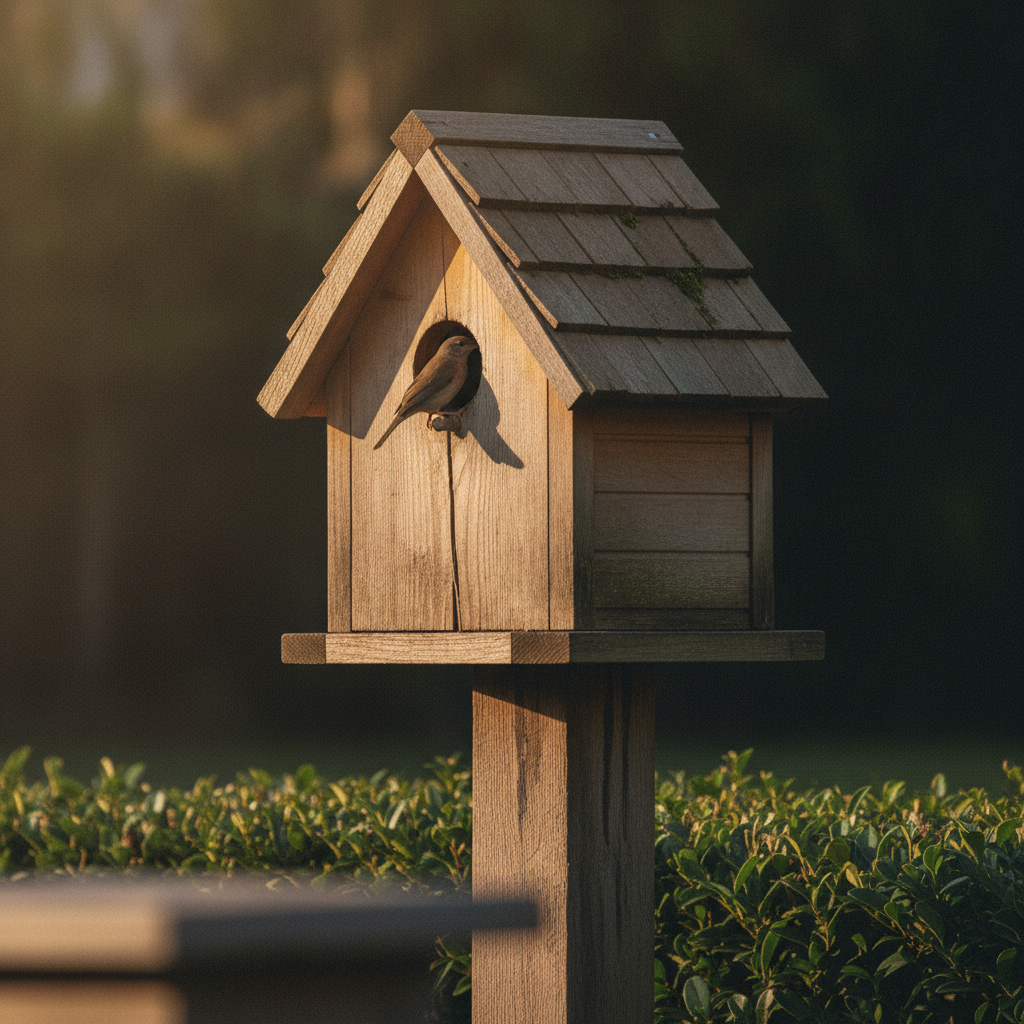
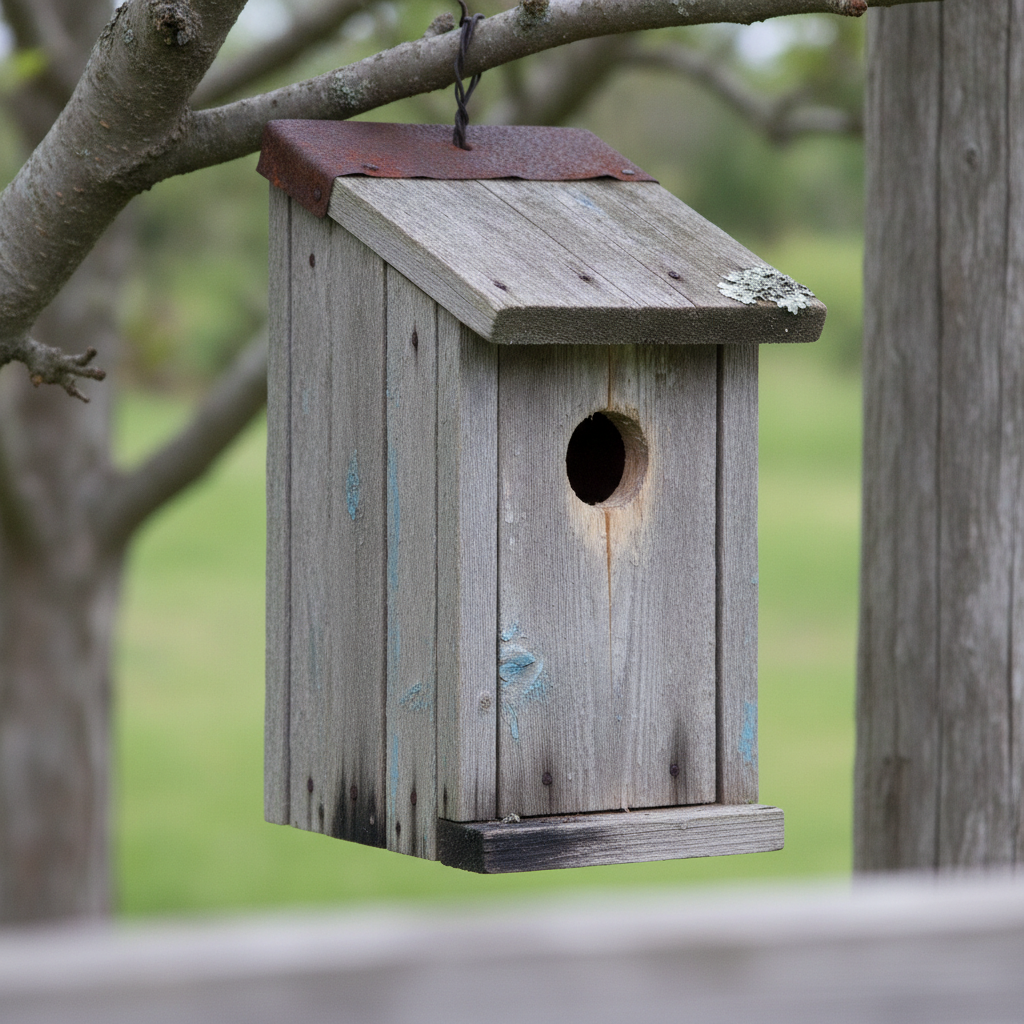
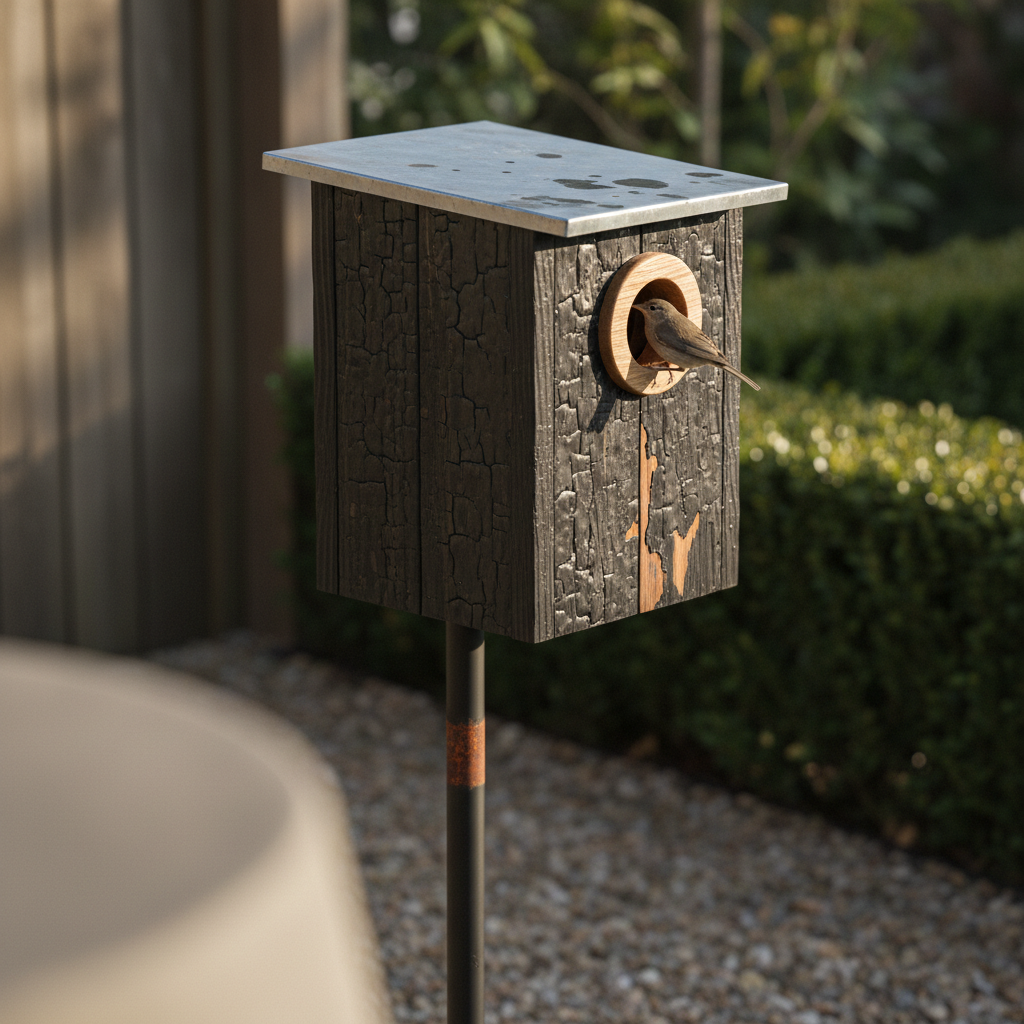
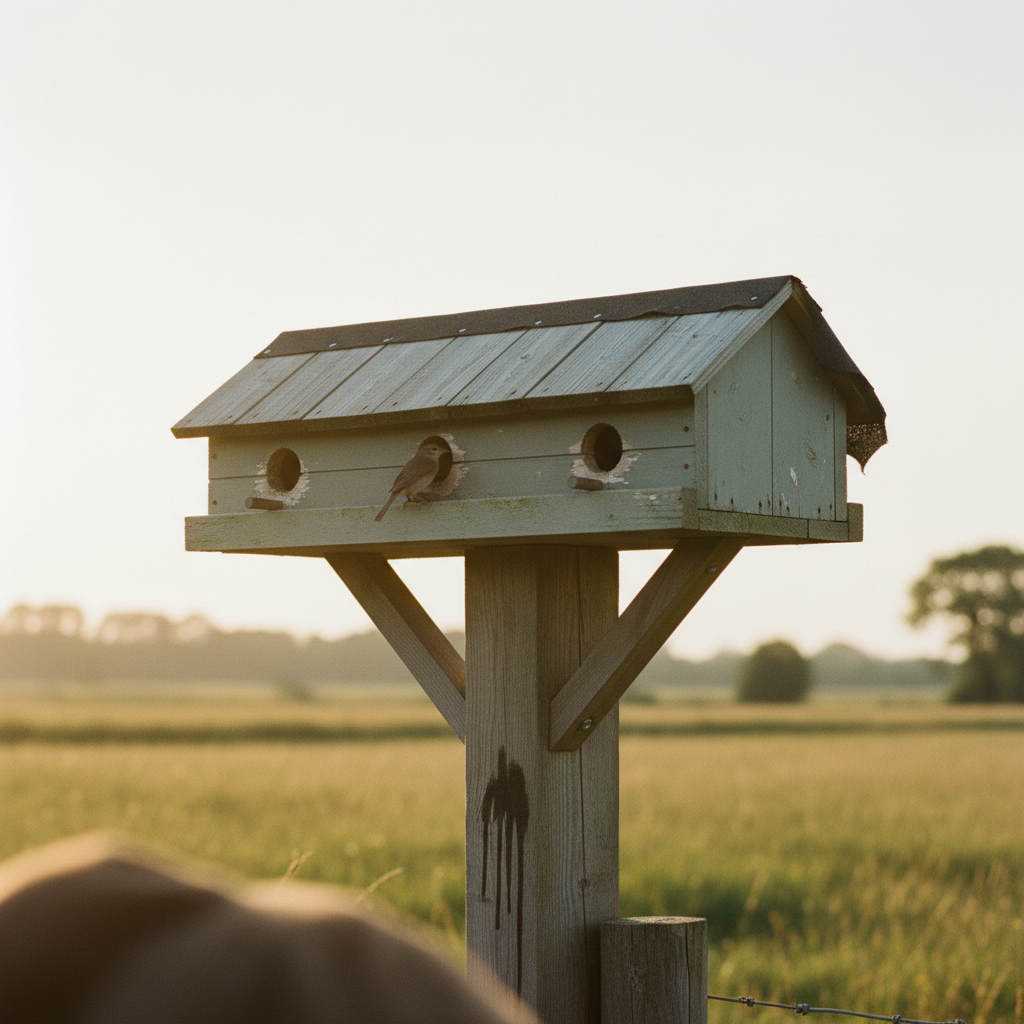
See the box finished before you cut a single board. This AI birdhouse design generator turns a description into one real birdhouse photographed in a real garden, in about thirty seconds — a cedar gable box on an oak post, reclaimed barn boards hung from an apple branch, a charred larch nest box on a steel pole, a terrace of three under one roof, a wall box that opens for cleaning and one with a living sedum roof. All six results are below exactly as they came back, including the two that mounted themselves the wrong way.
Design a Birdhouse FreeTry the AI Birdhouse Design Generator — Free
Pick a box, then use the input for what is specific to yours — which birds you are hoping for, whether it goes on a post, a wall, a pole or a branch, which way the weather drives, and whether it has to open to be cleaned out. Each preset already carries the camera held level with the entrance hole, the hole written as a cut through the board, the joinery written as connections named at both ends, the wear pinned to marks that survive, and every sign, plaque, number and plant label banned as an object rather than as lettering.
AI Birdhouse Design Generator
Choose a box, name your boards, your roof, your entrance hole and what holds it up, and get a photorealistic birdhouse shot in a real garden. Up to 4K.
Six Boxes From the AI Birdhouse Design Generator, Shown Exactly As They Came Back
Nothing here was regenerated or retouched. Each caption says what the prompt asked for and what actually arrived, because the gap between those two is the part nobody publishes.
What the AI Birdhouse Design Generator Gets Right and Wrong
A birdhouse is the smallest subject on this site and it solved the problem that has beaten every other small subject here — while losing two frames to the one thing a nest box is absolutely certain about.
Height in the design beats any camera instruction
The camera climbs on small subjects and the foreground anchor has already been recorded failing on a knee-high dog house. All six birdhouses here were shot level with the entrance hole, because a box on a post, a pole, a wall or a branch is already at head height. Give a design somewhere to be and the angle looks after itself.
Count out loud, then say why the count is that
Repeated parts drift upward on every page here. The terrace asked for three entrance holes, three and no more, one to each of three compartments divided by two partitions inside one box under one roof — and three arrived, along with exactly two braces and, elsewhere, exactly two hinges. A number with a structural reason holds where a bare number drifts.
Name where the old paint survives, not what the surface became
Pale wear asked for on a darker surface has come back as flicked white paint on three previous pages. Asking instead for the last of a dull blue paint left only in the grain and gone from the raised parts landed perfectly. Describing a thing that is still there gets drawn; describing a transformation gets invented, and what gets invented is paint.
A nest box opens at the top, whatever you write
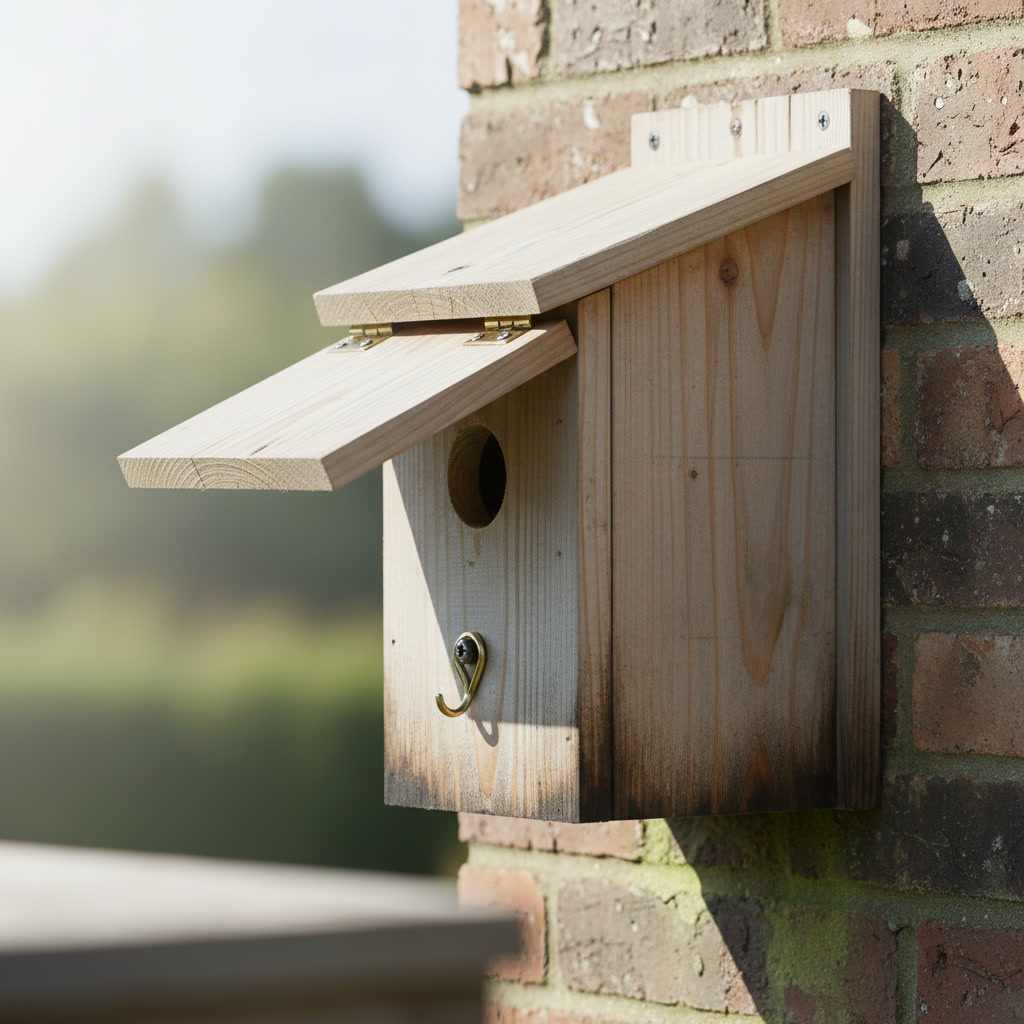
Two of six frames lost their mounting to the default. A box told to sit on the sawn top of a post came back screwed to the face of it. A box whose whole left side panel was specified as a hinged cleaning door came back with a hinged roof and an untouched side. Design with the default or expect to fight it.
A two part fastener loses its partner
A brass hook and eye were both named, and both ends of each were named, which is normally enough to build anything here. What arrived is a lone hook screwed to the front board with no eye anywhere and nothing to latch onto. New and worth knowing for latches, catches, hasps and any fitting that needs a mate to make sense.
Never describe wear as a liquid going somewhere
Rain staining where water runs off the roof ends was drawn as a black streak down the post that reads like spilled paint. Earlier pages blamed that artifact on asking a dark surface to go pale; this one is dark on pale and it happened anyway, which pins the cause on the running shape itself rather than the colour.
How It Works
Pick the box closest to what you want
A cedar gable house on an oak post, reclaimed barn boards hung from a branch, a charred larch nest box on a steel pole, a terrace of three compartments under one roof, a wall box that opens for cleaning, or one with a living sedum roof. Each preset already carries the camera held level with the entrance, the joinery written as connections, and every sign and plaque banned as an object.
Add what is specific to yours
Which birds you are hoping for, whether it goes on a post, a pole, a wall or a branch, which way the weather drives, whether it has to open to be cleaned, and what it stands next to. Describe materials and connections rather than styles, and skip the measurements — give sizes as a fraction of something already in the frame, like the post or the bricks behind it.
Generate, crop in, then cut the timber
About thirty seconds later you have a photograph of it. Crop in before you judge it — a roof that hinged instead of a side panel, a hook with no eye, a rust band floating halfway up a pole and a board run that flipped from horizontal to vertical are all things you only see at full size — then download up to 4K and use it as the brief.
Built for the Way People Actually Plan a Birdhouse
A box in a garden, never a gift shop
Every preset names the garden centre display, the trade stand, the craft fair table and the catalogue page as things this is not, states there is exactly one birdhouse in the frame, and puts it on a real post or a real branch with real light falloff. It matters for a subject whose stock photography is almost entirely painted novelties shot on white.
The lettering problem taken seriously
Painted names, house numbers and little welcome boards are what the model believes a decorative birdhouse is. Each preset bans the plaque, the board, the number, the sign, the recess, the sunken panel, the frame, the card holder and the hook, and bans the plant label and the seed bag that a garden scene drags in. Six frames out of six came back with no lettering at all.
The entrance hole written as a cut
Not a hole as a shape but a hole as an operation: bored clean through the front board so the cut edge shows the full thickness of the timber and the inside is dark behind it. It landed in every frame that asked for it, once as raw pale timber against weathered grey and once as a ring of oiled oak against charred black.
Props pre-declared instead of forbidden
A bird is going to turn up whatever you write, so the presets state in advance what any bird has to be — one small plain brown bird with no markings and no bright colour, and never more than one. That is exactly what arrived in four of six frames. Feeders, seed trays and fat balls are banned outright, because those are optional and a bird is not.
Texture on the box, not just behind it
Every preset states the light direction, because an unstated one guarantees a render. That is necessary and not sufficient. The frames that read as photographs have a material event on the box itself — charred alligator crackle, split reclaimed boards, moss in the shingle courses. The one that still reads CG is the one whose timber is fresh, flat and pale.
Wear that survives a winter outdoors
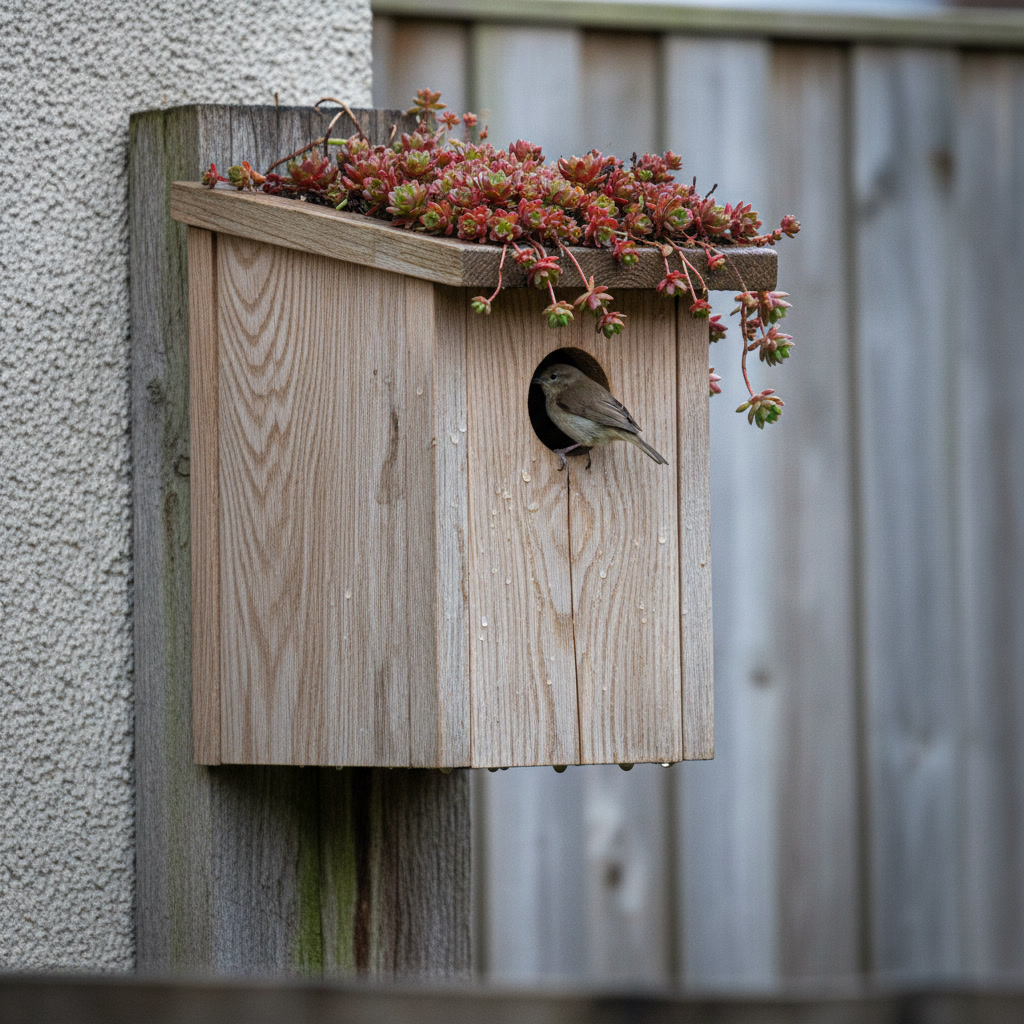
Moss in the shingle courses, flat lichen on a shaded eaves board, algae greening the brick under a wall box, dark staining along a bottom edge, rust on folded flashing, a split running with the grain and paint chipped back to bare timber around an entrance hole all landed. Dead patches in healthy planting and rain described as running down do not.
AI Birdhouse Design Generator FAQ
Related Design Tools
AI Dog House Design Generator
The same small timber build one size up, and the page where the camera would not come down. Worth reading next to this one for the clearest proof that height in the design beats any camera wording.
AI Chicken Coop Design Generator
A nest box with a run attached and a door people actually walk through. Run this if what you want is somewhere birds live rather than somewhere they nest.
AI Fence Design Generator
The post the birdhouse goes on and the thing that sets its scale in half the frames here. Useful if the fence and the box are going in the same weekend.
See the Box Finished Before You Cut the Timber
Six birdhouses, one description each, about thirty seconds per result. Start free and find out tonight whether yours hangs or stands, whether the roof lifts, and whether one box or three.
Design a Birdhouse FreeAn AI Birdhouse Design Generator for Posts, Branches and Boxes That Have to Be Cleaned Out
A birdhouse is the smallest build in the garden and it still has half a dozen decisions in it, almost none of them about looks. Does it go on a post where you can see it from the kitchen, or up a tree where the birds would rather have it? Does it hang, or is hanging exactly the wobble that stops anything nesting in it? Does it open to be cleaned out in autumn, and if it does, does it open at the top or at the side? Is it one box or a terrace of three? Does it get a green roof, and is that a lovely idea or a bucket of wet soil sitting on your best oak? Those are the arguments a photograph settles and a dimensioned drawing does not. That is the gap an AI birdhouse design generator fills — describe the boards, the roof, the entrance hole, what holds it up and where it stands, and about thirty seconds later you have a picture of it finished. The six results above are shown exactly as they came back, failures included.
The six cover the shortlist a real decision has. A classic cedar gable box on a weathered oak post, which is what most people picture. Reclaimed barn boards with the last of an old blue paint still in the grain, hung on a wire from an apple branch. A flat-roofed charred larch nest box on a slim steel pole, for a garden where the box has to look like it was meant. A terrace of three compartments under one continuous roof on a tall post at the edge of a meadow. A plain larch wall box screwed to brick with a panel that opens for cleaning. And one with a living sedum roof planted in a shallow oak tray, rosettes spilling over the lip and hanging down in front of the hole, which is the prettiest thing on the page and also the one that argued hardest about how it was fixed to its post.
The pattern in what came back matters more than a feature list, and this subject settled a question that has been open here for months. Every small object photographed on this site gets looked down on, and the usual remedy — a solid object standing close in the foreground, cut by the bottom edge of the frame — has already been recorded failing on a dog house even with something plainly taller than the subject in front of it. All six birdhouses came back at eye level with the entrance hole. Not because the wording improved, but because a birdhouse lives on a post at head height, so there was never anything to look down onto. Height in the design beats any instruction to the camera. The other big result is counting. Repeated parts have crept upward on every page here, and the terrace asked for three entrance holes, three and no more, one to each of three compartments divided by two partitions inside one box under one roof — and three is what arrived, with exactly two braces beside them and exactly two brass hinges in another frame. Give a number a structural reason and it holds.
What fails is narrow and worth knowing before you start. A nest box is certain about two things — it is screwed to the face of something and it opens at the top — and both of those beat an explicit instruction: one box told to sit on the sawn top of a post came back fixed to the side of it, and one told to hinge its whole left side panel came back with a hinged roof and the side panel exactly where it started. A fixing hidden behind the subject does not get built at all, and a two part fastener loses its partner, so a hook and eye arrived as a lone hook with nothing to latch onto. Wear drifts off the place you pin it, with a rust band specified at the foot of a pole turning up halfway up it. An absence cannot be drawn, so a dead brown patch asked for in a healthy sedum mat simply did not exist. And rain described as running down a post came back as a black streak that looks like spilled paint, which finally pins that long-running artifact on the running shape rather than on the colour. Against all that: six frames out of six at the right height, six out of six with no lettering anywhere, every entrance hole written as a cut through the board arriving as real joinery, and the first pale-on-dark wear instruction this site has ever got back clean, because it named where the old paint survives instead of what the surface became. Inside those limits an AI birdhouse design generator is a genuinely useful half hour before you pick up a saw.