
AI Raised Garden Bed Design Generator
See the bed built, filled and planted before you buy a single sleeper. This AI raised garden bed design generator turns a description into one finished bed photographed in a real back garden, in about thirty seconds — timber sleepers coach-screwed to corner posts, a corten steel box bleeding rust across the paving, a waist-height bed standing on braced legs, boards terraced into a slope, brick under a sawn stone coping and a woven hazel hurdle ring. All six results are below exactly as they came back, including the two that went wrong.
Design a Raised Bed FreeTry the AI Raised Garden Bed Design Generator — Free
Pick a build, then use the box for what is specific to your garden — how the ground lies, what the boundary is made of, whether the bed sits on grass, gravel or paving, how tall you actually want to reach into it, and what is going to grow in it. Each preset already carries the fixings written as connections, the standing-height camera with its foreground anchor, the wear pinned to named places and the full list of printed objects swapped for unprintable ones — all tightened after reviewing what came back the first time.
AI Raised Garden Bed Design Generator
Choose a build, name your material, your corners, your fixings and the garden the bed has to sit in, and get a photorealistic raised bed shot from standing height. Up to 4K.
Six Beds From the AI Raised Garden Bed Design Generator, Shown Exactly As They Came Back
Nothing here was regenerated or retouched. Each caption says what the prompt asked for and what actually arrived, because the gap between those two is the part nobody publishes.
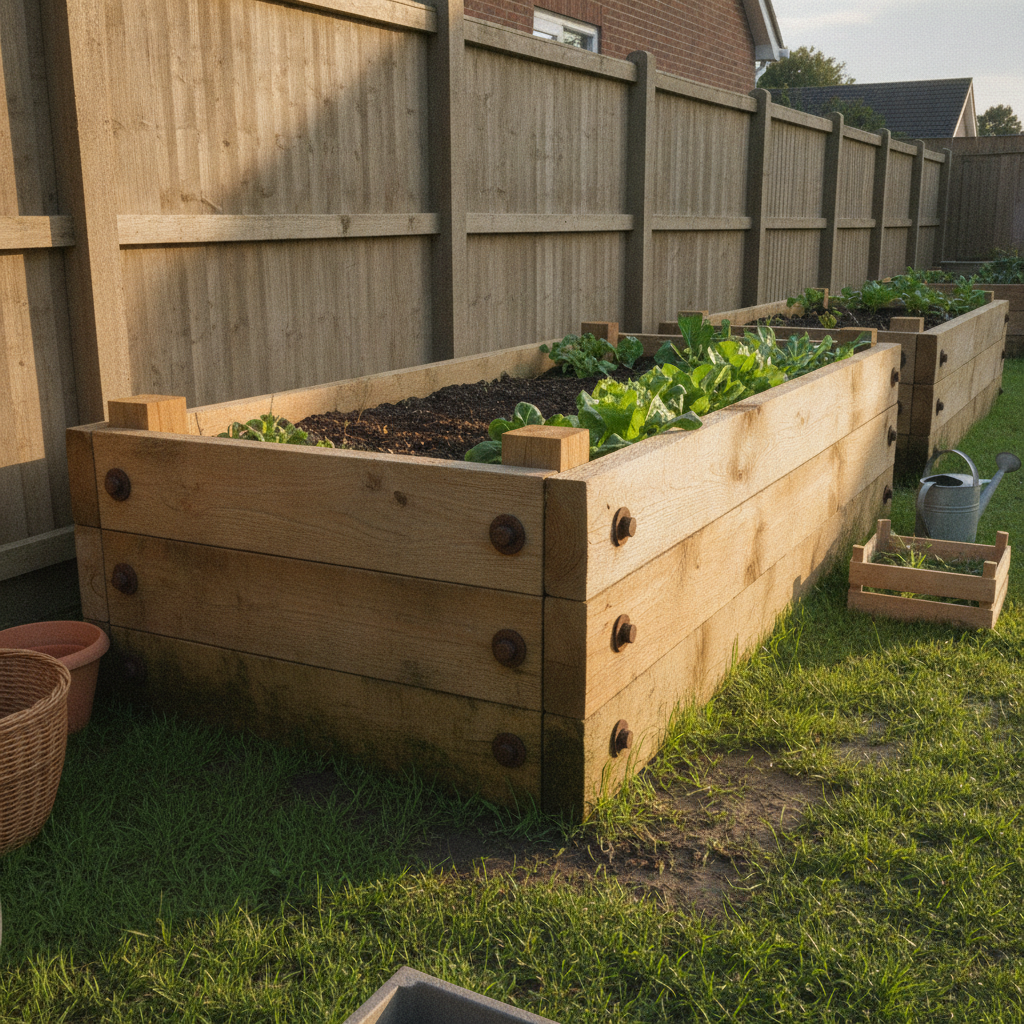
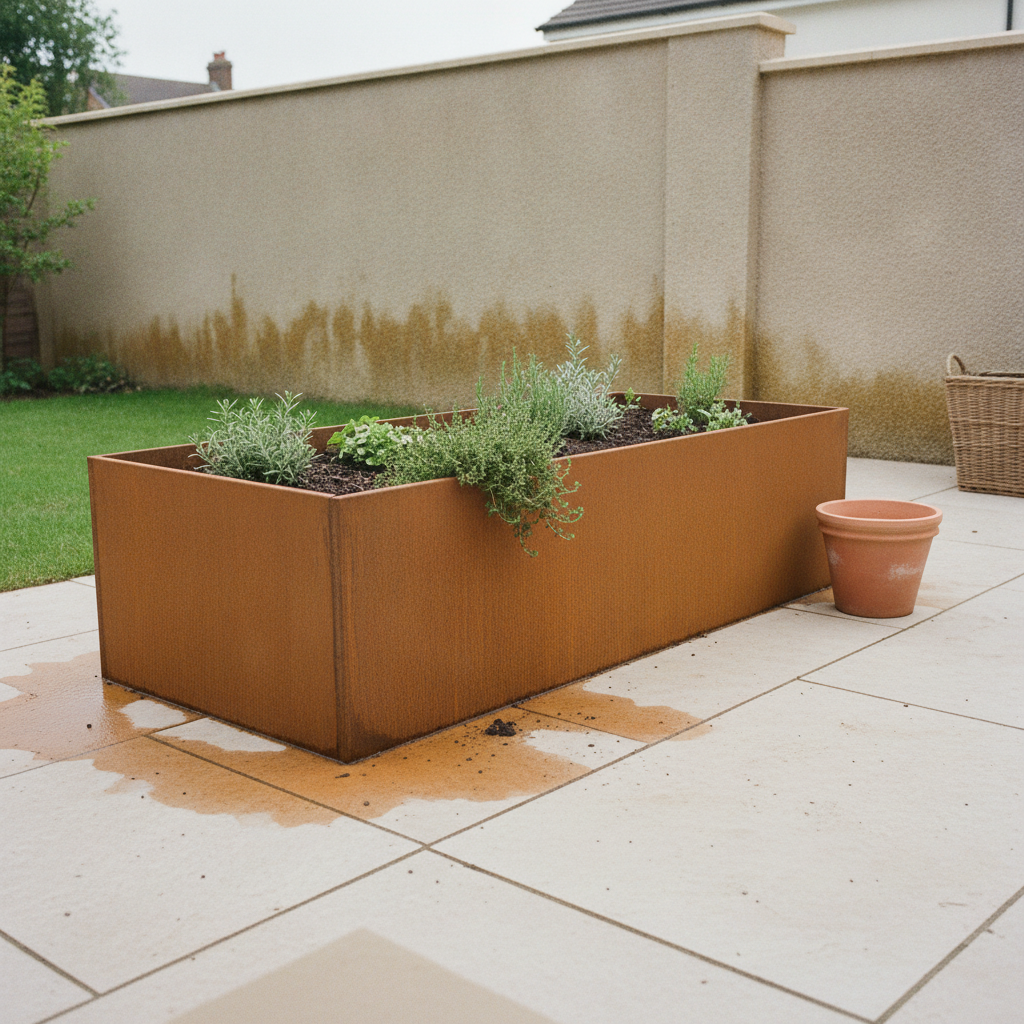
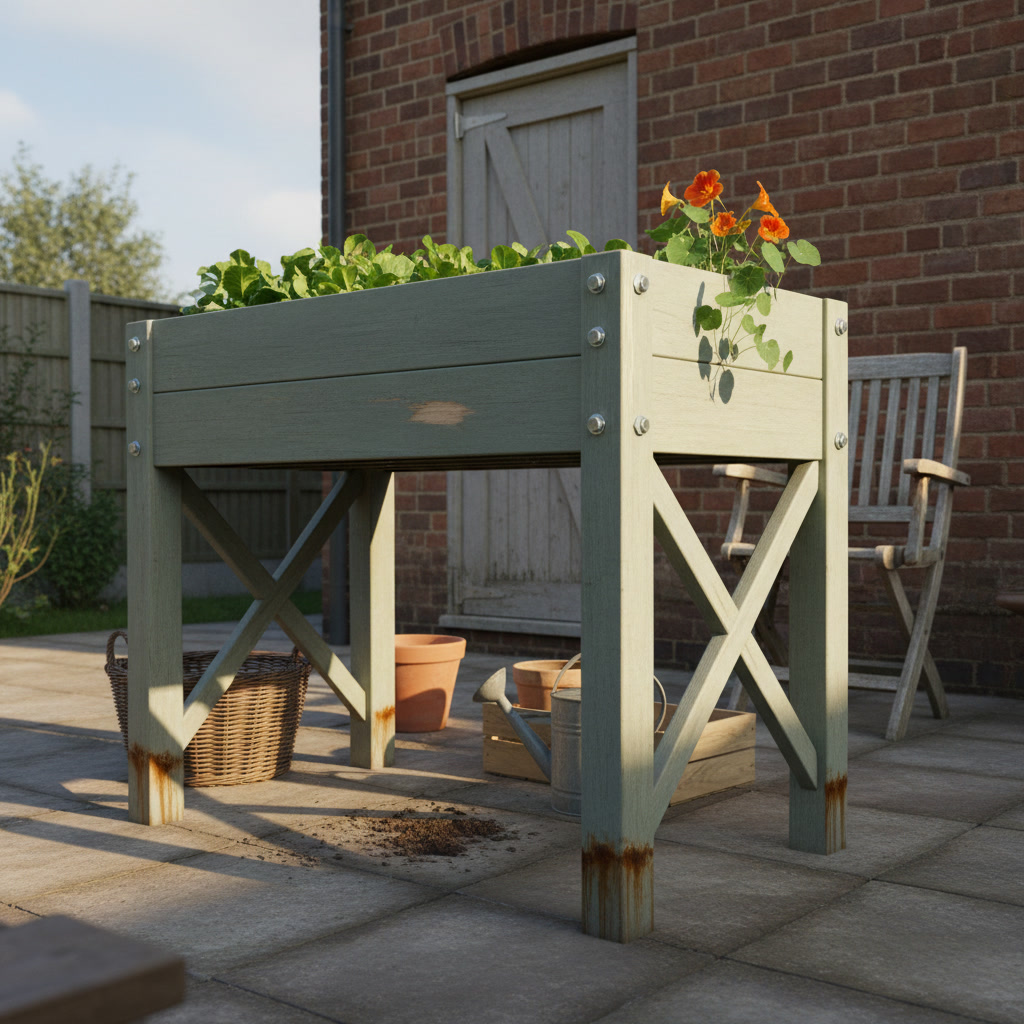
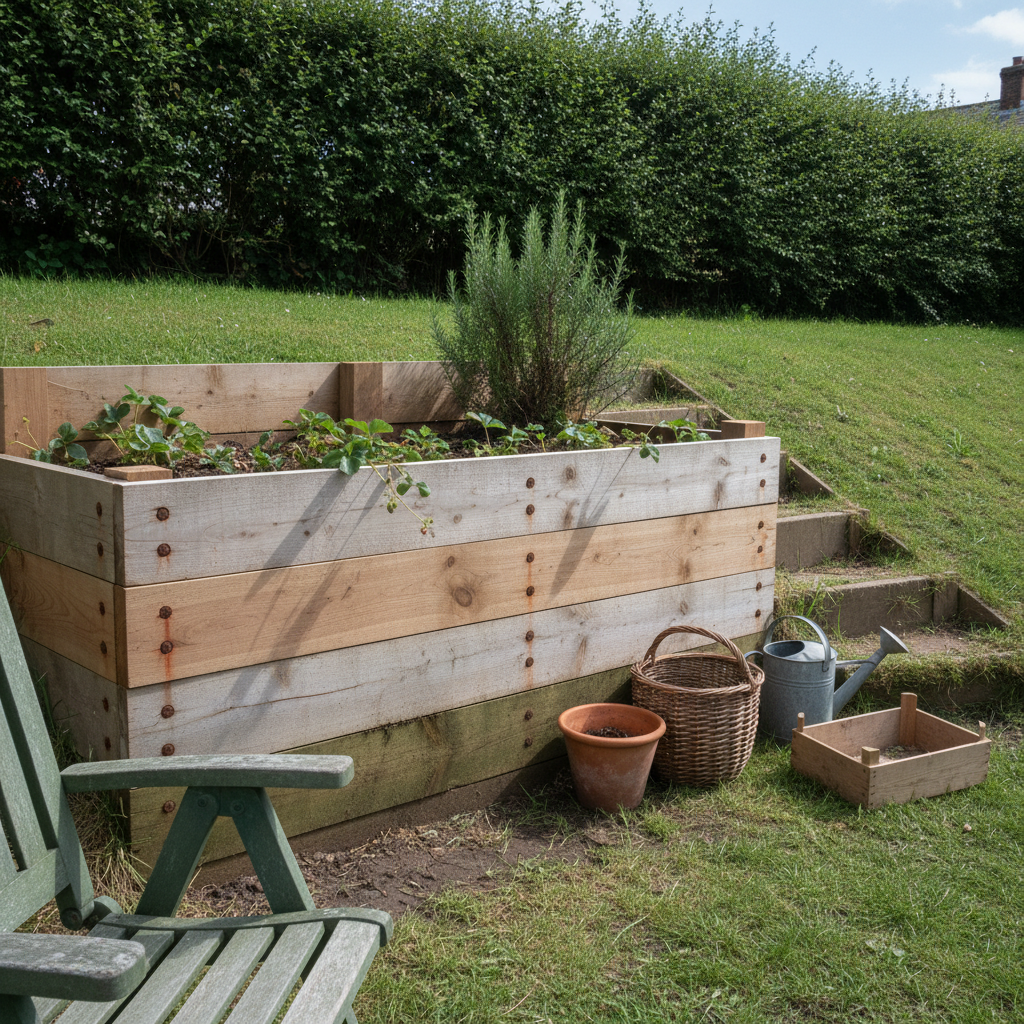
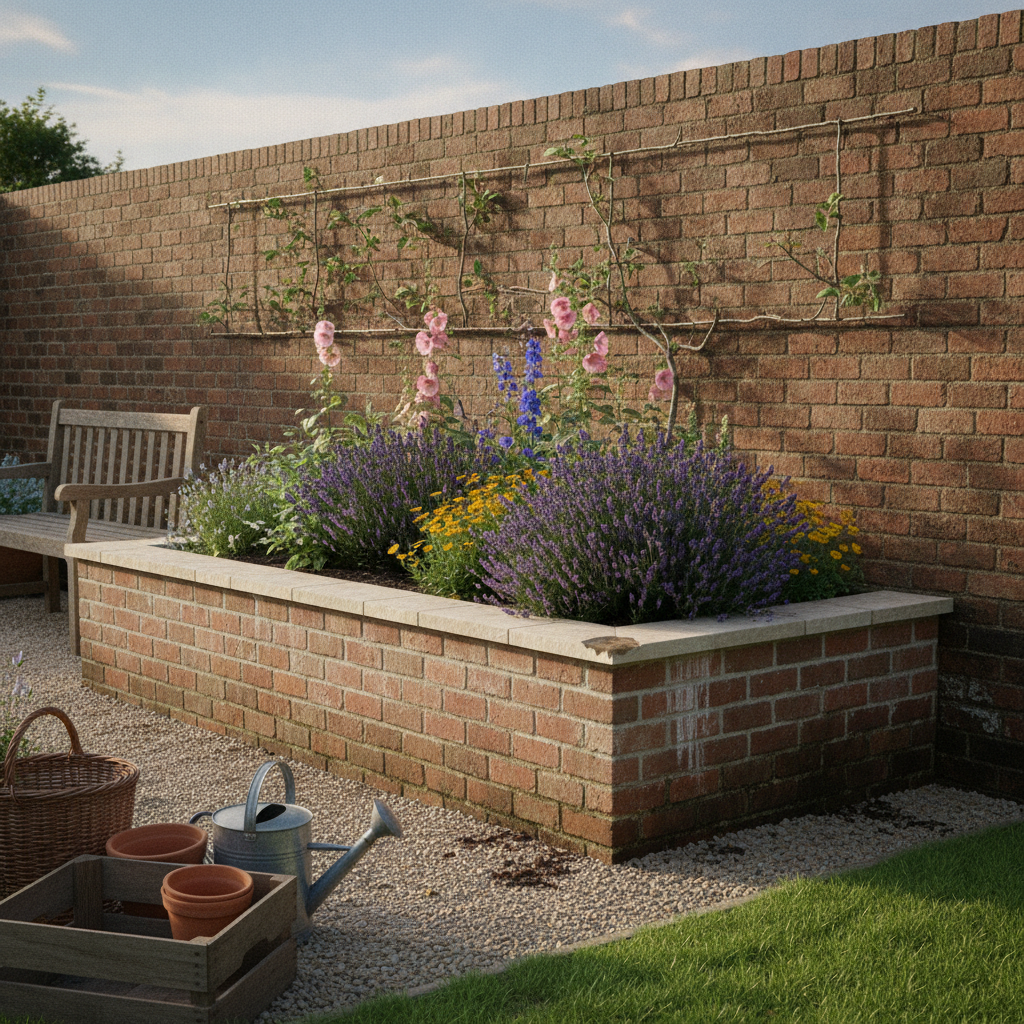
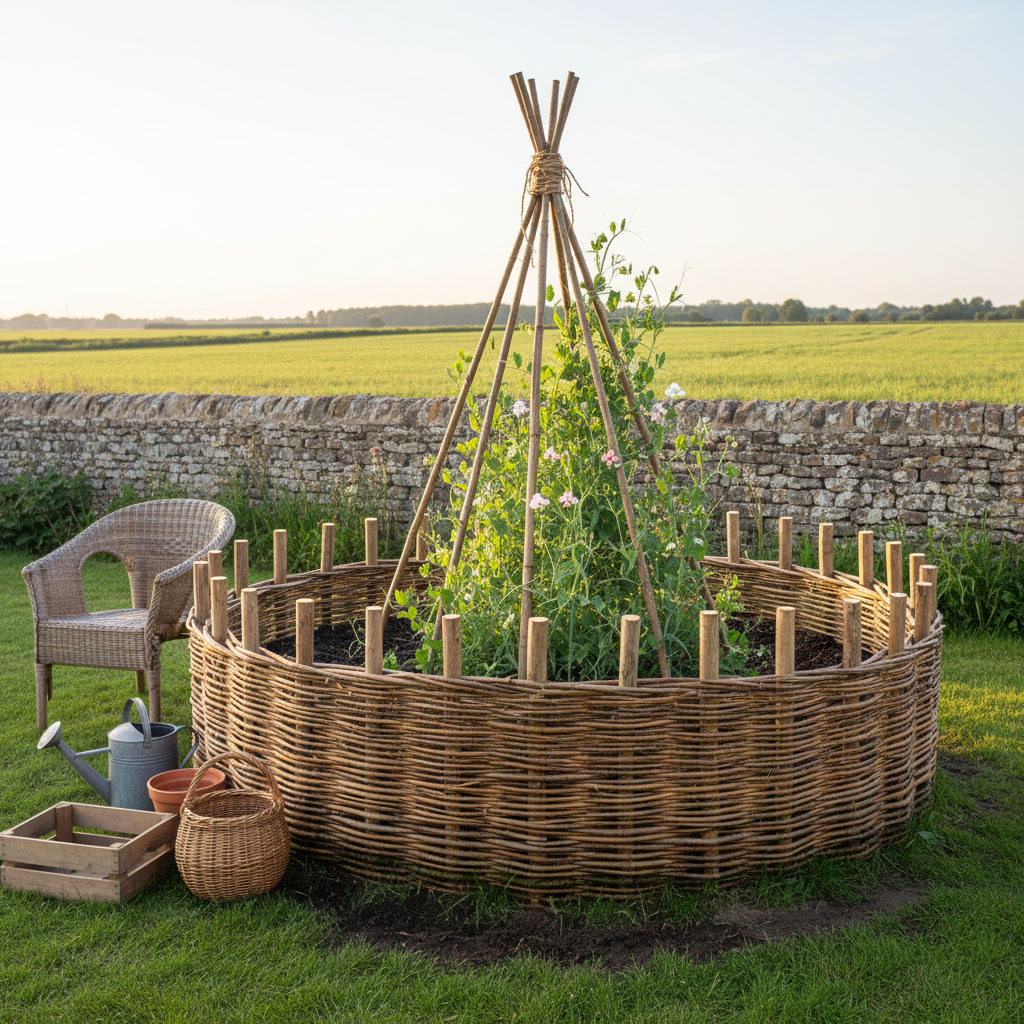
What the AI Raised Garden Bed Design Generator Gets Right and Wrong
A raised bed looks like four boards in a rectangle and hides four hard problems — keeping the camera out of the sky, keeping printed packaging out of the frame, getting a size that means anything, and persuading brand new timber to show a single day of weather.
A container pulls the camera upward
A raised bed is a box with something interesting inside it, and the model wants to show you the inside. Four frames here held standing eye level and two floated up into a half plan view. The only difference was whether a solid foreground object — a chair, a bench, a crate — arrived close to the camera and got cut by the bottom edge of the frame. Ask for it, and say it must stand taller than the bed behind it.
Replace printed objects, never blank them
Seed packets, compost sacks, feed bottles and plant labels are the default prop kit for this subject, and all four exist to carry print. Saying no text does not remove them. Naming each one and swapping it for a terracotta pot, a willow basket, an unmarked galvanised can and a bare wooden crate does: six images, not one letter, on the most text-prone garden subject there is.
Size only means something against an object
Centimetres are ignored. Every bed here that was described against something already in the frame came out right — three chair seats tall, as high as the bench back, as tall as the paving slab is wide. The one that grew past its instruction was the bed standing alone on an open lawn, with no path or wall touching it. Give it a proportion and something hard up against its foot.
New timber deletes the weather
Fresh sleepers and fresh hazel came back golden and spotless, with no silvering, no algae and no splitting, while weathered larch in the same set took every instruction — grey on the rain-facing boards, black algae along the bottom, rust streaks under every screw. Say the timber is old and has stood out for several winters in the same sentence as the material itself.
Stains land, and they land best on the neighbour
The strongest wear result on the page is rust bled out of a corten bed into soft orange pools across the pale paving at its foot, and the second strongest is lime bloom leached out of mortar and run down the brick under the coping. Pin the mark to the thing standing next to the subject rather than to the subject, and it arrives — and often goes further than you asked.
Counts rise, so say “and no more”
One raised bed came back as two. Two coach bolts per leg came back as four. One diagonal brace per leg came back as a crossed pair. One lavender came back as a drift. Small repeated hardware and whole objects both creep upward on this model, so state the number and close it off in the same breath.
How It Works
Pick the bed closest to the garden you have
Timber sleepers against a fence, a corten steel box on a terrace, a waist-height bed on braced legs, boards terraced into a slope, brick under a sawn stone coping, or a woven hazel hurdle ring. Each preset already carries the corners and fixings written as connections, the standing-height angled camera with its foreground anchor, the wear pinned to named places, and every printed object swapped for one that cannot carry print.
Add what is specific to your garden
Which way the ground falls, what the boundary behind it is made of, whether the bed sits on grass, gravel or paving, how far you need to reach into it, and what is going in it. Describe materials, connections and proportions rather than brand names, and skip the measurements — give the height as a fraction of something already in the picture instead.
Generate, crop in, then order the timber
About thirty seconds later you have a photograph of the bed in the garden. Crop in before you judge it — a post standing proud at a corner, a brace that doubled, a second bed that arrived uninvited and a floating wire are all things you only see at full size — then download up to 4K and use it to price the job or to settle how tall the thing should be.
Built for the Way People Actually Plan a Raised Bed
One bed in a garden, never an allotment
Every preset names the allotment site, the community garden, the market garden, the nursery, the garden centre and the show garden as things this is not, and states there is exactly one bed with nobody in shot. Five of six held it, which matters for a subject whose stock photography is almost entirely rows of identical beds on a plot.
Corners written as connections
Coach screws driven through the outside face of the sleeper and into the post behind. Coach bolts with a head and washer outside the leg and a nut inside the trough. Twine wrapped many times round a wigwam apex and knotted. Described that way they are drawn, and the bed reads as something built. Described as a noun, the fixing simply is not there.
Sloping ground, honestly shown
Most gardens are not flat, and a raised bed on a slope is a retaining job rather than a box on grass. The slope preset makes the ground fall visibly, gives the downhill face four boards against the uphill face’s one, steps the soil down inside and cuts turf steps up the bank beside it. It is the most photographic frame on the page.
Heights that mean something
The waist-height bed is described as three chair seats tall, the brick bed as the height of the bench back, the corten bed as the width of a paving slab. That is how you get a bed you could actually work at without bending, instead of a generic knee-high box that tells you nothing about the mornings you will spend at it.
The packaging problem taken seriously
Garden photography is packaging photography. Every printed object is named and replaced rather than blanked, and nothing is pushed into the soil but the plants — no labels, no markers, no lolly sticks, no tags. Six frames, zero text, which is the cleanest text result this site has recorded outside a wall of spine-inward books.
Wear that survives the render
Algae blackening the bottom board, silvering only on the faces the rain reaches, rust streaking down the timber under a screw head, lime bloom running out of mortar, rust bleeding from steel into pale paving. Stains land. Anything asking a surface to be rubbed pale, and anything at all on a brand new pale material, does not.
AI Raised Garden Bed Design Generator FAQ
Related Design Tools
AI Greenhouse Design Generator
The other half of a growing garden. Run it alongside this if the beds and the glass have to sit together and share a path.
AI Retaining Wall Design Generator
What a raised bed on a real slope actually becomes once it is holding back more than a foot of soil. Worth running first if your garden falls steeply.
AI Front Yard Design Generator
The whole plot rather than the bed in it. Run this first if the paths, the paving and the boundary are all still up for argument.
See the Bed Full and Planted Before You Buy the Timber
Six builds, one description each, about thirty seconds per result. Start free and find out tonight whether your garden wants two sleepers or four, timber or steel, on the flat or cut into the slope.
Design a Raised Bed FreeAn AI Raised Garden Bed Design Generator for Sloping Gardens, Bad Backs and Awkward Boundaries
A raised bed is the cheapest piece of landscaping in a garden and the easiest to regret, because the decision is never really about the boards. It is about how tall the thing has to be before you can work at it without kneeling, whether the ground falls enough that the downhill face is retaining soil rather than containing it, whether timber that costs a third as much will look tired in five years next to steel that will not, and what any of it looks like in the actual garden rather than in a photograph of somebody’s allotment. A price list answers none of that. That is the gap an AI raised garden bed design generator fills — describe the material, the corners, the fixings, the ground and the boundary behind it, and about thirty seconds later you have a photograph of it built and planted. The six results above are shown exactly as they came back, failures included.
The six builds cover the shortlist a real raised bed decision has. Timber sleepers coach-screwed to corner posts against a fence, which is what most people mean and what most people build. A corten steel box on a paved terrace, which is the version that costs more and then stops needing anything done to it. A waist-height bed on braced legs with open space underneath, which is the one that matters if bending is the reason you are reading this at all. Boards terraced into a slope with a four-board face downhill and a one-board edge uphill, which is what a raised bed becomes in a garden that is not flat. Brick under a sawn stone coping, which is the permanent version and doubles as somewhere to sit. And a woven hazel hurdle ring, which is what the same bed looks like if it is meant to disappear into a cottage garden rather than announce itself.
The pattern in what came back is worth more than a feature list. Connections land and nouns do not. A coach screw written as driven through the outside face of the sleeper and into the post behind arrived with its rusted head proud of the timber. A coach bolt written with a head and washer outside the leg and a nut inside the trough arrived. Twine written as wrapped many times round the top of a wigwam and knotted arrived plainly holding the poles together. Against that, sleepers asked to lap over one another at the corners lost the argument to the corner post, and espalier wires told to fix through vine eyes came back floating against the brick because the eyes themselves were too small to draw. Size behaves the same way: every bed described against something already in the frame came out right, and the one bed standing alone on an open lawn grew past its instruction. Give the height as a proportion of a chair, a bench or a paving slab, and put a path or a wall hard up against the foot of the bed.
What fails is narrow and worth knowing before you start. A raised bed is a container, and the camera climbs over containers to show you what is inside — four frames here held standing eye level and two drifted into a half plan view, and the only difference was whether a solid foreground object arrived close to the lens and got cut by the bottom edge. Brand new pale timber deletes every weathering instruction under it, while the weathered larch bed in the same set took silvering, algae and a rust streak beneath every screw head exactly as told. Counts creep upward: one bed became two, two bolts became four, one brace became a crossed pair. And a large flat matt painted surface still reads as CGI even with a full brick wall behind it and the light direction stated, because the honest texture has to be on the subject rather than behind it. Against all that, the best result on the page is the one nobody expects: six images of a subject whose entire prop kit is seed packets, compost sacks and plant labels, and not a single letter anywhere in any of them, because every printed object was named and replaced rather than simply forbidden. Inside those limits an AI raised garden bed design generator is a genuinely useful half hour before you commit: the height argument gets settled, the slope stops being theoretical, and the timber order stops being a guess.