
AI Rabbit Hutch Design Generator
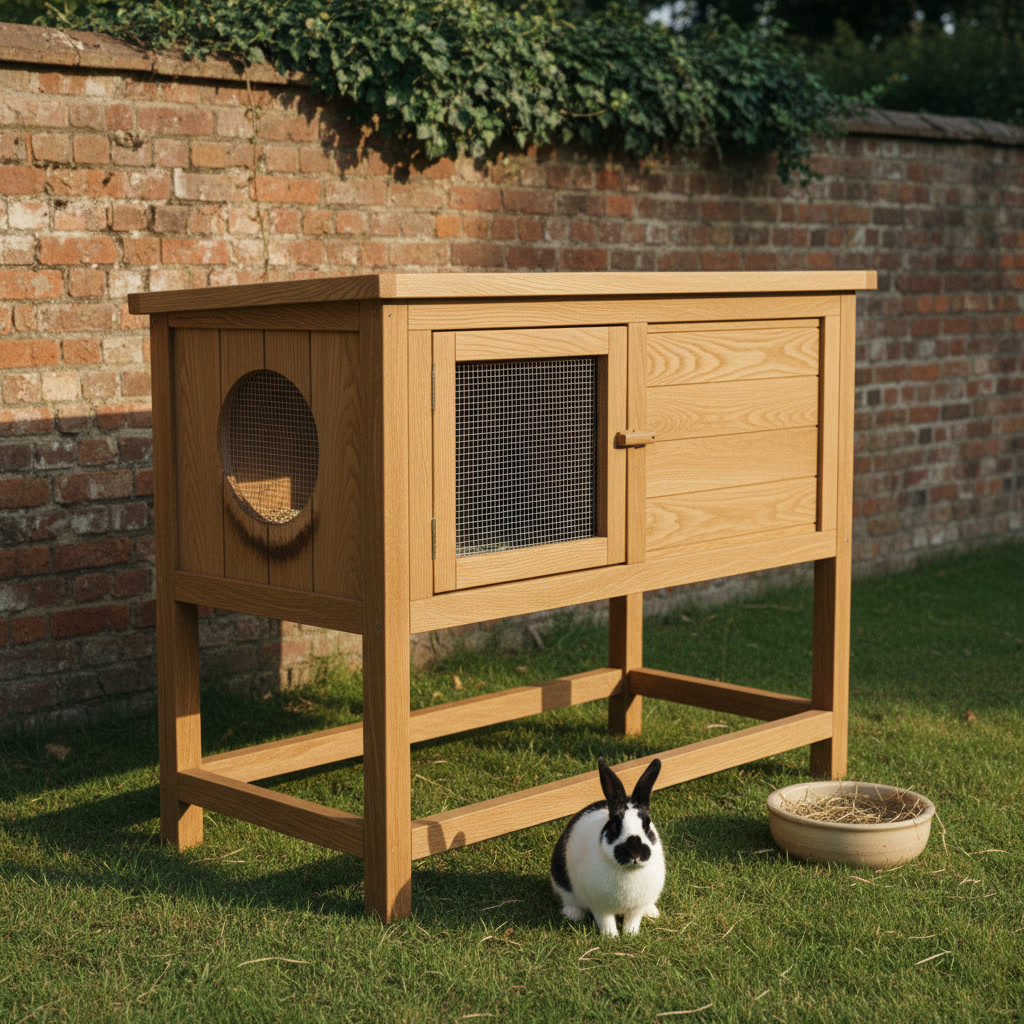
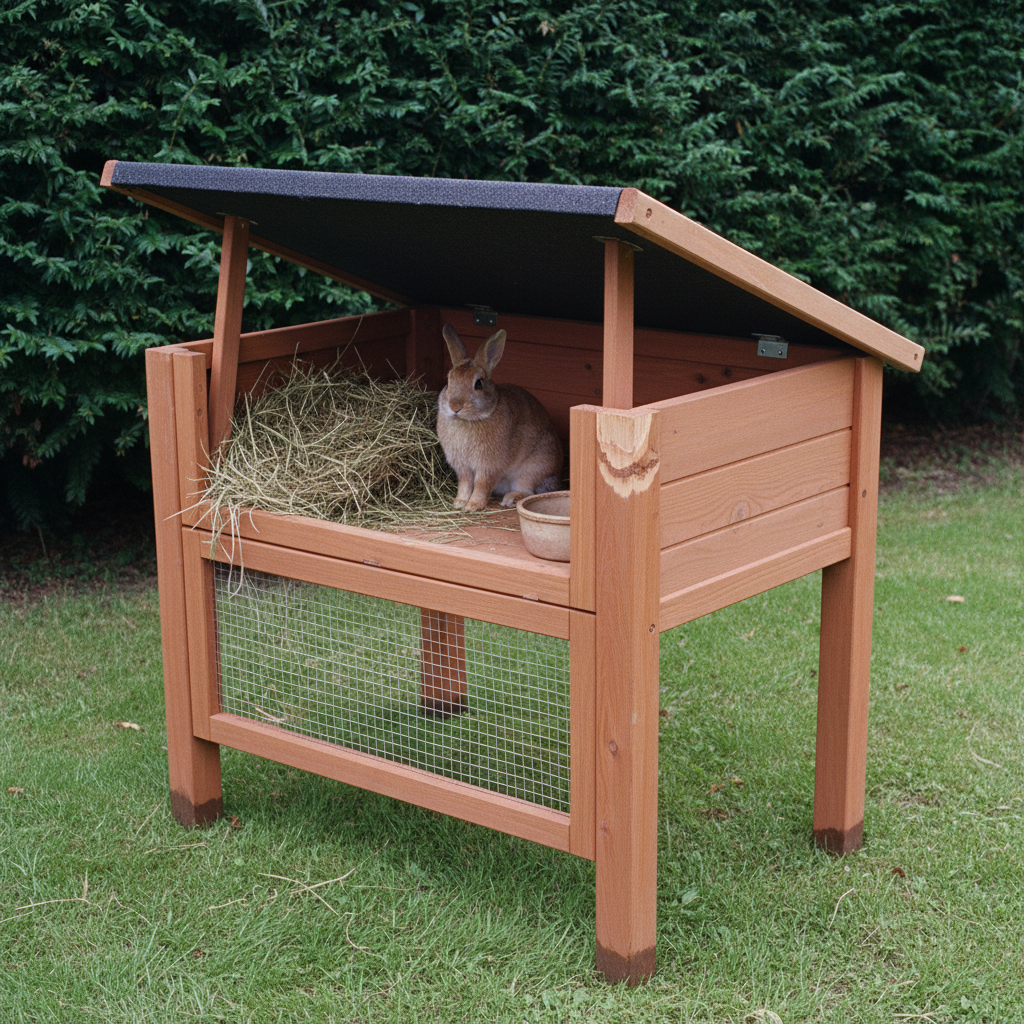
See it standing on the lawn before you buy a single board. This AI rabbit hutch design generator turns a description into one real hutch photographed in a real garden, in about thirty seconds — rough-sawn larch on long legs, a painted two-storey with a ramp down to the run, a mesh door standing open, reclaimed boards under corrugated sheet, an oak box on its own stand and a felt lid propped up. All six are below exactly as they came back, including the one that had to be run twice.
Design a Rabbit Hutch FreeTry the AI Rabbit Hutch Design Generator — Free
Pick a build, then use the input for what is specific to yours — how many rabbits, whether it has to take a pair, which corner of the garden it goes in, what the fence or wall behind it is made of, whether it needs a run underneath, and how cold your winters get. Each preset already carries the camera held level at standing height, the hutch stood on plain mown grass so the camera does not climb, the legs that keep it at eye level, and every feed sack, name plaque and blank panel banned as an object.
AI Rabbit Hutch Design Generator
Choose a build, name your boards, your mesh, your legs and your roof, and get a photorealistic rabbit hutch shot in a real garden. Up to 4K.
Six Builds From the AI Rabbit Hutch Design Generator, Shown Exactly As They Came Back
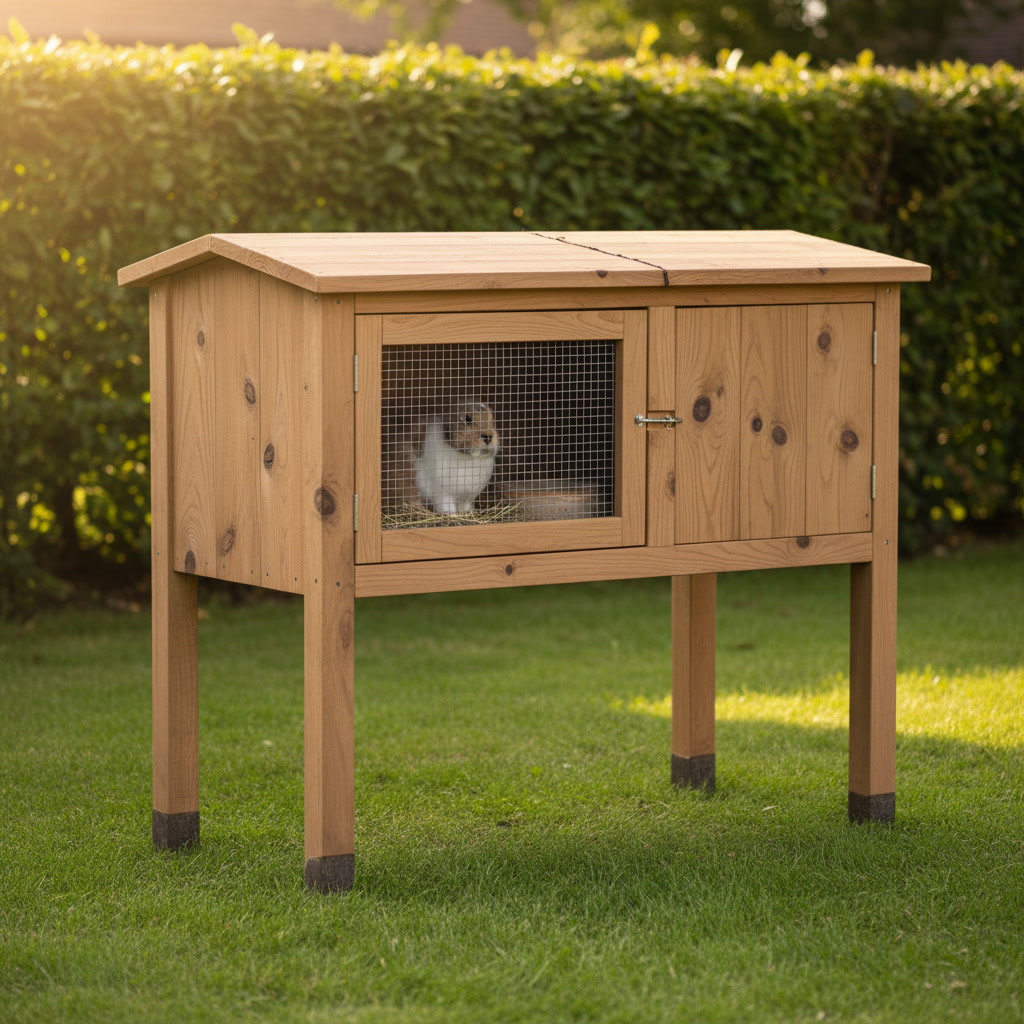
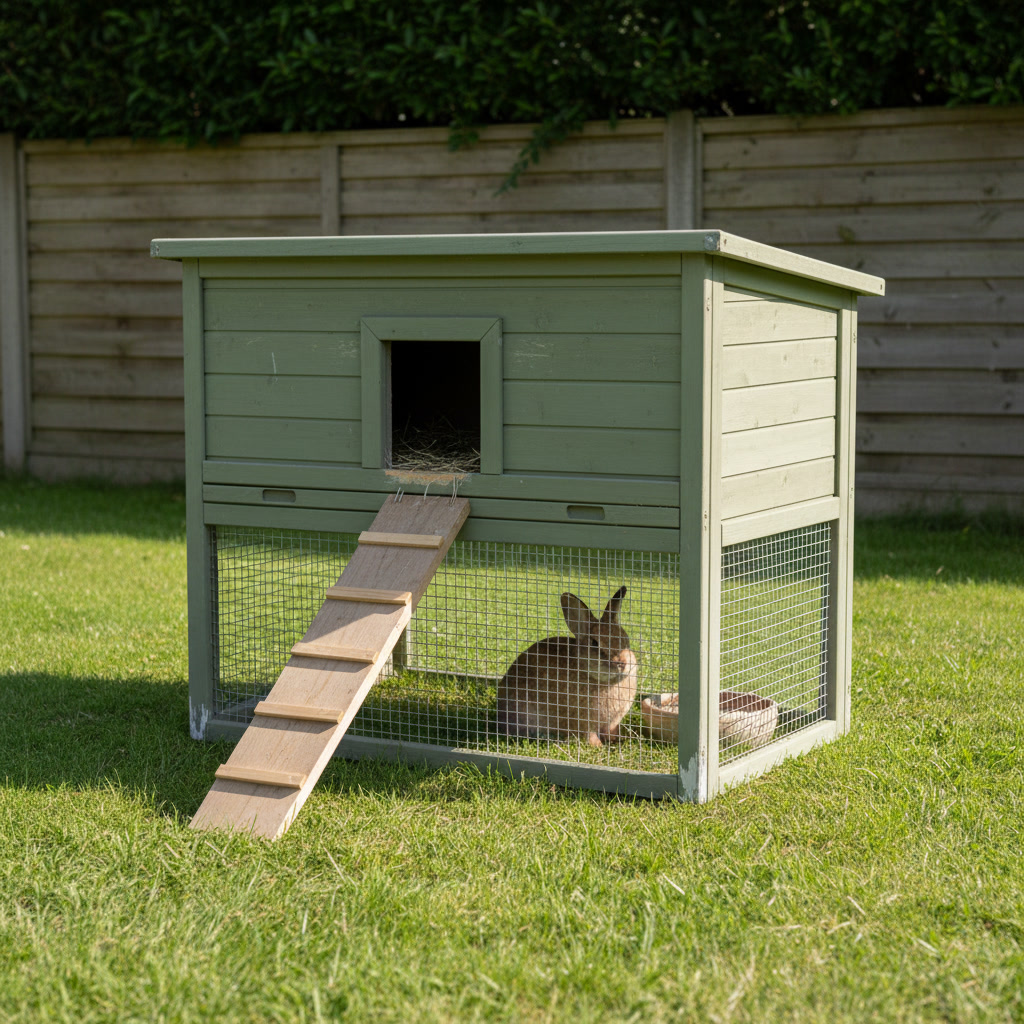
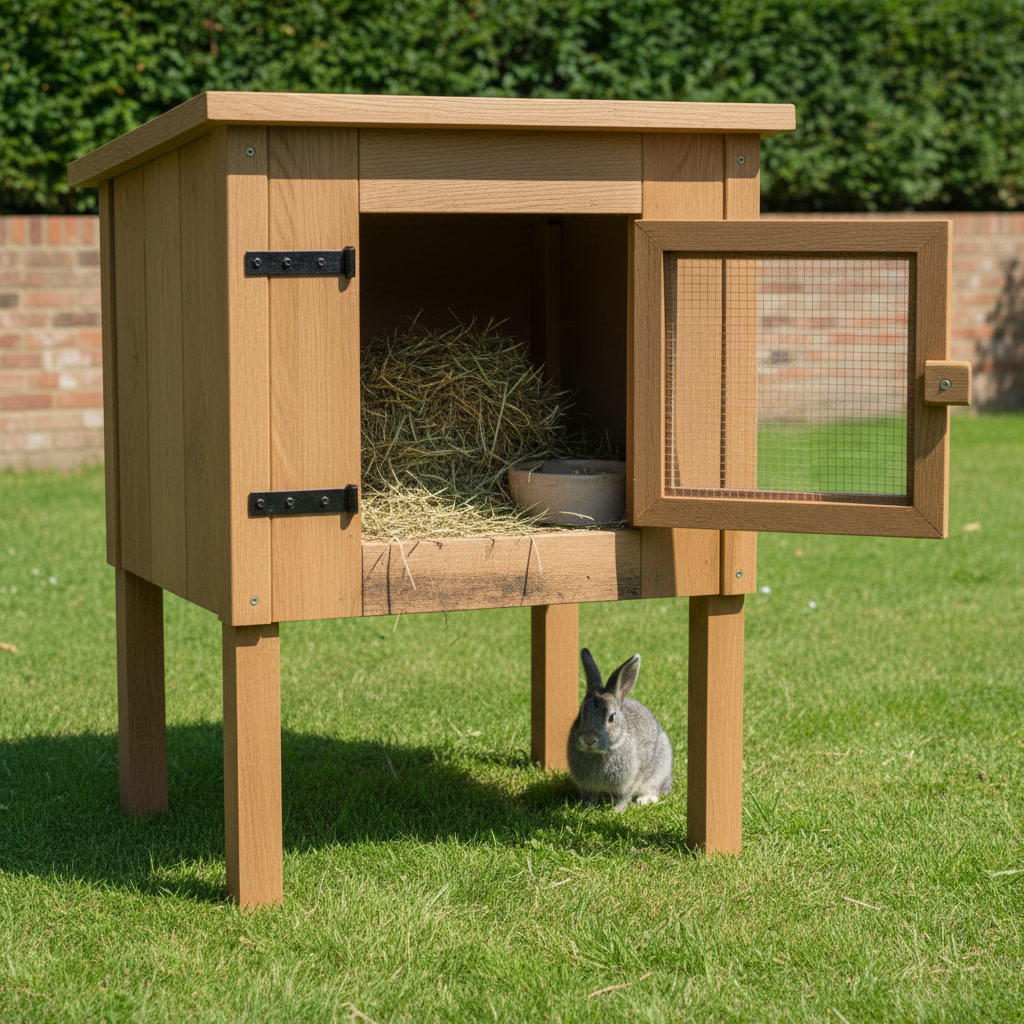
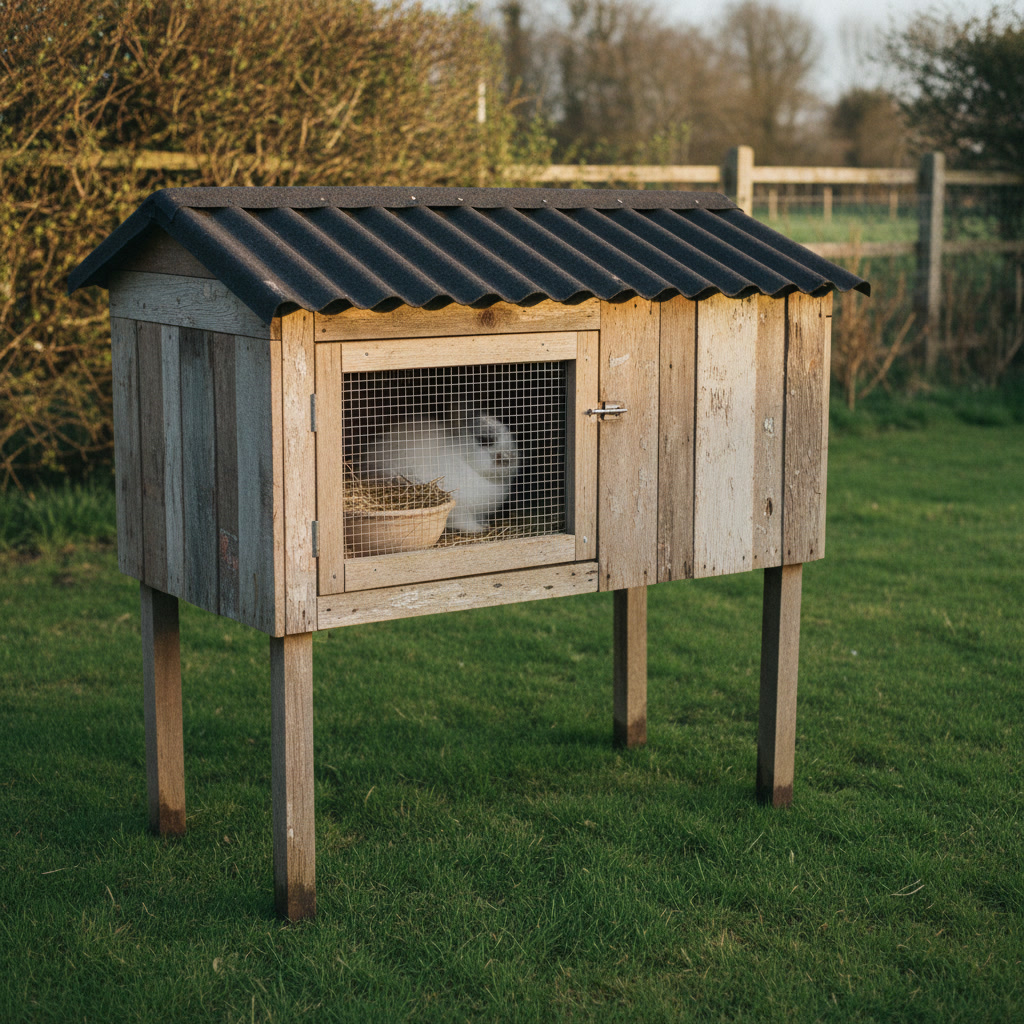
Nothing here was retouched, and the one frame that was generated twice says so in its caption. Each caption states what the prompt asked for and what actually arrived, because the gap between those two is the part nobody publishes.
What the AI Rabbit Hutch Design Generator Gets Right and Wrong
One run of six frames confirmed that legs solve the camera outright, produced an unusually clean experiment on why pinned wear disappears, and failed twice on a roof shape that has now lost five times.
Legs in the design beat every camera trick
Six frames out of six came back at standing height with two faces of the hutch in view, and not one of these prompts contains a foreground anchor — no object standing close to the lens, taller than the subject, cut by the bottom edge. The anchor was invented on this site to stop the camera climbing above short, wide things, and it has never worked well on knee-high subjects. Four long legs make the hutch tall instead, which removes the problem rather than fighting it. Put the height in the design and delete the camera clause.
Weathered timber keeps wear, fresh timber deletes it
This page is a clean side-by-side. Three builds are weathered — reclaimed boards, bare larch, douglas fir — and every wear clause on them landed. Two builds are fresh pale oak, and every wear clause on them vanished: a stain under the stand rail, a shake along the top board, darkening around the window, smoothing at the turn button, all gone, leaving flawless timber. If the wear matters to your picture, do not ask for it on a brand new pale finish. Ask for it on something already grey.
The both-ends-named fixing rule does not cover doors
Chunky hardware with both ends named and a real face to bite into is the most reliable fixing instruction on this site. It produced nothing at all for a hinged door. The open-door frame was run twice: once the hinges duplicated onto both front posts, four instead of two; once they landed on the far end of the hutch altogether. In both attempts the open door itself is attached to nothing and floats beside the opening. Static joints land, moving joints do not, and naming both leaves does not change that.
A mono-pitch roof has now lost five times
Two presets asked for a single board sloping one way only, high at the back and low at the front, explicitly with no ridge along the top and no second slope on the far side. One arrived nearly flat with a ridge hinted at the end; the other arrived as a full gable, with the corrugated sheet running across the slope instead of down it into the bargain. Banning the ridge by name does not help. A gable is what this model believes a small outdoor timber building has on top of it.
Small repeated hardware still counts upward
One timber roof stay became two posts. Two hinges became four. One turn button became two. Three separate upward drifts in a single run of six, on exactly the class of thing this site has watched creep before — rungs, panes, hoops and brick courses. The one count that held did so twice: two bays, because the brief gave the number a structural reason, namely that there are two rooms behind the front. Reasons that constrain the structure hold; reasons about taste do not.
A named connection still escapes its enclosure
The ramp on the two-storey build was described as one unbroken board with its top end on the doorway sill and its bottom end flat on the floor of the run. It did arrive as one board rather than splitting into segments, which is a win. But it runs straight out through the wire mesh wall and finishes on the open lawn. Naming both ends of a connection tells the model where the ends go; it does not tell the model that a wall is in the way.
How It Works
Pick the build closest to what you want
Rough-sawn larch on four long legs with two rooms behind the front, a painted two-storey house over an open mesh run with a ramp between them, an oak hutch with the door standing open, a reclaimed-board hutch under a corrugated sheet, a solid oak box carried on its own stand with a round mesh window, or a chunky hutch whose whole felt roof lifts up on a stay. Each preset already carries the camera at standing height, the legs that keep it there, plain mown grass underfoot and every printed thing banned as an object.
Add what is specific to yours
One rabbit or a bonded pair, whether it has to stand through a wet winter, how high the legs need to be to mow underneath, which fence or wall it backs onto and what that is made of, whether there is a run below or the rabbits go out to a separate one, and how much of the front you want as mesh rather than boarding. Describe materials and connections rather than styles, give sizes as a proportion of something already in the frame rather than in centimetres, and leave the hardware uncounted.
Generate, crop in, then buy the timber
About thirty seconds later you have a photograph of it. Crop in before you judge it — a door floating free of its hinges, a ramp running out through a mesh wall, a roof that quietly became a gable, a stay that turned into two posts are all things you only see at full size — then download up to 4K and use it as the brief for the actual build.
Built for the Way People Actually Plan a Rabbit Hutch
A rabbit hutch, not a coop and not a beehive
Left alone, a boxy timber thing on legs in a garden comes back as a chicken coop, a dog kennel, a nesting box or a beehive, all of which the model believes in more strongly than it believes in a hutch. Every preset names the coop, the kennel, the aviary, the bird table, the beehive, the log store, the compost bin and the dolls house as things this is not, and bans the garden centre display and the row of hutches for sale outright. All six held as a single hutch built for a rabbit.
The grass is doing real work
Naming a patterned ground surface pulls the camera up to look at the pattern — gravel, paving slabs and end-grain chequer have all done it on this site, even when other camera fixes were working. Grass holds. So every preset here specifies short mown lawn running away behind the hutch and bans gravel, shingle, paving, stepping stones, decking and concrete by name. Six frames, six at standing height, no camera clause needed.
Height built in rather than faked
The foreground anchor does not rescue a knee-high subject; that has been tried here with a taller urn and it still failed. Four long legs solve it instead by making the hutch genuinely tall, and the presets state that the floor stands well above the grass and the roof reaches an adult chest. A hutch on legs is also the right answer in the garden, since it keeps the floor dry and lets you mow underneath.
Wear pinned to a pair of objects
The one wear instruction that landed on every frame it was given to is the same shape every time: the leg stained dark and greyed where it meets the grass. Two named objects, one named place where they touch. Wear pinned to a surface drifts, wear pinned at two matching spots merges into one event between them, and a ring of wear has failed four separate ways on this site. Name the junction, not the region.
Texture on the hutch, not only behind it
Every preset states the light direction, because leaving it out produces a render almost every time. That is necessary and not sufficient — a hedge behind the subject does not rescue a subject made of one flat colour. What separates the convincing frames here is material on the thing itself: mismatched reclaimed boards with flaked paint and nail holes, roofing felt whose granules catch the light, resin streaks in douglas fir. Large areas of fresh flat timber still read as CG.
The hay and the bowl are pre-declared, not banned
A rabbit hutch scene ships with a prop kit, and every item in it carries print: feed sacks, wrapped bales and their netting, plastic drip bottles, seed packets, plant labels. Banning props outright works less well than stating their form in advance, so the presets pre-declare loose dry meadow hay with nothing wrapped round it and exactly one plain unglazed stoneware bowl. Both turned up unmarked wherever they appeared, and the rabbit is specified as wearing no collar or name tag.
AI Rabbit Hutch Design Generator FAQ
Related Design Tools
AI Chicken Coop Design Generator
The nearest neighbour to this page and the thing a hutch keeps trying to turn into. Same legs, same mesh, same argument about the roof.
AI Dog House Design Generator
The other animal build on this site, and the page where a hidden-body geometry lost to a strong object prior. Worth reading next to the floating door here.
AI Birdhouse Design Generator
The page that first proved height in the design beats every camera clause — a birdhouse on a post came back at eye level six times out of six, exactly as the legs did here.
See It Standing on the Lawn Before You Buy the Timber
Six rabbit hutches, one description each, about thirty seconds per result. Start free and settle tonight whether yours goes on legs or on the ground, whether it gets one storey or two, and whether the run belongs underneath it or out on the grass.
Design a Rabbit Hutch FreeAn AI Rabbit Hutch Design Generator for Legs, Mesh and the Argument About the Roof
A rabbit hutch is a small build with more decisions in it than it looks, and the flat-packed ones settle almost none of them for you. Does it stand on long legs so the floor stays dry and you can mow underneath, or does it sit on the ground so the rabbits can reach the grass? One room or two, so there is somewhere dark to sleep away from the mesh? One storey, or a house above an open run with a ramp between them? Bare larch that will silver, or paint that will need doing again in three years? Felt on a slope, or a corrugated sheet with a proper overhang to throw the rain clear of the boards? Those are the arguments a photograph settles and a sketch does not. That is the gap an AI rabbit hutch design generator fills: describe the boards, the mesh, the legs, the ramp and the roof, and about thirty seconds later you have a picture of it standing on the lawn. The six results above are shown exactly as they came back, failures included.
The six cover the shortlist a real decision has. Rough-sawn larch on four long legs with the front split into a mesh bay and a boarded sleeping bay, which is what most people build first. A painted sage two-storey with the house above and an open wire run below, joined by a single battened ramp, for a garden with no room for a separate run. An oak hutch photographed with its door wide open, because you cannot judge the inside of a hutch from a picture of it shut. A hutch made from mismatched reclaimed boards under a dark corrugated sheet, for anyone building out of what is already in the shed. A solid oak box carried on its own open stand with a true round mesh window cut clean through the end, for a garden where the hutch has to look deliberate. And a chunky douglas fir build whose whole felt roof hinges at the back and props open, for cleaning out without crawling in.
The pattern in what came back matters more than a feature list. The headline finding is about the camera, and it is the cleanest confirmation this site has of a rule it learned on a birdhouse. Not one of these prompts contains the foreground anchor clause normally used here to stop the camera climbing above a subject, and all six frames still came back at standing height with two faces of the hutch in view. Long legs make the hutch a tall object, and a tall object gives the camera nowhere above it to look down from. The grass underneath is the other half: naming a patterned ground surface pulls the camera up to look at the pattern, so every preset specifies plain mown lawn and bans gravel, paving and decking outright. The second finding is an unusually clean experiment on wear, because three of these builds are weathered timber and two are fresh pale oak. Every wear clause on the weathered ones landed, including the leg stained dark and greyed exactly where it meets the grass on three separate frames. Every wear clause on the fresh oak vanished without trace. A brand new pale finish deletes pinned wear, and the fix is to ask for it on something already grey.
The failures are worth knowing before you start. Doors are the big one, and this page states it more plainly than any before it: the fixing technique that works everywhere else on this site — chunky hardware, both ends named, a real face to bite into — does nothing for a hinge. The open-door frame was generated twice, and in both attempts the door floats unattached beside the opening, with the hinges once duplicated onto both front posts and once landing on the far end of the hutch entirely. The mono-pitch roof lost twice more here, once arriving nearly flat and once as a full gable, despite the ridge and the second slope being banned by name. Small hardware counted upward three times in six frames: one stay became two posts, two hinges became four, one turn button became two. And a ramp described with both of its ends named still ran straight out through the mesh wall of the run and finished on the open lawn. Against that: six frames out of six at standing height, six out of six with no lettering anywhere on a subject whose every accessory carries print, six out of six reading as a rabbit hutch rather than as a chicken coop or a beehive, and the one count that was given a structural reason holding at exactly two, twice. Inside those limits an AI rabbit hutch design generator is a genuinely useful half hour before anyone picks up a saw.