
AI Picnic Table Design Generator
See the table standing on your lawn before anybody buys the timber. This AI picnic table design generator turns a description into a finished table photographed where it stands, in about thirty seconds — classic A-frame oak, modern minimalist, round, child-sized, live-edge slab and painted green. All six results are below exactly as they came back, with what the prompt asked for and what actually arrived.
Design a Picnic Table FreeTry the AI Picnic Table Design Generator — Free
Pick a style, then use the box for what is specific to you — the timber, the stain or paint colour, detached benches instead of attached ones, a wheelchair-accessible end, a parasol hole through the middle, the hedge or wall you already have behind it. Each preset already carries the joinery, the connections, the camera position, the weathering and the no-lettering list, all tightened after reviewing what came back the first time.
AI Picnic Table Design Generator
Choose a style, name your timber, legs, benches and finish, and get a photorealistic picnic table built and standing on the grass. Up to 4K.
Six Tables From the AI Picnic Table Design Generator, Shown Exactly As They Came Back
Nothing here was regenerated or retouched. Each caption says what the prompt asked for and what actually arrived, because the gap between those two is the part nobody publishes.
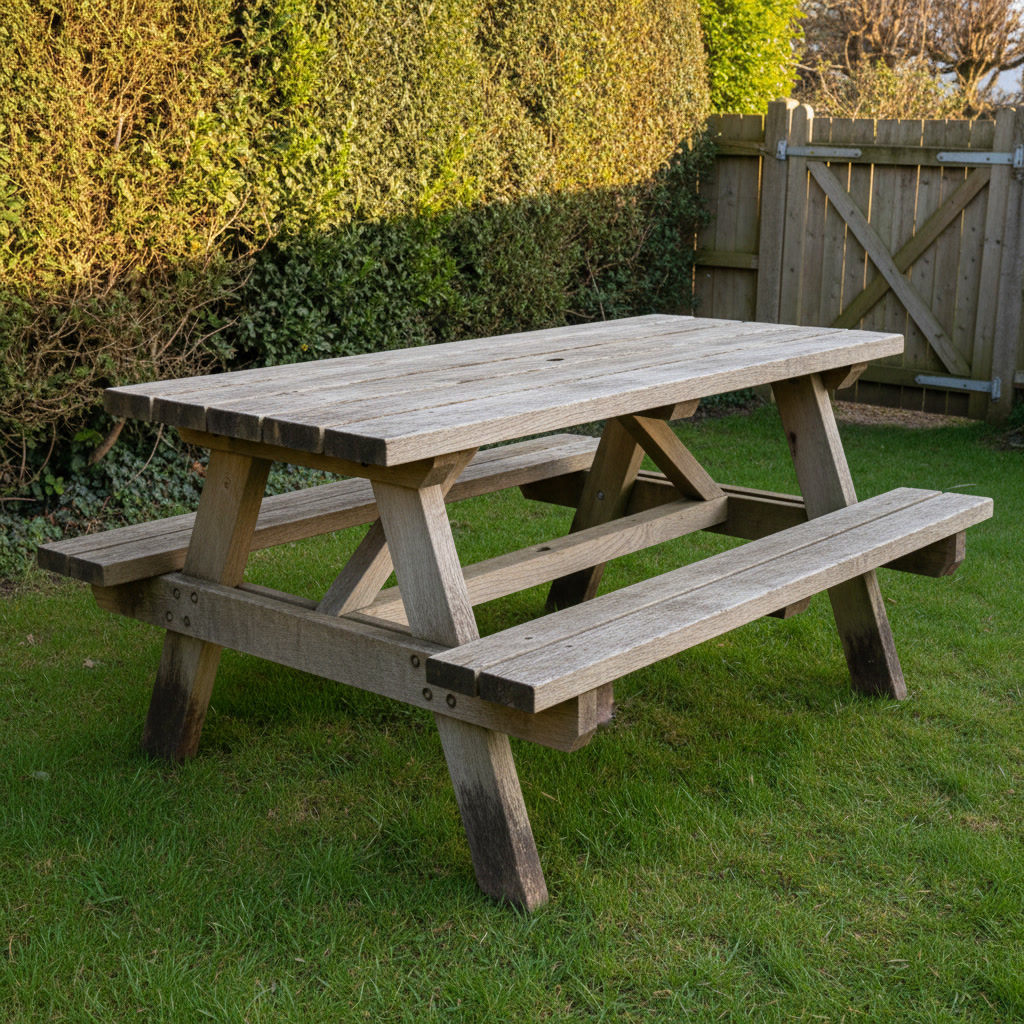
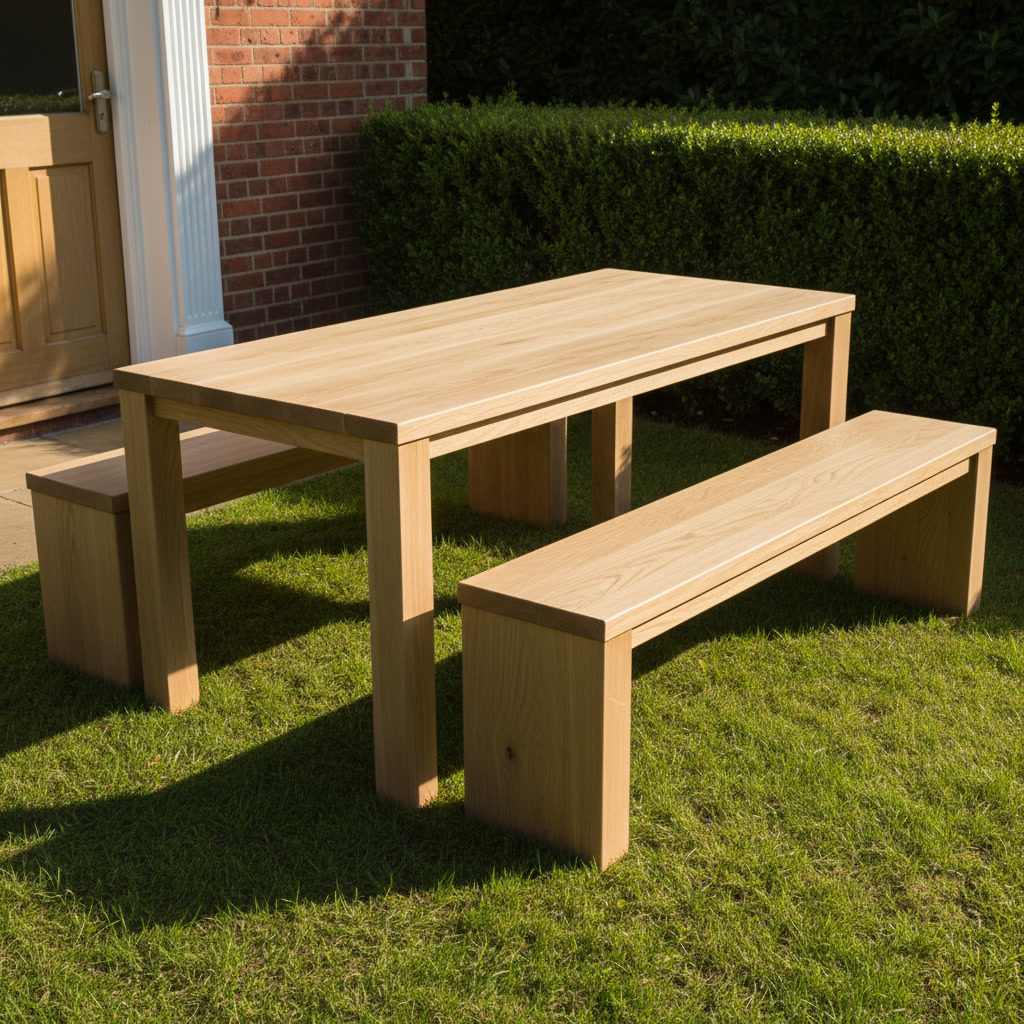
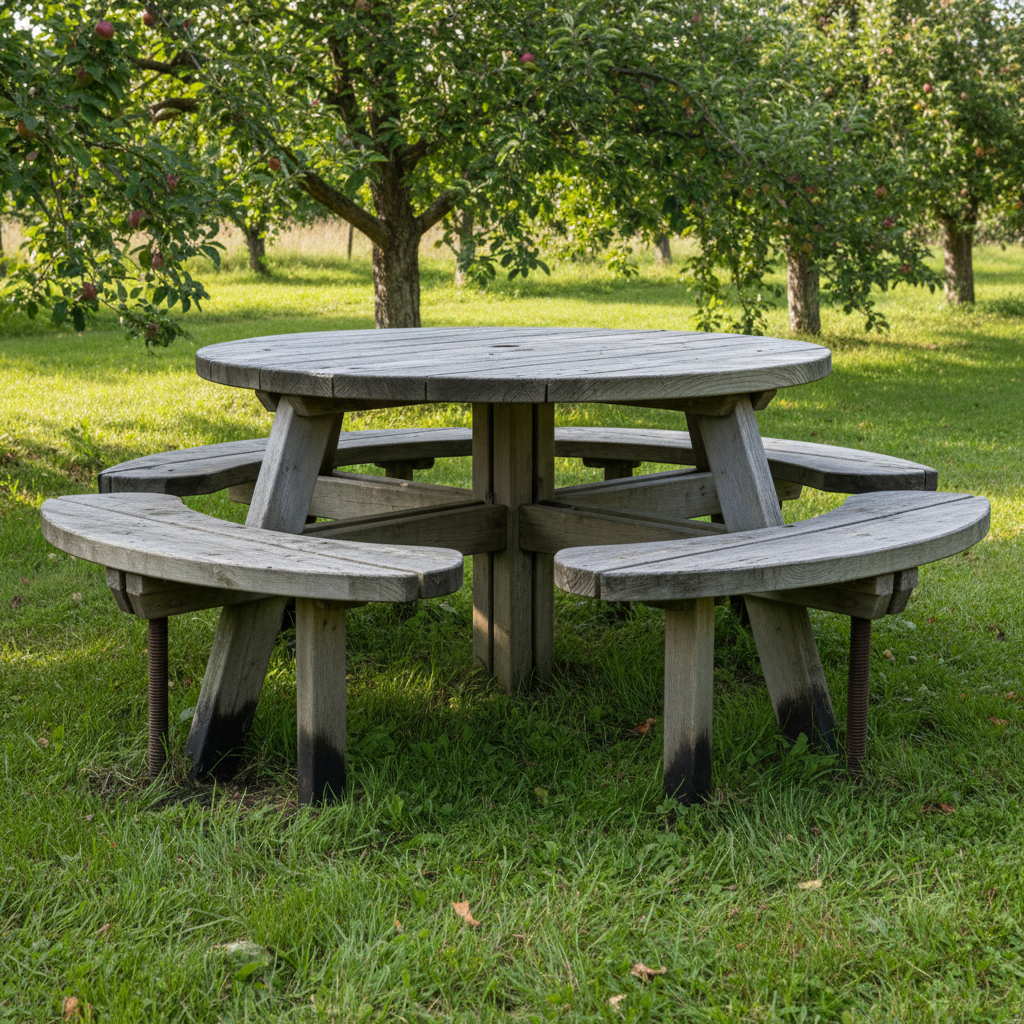
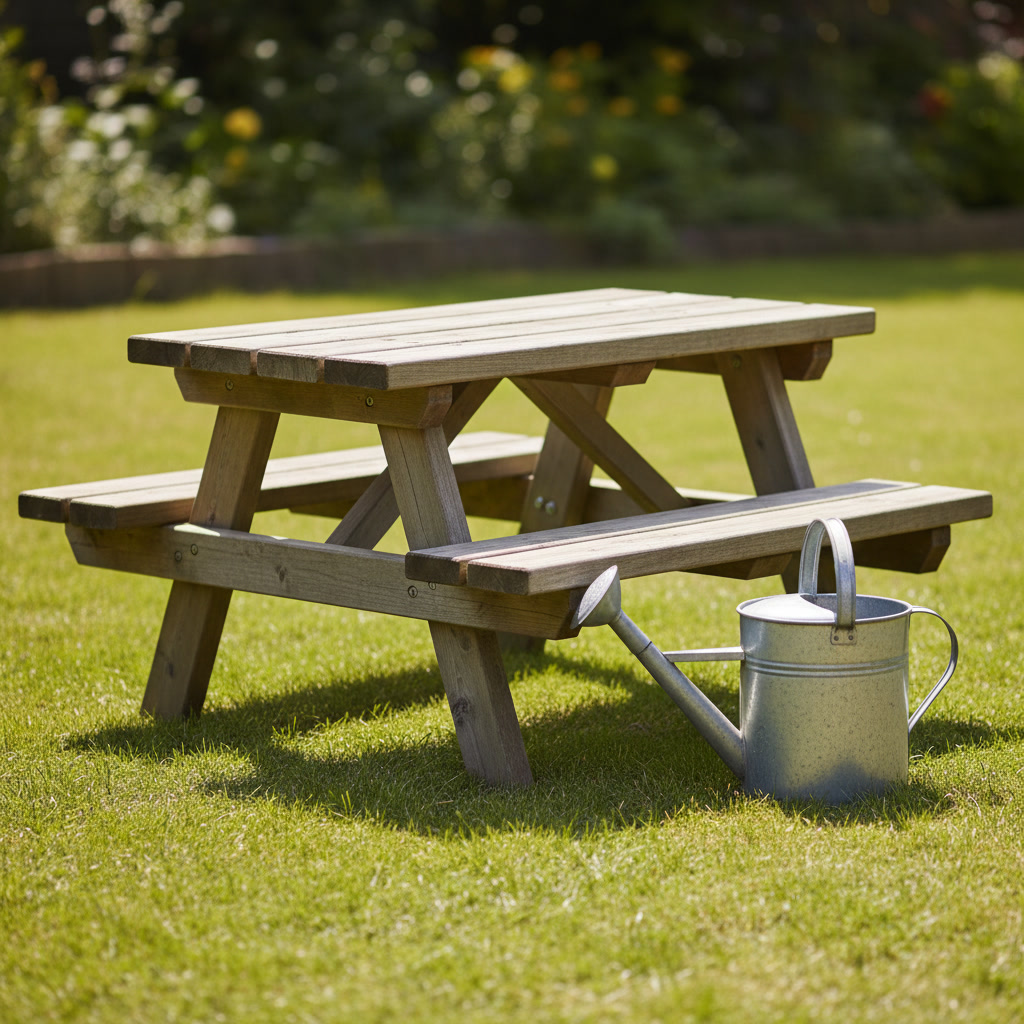
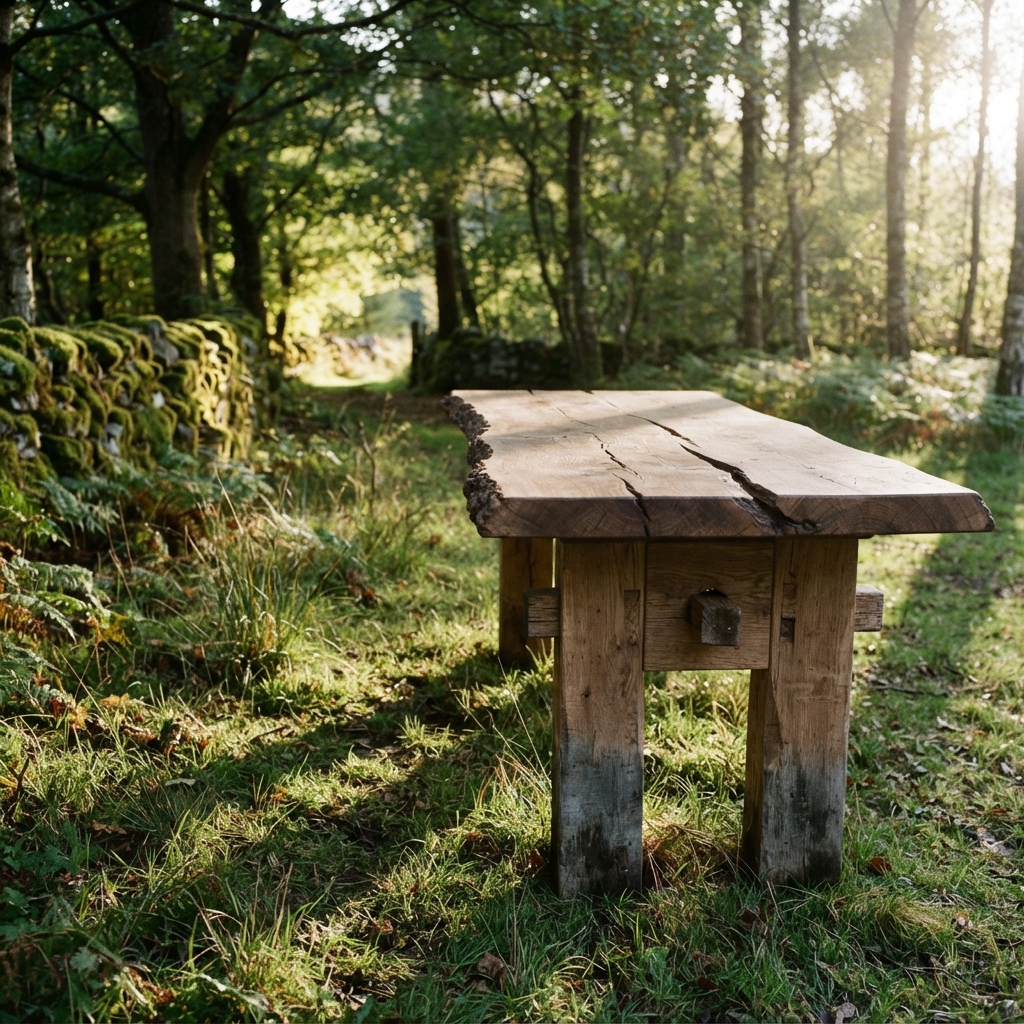
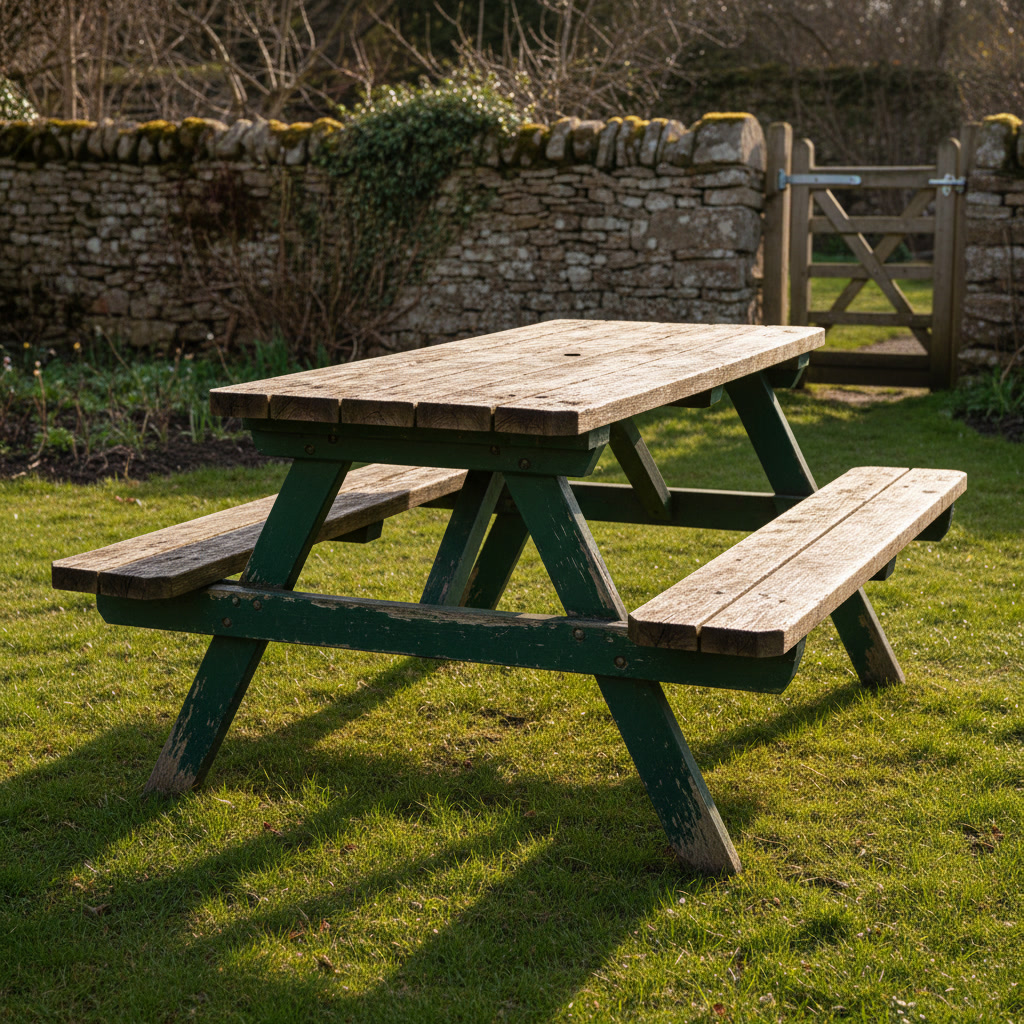
What the AI Picnic Table Design Generator Gets Right and Wrong
A picnic table is a small object with a very strong archetype behind it, and almost every interesting failure comes from that archetype pushing back.
A peg through the timber beats any bracket — if you can see it
A peg driven right through the leg and the beam with both sawn ends standing proud is the most reliable connection instruction on this subject: on the live-edge slab it arrived wedged and visibly proud, because its run is visible on both faces and there is nothing to imply. It has one hard limit. On the round table the same sentence pointed at a centre post hidden behind the structure, and rather than being drawn it was relocated — two rusted coiled rods appeared standing in the grass, fixed to nothing at all.
Legs solve the camera height, not the camera angle
Small garden objects normally drag the camera up and over, and the usual fix is an anchor object standing in the foreground. A picnic table needs none: height built into the design holds the view at standing eye level, and not one of these six presets contains an anchor clause. The angle is a separate fight and it was lost twice. The round table came back square on, because radial symmetry beats an off-to-one-side instruction, and the long slab pulled the lens onto its own axis despite the prompt forbidding that in as many words.
A fresh pale finish deletes every wear clause
The clearest A/B on this page. The same weathering language that greys the feet of the oak table, splits a board and leaves the grain standing proud does nothing whatever once the timber is described as new and pale. Clean, plain and smooth is the vocabulary of a visualisation, and it quietly overrules a whole paragraph asking for a photograph.
Grass holds the view, gravel loses it
What the table stands on turns out to matter as much as the table. A patterned ground — gravel, paving, decking boards — reads as a pattern worth photographing and pulls the camera up into a high three-quarter or overhead view. Mown grass and orchard grass hold the camera down at standing height. All six presets stand the table on grass for exactly that reason.
One sentence per part fixes matching parts — lists still get sampled
A property given to two matching parts in a single phrase normally lands on one of them. Writing the near end and the far end as two separate sentences, each describing the A-frame in full rather than referring back, produced two correct A-frames on the first try. The related failure survived, though: green paint specified for the legs, the rails and the bench seats arrived on the legs and rails only. A list of three parts gets sampled, so give each one its own sentence too.
The archetype fits a parasol hole whether you ask or not
Three of these six tables came back with a cleanly bored parasol hole through the middle of the top, and not one prompt mentions a parasol. A picnic table is one of the few objects whose standard form includes a hole, so the hole arrives as standard equipment. If you do not want one, ban it by name — and expect the same behaviour from any feature the object is normally sold with.
Bans need the empty form banned too
A picnic table is a plaque magnet — memorial plates, dedication panels and carved initials are all things real ones wear. Banning the plaque alone gets you a blank metal rectangle screwed to the rail instead. Banning the plaque and its empty form, the recess, the frame, the holder and the hook, is what actually clears the frame.
How It Works
Pick the style
Six presets: a classic A-frame in weathered oak, a modern minimalist table in pale oak, a round table ringed with curved benches, a child-sized table, a live-edge slab on trestle legs and a painted green table with a bare oak top. Each already carries the joinery, the connections, the camera position, the weathering and the no-lettering list.
Add your table
Put the specifics in the box: the timber, the stain or paint colour, attached or detached benches, a parasol hole, an accessible overhanging end, the hedge, wall or fence behind it. Describe materials physically rather than naming a style, and say what each part lands on — the seat on its bearer, the bearer on the legs, the legs on the grass.
Check it, then download
About thirty seconds later you have a table photographed where it stands. Before you judge the look, check three things: does every leg carry on down until its foot stands flat on the ground, is each bench actually sitting on a bearer rather than floating beside the table, and did both ends come back the same. Then generate two or three more. Downloads go up to 4K.
Writing a Prompt That Produces a Buildable Picnic Table Design
Four habits that separate a design worth showing a joiner from one you regenerate, all learned from the six results in the gallery above.
Write the fixing through the timber
Not bolted together, but a peg driven right through the leg and the beam with both sawn ends standing proud. A fixing you can see from both faces gets drawn; one described only by the joint it closes gets implied, and an implied fixing is a floating one.
Ask for the wear that gets drawn
A leg stained dark and greyed where it meets the grass lands every time. A ring of wear on the top never does, and a stain asked for on a timber top comes back as a hole cut through it. For the top, ask for an open split running along the grain instead.
Give size a thing to be measured against
Stated measurements never land. A child-sized table reads as small because a plain galvanised watering can stands beside it at the same height as the top, and because the full-size version is banned from the frame by name. Proportion against something in shot is the only size instruction that works.
Say where the light comes from, then add texture
No stated light direction gives you a render every time, but naming one is not enough on its own. Put a real material on the table itself — rough-sawn faces, grain standing proud, darker end grain, knots. Texture on the wall behind the table does not rescue the table.
Who Uses an AI Picnic Table Design Generator
Weekend woodworkers
A picnic table is the classic first outdoor build, and the plans you find online are all cutting lists and leg angles. None of them tells you what the finished thing looks like in oak against your hedge. Generate the same table in three timbers and two finishes and the design decision is made before the first board is cut.
Homeowners buying rather than building
The catalogue photograph is taken on a white studio sweep or a display forecourt with nothing else in the frame. Seeing the same table on mown grass, at eye level, against your own fence and in your own afternoon light, is a comparison nobody sells you and it usually settles an argument in an evening.
Garden and landscape designers
Outdoor seating is the part of a scheme clients struggle to picture from a plan. A photographed table on the lawn is worth more in a presentation than a CAD block, especially when you are arguing for a round table that eats a different footprint from the rectangle everybody already imagines.
Pubs, campsites and village halls
Buying a dozen tables is a real capital decision and the choice is usually made from a supplier PDF. Generating the same table painted, stained and left bare shows what each option will look like in three years, which is the question that actually matters when the things live outdoors permanently.
Parents planning a garden for children
The child-sized table is its own decision — low enough to be usable, sturdy enough to survive, and not so twee it has to be thrown away in two years. The preset here shows one at a believable height beside a familiar object, which is more useful than a product photograph with no scale in it at all.
Joiners and timber merchants quoting a job
Showing a customer a configuration you have not built yet normally means a sketch or a CAD render that looks like a render. These come back looking photographed — greyed feet, grain standing proud, a split along one board — which sells the build better, as long as the spec and the cutting list go on a separate sheet.
AI Picnic Table Design Generator FAQ
Related Design Tools
AI Furniture Design Generator
The same joinery thinking applied indoors. Tables, chairs, cabinets and shelving, when the piece lives in a room rather than on a lawn.
AI Patio Design Generator
For everything the table sits in. Paving, planting, seating and lighting, when the question is where the table goes rather than how it is built.
AI Pergola Design Generator
For the structure over the table. Posts, beams, rafters and climbers, when the dining spot needs shade as well as somewhere to sit.
See It on the Lawn Before You Buy the Timber
Six styles — classic A-frame oak, modern minimalist, round, child-sized, live-edge slab and painted green — each photographed where it stands in about thirty seconds, in your garden and in your light. Up to 4K. Free to start, from $2.99.
Design a Picnic Table FreeAn AI Picnic Table Design Generator for Woodworkers, Homeowners and Anyone Pricing a Garden Table
A picnic table is the easiest piece of outdoor furniture to get wrong, because every source of information about one is either a cutting list or a studio photograph. The plan gives you leg angles and board widths and tells you nothing about how the finished thing sits on a lawn. The catalogue shot is taken square on against a white sweep with no grass, no hedge and no scale in it. Neither answers the question people actually have, which is what a rough-sawn oak A-frame looks like against their own fence on a Saturday afternoon, and whether the round one they keep coming back to will eat the whole patio. That is the gap an AI picnic table design generator fills. Describe the timber, the legs, the benches, the finish and the garden around it, and about thirty seconds later you have a photograph of the table standing there. Every preset on this page is written that way, and the six results above are published exactly as they came back, failures included.
The six styles cover the shortlist a real project actually has. A classic A-frame in weathered oak, which is what most people picture when they say picnic table. A modern minimalist version in pale oak with straight square legs, for anyone who wants the form without the campsite associations. A round table ringed with curved benches, which is the option nobody can visualise from a plan and the one that changes the footprint most. A child-sized table, where the whole decision is proportion. A live-edge slab on chunky trestle legs, for the build that is really a statement piece. And a painted green table with a bare oak top, because paint on a table that lives outdoors permanently is a decision you want to see aged rather than new.
The pattern in what came back teaches more than a feature list. Joinery described end to end is the solved half: a peg driven right through the leg and the beam with both sawn ends proud, a bench seat carried on a bearer that passes underneath it and is fixed to both legs, a leg that carries on down until its sawn foot stands flat on the grass with a real contact shadow. Weathering is solved too, but only in one direction — a leg stained dark and greyed where it meets the grass lands every time, an open split running along a board lands, and a ring of wear on the table top never does. The camera is solved for free on this subject, because a table has legs, and height built into the design holds the view at standing eye level without any of the foreground tricks that smaller garden objects need. What still fails is narrower. Anything given to two matching parts in one phrase arrives on one of them. Anything counted across a flat face drifts. And a fresh pale finish quietly deletes every wear instruction in the prompt, which is why five of these six presets specify weathered timber.
The working rules follow directly, and they are all in the presets now. Write each fixing through the timber it passes through rather than across the gap it closes. Describe the near end and the far end as separate sentences, because both ends is read as one end. Ask for the wear that actually gets drawn — greyed feet and an open split, not a stain ring on the top. Give size something in the frame to be measured against instead of a number. Name a direction for the light and then put a real material on the table itself, because texture behind the subject does not save a flat one. Stand the table on grass rather than gravel or paving, which are patterns that pull the camera up and over. And keep enumerating everything that could carry text, which on this subject means the memorial plaque, the dedication panel, the carved initials and the empty recess where a plaque would sit, as well as every bottle, packet and napkin a picnic scene brings with it uninvited. Inside those limits this is a genuinely good way to spend twenty minutes before you spend on timber: the look gets settled, the household agrees on something it can point at, and the joiner gets a picture instead of an argument.