
AI Knitting Pattern Generator
A knitted stitch is a small V, wider than it is tall, and every technique has its own hard rule about how many colours can live in a single row. This AI knitting pattern generator is built around those rules rather than around pretty flat artwork: stranded Fair Isle, intarsia, Aran cables, blocked lace, mosaic slip-stitch and stitch-level swatches. See the fabric before you buy the yarn — about twenty seconds per design.
Start Designing FreeTry the Knitting Pattern Generator — Free
Pick the technique first, then add your yarn colours and motif. Each preset composes for what that technique can physically do — how many colours fit in a row, whether the design is colour or shadow, and how the fabric behaves once it is off the needles.
AI Knitting Pattern Generator
Choose a knitting technique, describe the yarn colours and motif, and get a picture of the finished fabric at up to 4K
Knitting Designs Made With This Generator
Six techniques rather than six decorative styles, generated with the presets above and left unedited. Read them against each other and the constraints show up on their own. The stranded yoke keeps to two colours in every band because that is all a knitter can carry across a row, while the intarsia sweater spends colours freely and pays for it in bobbins. The Aran sweater has no colour at all and is only legible because the light is coming in low from one side — move it under a ceiling lamp and the cables flatten out. The lace only looks like lace because it is pinned to a mat, and the last frame is the whole problem in close-up: the cream motif has come out wider than it is tall, and its edges climb the fabric in stair-steps, because a knitted stitch is a V wider than it is tall and a row is the only place an edge can move.
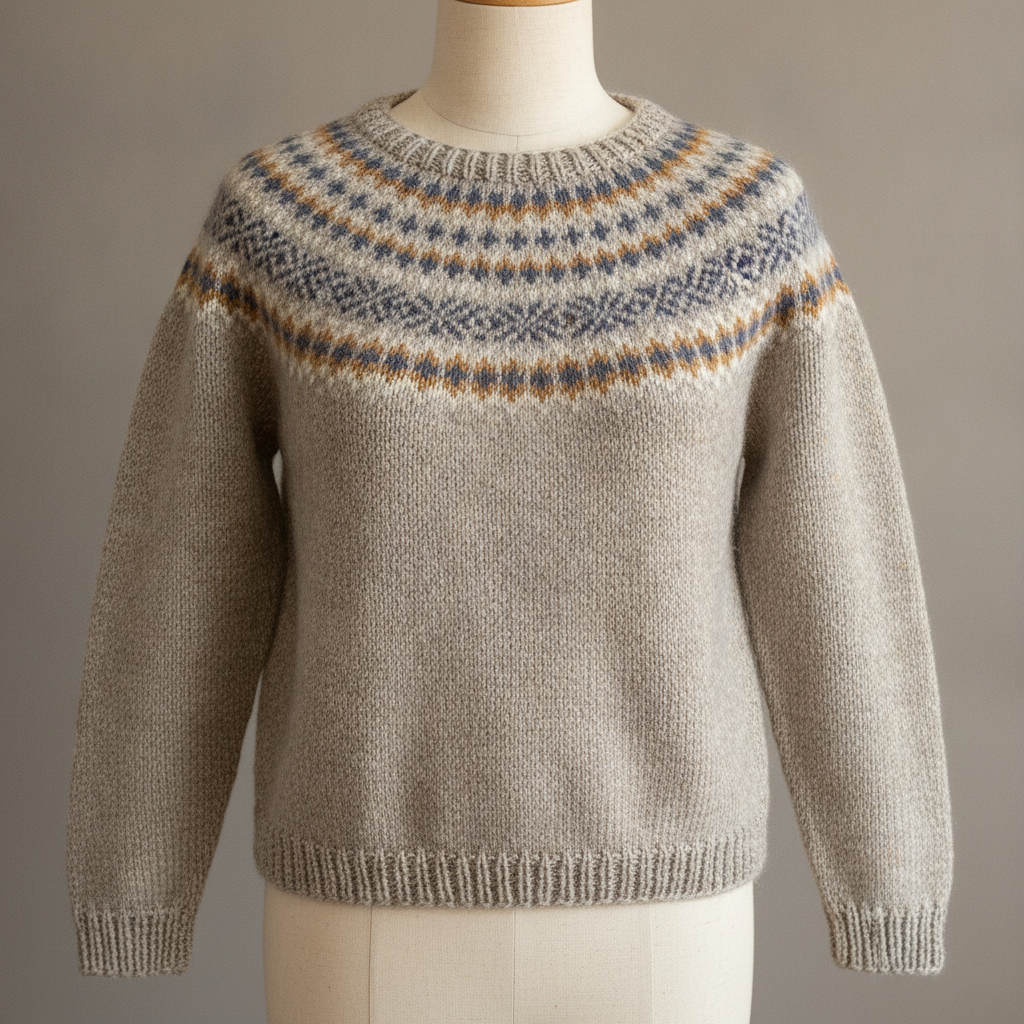
AI knitting pattern generator result: a circular stranded colourwork yoke in slate blue and amber on pale heathered grey wool, its motifs stacked in horizontal bands that each carry only two colours at a time
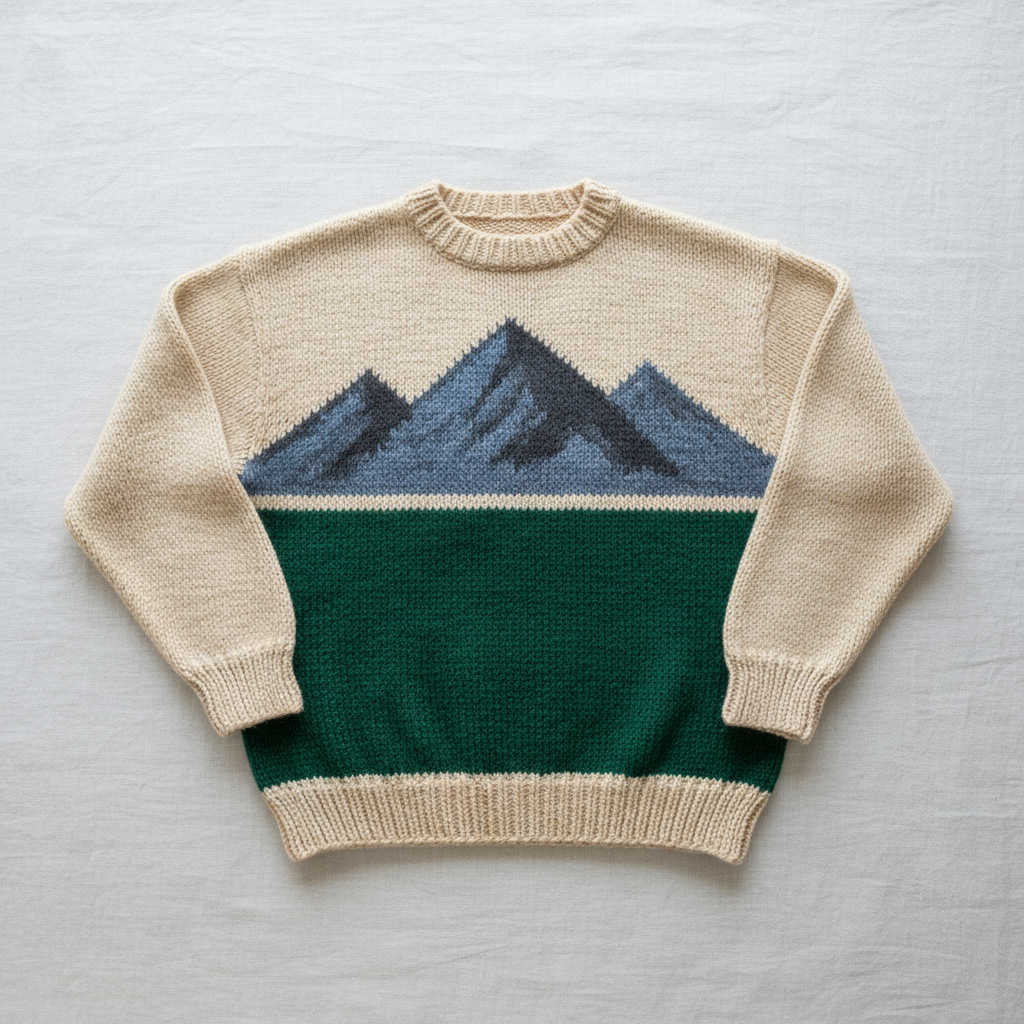
A cream sweater laid flat with a large intarsia mountain scene in slate blue, charcoal and deep green, each colour a separate ball of yarn and every ridge line climbing in visible stitch-wide steps rather than as a smooth printed edge
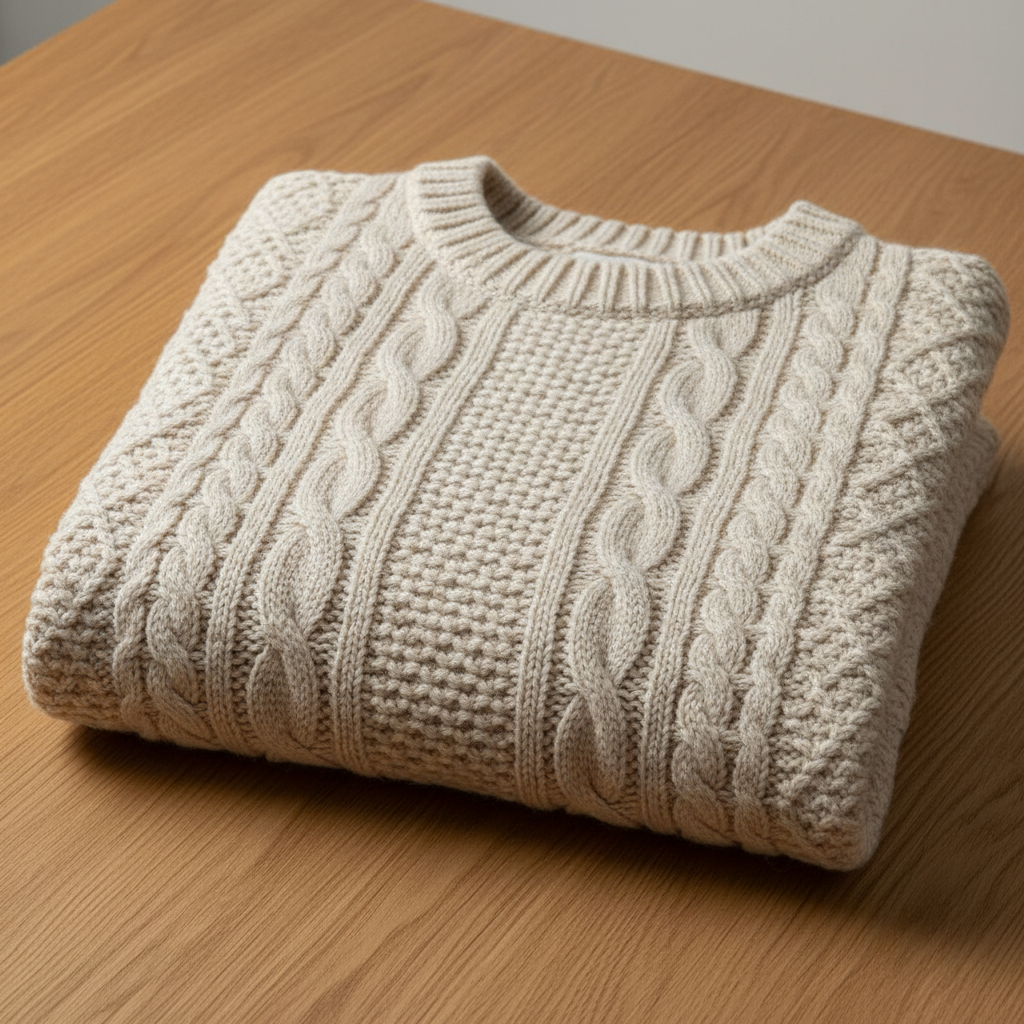
A folded cream Aran sweater in a single undyed colour, where twisted rope cables and a seed stitch centre panel are visible only through the shadows the side light throws into them
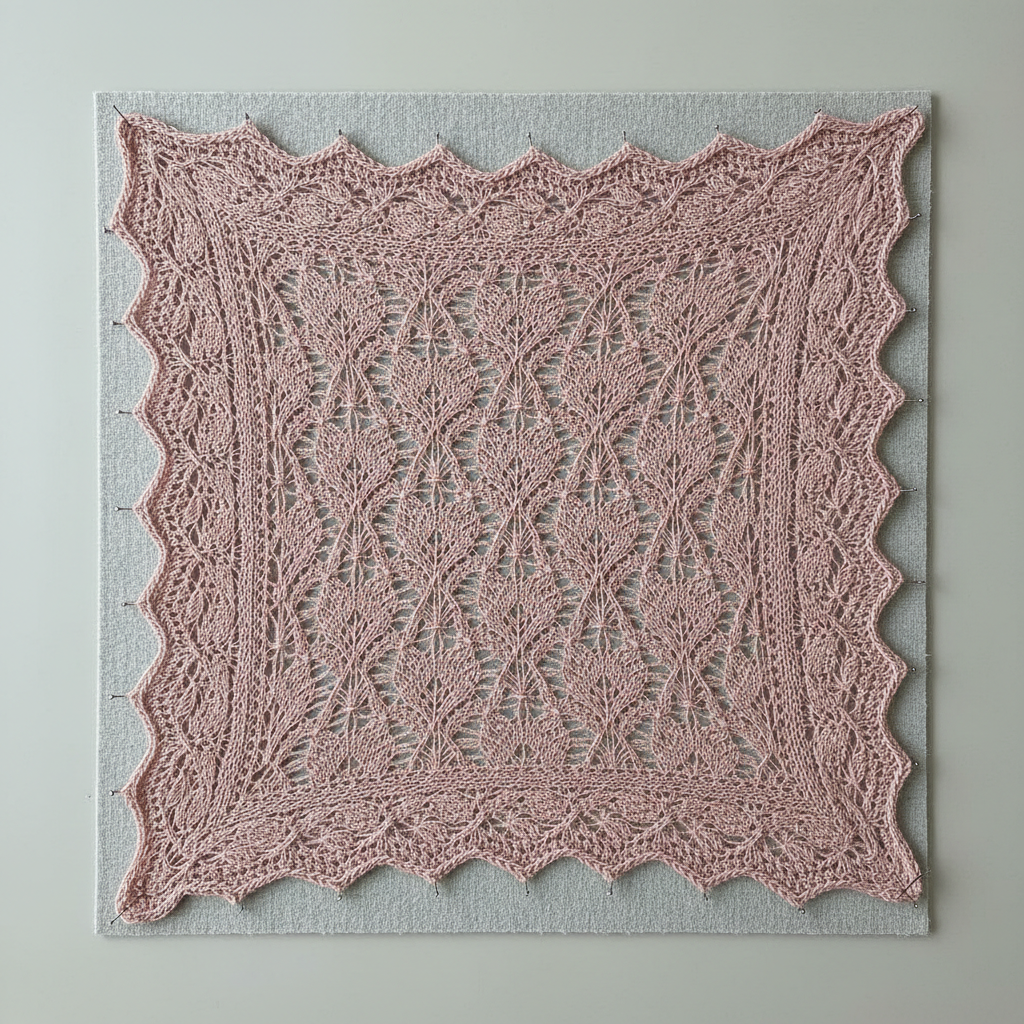
A square dusty rose lace panel pinned out taut on a blocking mat, its eyelet leaf motifs and pointed scalloped edge held open only because the fabric is stretched and drying under the pins
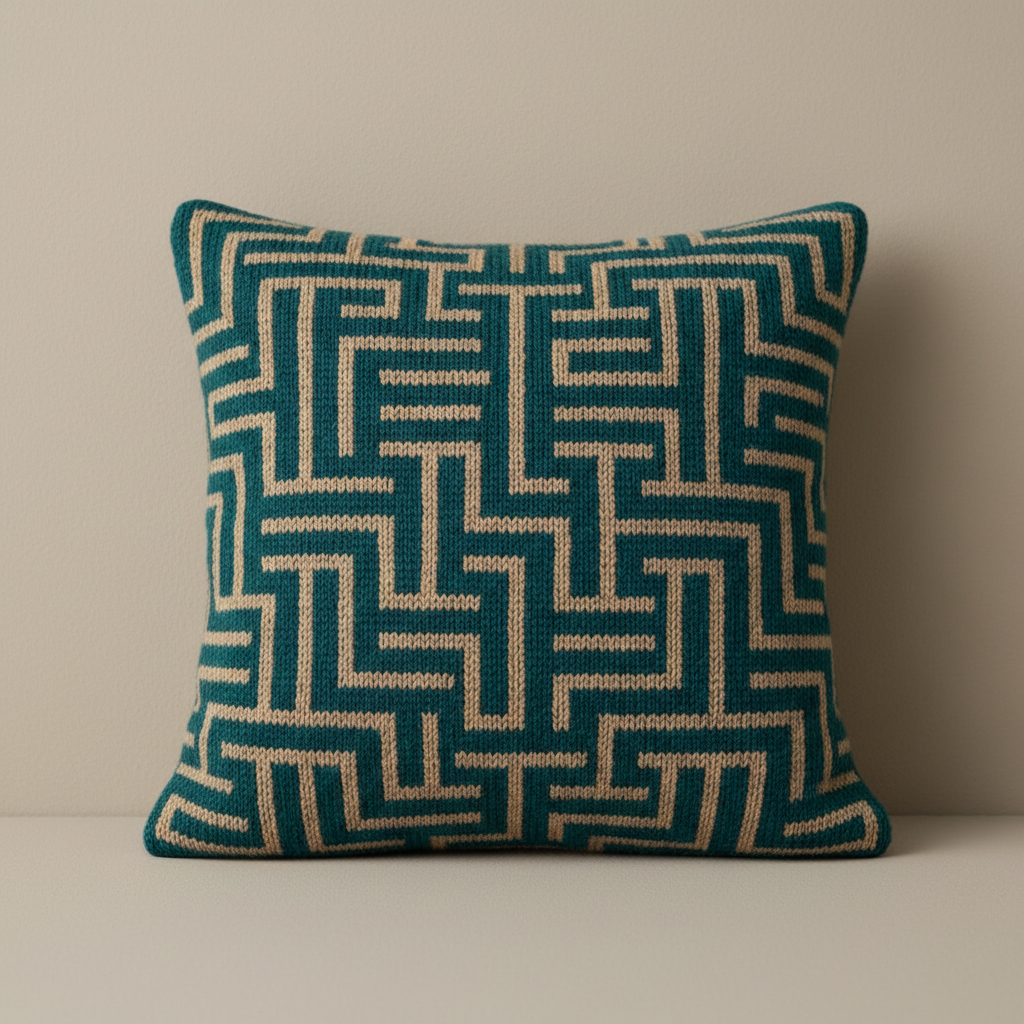
A mosaic slip-stitch cushion in teal and sand, where the interlocking maze design is built entirely from horizontal steps because each row carries a single colour
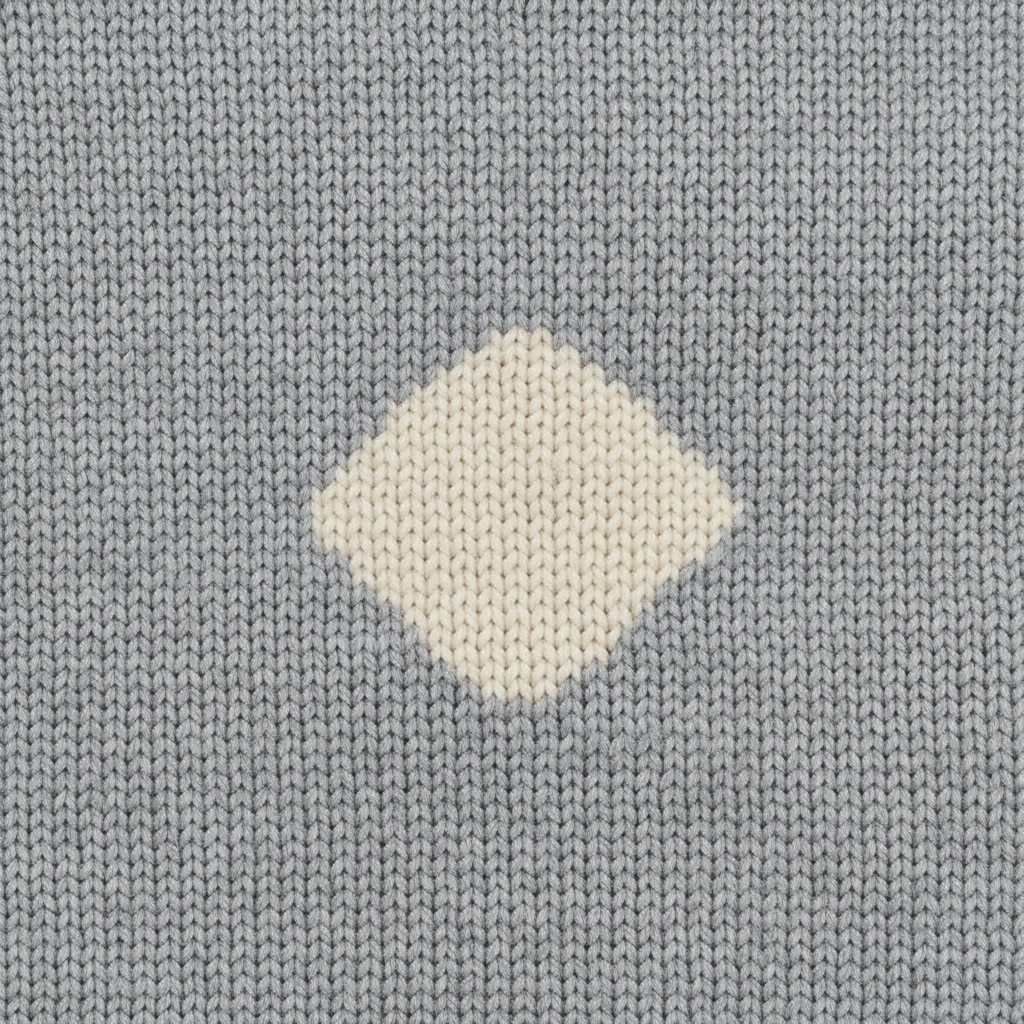
Macro on grey stocking stitch: a cream motif comes out noticeably wider than it is tall because every knitted stitch is a V wider than it is tall, and its edges climb the fabric in visible stair-steps one row at a time
How the AI Knitting Pattern Generator Works
Pick the technique
Stranded Fair Isle, intarsia, Aran cables, blocked lace, mosaic slip-stitch or a stitch swatch. The technique sets the colour rules and decides whether the design is made of colour or of shadow, so it comes before any palette.
Describe yarn and motif
Add the yarn weight, the fibre and the colours, then the motif and how big it should sit. Scale is the real decision in knitting: a six-stitch peerie repeat and a full-chest picture are different crafts even in the same wool.
Swatch, then chart to your gauge
Designs arrive in about twenty seconds at up to 4K. Knit a swatch, measure your own stitches and rows over ten centimetres, then chart the motif on proportional graph paper so it comes out the shape you drew.
What Actually Decides a Knitting Pattern
Six constraints separate knitting from every other way of making a patterned surface. They are why this AI knitting pattern generator renders techniques rather than filters, and why a beautiful flat design can still be an unknittable one.
The stitch grid is not square
A stocking stitch is roughly a third wider than it is tall — near enough twenty-two stitches to thirty rows over ten centimetres in worsted weight. Chart on ordinary square graph paper and everything knits up squashed: circles become ovals, squares become letterbox rectangles, faces get shorter. Chart on proportional paper in your own measured gauge, or stretch the artwork vertically before charting it.
Each technique has a colour budget
Stranded knitting allows two colours per row and no more, with the idle yarn floating behind. Mosaic slip-stitch allows exactly one colour per row, which is why its shapes are always stepped and blocky. Intarsia allows any number but demands a separate bobbin for each block and cannot be worked in the round. The technique you choose is the first and hardest edit on the design.
Floats decide what is stranded-knittable
When a stranded colour is not being used it runs loose across the back of the work, and a float longer than about five stitches catches on fingers, rings and buttons unless it is caught in every few stitches. That single rule quietly bans wide solid fields from stranded designs and is why traditional Fair Isle motifs are small, busy and evenly spaced rather than pictorial.
Texture is shadow, not colour
Cables, bobbles and lace have no colour of their own. They are visible only through the shadows they cast, so they need a smooth pale plied yarn and light coming in from the side. A dark yarn swallows them, a heathered or tweed yarn muddles them and a fluffy yarn erases them altogether — which is why traditional Aran wool is cream and tightly spun.
Lace does not exist until it is blocked
Straight off the needles, lace knitting is a crumpled disappointment. The yarnovers only open into holes when the piece is soaked, pinned out taut and left to dry, which also sets the final dimensions — a shawl commonly grows by a third or more in blocking. Any lace design has to be judged in its blocked state, which is exactly how the shawl above is photographed.
A render is a decision, not a pattern
What comes back is a picture of knitted fabric, not stitch counts, rows, gauge, sizes or a chart. It settles the parts that cost the most to get wrong — technique, palette, motif and scale — before a single ball of yarn is bought. Charting it to your gauge, making the repeat divide into your cast-on and grading it for each size is the work that follows.
Why Use This AI Knitting Pattern Generator
Six techniques, not six filters
The presets differ in colour rules, fabric behaviour and lighting — stranded, intarsia, cables, lace, mosaic and swatch — so changing preset changes what is physically possible in the design, not just the palette.
Knitted, not printed
Every preset asks for visible V-shaped stitches and stepped motif edges, so you see a motif as knitted fabric rather than as flat artwork laid over a jumper. That is the difference between a design that reads and one that dissolves.
A swatch preset for scale
The stitch swatch renders at macro distance, where you can judge how many stitches a motif needs and whether its edges will read as a shape or as a staircase — the check that decides most colourwork before it is charted.
Cheaper than a yarn order
A sweater quantity of good wool is a serious purchase, and a colourway that looks wrong in the flesh is weeks of knitting. Trying six palettes here costs a fraction of one skein.
4K for charting
Downloads are large enough to zoom into a motif and count out its shape stitch by stitch when you sit down to chart it, and detailed enough to judge whether fine linework will survive at your gauge.
Texture lit the way texture works
The cable and lace presets use raking side light and pale solid yarn on purpose, because that is the only condition under which a texture design is visible at all. It shows you the best case honestly, rather than faking it flat.
AI Knitting Pattern Generator FAQ
Related Craft Tools
AI Crochet Pattern Generator
The sibling craft, and a genuinely different fabric: one live loop and a hook, worked in any direction, dense and firm. Knitting holds a whole row of live stitches on two needles and drapes. Use that page for graphgans, amigurumi and granny squares.
AI Cross Stitch Pattern Generator
The other grid craft, and the easy comparison: cross stitch sits on square evenweave, so a charted circle really is a circle. Knitting stitches are wider than they are tall, which is why the same chart needs redrawing here.
AI Sock Design Generator
Product design rather than pattern design. That page decorates a finished sock blank for print-on-demand; this one works out what the fabric itself is made of, stitch by stitch, before anything is knitted.
Design Your Next Knit Now
Six techniques, knitted fabric rather than flat artwork, and 4K downloads to chart from. Free to start, from $2.99 for more.
Start Designing FreeAbout This AI Knitting Pattern Generator
An AI knitting pattern generator has to answer to the fabric before it answers to the picture, because knitting is not printing. Every stitch is a small interlocking V, and in ordinary stocking stitch that V is about a third wider than it is tall, so the grid a design lands on is rectangular rather than square. That single fact reshapes everything drawn on it: a circle charted stitch for stitch on square graph paper comes out as a flattened oval, and lettering and faces go short and wide. The six presets here — stranded Fair Isle, intarsia, Aran cables, blocked lace, mosaic slip-stitch and a macro stitch swatch — render knitted fabric rather than flat artwork so you can see that grid, and the last one exists purely to show it at stitch scale.
The second thing a knitting pattern generator has to respect is that each technique has a hard colour budget. Stranded knitting carries two colours in a row and no more, with the resting yarn floating across the back, and floats longer than roughly five stitches snag unless they are caught in — which is exactly why traditional Fair Isle motifs are small, dense and evenly spaced rather than pictorial. Mosaic slip-stitch is stricter still at one colour per row, and gets its graphic maze-like character from that limitation. Intarsia lifts the limit entirely but charges a bobbin per colour block per row and refuses to work in the round. Choosing between them is the first real edit on any colourwork design, and it is why this tool asks for a technique before it asks for a palette.
Texture behaves differently again. Cables, bobbles and lace have no colour of their own — they are made of shadow, which means they need a pale, smooth, tightly plied yarn and light arriving from the side to be visible at all. A dark yarn buries a cable, a heathered or tweed yarn scatters it, and a hairy yarn hides it completely, which is why classic Aran wool is cream and firmly spun. Lace has one more catch: it does not exist until it has been blocked. Wet, pinned out taut and dried, the yarnovers open into the holes that are the design, and the piece commonly grows by a third in the process. Judging a lace idea in any other state is judging the wrong thing.
This knitting pattern generator runs on Nano Banana Pro, the same image model behind the other craft tools on this site, and it renders wool convincingly: the halo of fibre on a soft-spun yarn, the shadow in a crossed cable, the stepped edge where a colourwork motif climbs from row to row. Designs arrive in about twenty seconds at up to 4K. Treat what comes back as the design decided rather than the pattern written — it settles the technique, the palette, the motif and the scale, which is where the yarn budget and the next several weeks of knitting are actually committed. From there, knit a swatch, measure your own gauge over ten centimetres, chart the motif on proportional graph paper and make the repeat divide evenly into your cast-on for every size you want to knit. It is free to start and paid plans begin at $2.99, so a full run of colourways costs less than a single skein.