
AI Fire Pit Design Generator
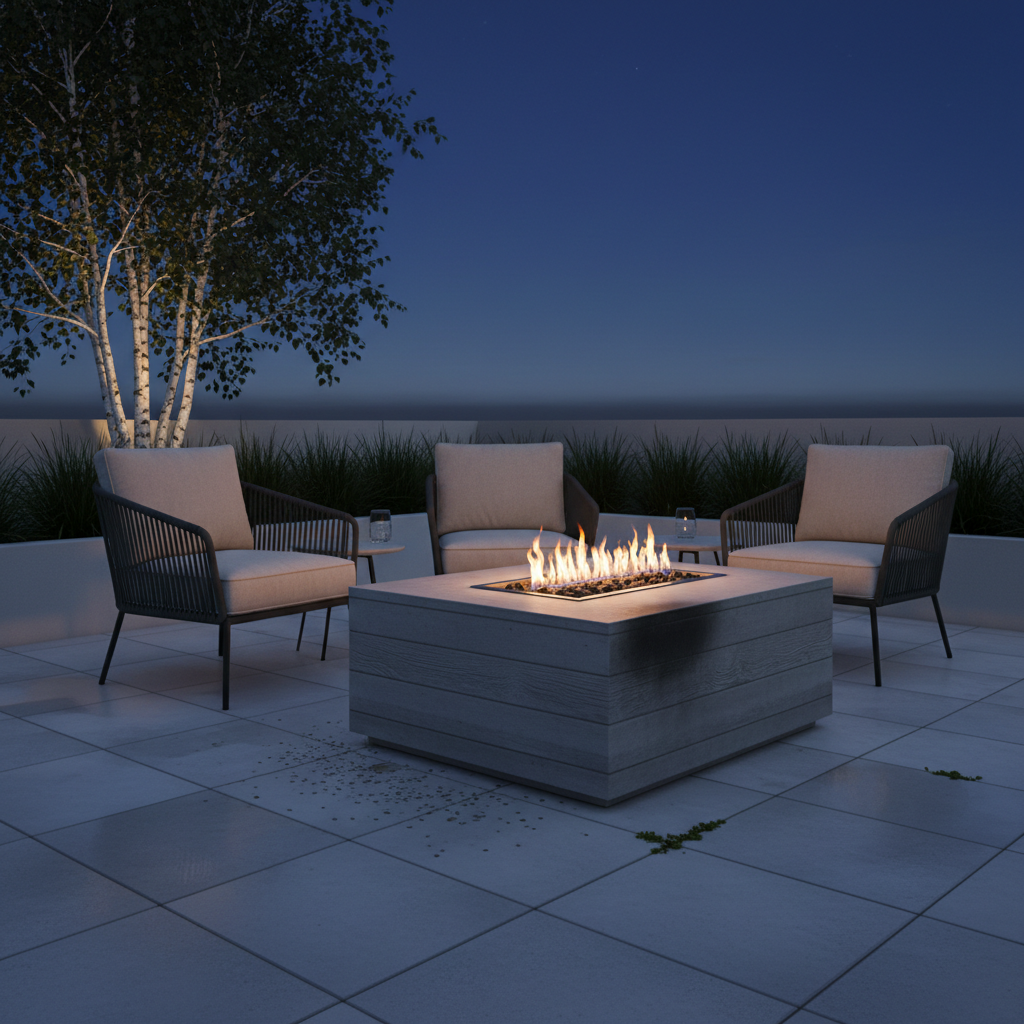
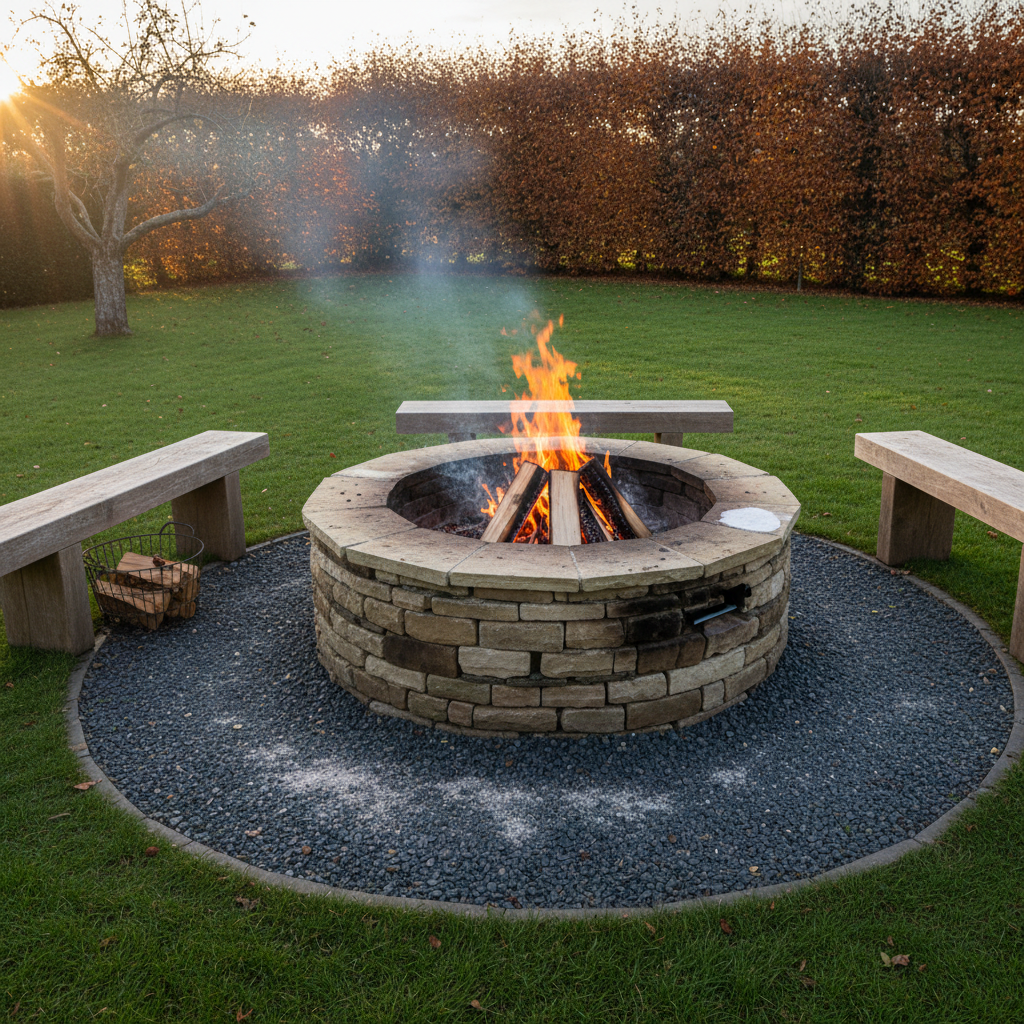
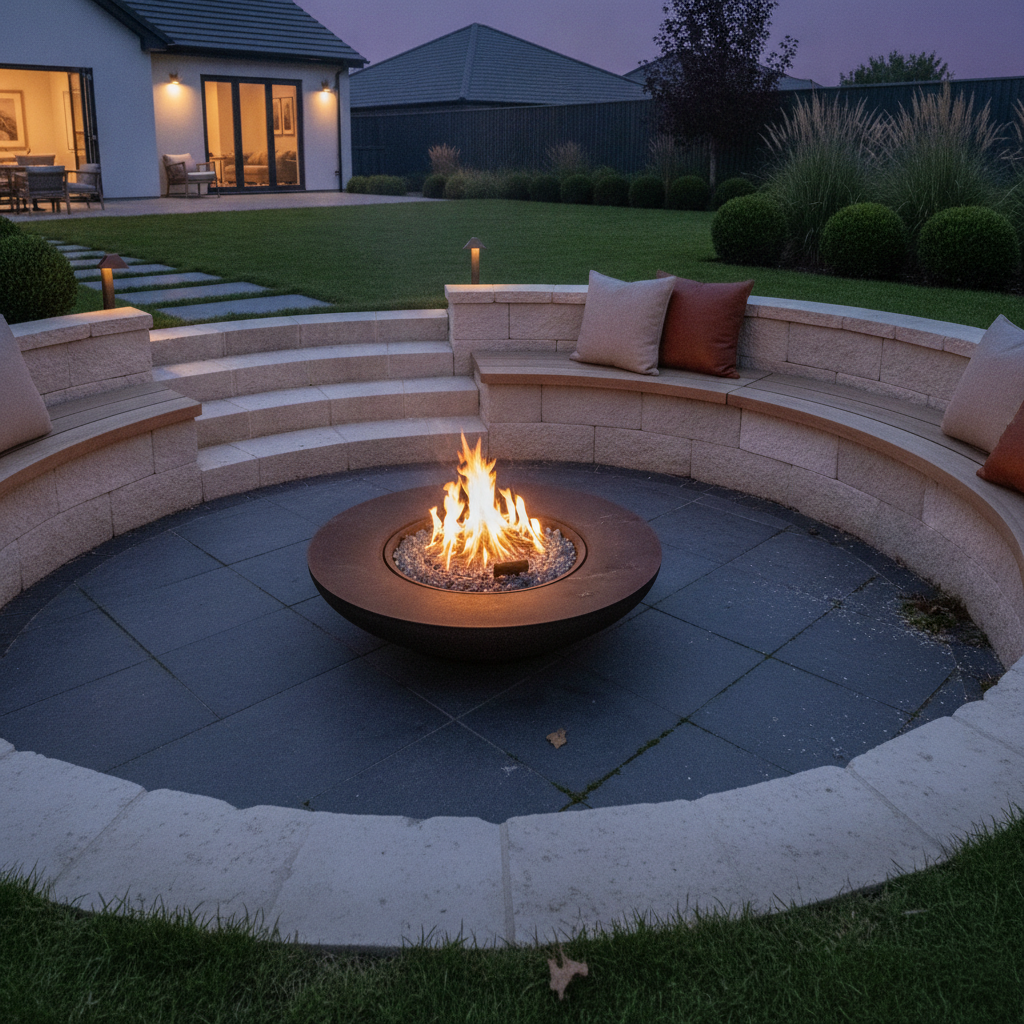
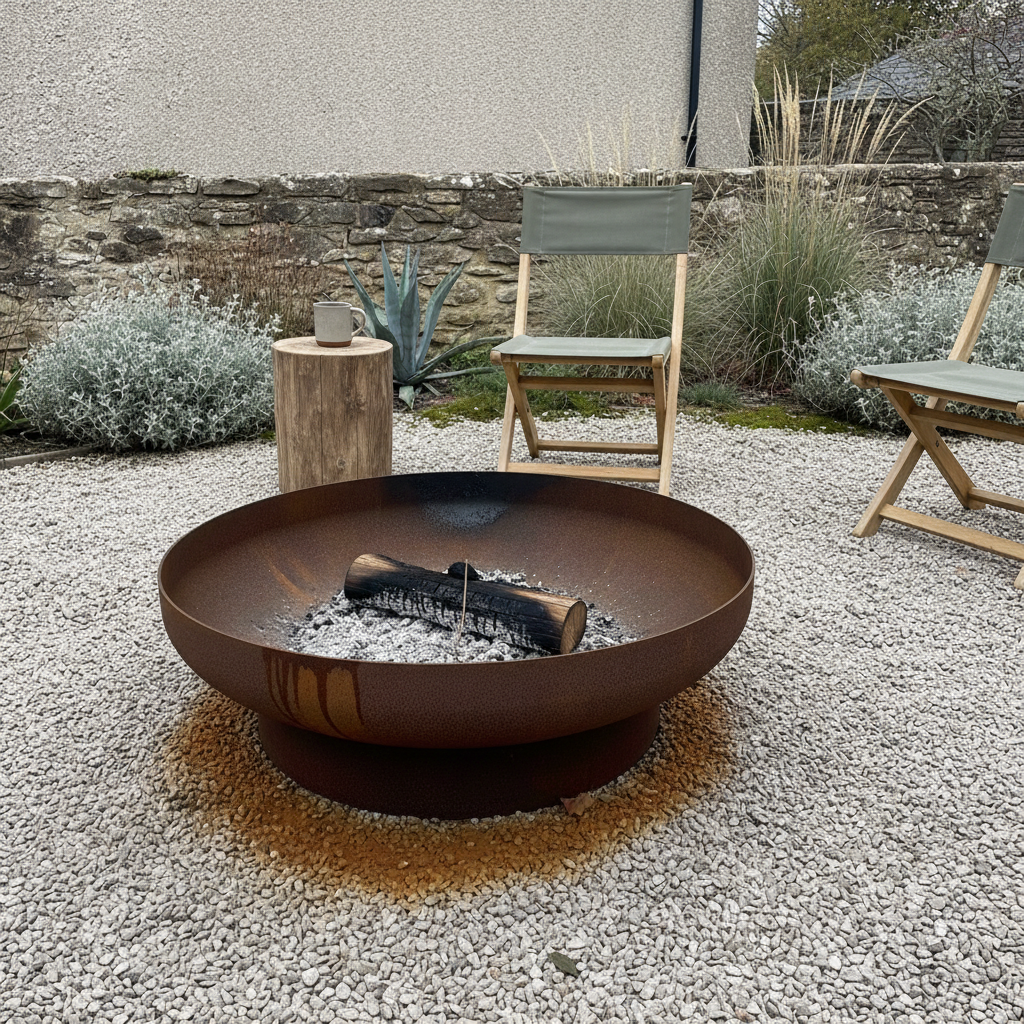
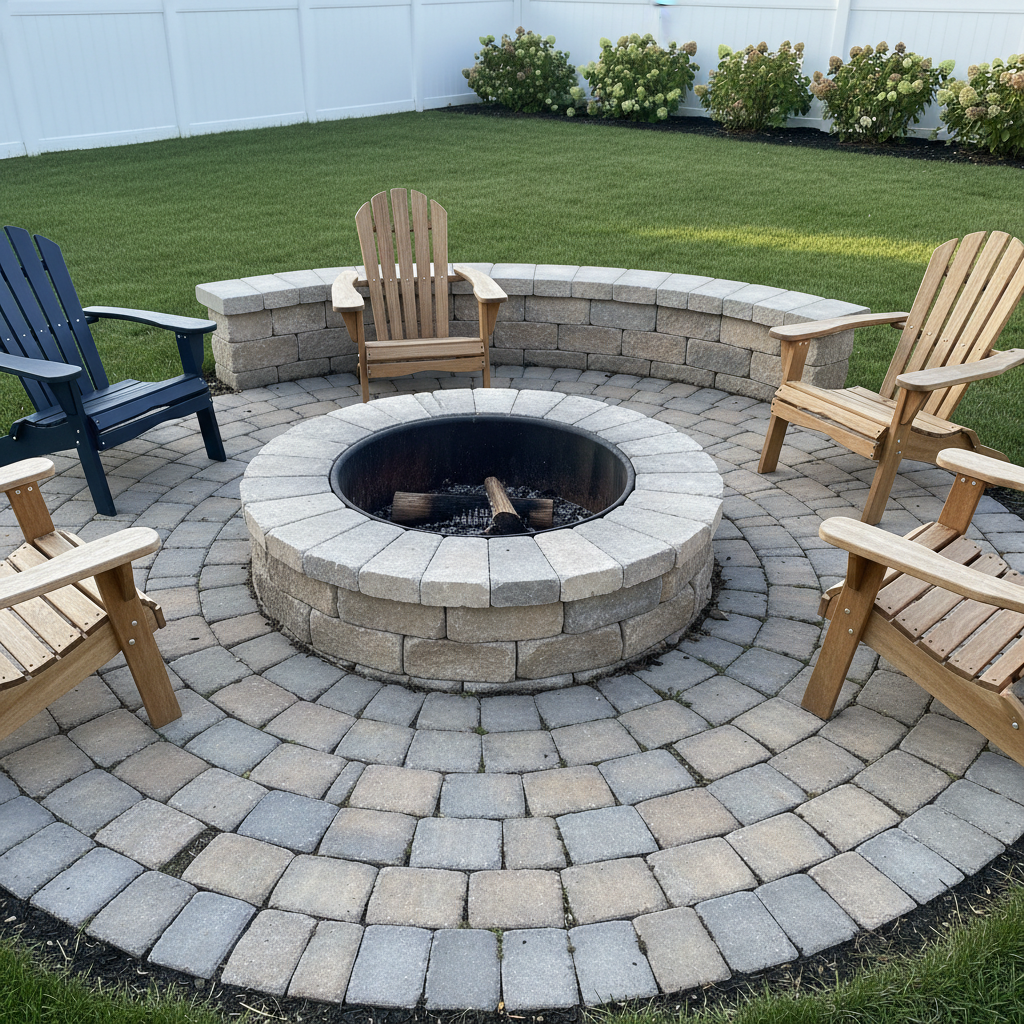
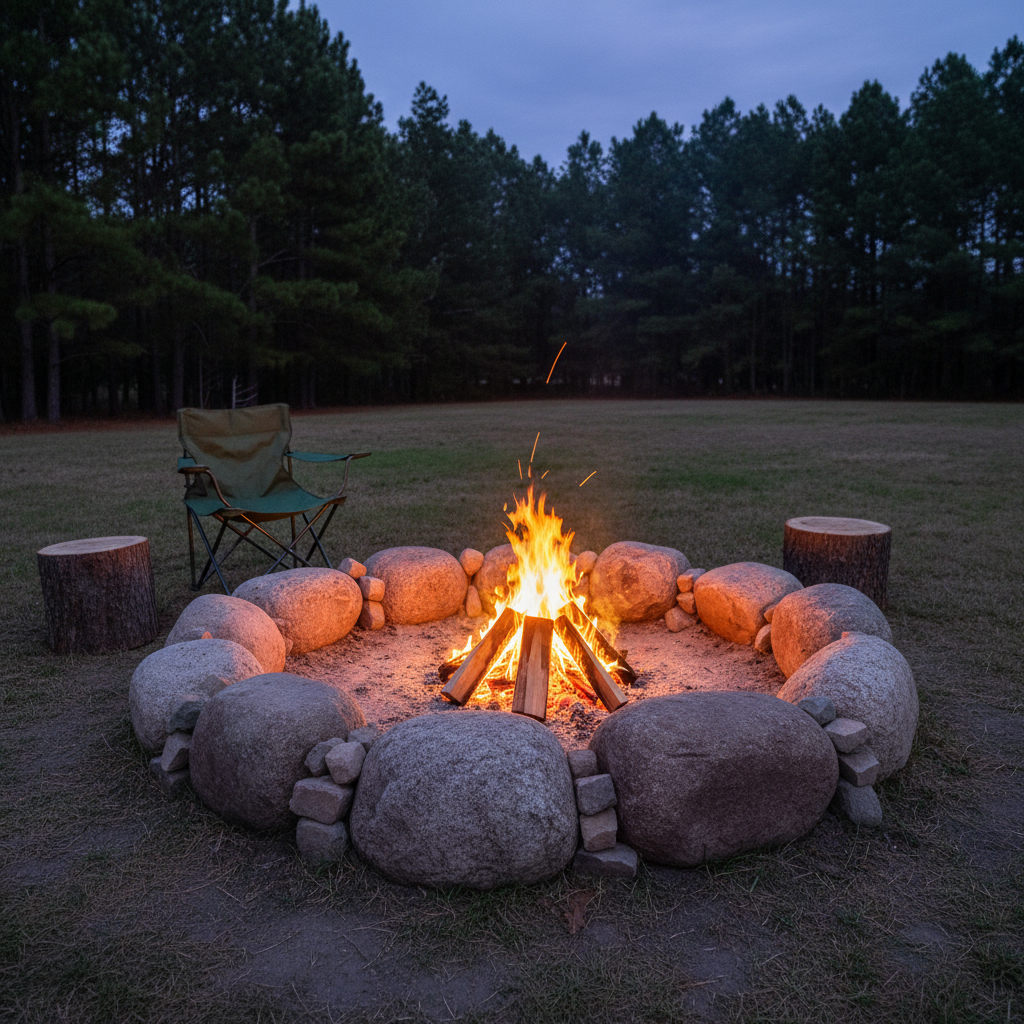
See it lit before you lay a single block. This AI fire pit design generator turns a description into a finished fire pit photographed where it stands, in about thirty seconds — a modern gas fire pit table, a stacked stone wood burner, a sunken lounge at dusk, a corten steel bowl, a paver circle with a seat wall and a rustic boulder ring. All six results are below exactly as they came back, including the one where the fire went out.
Design a Fire Pit FreeTry the AI Fire Pit Design Generator — Free
Pick a build, then use the box for what is specific to you — the stone you can actually get, gas instead of wood, a seat wall on the side the wind comes from, the paving you already have, the fence or the house wall behind it. Each preset already carries the construction, the connections that have to be drawn as connections, the camera position and the no-lettering list, all tightened after reviewing what came back the first time — especially the floating flames and the fire that went out.
AI Fire Pit Design Generator
Choose a build, name your material, fuel, height and the surface it stands in, and get a photorealistic fire pit built and lit. Up to 4K.
Six Builds From the AI Fire Pit Design Generator, Shown Exactly As They Came Back
Nothing here was regenerated or retouched. Each caption says what the prompt asked for and what actually arrived, because the gap between those two is the part nobody publishes.
What the AI Fire Pit Design Generator Gets Right and Wrong
A fire pit is a simple object with one genuinely hard thing in it, and every interesting failure in the six results above comes back to fire, wear or where the camera decided to stand.
Write the flames as a connection
Fire is the one part of the picture that is not attached to anything, so it gets drawn as a separate object hovering over the bowl. Say the flames start at the burner or at the burning wood and rise out of it, touching it along their whole base. That single sentence is the difference between the gas table above and a sheet of fire floating in mid air.
Fill the bowl out to its wall
Lava rock, fire glass and ash all tend to arrive as a small heap in the middle with a ring of empty void between the fuel and the inside face of the pit. Say the fuel bed fills the pit right out to its inside wall. This also carries the soot: the blackening only appears where the fire is described as touching something.
Ask for the flames twice on an open dish
The corten bowl came back cold — one charred log on grey ash, no flame. A deep enclosed pit gives the fire a wall to belong to; a shallow open dish does not, and the fire quietly drops out. If the design is a bowl rather than a pit, describe the flames in the body of the prompt and again at the end.
Name the camera, especially for anything sunken
Ask for a sunken lounge and you get a raised view looking down into it, because that is the only angle that proves a hole is a hole. Say the camera is at the eye level of an adult standing a few paces back and off to one side. The overhead view flattens the thing you are actually selling, which is the feeling of sitting down inside it.
Pin the wear to named places
A smooth matt minimal concrete table silently overrules a general request for weathering — the modern gas table came back immaculate. Attach the wear to specific spots instead: soot in a band above each flame, ash drifted in the bottom, ember freckles on the paving nearest the fire, moss in two joints.
Size it against something in the frame
Stated measurements do not survive. Knee height compared with the bench beside it, or wide enough that a seated adult could not reach across it, both land. So does a wall counted in courses rather than in centimetres — though even that drifts, as the four-course seat wall that came back as three shows.
How It Works
Pick the build closest to yours
Gas table, stacked stone, sunken lounge, corten bowl, paver circle or boulder ring. Each preset already carries the construction, the connections, the wear and the camera, so you are starting from a brief rather than a blank box.
Add what is specific to your garden
The stone your supplier actually stocks, gas instead of wood, the paving you already have, the seat wall, the fence or house wall behind it, and the time of day you would actually use it.
Generate, review and send it on
About thirty seconds later you have a photograph of it built and lit. Download up to 4K and send it to a landscaper, or hold it up against the corner of the garden it is meant to go in.
Built for the Way People Actually Plan a Fire Pit
Gas and wood, drawn differently
A burner pan on lava rock with clean smokeless flames, or split logs on an ash bed against a soot-blackened wall. The two look nothing alike and the presets keep them apart.
Real construction, not a sketch
Courses that bear on each other, coping that overhangs with a shadow under the lip, a steel liner set down inside the opening, a base that touches the ground along its whole perimeter.
The evening picture
Dusk light with named faces lit and named faces in blue shade — the view that sells the project to whoever else in the house has to agree to it.
The surface it sits in
Gravel apron inside a flush kerb, concentric paver rings, charcoal slabs running unbroken to the foot of the wall, or packed dirt. The apron is half the design and it is described in every preset.
Seating that stands on the ground
Seat walls, bench slabs, Adirondack chairs and log stools, each carried down until it stands flat with its own contact shadow instead of hovering near the fire.
Nothing branded, anywhere
Fire pits come covered in badges, moulded logos, control dials and stamped paver marks. Every one of those is enumerated and banned by name, which is why there is no legible character in any of the six.
AI Fire Pit Design Generator FAQ
Related Design Tools
AI Backyard Design
For everything the fire pit sits in. Paving, planting, lawn, seating and lighting, when the question is where the fire goes rather than what it is built from.
AI Outdoor Kitchen Design Generator
The other half of the same terrace. Runs, counters, grills and storage, for when the fire pit is one end of a bigger outdoor living project.
AI Gazebo Design Generator
For putting a roof over the seating. Posts, rafters, screens and covers, when the fire needs somewhere to sit that works in the rain too.
See It Lit Before You Lay a Single Block
Six builds — modern gas fire table, stacked stone wood burner, sunken lounge, corten bowl, paver circle with a seat wall and a rustic boulder ring — each photographed where it stands in about thirty seconds, in your garden and in your light. Up to 4K. Free to start, from $2.99.
Design a Fire Pit FreeAn AI Fire Pit Design Generator for Homeowners, Patio DIYers and Anyone Pricing a Hardscape Job
A fire pit is one of the few garden projects where the finished thing looks almost nothing like the way it is sold. The catalogue photograph is a bowl on a white background. The kit comes as a pallet of blocks and a diagram. The landscaper’s quote is a line item. None of those tells you what a knee-high stacked stone drum looks like on your gravel with your hedge behind it at six in the evening, which is the only moment the thing exists for. That is the gap an AI fire pit design generator fills: describe the material, the shape, the fuel, the surface it stands in and the garden around it, and about thirty seconds later you have a photograph of it built and lit. Every preset on this page is written that way, and the six results above are shown exactly as they came back, failures included.
The six builds cover the shortlist a real project actually has. A modern gas fire pit table in board-formed concrete with a linear burner, which is what most people mean now when they say fire pit and want no smoke and no fetching logs. A stacked stone wood burner with a flat coping and a proper fire in it, which is what most people actually build. A sunken lounge retained by a block seat wall, which is the most searched and the most expensive. A corten steel bowl for a courtyard where the fire is an object rather than a structure. A paver circle with a curved seat wall, which is the version a contractor can price off a picture. And a rustic boulder ring, which is the cheapest thing in the list and still looks like something once the fire is in it.
The pattern in what came back teaches more than a feature list does. Construction described end to end is the solved half: courses bearing on one another, coping overhanging the final course with a shadow under the lip, a steel liner sitting down inside the opening, a gravel apron held in a kerb set flush with the lawn, paving running unbroken to the foot of a wall, chairs and benches standing flat on the ground with their own contact shadows. Material is solved too, and sometimes better than asked — the rust bleeding off the corten bowl into an orange ring in the pale gravel is the kind of detail that only appears when it is named, and it is what makes that frame read as a photograph. The no-lettering list held perfectly across all six, on a subject that normally arrives covered in moulded brand names, control dials with printed scales and stamped paver marks.
What failed is narrower and more useful. Fire is the hardest element, because it is the one thing in the frame that is not physically attached to anything: unless you write the flames as rising out of the fuel and touching it along their base, they float, and on an open shallow dish they can drop out of the picture altogether, which is exactly what happened to the corten bowl. The camera goes overhead for anything sunken, because that is the only angle that proves a hole is a hole, and it flattens the very thing you are trying to show. A smooth matt minimal surface silently overrules a general request for weathering, so wear has to be pinned to named places — soot in a band above each flame, ash in the bottom, ember freckles on the nearest paving. And size only survives when it is given as a proportion against something else in the frame. Inside those limits this is a genuinely good hour to spend before you spend on stone: the look gets settled, the household agrees on something it can point at, and the landscaper gets a photograph instead of an argument.