
AI Compost Bin Design Generator
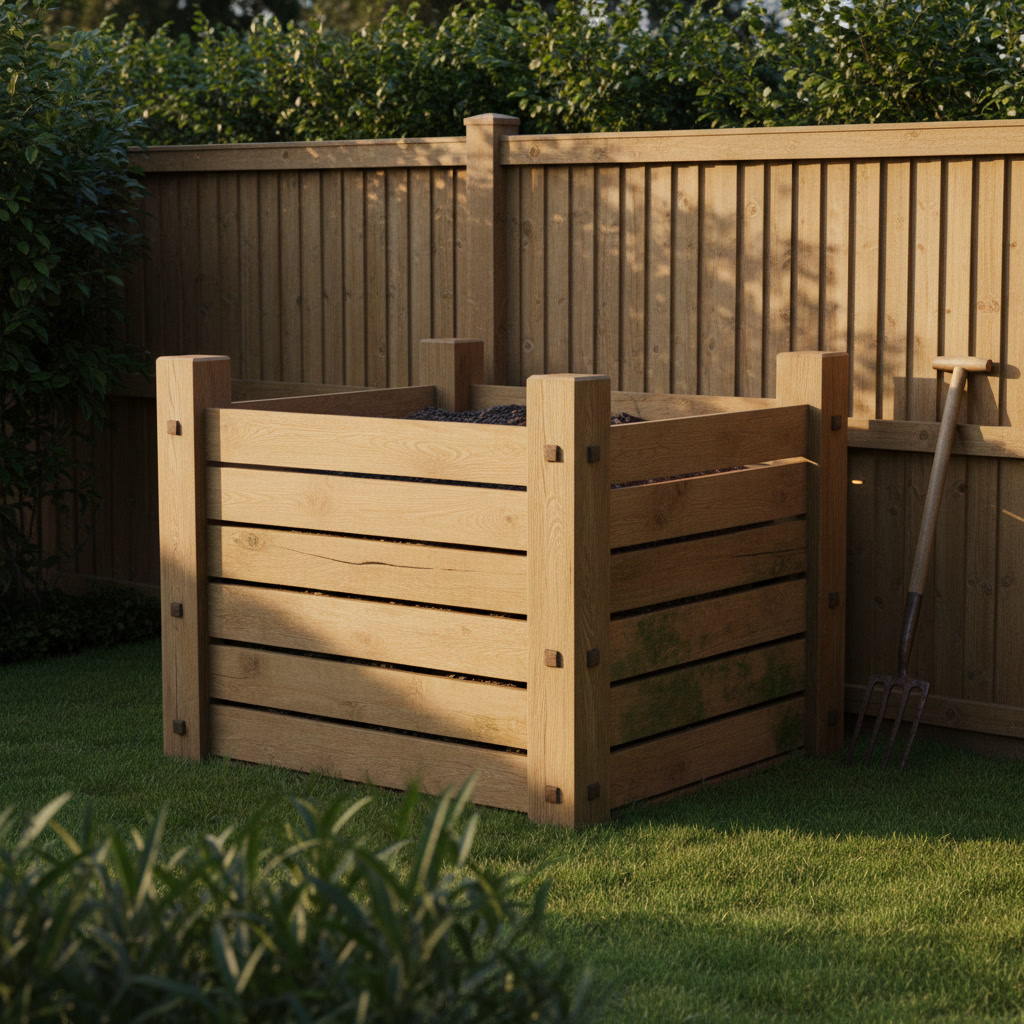
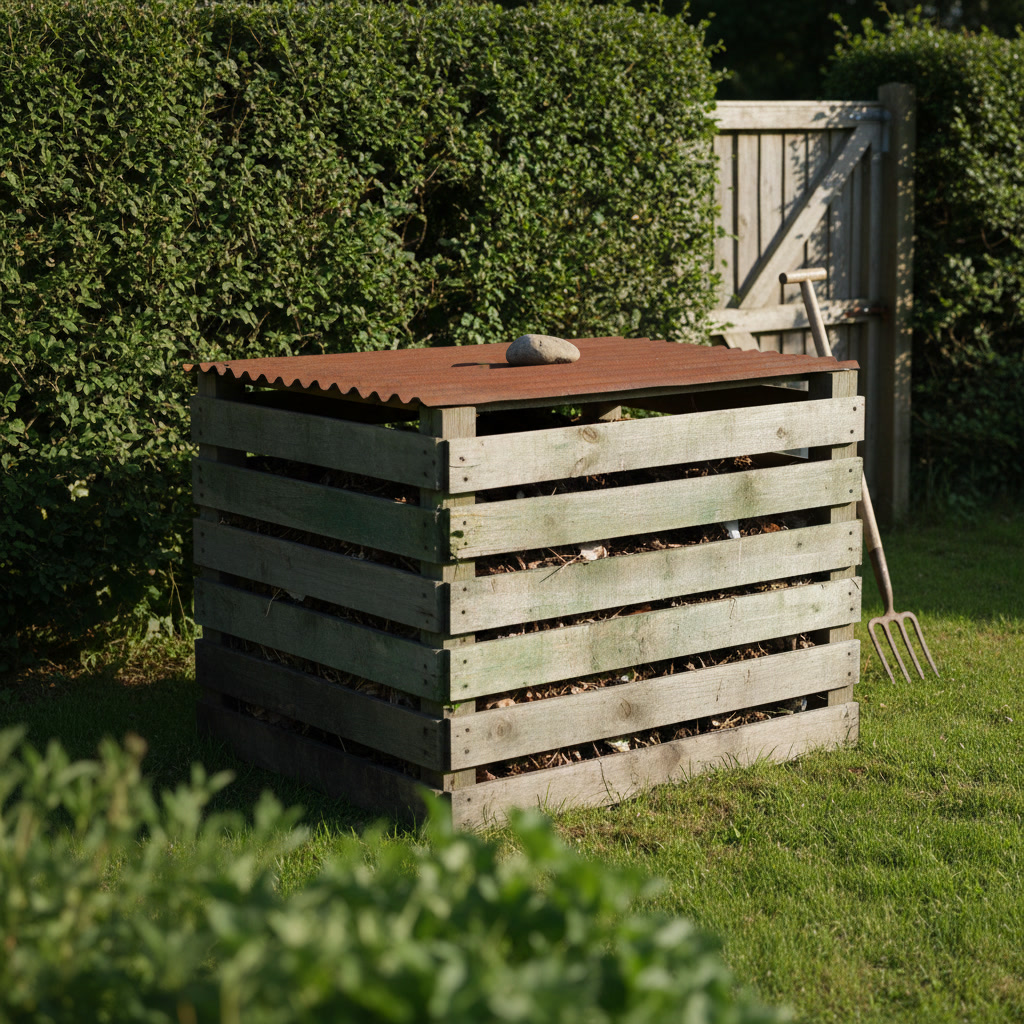
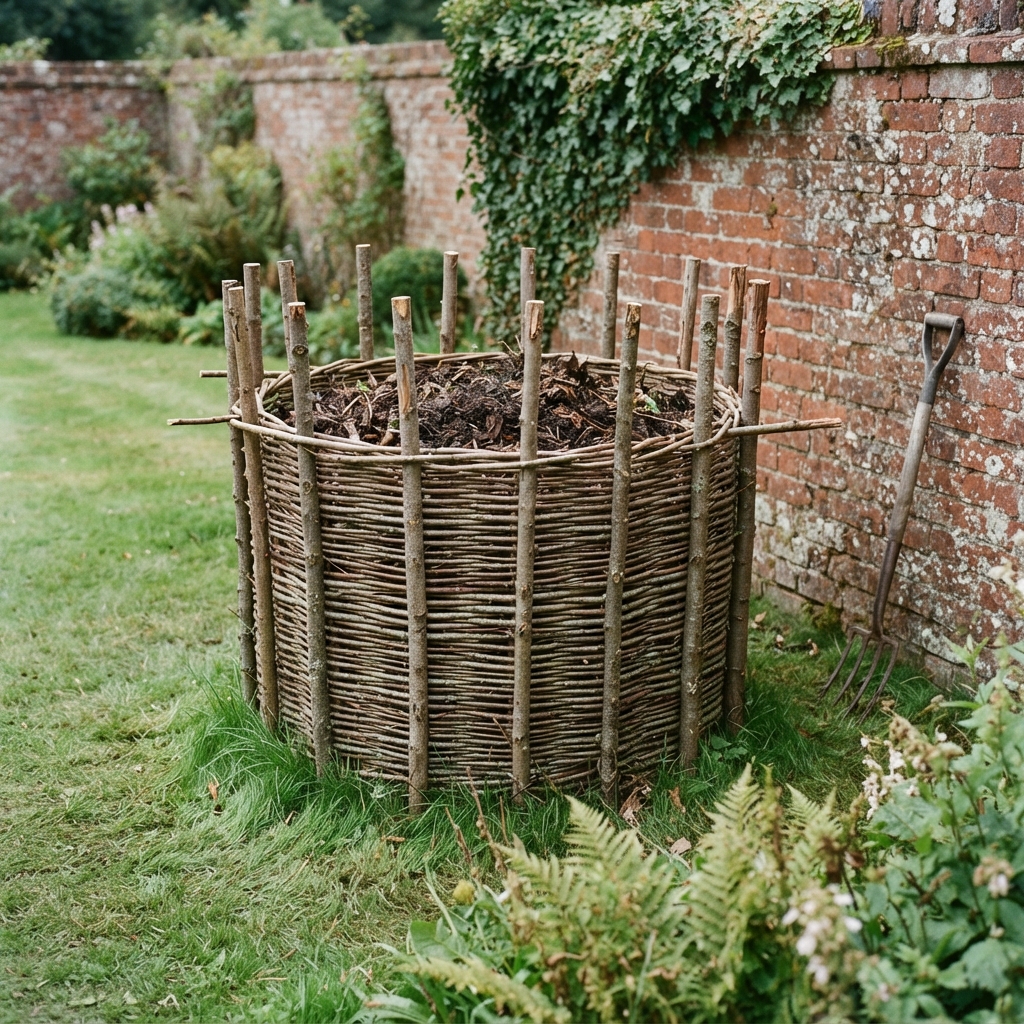
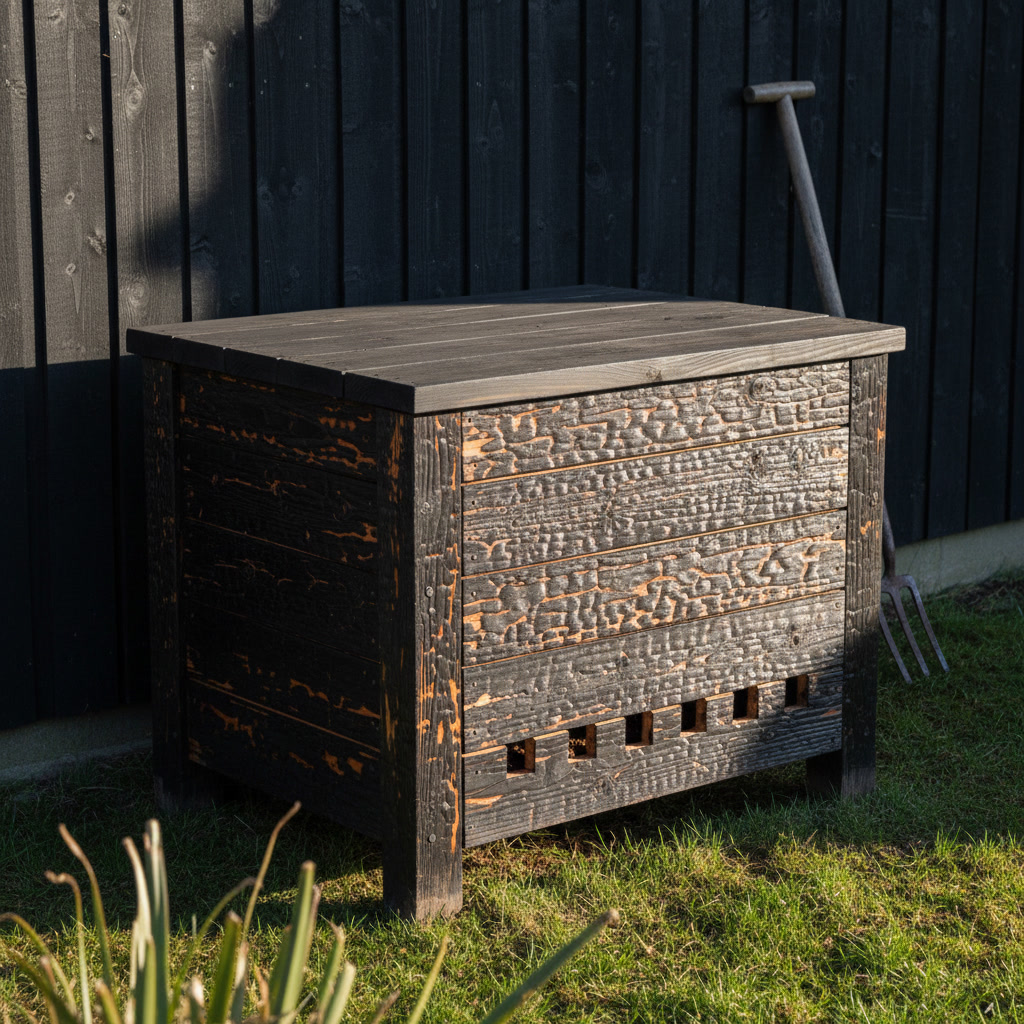
See the bin finished before you cut a single board. This AI compost bin design generator turns a description into one real compost bin photographed in a real garden, in about thirty seconds — a slatted oak bay with pegged posts, a reclaimed pallet bin under a corrugated iron lid, a round woven hazel ring, a charred larch bin with a closed lid, a steel mesh cylinder and a reclaimed brick bay. All six results are below exactly as they came back, including the one that tipped the camera over and the one that built only half the brickwork.
Design a Compost Bin FreeTry the AI Compost Bin Design Generator — Free
Pick a bin, then use the input for what is specific to yours — how much garden waste you actually make, whether you turn a heap from one bay into another, whether it has to be shut against rats and rain, what it stands against and how much of it you will see from the house. Each preset already carries the camera held level with the top edge, the corner posts running proud so the design has its own height, the front written as boards stacked in a slot, the wear pinned to marks that survive, and every bag, sticker, badge and blank label panel banned as an object rather than as lettering.
AI Compost Bin Design Generator
Choose a bin, name your boards, your posts, how the front opens and whether it has a lid, and get a photorealistic compost bin shot in a real garden. Up to 4K.
Six Bins From the AI Compost Bin Design Generator, Shown Exactly As They Came Back
Nothing here was regenerated or retouched. Each caption says what the prompt asked for and what actually arrived, because the gap between those two is the part nobody publishes.
What the AI Compost Bin Design Generator Gets Right and Wrong
A compost bin is a box you have to see into, which makes it an unusually good test of openings, stacked parts and weathering — and this page produced one clean new rule and confirmed three old ones.
A property given to two matching parts lands on only one
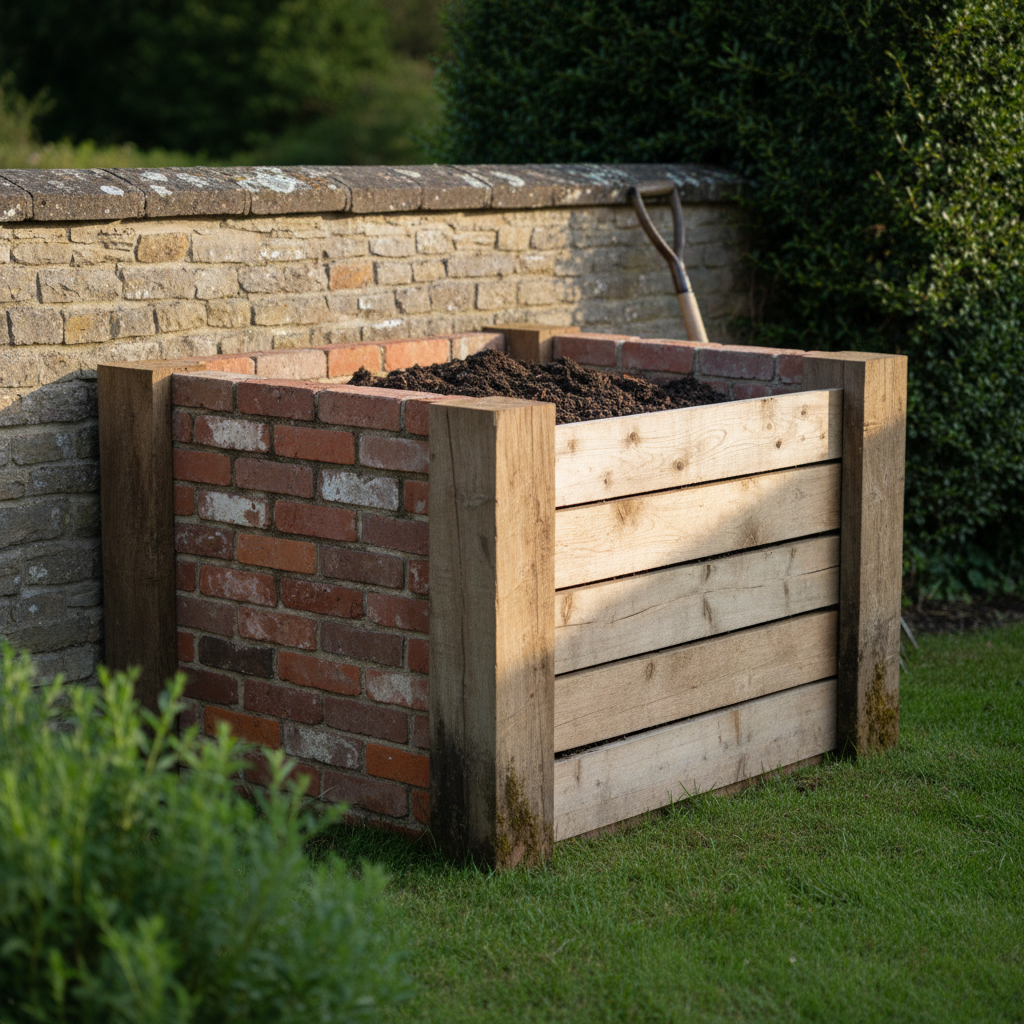
Both side walls of the brick bay were specified as reclaimed red brick in a single phrase. The left wall is brick; the right wall is timber. This is the same failure as both slopes shingled shingling exactly one slope on an earlier page, and it now has a fix worth using everywhere: say it once per part, in two separate sentences, and never as a pair.
A fresh pale finish deletes wear anywhere in the frame
The slatted oak bay and the brick bay carried word-for-word identical base-staining clauses. It landed on the weathered posts and vanished completely on the fresh oak ones, which came back clean to the grass. Wear is not a property you can bolt onto a new-looking material. Start the timber grey if you want any ageing at all.
Mesh pulls the camera up, on a wall as well as a floor
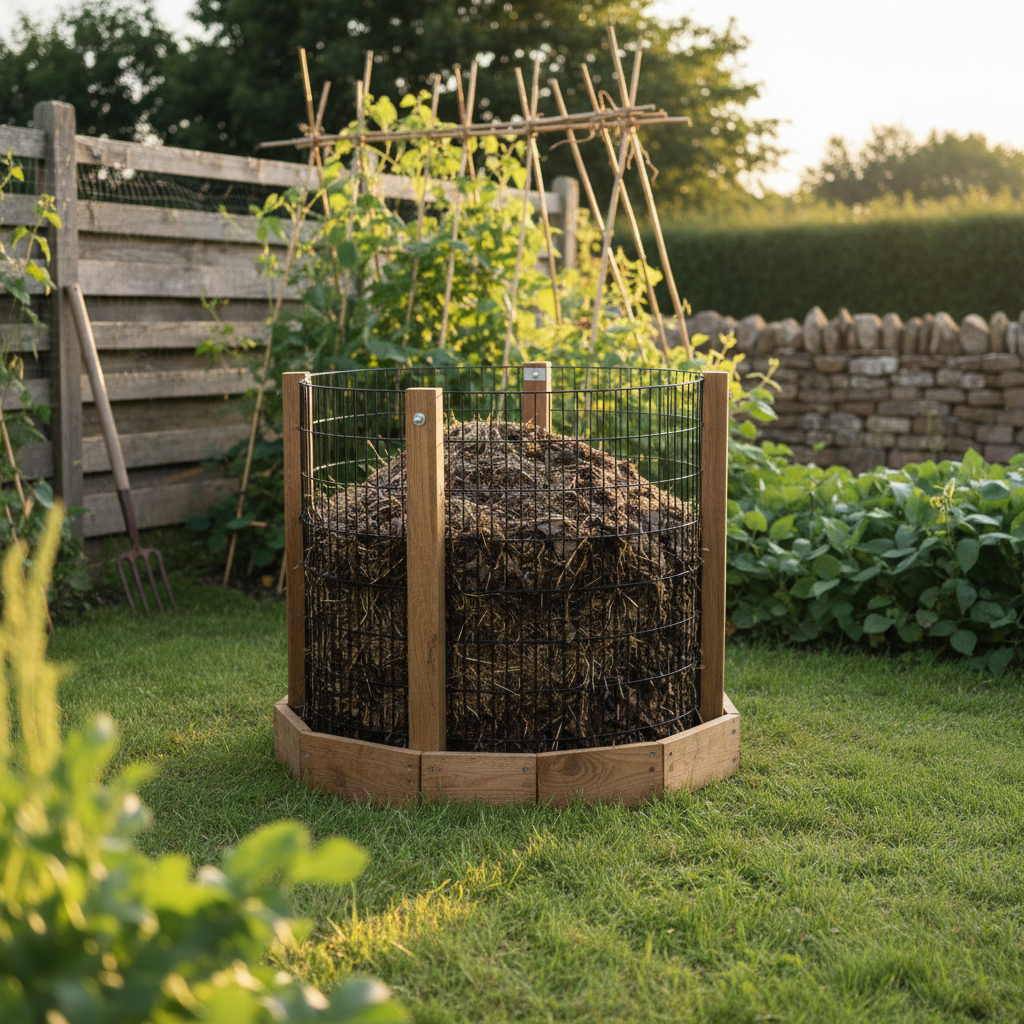
Five of six frames were shot at standing eye level. The one that tipped down and looked into its subject is the mesh cylinder, and it beat both remedies at once — the foreground planting and the uprights standing proud. A mesh floor did this to a bird feeder and gravel did it to a garden. A pattern can only be photographed from above it.
A stated finish loses to a stock material default
Black powder coated steel mesh came back bare galvanised, because that is the finish garden mesh comes in. This is the same mechanism that stamps a galvanised tube with maker marks under a total lettering ban. If the world sells a material in one finish, specifying a different one is a request the object prior will quietly overrule.
Stacks build correctly where divisions do not
Loose front boards sitting one above another in a slot cut into the front posts arrived correctly three times out of three, and in all three the stack stops short of the top exactly as written. A stack is something you could feel with your hands. A face divided into bays is just an elevation, and this site has watched bays multiply every time.
A fixing hidden along its length is not drawn
A peg driven right through a body with both cut ends proud is the most reliable connection this site has found, and the oak pegs through the corner posts prove it again. The identical instruction failed on the charred bin, where the rod ran under a closed lid. Naming both ends is not enough if the run between them is out of sight.
How It Works
Pick the bin closest to what you want
A slatted oak bay with pegged corner posts, a reclaimed pallet bin under a corrugated iron lid, a round woven hazel ring, a charred larch bin with a flat closed lid, a steel mesh cylinder on an oak collar, or a reclaimed brick bay with stacked front boards. Each preset already carries the camera at standing eye level, the joinery written as connections named at both ends, and every bag, badge and blank label panel banned as an object.
Add what is specific to yours
How much waste you actually make, whether you need one bay or two, whether the front lifts out or drops in, whether it has to shut against rain and rats, what it stands against and how much you will see from the house. Describe materials and connections rather than styles, and skip the measurements — give sizes as a fraction of something already in the frame, like the fence behind it.
Generate, crop in, then cut the timber
About thirty seconds later you have a photograph of it. Crop in before you judge it — a brick wall that only built on one side, a steel rod that never appeared under a lid, and base staining that quietly vanished off fresh oak are all things you only see at full size — then download up to 4K and use it as the brief.
Built for the Way People Actually Plan a Compost Bin
A bin in a garden, never a garden centre
Every preset names the garden centre display, the trade stand and the catalogue page as things this is not, states there is exactly one bin in the frame with no row of bins behind it, and stands it on mown grass against a real fence, hedge or wall with real light falloff. It matters for a subject whose stock photography is almost entirely moulded green plastic cones shot on white.
The packaging problem taken seriously
Compost drags printed bags into frame with it. Each preset bans the compost bag, the fertiliser sack, the bark chipping bag, the seed packet, the plant label and the plant marker by name, bans the blank panel and card holder waiting for a label, and then pre-declares the one tool that is allowed: a plain fork with a bare unpainted handle. Six frames out of six came back with no lettering anywhere.
Openings written as cuts, not as shapes
Slots cut clean through the front board so the cut edge shows the full thickness of the timber and the compost is visible in the shadow behind them. Written that way it lands every time. It is also the only way to get the contents drawn inside the bin rather than painted onto its outside face, which is what happens to a loose fill in a closed opaque body.
Height built into the design, not into the prompt
Corner posts running well above the sides to a bare sawn end, or hazel stakes standing proud of a woven rim. Giving the object its own height is what holds the camera at standing level on a waist-high container, and it works where writing harder at the lens does not. Five of six frames here are level, and the exception is the one bin with nothing standing proud.
Texture on the bin, not just behind it
Every preset states the light direction, because an unstated one guarantees a render. That is necessary and not sufficient. The frames that read as photographs have a material event on the bin itself — charred alligator crackle, woven hazel with the bark and buds still on, split reclaimed boards, chipped reclaimed brick. A flat even surface on the subject is what makes a picture look CG.
Wear that survives a winter outdoors
Old green paint left only in the grain, algae darkening a shaded face, a long split running with the grain, lichen on a brick coping, rust heaviest along the corrugations of an iron sheet, a bottom board soft and blackened where it meets the compost. All landed. Rings, arcs, and anything described as running down a surface do not, and neither does any of it on fresh pale timber.
AI Compost Bin Design Generator FAQ
Related Design Tools
AI Raised Garden Bed Design Generator
Where the compost ends up, built from the same boards on the same afternoon. Worth running alongside this one if you want the bed and the bin to look like the work of the same pair of hands.
AI Shed Design Generator
The bigger box at the other end of the garden, and the page that first sorted out cladding, roofs and doors. Useful if the bin is going to stand against the shed wall and needs to belong to it.
AI Greenhouse Design Generator
The third corner of a working kitchen garden. Run it if you are laying out the whole utility end at once rather than deciding one structure at a time.
See the Bin Finished Before You Cut the Timber
Six compost bins, one description each, about thirty seconds per result. Start free and find out tonight whether yours is one bay or two, whether the front lifts out, and whether it needs a lid.
Design a Compost Bin FreeAn AI Compost Bin Design Generator for Bays, Rings and Anything You Have to See Into
A compost bin is the least glamorous thing in a garden and it still has half a dozen real decisions in it. One bay or two, so you can turn a heap out of one and into the next? Does the front lift out in loose boards, or drop into a slot, or swing on hinges you will come to regret? Does it need a lid to keep the rain out and the rats off, or does it need to stay open so it wets down? Is it slatted for air, woven for looks, or mesh because that is what is in the shed already? And how much of it will you be looking at from the kitchen window for the next ten years? Those are the arguments a photograph settles and a dimensioned drawing does not, which is exactly the gap an AI compost bin design generator fills — describe the boards, the posts, the front, the lid and where it stands, and about thirty seconds later you have a picture of it finished. The six results above are shown exactly as they came back, failures included.
The six between them cover the shortlist a real decision has. A slatted oak bay with the corner posts running proud above the sides, square pegs driven right through them and loose front boards stacked in a slot, which is what most people picture when they picture a compost bin. A reclaimed pallet bin with the last of an old green paint still in the grain and a rusted corrugated iron sheet lying shut on top under one cobble. A round woven hazel ring with peeled stakes standing above the weave, for a garden where the bin is going to be seen. A charred larch box with a flat lid and slots cut clean through the bottom of the front board. A steel mesh cylinder on an oak collar in a working vegetable garden. And a reclaimed brick bay with a coping course laid on edge and rough sawn oak boards stacked in the front.
What came back matters more than a feature list. A compost bin is a container you need to see into, and that turned it into the best test of openings this site has run. Every bin here has somewhere to look in — wide gaps between slats, a front stack that stops short of the top, an open woven rim, slots cut clean through a board, mesh that is nothing but hole — and the compost is drawn properly inside all six of them. That is the direct fix for a failure recorded on an earlier page, where a loose fill inside a closed opaque body was painted onto its outside face instead. The joinery sorted itself the same way it has on every page before this one: a peg driven right through a body with both cut ends standing proud is the most reliable connection there is, and the oak pegs down the corner posts of the first bin are plainly visible. Loose boards stacked one above another in a slot built correctly three times out of three, because a stack is a form with weight to it.
The failures are narrow and worth knowing before you start. The cleanest new rule came from the brick bay: a property given to two matching parts in a single phrase lands on only one of them, so both side walls in reclaimed brick produced one brick wall and one timber one. Say it once per part. The second is about weathering — identical base-staining clauses landed on weathered posts and vanished entirely on fresh oak, confirming that a pale new finish deletes wear everywhere in the frame rather than only where you pinned it. The third is the camera. Five of six frames came back at standing eye level because the designs carry their own height in posts and stakes that run proud, and the sixth is the mesh cylinder, where a pattern on a vertical face lifted the lens over the heap despite everything else in the prompt. Mesh also came back bare galvanised after being specified as black powder coated, because a stock material wins the argument about its own finish. Against all that: six frames out of six with no lettering anywhere on a subject that arrives wrapped in printed bags, every cut opening built as real joinery, and the charred crackle doing what a flat colour never does. Inside those limits an AI compost bin design generator is a genuinely useful half hour before you pick up a saw.