
AI Coaster Design Generator
A coaster is the smallest serious canvas in homeware. It is about four inches across, it is almost always sold as a set of four or six rather than on its own, and the moment it does its job a glass lands in the middle and hides the best part of the artwork. This AI coaster design generator works inside those three constraints and shows the result on a real product mockup in about twenty seconds, at up to 4K, in six styles: geometric, marble and gold, botanical watercolour, retro sunburst, coastal nautical and terrazzo. Pick a style, describe your motif and palette, and see the coaster before you order a sample.
Try It Now — Free
Pick the coaster style first, then use the details box for your motif, your palette, and whether you are printing round or square. Every preset already carries what a coaster cares about — a pattern that still reads at four inches, interest pushed out towards the rim where a glass will not cover it, and a design that holds up when it is repeated four times as a matching set.
AI Coaster Design Generator
Pick a coaster style, describe your motif and colours, and see it on a real product mockup
Coasters From the AI Coaster Design Generator
Geometric, marble and gold, botanical watercolour, retro sunburst, coastal nautical and terrazzo — the six directions that cover almost every coaster set anybody actually buys
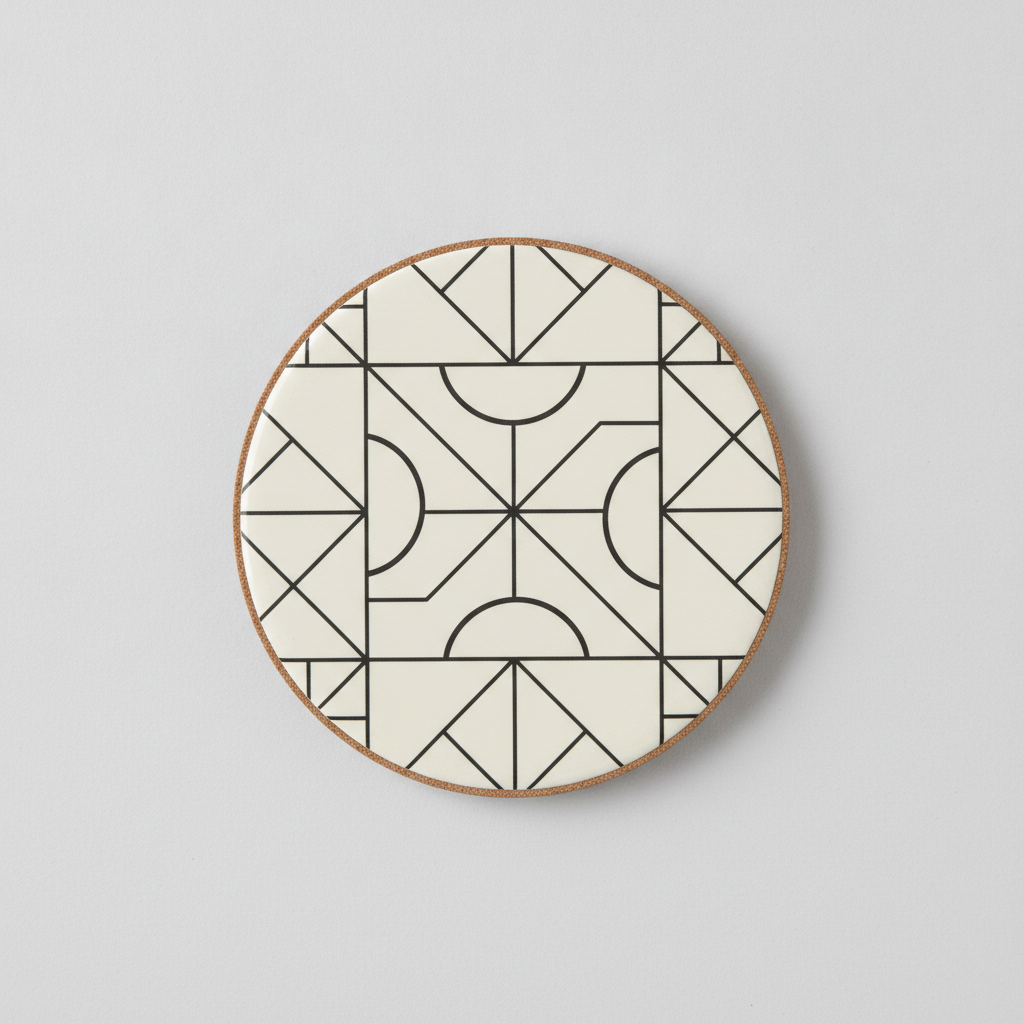
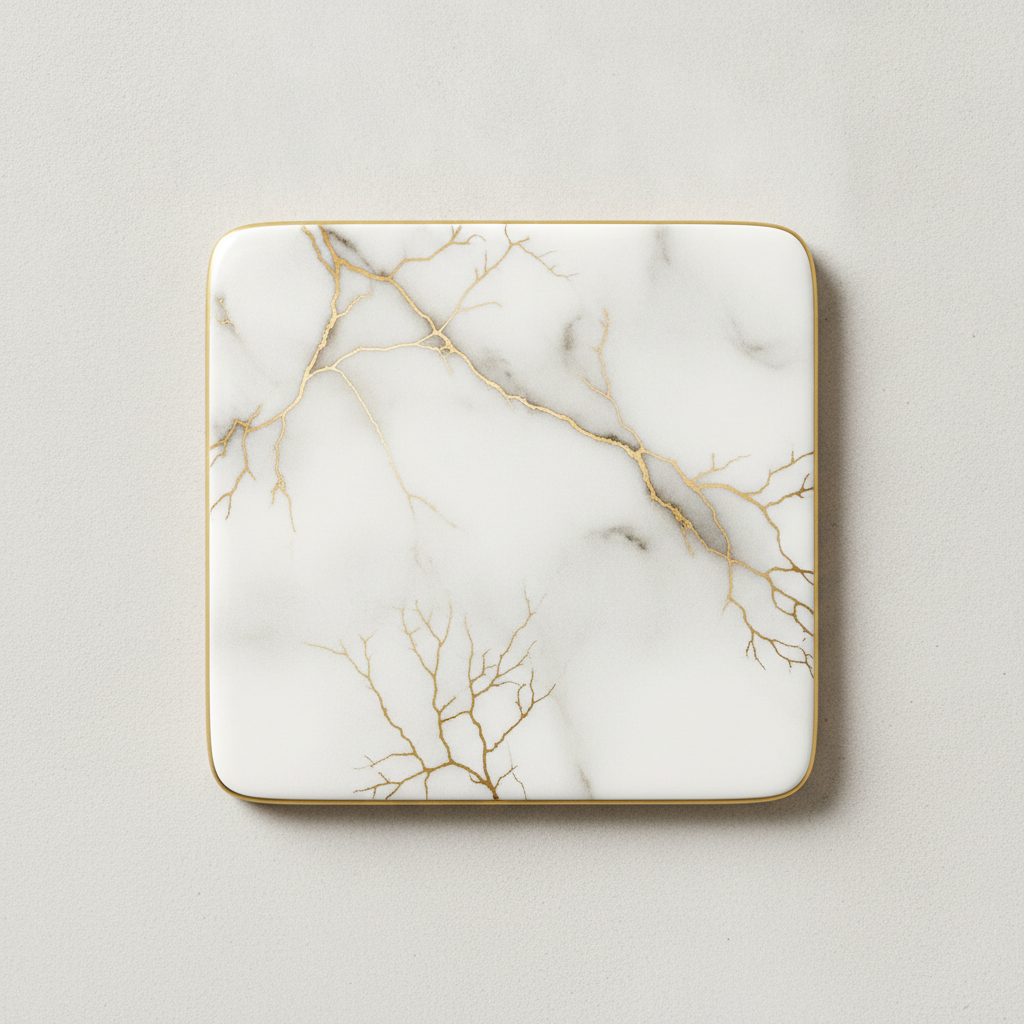
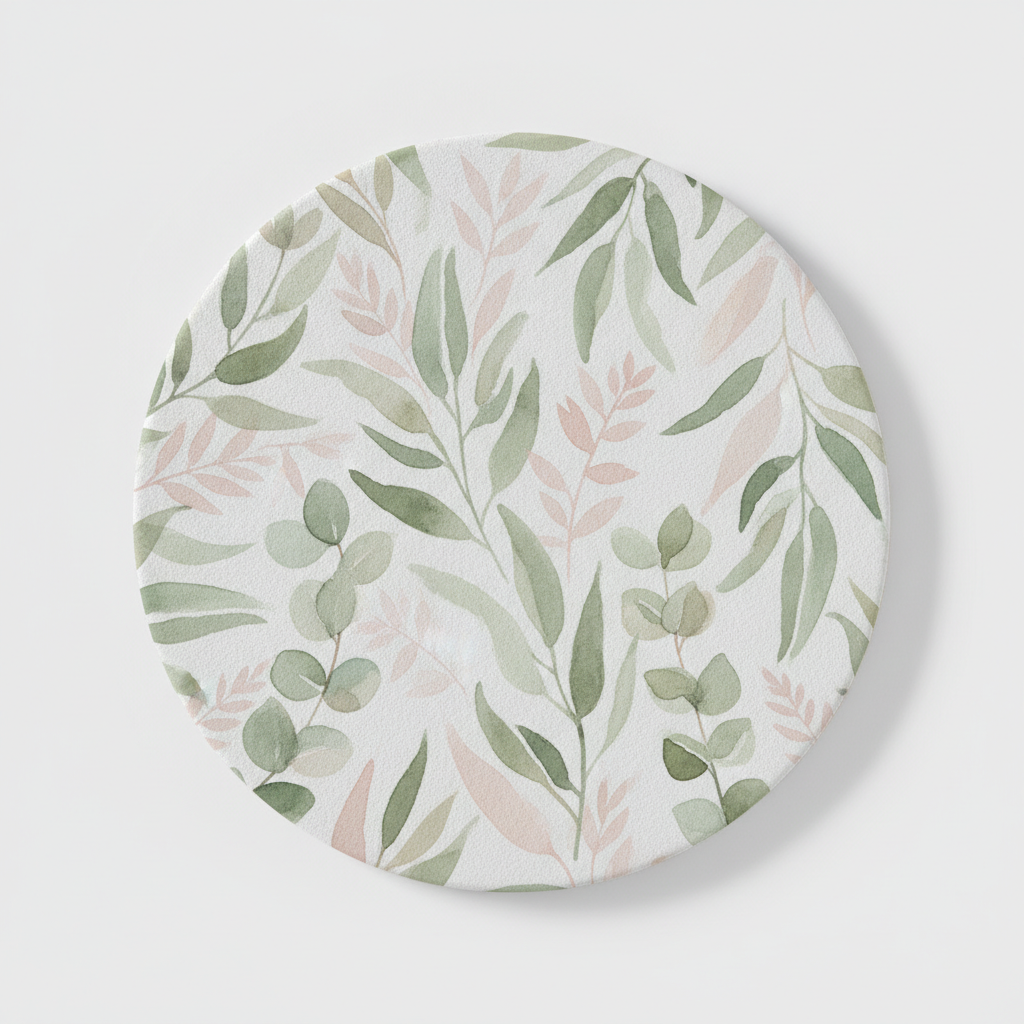
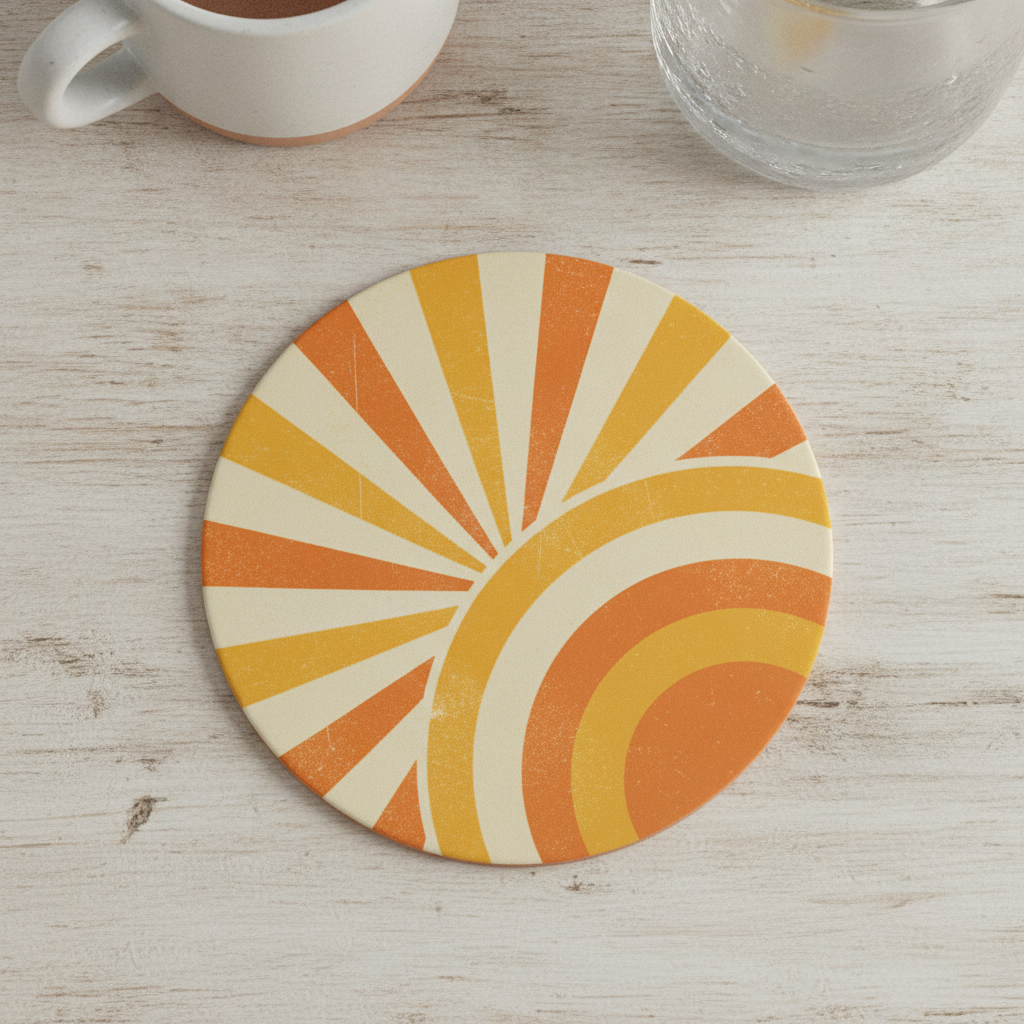
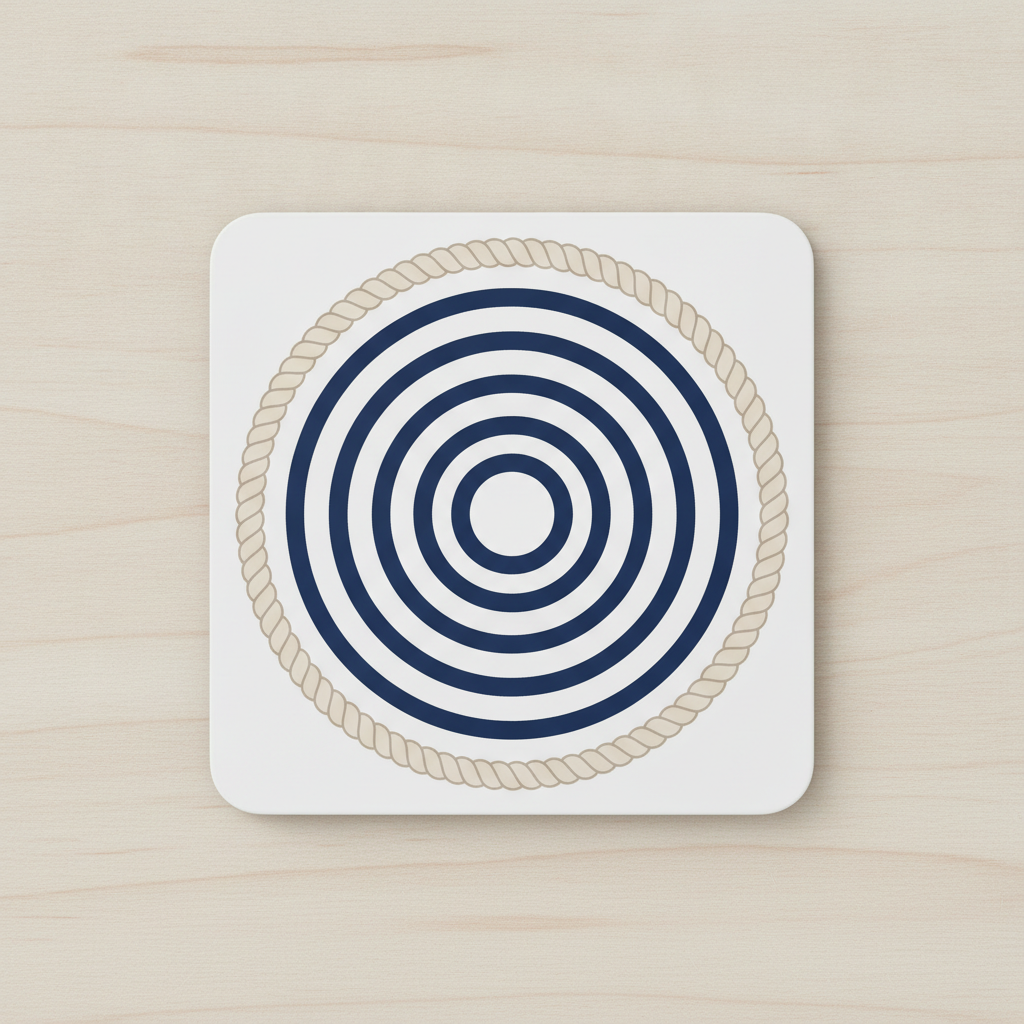
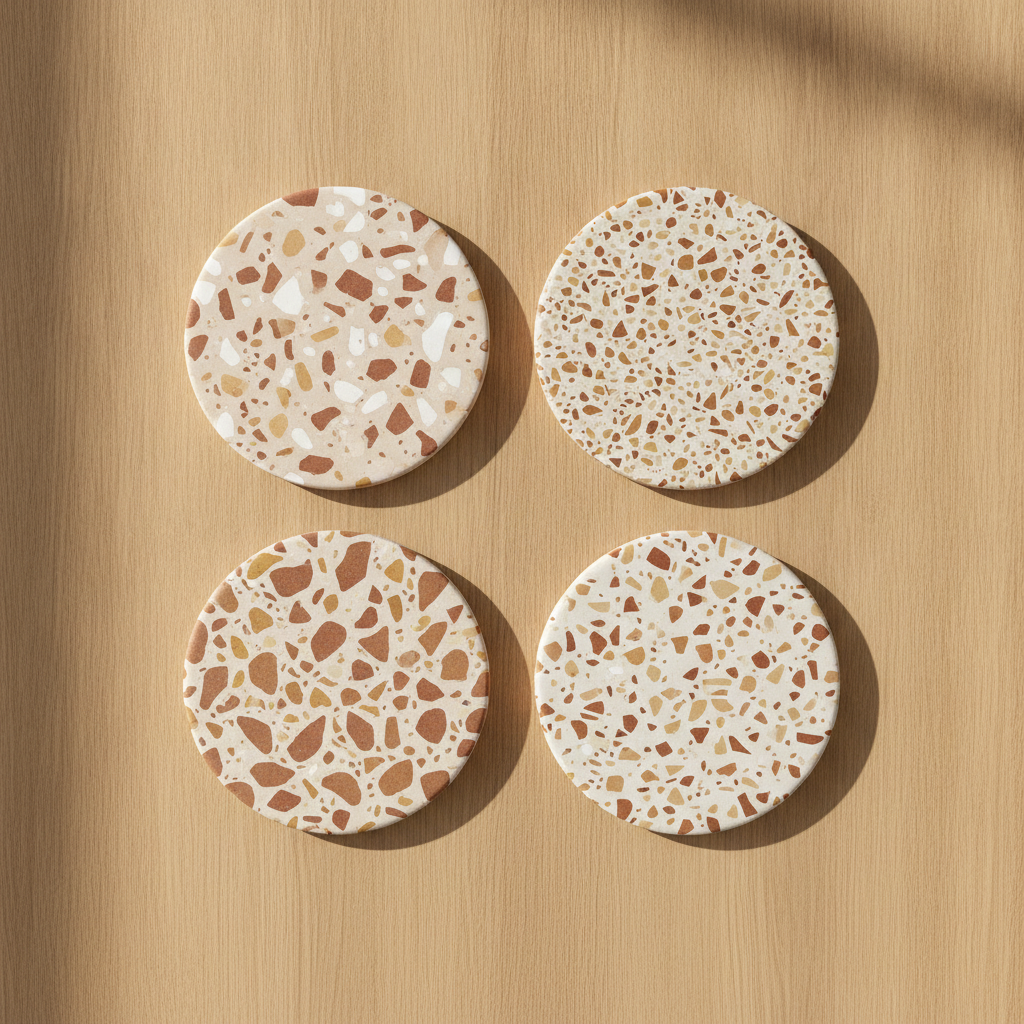
How the AI Coaster Design Generator Works
Three steps from an idea to artwork a print-on-demand supplier can work from
Choose the Shape and the Material First
Two decisions come before the motif, because both change what the artwork can be. Shape is the easy one: round coasters are the default and they are rotationally forgiving, since nobody puts a coaster down the right way up, so an all-over pattern or a concentric motif works and a design with a clear top and bottom does not. Square coasters, usually with softly rounded corners, give you four corners to fill and crop a circular motif awkwardly if you simply drop one in. Material matters more. Absorbent sandstone and ceramic take colour softly and dry it back matte and slightly chalky, so saturated designs land a shade paler than they look on screen. Cork-backed hardboard takes a gloss print and holds the most vivid colour of the common options. Slate and dark wood are effectively single-colour surfaces, because a design is laser engraved into them rather than printed on. Neoprene and acrylic behave like fabric and glass respectively. Name the material in the details box and the mockup comes back on the right surface.
Design Around the Glass and the Rim
This is the constraint that makes coasters their own design problem. A standard coaster is about 95 to 100 mm across, and the base of an ordinary tumbler or mug is 60 to 75 mm — so whenever the product is doing its job, roughly half its face is hidden, and it is the middle half. A centred monogram, a single small icon, a delicate illustration placed in the heart of the circle: all of them vanish under the first drink. The layouts that survive are the ones that put their interest out at the rim, or use an all-over pattern that has no centre to lose, or run a border treatment around the edge. The second constraint is scale. Four inches is small, and a pattern that looks balanced on a laptop screen can arrive as visual mush at actual size. Ask for fewer, larger elements than instinct suggests, keep contrast reasonably strong, and remember that hairline detail is the first thing an absorbent stone surface will soften.
Generate the Set, Then Take It to a Supplier
Coasters are sold in fours and sixes, so the unit of design is the set, not the coaster. The strongest sets share a palette and a material and vary one thing — the scale of a repeat, the density of a speckle, the section of a larger pattern each piece is cropped from — which is why the terrazzo preset here generates four coordinated pieces at once rather than one. Generate a style you like, then run it again with the same palette and a different motif to build out the rest of the set. Each design arrives in about twenty seconds at up to 4K on a photographed coaster, which is enough to judge scale, contrast and whether the pattern holds together as a family. Then take it to whoever makes it. A print-on-demand service wants a flat artwork file at its template size — usually the finished 95 to 100 mm plus 3 mm of bleed on every side, at 300 DPI — and for round coasters it will also specify a safe area inside the trim, because die-cutting a circle carries a tolerance and anything crowding the edge can get shaved off.
Why Use an AI Coaster Design Generator
Six things that decide whether a coaster design survives the glass, the four-inch trim and the machine that has to print it
A Glass Covers the Middle
No other printed product is designed to be obscured. A coaster is about 95 to 100 mm across and the base of a typical glass or mug is 60 to 75 mm, which means that in use somewhere between forty and sixty percent of the face is hidden — and it is the exact area a designer instinctively treats as the focal point. This is why so many custom coasters look wonderful in the listing photo and anonymous on the table. Three layouts get around it. An all-over pattern has no centre to lose, which is why botanical, terrazzo and geometric repeats dominate the category. A rim or border treatment keeps the design in the visible annulus between the glass and the edge. And a radial composition, like a sunburst, reads as complete even when its middle is covered because the rays continue out past the glass. If the design must have a central element — a monogram or a crest for a wedding or a bar — accept that it is really a display design, and give it a supporting pattern that keeps working once a drink lands on it.
The Set Is the Product
Almost nobody buys one coaster. The category sells in fours and sixes, and the buying decision is made on how the group looks stacked in a photograph or fanned out on a table, not on any single piece. That changes the brief in a way that catches most first-time designers out. Four unrelated designs in the same palette read as a grab bag. Four identical designs read as cheap. What sells is a family: one palette, one material, one visual idea, with a single variable moving across the set — the scale of the repeat, the density of a speckle, the dominant colour rotating through the group, or four crops taken from different parts of one larger artwork. That last approach is the most elegant and the easiest to produce, because it guarantees coherence for free. The terrazzo preset here demonstrates the pattern by generating four coordinated pieces in one image, and the fastest way to build any other set is to lock the palette in the details box and vary only the motif.
Four Inches Is Smaller Than It Looks
A coaster is roughly the size of a drinks mat because it is one, and on a screen you are almost always looking at it four or five times larger than it will ever be. That gap is where fine detail dies. A delicate illustration with hairline strokes, a dense pattern with twenty elements, a subtle three-tone gradient, small supporting type around a rim: all of them survive the mockup and disappear on the table. The fix is to overshoot on scale. Use fewer and larger motifs than feel right, keep the value contrast strong enough that the design reads from standing height rather than from six inches away, and treat any line thinner than about half a millimetre at finished size as optional. Absorbent surfaces compound this, because a sandstone or ceramic coaster spreads ink very slightly as it absorbs it, softening the finest linework further. If you want intricacy, put it in the texture of the material rather than in the drawing.
Absorbent Stone Prints Differently From Gloss Board
The two dominant constructions behave nothing alike, and choosing between them is a design decision rather than a manufacturing detail. Absorbent coasters — sandstone, diatomite, unglazed ceramic — are the ones people buy for function, because they drink the condensation ring instead of sliding it around. They print via dye sublimation or UV onto a porous surface, which lands colour matte, slightly chalky and noticeably softer than the screen version, so pale tints creep towards white and deep colours lose a little punch. Push saturation up rather than down. Cork-backed hardboard is the opposite: a smooth coated face takes a gloss sublimation print and holds the most vivid colour of any common coaster, but it does not absorb, so water sits on it. Then there are the surfaces where colour is not on the table at all — slate, bamboo and hardwood are usually laser engraved, giving one tone burnt into the material, which means a design for those has to work as pure silhouette with no colour and no halftones.
It Lives Where Things Get Spilled
A coaster exists to catch what would otherwise mark the table, which makes staining the defining wear pattern of the product rather than an accident. Coffee, red wine, tea and citrus all land on it, and on an absorbent stone face they can leave a mark that never entirely leaves. That is a design input. Pale grounds — white, cream, blush, pale grey — photograph beautifully and show a tea ring within weeks, which is why so many of the best-selling absorbent sets are mid-toned or busily patterned. Deep colours and dense all-over patterns hide staining almost completely. Large flat areas of a single pale colour are the worst case and large flat areas of a single dark colour are the middle case, since they hide stains but show dust and water spots. Sealed and gloss surfaces sidestep the problem but give up the absorbency people wanted. If the set is going to a customer rather than into a photograph, decide which of those trade-offs you are making on purpose.
Free to Start, $9.98 to Go Further
You can generate coaster designs free without a credit card, which is enough to find out whether a motif still reads at four inches and holds together as a set of four before you pay for a sample or a designer. Paid plans start at $9.98 for the real work: building a coordinated set piece by piece, testing one palette across round and square blanks, or the repeated passes it takes to get a repeat scaled correctly for a 100 mm face rather than a screen. Output reaches 4K without a watermark and is cleared for commercial use, which is what matters once designs are going to a print-on-demand supplier or a manufacturer. Set against a custom coaster sample that costs ten to thirty dollars and takes one to three weeks to arrive — and against the fact that you usually need to see four together to judge any of them — seeing a dozen directions on a photographed coaster first tends to change which set gets made.
Frequently Asked Questions
Common questions about using an AI coaster design generator
Design the Coaster Set in Twenty Seconds
Pick a style, describe your motif and colours, and see it on a real coaster mockup at up to 4K — geometric, marble, botanical, retro sunburst, nautical or terrazzo. Powered by Nano Banana Pro. Free to start, plans from $9.98.
The Smallest Serious Canvas: the AI Coaster Design Generator
Designing a coaster used to start with the most expensive step. You picked something from a supplier's catalogue or briefed a designer, ordered a sample set, waited one to three weeks for it to arrive and paid ten to thirty dollars for the privilege — and only when the box was opened did you find out that the pattern you approved on a laptop screen is visual mush at four inches, or that the four designs you chose separately do not look like a family sitting side by side on a table. An AI coaster design generator inverts that order. You describe the shape, the material, the motif and the palette, and the design arrives on a photographed coaster in about twenty seconds, which makes the deciding cheap and leaves only the making expensive. On a product you genuinely have to see in a set of four to judge at all, trying a dozen directions before committing is worth far more than it costs.
The six presets exist because a coaster is a different design problem from every other printed surface. It is deliberately covered: a glass base hides 60 to 75 mm of a 95 to 100 mm face, so the middle of the artwork is the least valuable real estate rather than the most, and the designs that last are all-over patterns, rim treatments and radial motifs that keep reading with a drink on top. It is tiny, so the detail that looks refined at screen size arrives as noise at print size. It is sold in fours and sixes, so the real unit of design is a coordinated family rather than a single piece. And its material decides its palette before you do — absorbent sandstone dries colour back matte and chalky, cork-backed hardboard holds gloss colour vividly, and slate and hardwood are engraved in a single tone with no colour available at all.
Two habits improve nearly every coaster design. Push the interest outwards, because the rim is the part that survives contact with an actual drink. And design the set rather than the piece: fix one palette and one material, then vary a single thing across the four — the scale of a repeat, the density of a speckle, or which part of one larger artwork each coaster is cropped from — which gives you coherence for free and is the difference between a set that sells and four coasters that happen to share a box. Shape, material, motif, palette: four decisions, and the supplier does the rest.
What the AI Coaster Design Generator Will Not Do
It will not make a coaster, and it will not produce a production-ready file. What you get is artwork shown on a real coaster, which is what you need for judging scale, contrast and whether four pieces read as a set, and for a listing photo while you test demand — but a print-on-demand supplier wants a flat file at its exact template dimensions with bleed and a safe area, and preparing that is a separate step. Generate the design you like, run it again asking for the flat artwork on a plain background, then clean it up with the AI background remover and enlarge it with the 4K image upscaler if you are printing a larger bar-format blank.
It will not guarantee the finished coaster either, because stone is not pixels. Sublimated colour on absorbent sandstone lands matte and a shade paler than it looks on a backlit screen, fine linework softens as the surface takes the ink, engraved slate and bamboo give you one burnt tone rather than a palette, and no mockup can tell you how a pale ground will look after a season of coffee rings — so approve a physical sample before a production run. For neighbouring jobs there are better fits: the AI pattern generator is the place to work on a seamless repeat itself, the AI logo generator builds the bar or studio mark that goes on the coaster in the first place, the AI mug design generator and the AI mouse pad design generator carry the same palette onto the rest of a homeware or desk range, the AI wall art generator handles the print that hangs above the table, and the AI mockup generator places a finished design into styled shop photography. For any lettering, text in images explains what type the model can reliably set.
Within those limits the work is yours to use. Output reaches 4K with no watermark and is cleared for commercial use, which covers Etsy and Shopify listings, print-on-demand shops, homeware lines, hospitality branding, wedding favours and client jobs alike. Keep other people's property out of it — sports team marks, drinks brand logos, licensed characters and the style of a specific named living artist. Check the AI policy of whichever marketplace you sell through, and know that in the United States purely AI-generated images are not registrable for copyright, so selling the coasters is fine but stopping an imitator may not be. It is free to start with no credit card and plans begin at $9.98. Pick a style, name your motif, and see the set before you order the sample.
Try the AI coaster design generator free today. Pick one of six coaster design styles, describe your motif and colours, and see it on a real product mockup at up to 4K. No credit card required to start. Paid plans from $9.98.