
AI Bookshelf Design Generator
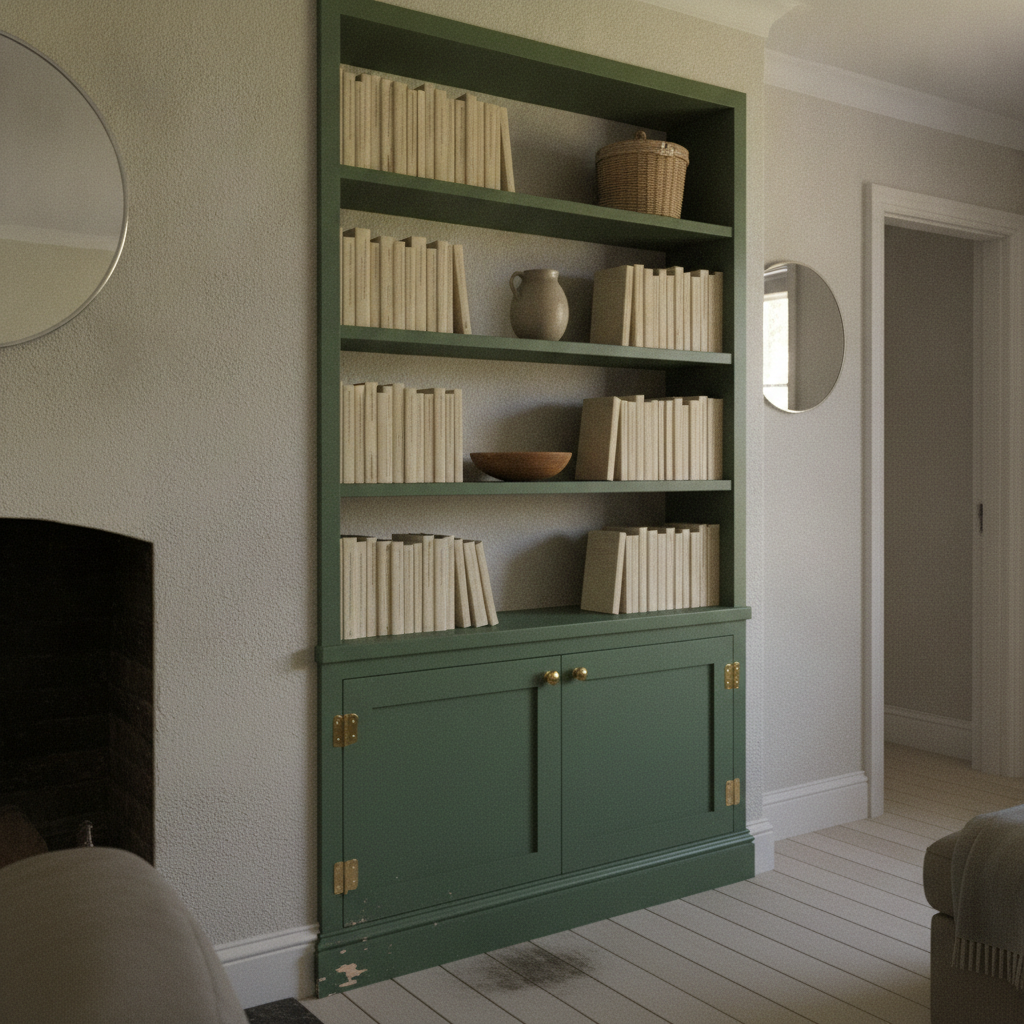
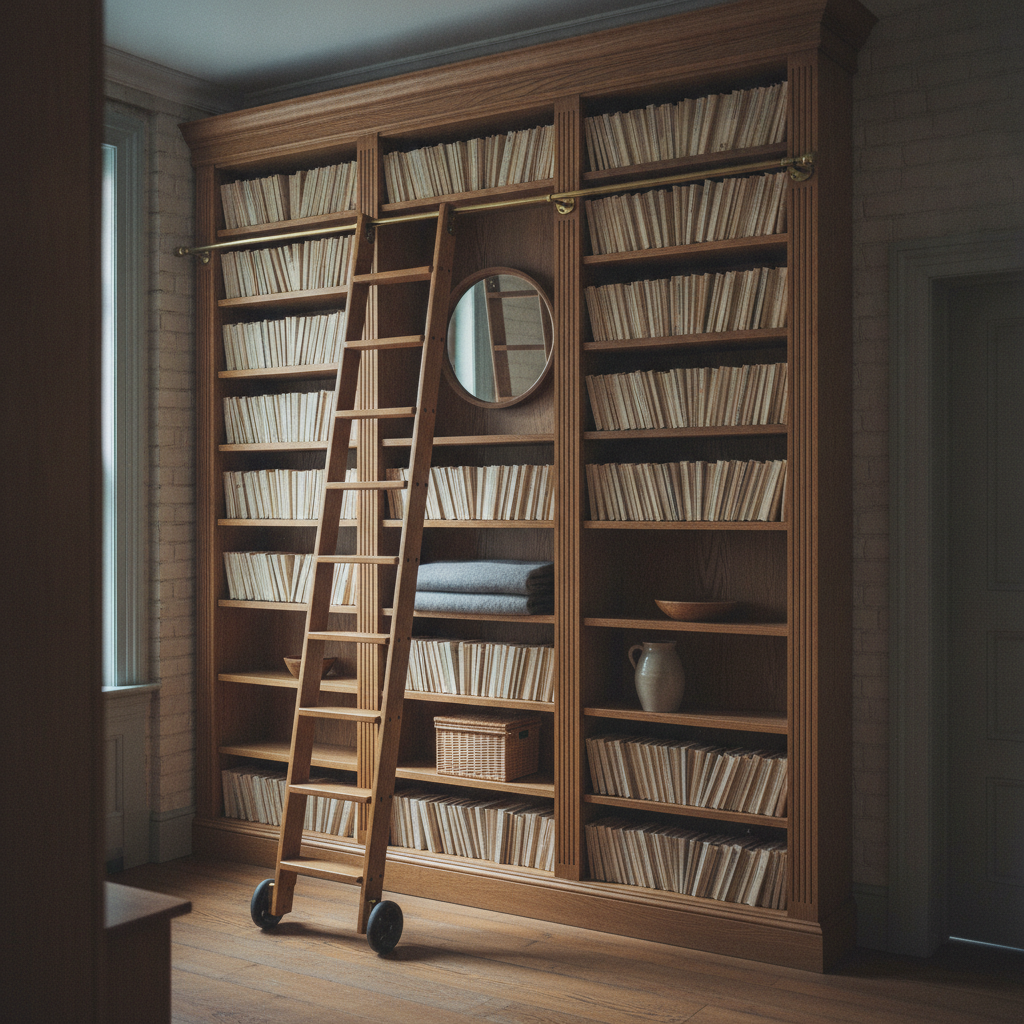
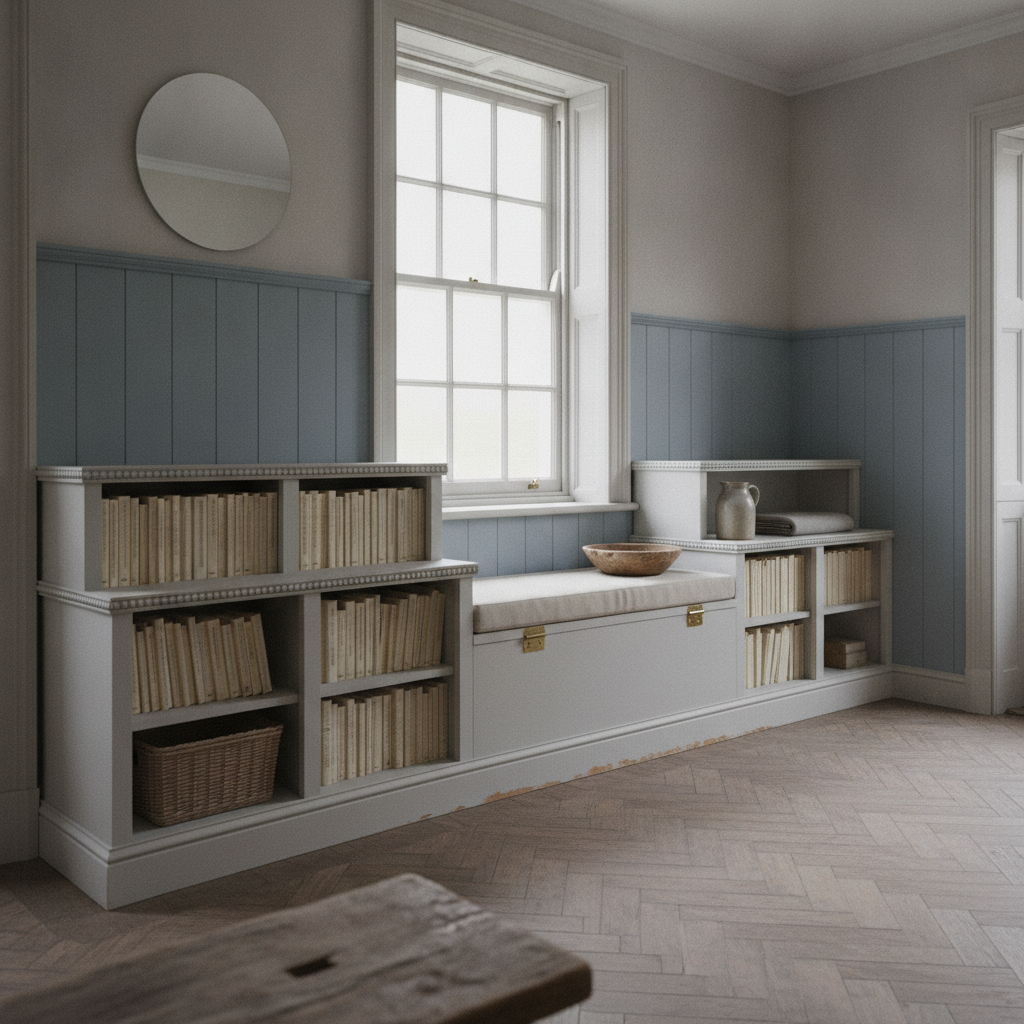
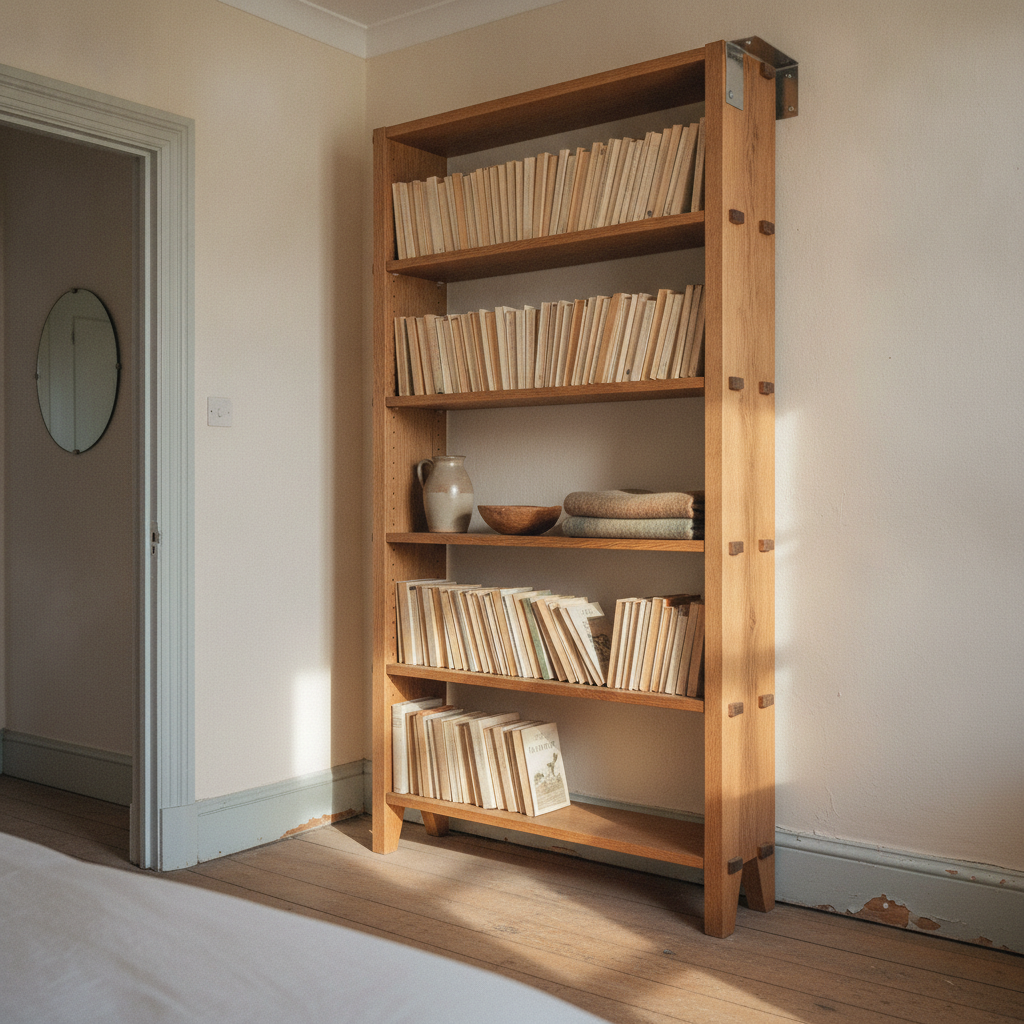
See the bookcase built and full before a joiner cuts anything. This AI bookshelf design generator turns a description into one finished run of shelves photographed inside a real room, in about thirty seconds — a deep green alcove built-in beside a chimney breast, an oak library wall with a sliding ladder, low shelves around a window seat, a freestanding oak shelf strapped to the wall, shelves raked in under a staircase and scaffold boards on threaded pipe. All six results are below exactly as they came back.
Design a Bookshelf FreeTry the AI Bookshelf Design Generator — Free
Pick a build, then use the box for what is specific to your room — which wall or alcove the shelves go in, whether there are cupboards or drawers underneath, how high the ceiling is, what the floor is made of, whether the wall is out of square, and how much of the run has to be open shelf. Each preset already carries the joints and fixings written as connections, the eye-level angled camera, the wear pinned to named places and the full no-lettering list, all tightened after reviewing what came back the first time.
AI Bookshelf Design Generator
Choose a build, name your timber, your joints, your fixings and the room the shelves have to fit, and get a photorealistic bookcase shot from inside the room. Up to 4K.
Six Bookcases From the AI Bookshelf Design Generator, Shown Exactly As They Came Back
Nothing here was regenerated or retouched. Each caption says what the prompt asked for and what actually arrived, because the gap between those two is the part nobody publishes.
What the AI Bookshelf Design Generator Gets Right and Wrong
A bookcase looks like the simplest thing on this site and hides four hard problems — whether it reads as built-in or as furniture, whether the joints and fixings are drawn as real hardware, whether a wall of books can be kept free of lettering, and whether the finish will let any wear show at all.
Built-in has to be written as geometry
A recess with its own reveal, shelf ends housed into the uprights with the joint line showing, uprights scribed to the plaster with a painted fillet, a plinth running unbroken along the floor. Written that way the alcove frame came back as joinery made for the gap. The word built-in on its own has never once produced anything but a cupboard standing against a wall.
Both ends of a fixing, or it floats
The ladder hung on hooked brackets over a rail flanged into the upright faces and rolled on two wheels at the floor. The freestanding shelf got an L bracket screwed down onto its top and into the wall behind. The pipe uprights got a flange in the ceiling and a flange in the floor. Every fixing described end to end was drawn; the one rail described only by its length came back in two pieces at two heights.
Spine-inward books work until books are the subject
Three frames came back with hundreds of books and not one visible spine, which is the best text result this site has recorded. The other three leaked, and each found a different surface the rule had not named: a cover turned to face the room, two books left lying open, and a bottom shelf quietly put back spines outward. Close all three in the same sentence — shut, upright, page edges only.
A fresh pale timber deletes the wear
New oak came back showroom clean twice over, no darkened shelf edges, no polished rungs, no sag, while the painted skirting a metre away chipped through to bare timber exactly where it was told to. Say the piece is old and has been loaded or climbed for years in the same breath as the material, or accept shelving that looks delivered this morning.
A hinge without a direction of travel walks off
The window seat lid was specified as hinged along its back top edge. The hinges vanished and two brass latches appeared on the front of the box instead, so the lid cannot lift. That is two pages running: state which way the thing opens, not merely where the hinges sit, or the hardware lands wherever the model finds it most decorative.
Flat paint still renders, texture still saves it
The frames with bare brick, painted brick or trowelled lime plaster across a whole wall look like photographs. The one that asked for full-height boarding and got a half-height dado with flat matt paint above it is the one frame here that still reads as CGI. Stating the light direction is necessary and never sufficient — the room needs one honest material across a whole surface.
How It Works
Pick the bookcase closest to the room you have
A painted alcove built-in beside a chimney breast, an oak library wall with a sliding ladder, low shelves around a window seat, a freestanding oak shelf strapped back to the wall, shelves raked in under a staircase, or scaffold boards on threaded pipe. Each preset already carries the joints written as joints, the fixings named at both ends, the wear pinned to named places, the angled eye-level camera and the no-lettering list.
Add what is specific to your room
Which alcove or wall the run goes on, whether there are cupboards or drawers under the shelves, how high the ceiling is, where the window and the door are, what the floor is made of, and how far out of square the walls are. Describe materials, joints and proportions rather than brand names, and skip the millimetres — stated measurements are ignored every time.
Generate, crop in, then send it on
About thirty seconds later you have a photograph of the bookcase in the room. Crop in before you judge it — a latch where a hinge should be, a rail that came back in two pieces, a plug lying loose on the floor and a single book turned cover-forward are all things you only see at full size — then download up to 4K and send it to a joiner for a quote.
Built for the Way People Actually Plan Shelving
One bookcase in a home, never a library
Every preset names the public library, the bookshop, the furniture showroom, the trade stand and the catalogue page as things this is not, and states that there is exactly one bookcase in the room with nobody in shot. All six frames held it, which matters for a subject whose stock photography is almost entirely institutional.
Joints written as joints
Shelf ends housed into uprights with the joint line showing, through tenons wedged with the end grain flush on the outside face, beaded moulding pinned along a shelf front. Described that way they are drawn, and the bookcase reads as something a joiner made. Described as a style, shelves come back as floating slabs with no visible means of support.
The awkward shapes, honestly shown
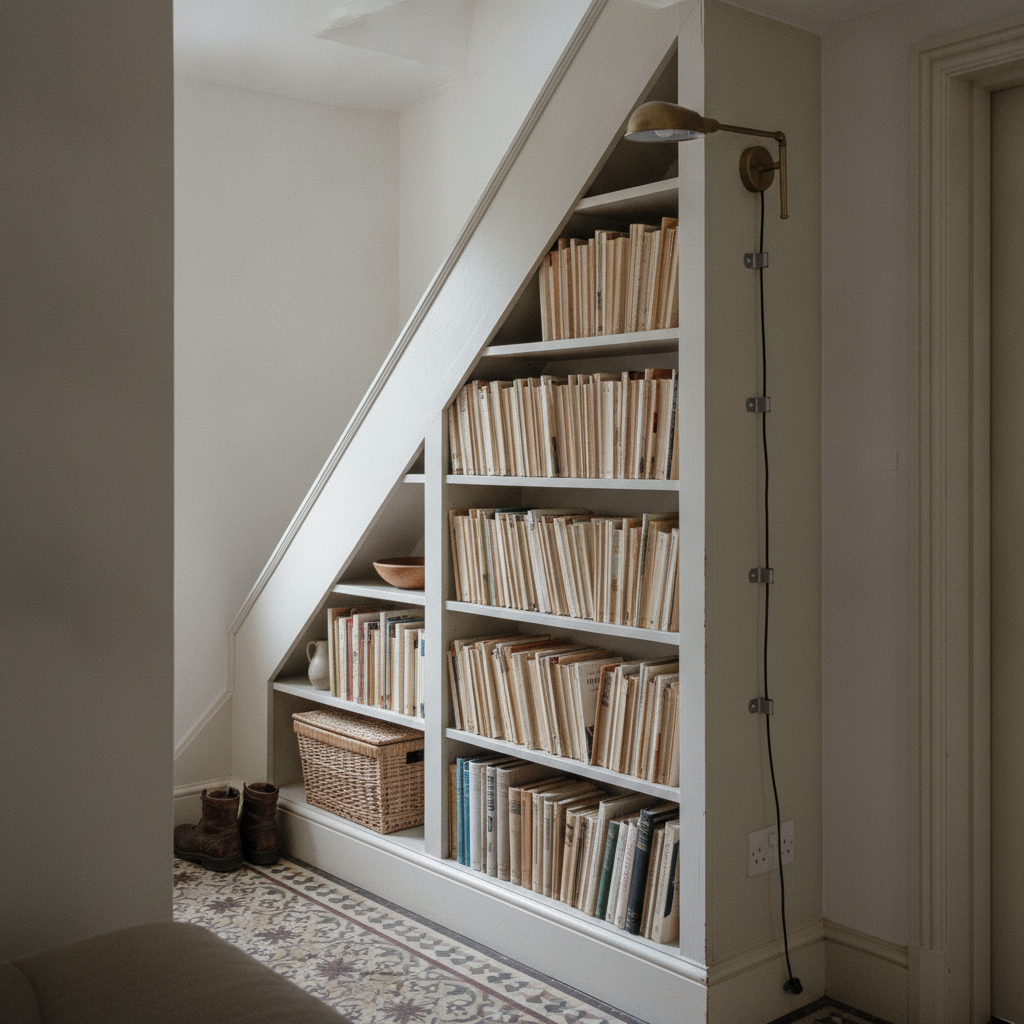
The under-stair preset rakes every shelf down beneath the line of the staircase in a hall narrow enough to touch both walls at once. The alcove preset fits a chimney breast recess. These are the two places shelving actually goes, and both came back with the walls standing full height rather than cut away.
Wear pinned to named places
Grubby paint at the cupboard door edge where fingers pull it, chipping through to bare timber at the plinth corner, a dulled dirty patch with no edge to it on the floor in front. Shapeless, located wear lands; wear with a shape drawn on it never does, and a ring of wear on a timber top comes back as a hole every time.
The text problem taken seriously
Books are the hardest subject on this site because they exist to carry print. Turning every book spine-inward produced three completely clean frames including a full library wall. The presets now also forbid open books, covers facing the room and anything propped on display, which are the three ways the leaks happened here.
A camera that stays in the room
Shelving is flat against a wall, which is exactly the geometry that collapses into a flat elevation. The fix in every preset is an angled standing viewpoint with the adjoining wall and a door architrave in shot, and something solid cut by the bottom edge of the frame. Where that foreground object arrived, the frame kept its depth.
AI Bookshelf Design Generator FAQ
Related Design Tools
AI Reading Nook Design Generator
The chair, the light and the corner that the shelves are being built for. Run it alongside this if the shelving is really there to make somewhere to sit and read.
AI Living Room Design Generator
The whole room rather than the alcove in it. Worth running first if the walls, the floor and the fireplace are all still up for argument.
AI Staircase Design Generator
Where under-stair shelving has to fit. Run it together with this if you need to see the stair and the storage beneath it as one piece of joinery.
See the Shelves Full Before Anyone Cuts a Board
Six builds, one description each, about thirty seconds per result. Start free and find out tonight whether the alcove wants shelves all the way down or cupboards underneath.
Design a Bookshelf FreeAn AI Bookshelf Design Generator for Alcoves, Awkward Walls and Anyone With Too Many Books
Shelving is the cheapest joinery in a house and the easiest to get wrong, because the decision is never really about shelves. It is about whether the alcove beside the chimney breast should be open all the way down or have cupboards at the bottom, whether the run should stop at the picture rail or go to the ceiling, whether the thing should look built-in or stand free so it can move with you, and what any of it looks like once it is full rather than styled with three plants. A quotation answers none of that, and a showroom photograph answers it in a room that is not yours. That is the gap an AI bookshelf design generator fills — describe the carcass, the joints, the fixings and the room around them, and about thirty seconds later you have a photograph of it in place. The six results above are shown exactly as they came back, failures included.
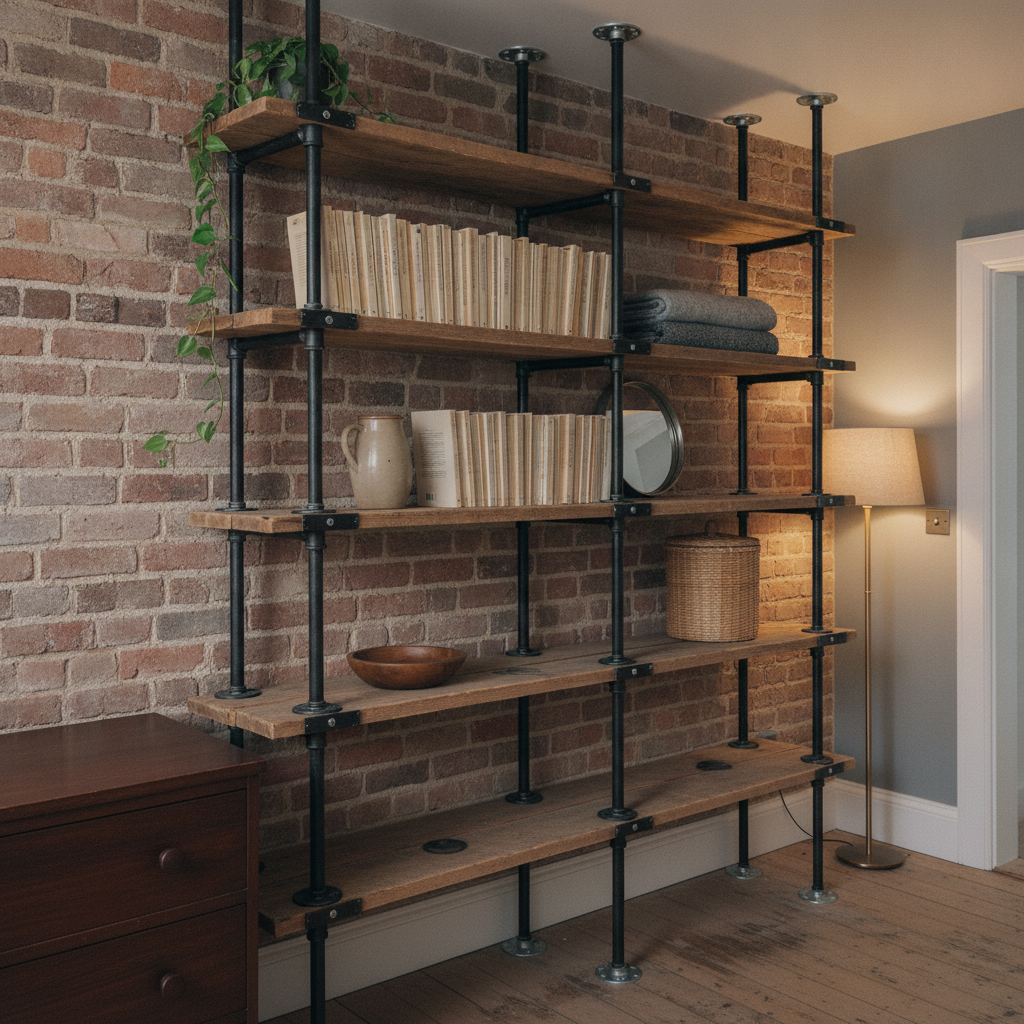
The six builds cover the shortlist a real shelving decision has. A painted alcove built-in with cupboard doors below, which is what most people mean when they say they want shelves. An oak library wall with a sliding ladder, which is the version that has to reach the ceiling. Low shelves running either side of a window seat, which is how you get storage without losing the light. A tall freestanding oak bookshelf strapped back to the wall, for anyone who rents or expects to move. A run raked in under a staircase, which is the most common piece of built-in joinery in a terraced house. And scaffold boards on threaded pipe, which is what the same wall costs when you build it yourself in a weekend.
The pattern in what came back is worth more than a feature list. Connections land and nouns do not. A recess written as a reveal with the shelf ends housed into scribed uprights arrived as genuine built-in joinery; a ladder written as hanging on hooked brackets over a rail at the top and rolling on two wheels at the floor arrived doing exactly that; a through tenon written with its end grain flush and two wedges driven into it arrived as a real joint; an anti-tip bracket written as screwed down onto the top and into the wall behind arrived with every screw head showing. Against that, a rail described only by the width it had to span came back in two segments at two different heights, and a hinge given a position but no direction of travel turned into a pair of latches on the wrong face of the box. If a part has to exist, say what it is fixed to at both ends and which way it moves.
What fails is narrow and worth knowing before you start. New pale timber deletes wear entirely — the two new oak pieces came back showroom clean while the painted skirting beside one of them chipped through to bare timber exactly as instructed — so say the piece is old in the same sentence as the material. Paint damage slides down to the plinth wherever you pin it. A ring of wear on a timber top comes back as a hole cut through the board, now four times running. Stating the light direction does not stop a flat matt wall reading as CGI; one honest material across a whole surface does. And books, the hardest text subject this site has, came back completely clean in three frames out of six, including an entire library wall with hundreds of page edges and not one spine, while the other three each found a different way round the rule — a cover turned outward, two books left lying open, a bottom shelf quietly reversed. The presets above now close all three doors at once. Inside those limits an AI bookshelf design generator is a genuinely useful half hour before you commit: the open-shelf argument gets settled, the cupboard-or-not question becomes visible, and the joiner gets a photograph instead of a paragraph.