
AI Bird Feeder Design Generator
See the feeder finished before you cut a single board. This AI bird feeder design generator turns a description into one real bird feeder photographed in a real garden, in about thirty seconds — a cedar shingle hopper on an oak post, a reclaimed barn board tray hung from an apple branch, a charred larch tube on a shepherd's crook, a copper and mesh feeder on a forged wall bracket, a woven willow hoop under a pergola beam and a hollowed oak log on a birch tripod. All six results are below exactly as they came back, including the one that counted wrong and the one that tipped the camera over.
Design a Bird Feeder FreeTry the AI Bird Feeder Design Generator — Free
Pick a feeder, then use the input for what is specific to yours — which birds you are feeding, whether it hangs or stands, what it hangs from, which way the weather drives, and whether it has to be easy to refill and clean. Each preset already carries the camera held level with the feeding port, the ports written as cuts through the board, the joinery written as connections named at both ends, the wear pinned to marks that survive, and every badge, brand name, price tag and seed bag banned as an object rather than as lettering.
AI Bird Feeder Design Generator
Choose a feeder, name your body, your roof, your feeding ports and what holds it up, and get a photorealistic bird feeder shot in a real garden. Up to 4K.
Six Feeders From the AI Bird Feeder Design Generator, Shown Exactly As They Came Back
Nothing here was regenerated or retouched. Each caption says what the prompt asked for and what actually arrived, because the gap between those two is the part nobody publishes.
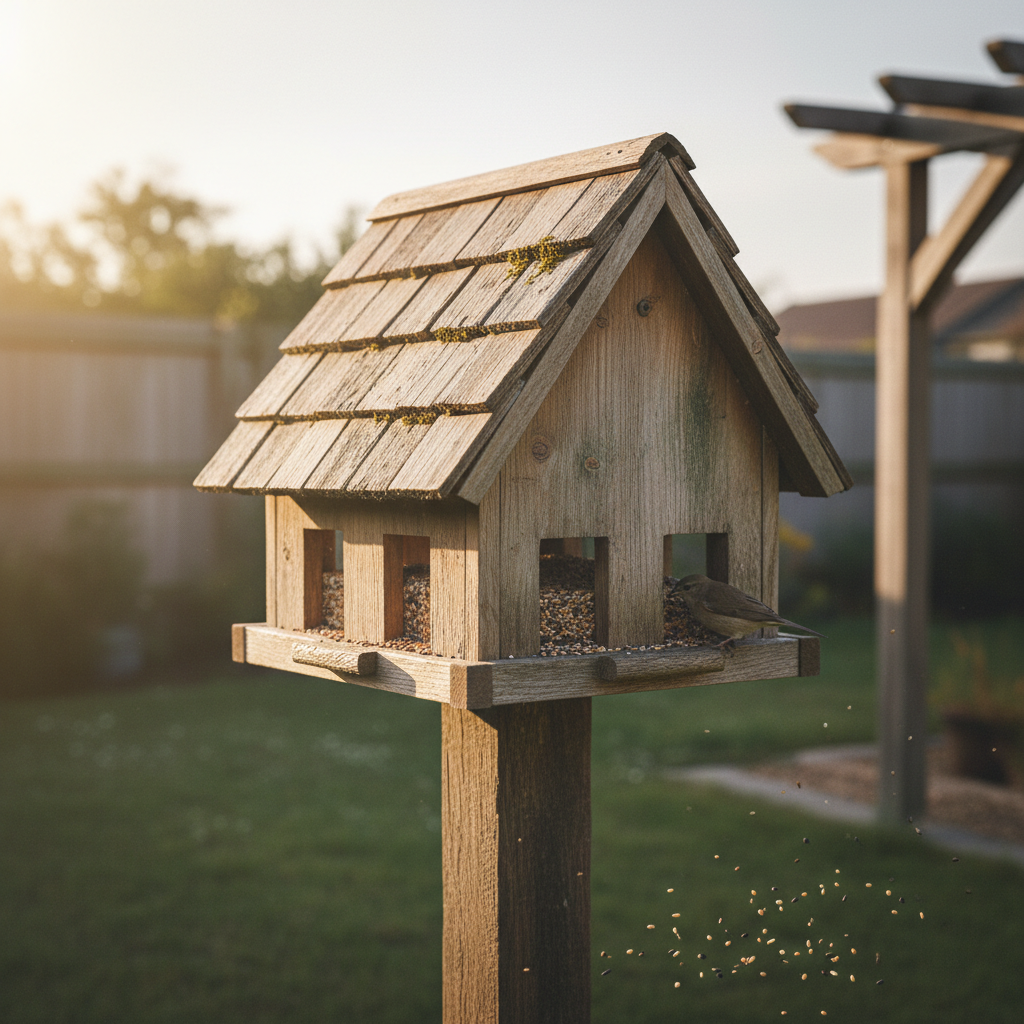
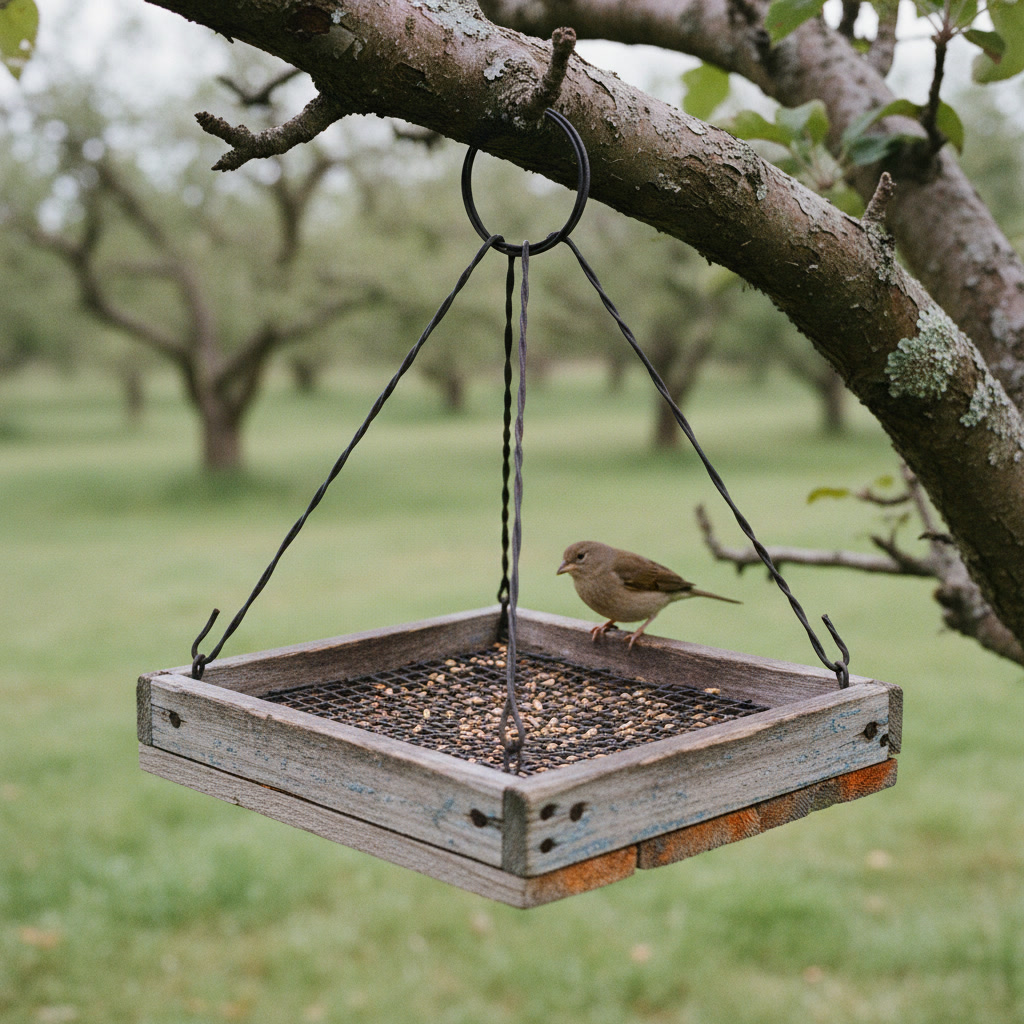
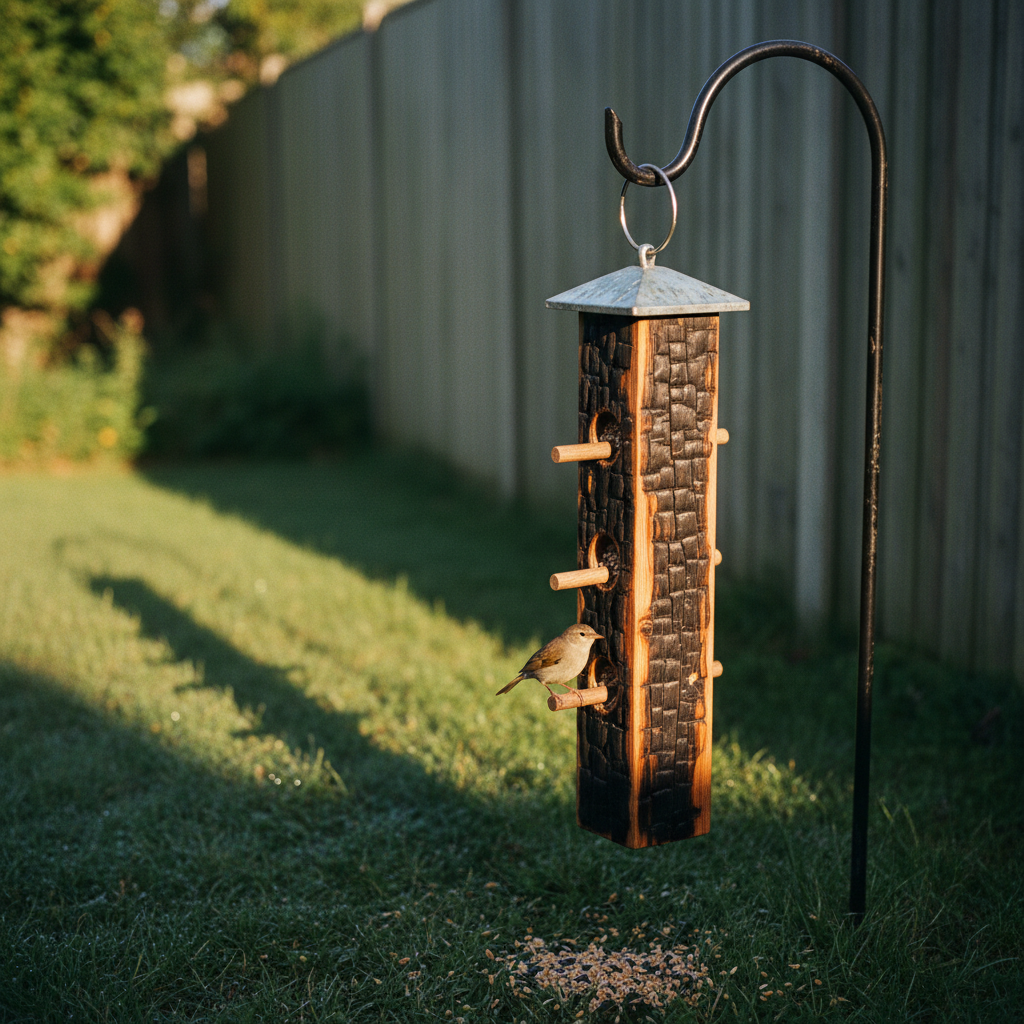
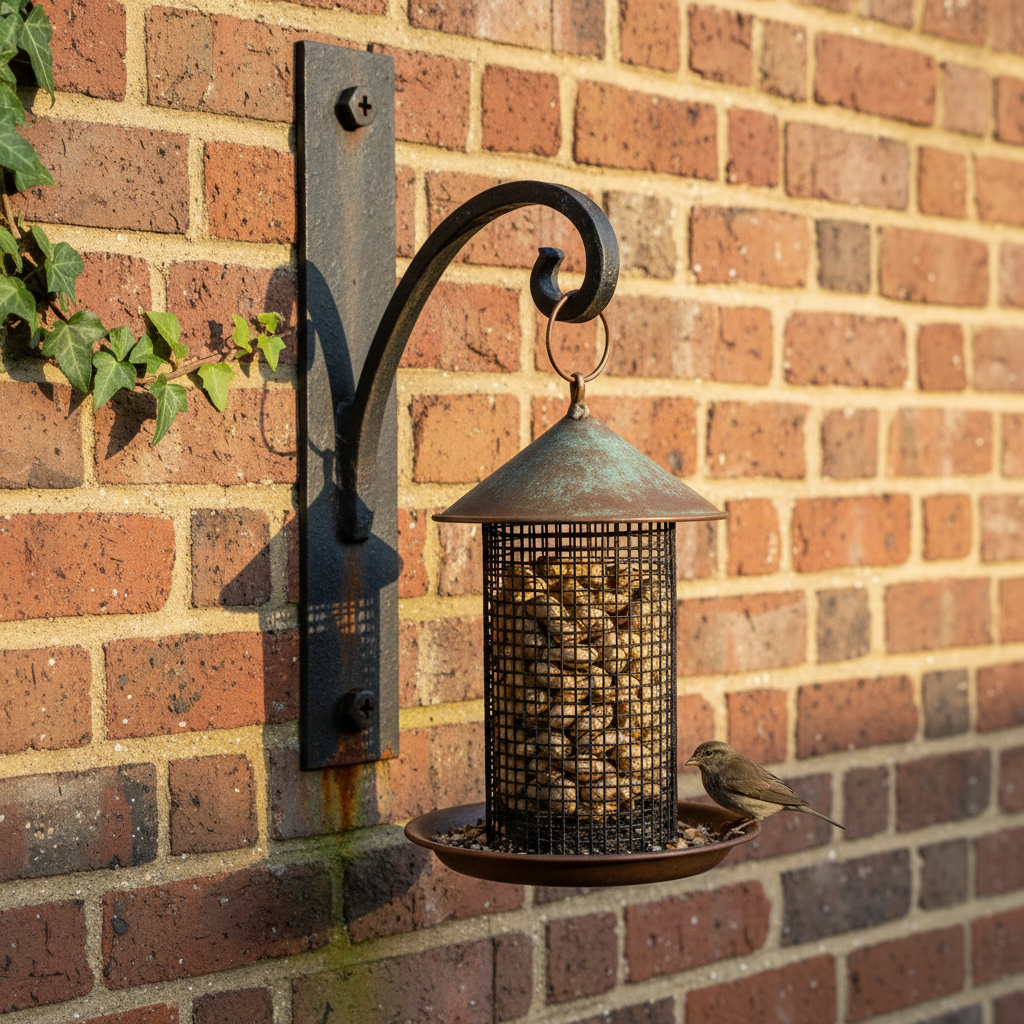
What the AI Bird Feeder Design Generator Gets Right and Wrong
A feeder is a small object that always hangs off something bigger, which makes it the ideal subject for testing connections — and this page sorted the fixings that get built from the ones that quietly disappear.
A peg driven right through beats every other fixing
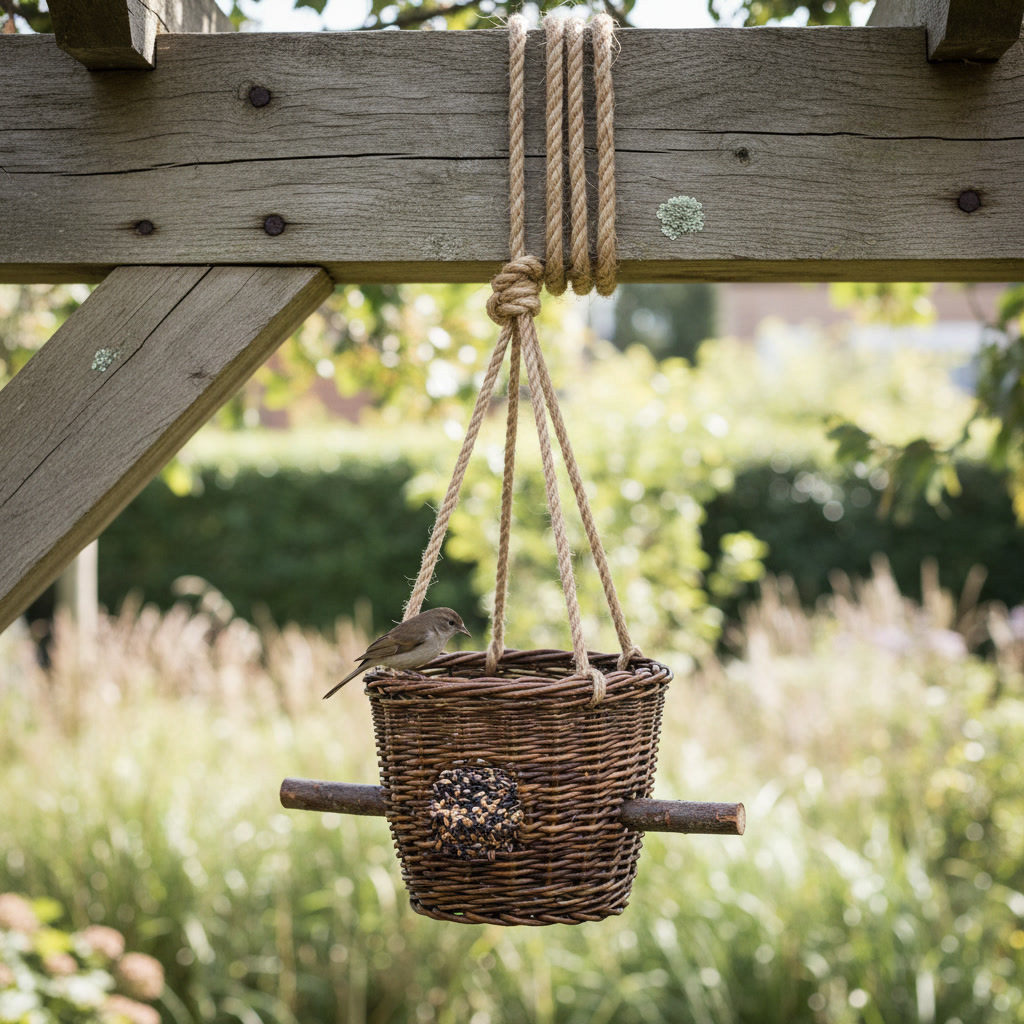
A hazel stick pushed through a willow basket with its cut ends proud on both sides, and oak dowels driven through a charred larch tube the same way, were both built exactly as written. Nothing else on this site is that reliable. A bracket spanning a gap can float, a strap behind a subject is not drawn at all, but a peg through a body with both ends visible arrives every time.
Counts hold on stacks and convergences, not on divisions
Three ports to three levels divided by two floors: three arrived. Three poles crossing at one lashed point: three arrived. Two ports to two compartments divided by one partition: four arrived. The structural reason has to be something you could feel with your hands — things above each other, or parts meeting at a point. A face divided into bays is just an elevation, and bays multiply.
Never describe a horizontal surface by its pattern
Five of six frames were shot at eye level. The one that tipped down and looked into the subject is the one whose floor was specified as steel mesh with the wires showing across the whole floor. This site has now watched the same thing happen to an end-grain chequer and to gravel. A pattern on a flat top can only be photographed from above it, so asking for one asks for that camera.
Identical hardware at two spots merges into one
A wall bracket was specified with two separate square plates bolted into the mortar, one at the top of the arm and one at the bottom. One long plate spanning both bolts came back. This is the same mechanism as identical wear pinned at two matching spots merging into a single band between them, and the exact mirror of an unbroken rail splitting when an opening interrupts it.
A loose fill inside an opaque body gets painted on the outside
Seed specified as filling the bottom of a closely woven willow basket arrived as an oval patch of seed on the outside of the weave, as though the basket had a window. New, and it explains a class of odd results. If the contents matter, give the container a real opening to see them through — the hopper and the tube on this page both have one and both read correctly.
Linkages collapse, static parts creep up
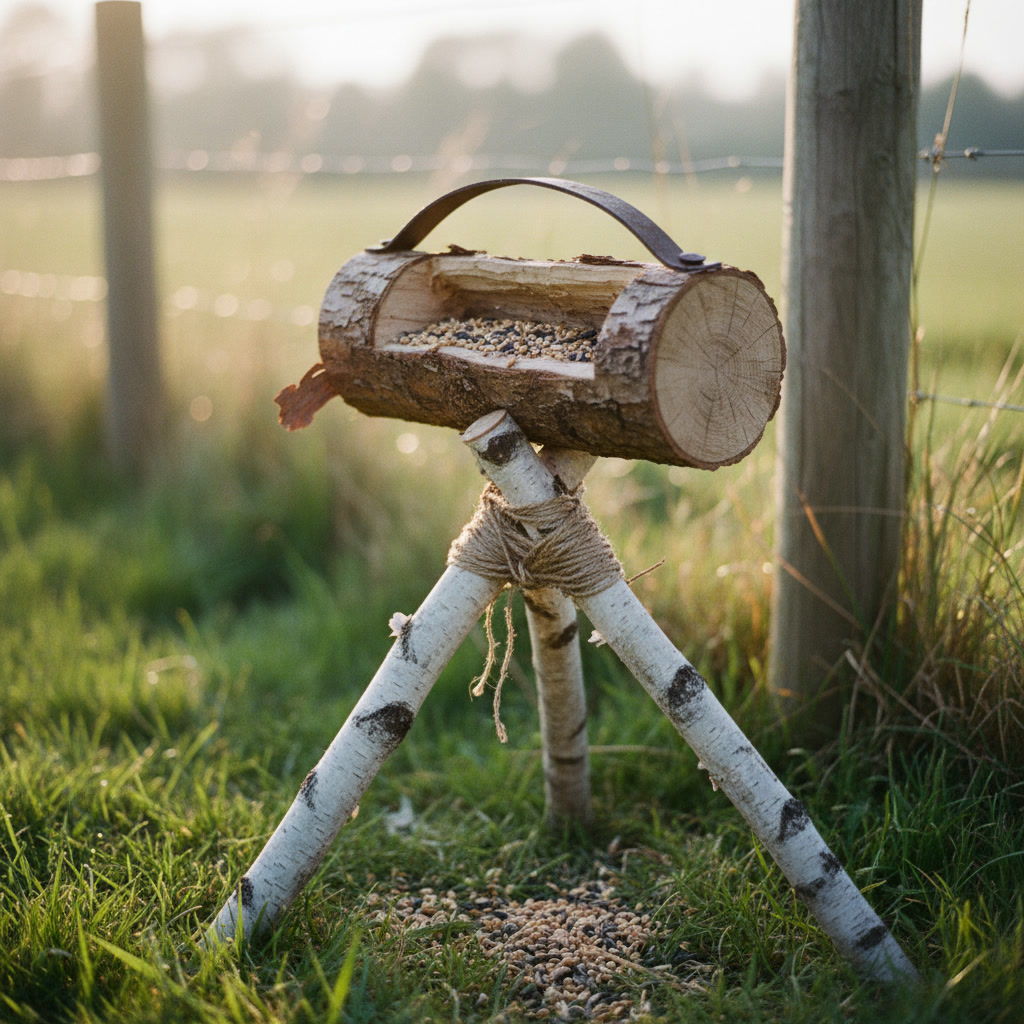
A hook and a separate ring became one hook. A strap bent over a log became a carrying handle with its nailed ends missing. A rope wrapped twice round a round branch became a ring hooked over a stub, while the identical wraps round a square sawn beam all landed. Jointed and moving parts simplify, while the number of static repeated parts drifts upward — opposite failures, same page.
How It Works
Pick the feeder closest to what you want
A cedar shingle hopper on an oak post, a reclaimed barn board tray hung from a branch, a charred larch tube on a shepherd’s crook, a copper and mesh peanut feeder on a forged wall bracket, a woven willow hoop under a pergola beam, or a hollowed oak log on a birch tripod. Each preset already carries the camera held level with the feeding port, the joinery written as connections, and every badge, brand name and seed bag banned as an object.
Add what is specific to yours
Which birds you are feeding, whether it hangs or stands, what it hangs from, which way the weather drives, whether squirrels are a problem and what it will be seen against. Describe materials and connections rather than styles, and skip the measurements — give sizes as a fraction of something already in the frame, like the post it stands on or the bricks behind it.
Generate, crop in, then cut the timber
About thirty seconds later you have a photograph of it. Crop in before you judge it — two ports that came back as four, a hook with no ring, a strap that turned into a handle and rust that ran down the brickwork are all things you only see at full size — then download up to 4K and use it as the brief.
Built for the Way People Actually Plan a Bird Feeder
A feeder in a garden, never a garden centre
Every preset names the garden centre display, the trade stand, the craft fair table and the catalogue page as things this is not, states there is exactly one feeder in the frame with no feeding station behind it, and puts it on a real post, branch, bracket or beam with real light falloff. It matters for a subject whose stock photography is almost entirely moulded plastic tubes shot on white.
The seed bag problem taken seriously
Seed is what a feeder is for, and printed sacks, boxes, packets and scoops are what a garden scene drags in with it. Each preset bans all of those by name, bans the plant label and the plant marker too, and then pre-declares what seed is allowed to be instead: loose in the feeder and scattered on the ground. Six frames out of six came back with no lettering anywhere.
Feeding ports written as cuts
Not a port as a shape but a port as an operation: bored or cut clean through the face so the edge shows the full thickness of the material and the seed is visible in the dark behind it. It landed in every frame that asked for it — square ports through a cedar hopper, round ones through charred larch, with the cut edge reading as real joinery in both.
Props pre-declared instead of forbidden
A bird is going to turn up whatever you write, so the presets state in advance what any bird has to be — one small plain brown bird with no markings and no bright colour, never more than one. That is exactly what arrived in five of six frames. Second feeders and feeding stations are banned outright, because those are optional and a bird is not.
Texture on the feeder, not just behind it
Every preset states the light direction, because an unstated one guarantees a render. That is necessary and not sufficient. The frames that read as photographs have a material event on the feeder itself — charred alligator crackle, split reclaimed boards, blotched verdigris, peeling birch bark, a woven willow face. A flat even surface on the subject is what makes a picture look CG.
Wear that survives a winter outdoors
Lichen in the shingle courses, old blue paint left in the grain, rust on steel mesh, algae greening brick under a bracket, birch bark peeling in curls, oak bark lifting along an edge, frayed tarred twine and posts stained dark where they meet the grass all landed. Dead patches in healthy planting and rain described as running down do not.
AI Bird Feeder Design Generator FAQ
Related Design Tools
AI Birdhouse Design Generator
Somewhere for them to nest rather than somewhere to eat, and the page where height in the design first solved the camera problem outright. Read it next to this one if you are building both in the same weekend.
AI Raised Garden Bed Design Generator
The same timber, the same weather and the same garden. Useful if the feeder is going in next to the vegetables and you want the two to look like they were built by the same person.
AI Fence Design Generator
The post the feeder goes on and the thing that sets its scale in half the frames here. Worth running if the boundary and the feeder are the same afternoon’s work.
See the Feeder Finished Before You Cut the Timber
Six bird feeders, one description each, about thirty seconds per result. Start free and find out tonight whether yours hangs or stands, whether it is a hopper or a tray, and whether one is enough.
Design a Bird Feeder FreeAn AI Bird Feeder Design Generator for Hoppers, Trays and Anything That Hangs
A bird feeder is the smallest useful thing you can build in a garden and it still has half a dozen decisions in it, almost none of them about looks. Does it hang from a branch where the birds want it, or stand on a post where you can see it from the kitchen? Is it a hopper that holds a week of seed, or an open tray that everything can land on and nothing stays dry in? Does the roof oversail far enough to keep rain off the ports? Does it come down easily enough that you will actually clean it in February? Is it timber that will grey off and belong, or plastic that will still look new and wrong in five years? Those are the arguments a photograph settles and a dimensioned drawing does not. That is the gap an AI bird feeder design generator fills — describe the body, the roof, the ports, what holds it up and where it stands, and about thirty seconds later you have a picture of it finished. The six results above are shown exactly as they came back, failures included.
The six cover the shortlist a real decision has. A classic cedar shingle hopper sitting on the sawn top of a weathered oak post, which is what most people picture. A reclaimed barn board tray with the last of an old blue paint still in the grain and a rusted mesh floor, hung on four wires from an apple branch. A tall charred larch tube on a black shepherd's crook, for a garden where the feeder has to look like it was meant. A copper and mesh peanut feeder on a forged iron scroll bracket bolted into the mortar of a brick wall. A closely woven willow hoop hanging under a pergola beam with a hazel stick pushed straight through it as a perch. And a hollowed oak log with the bark still on it, carried on three birch poles lashed at a single crossing in long meadow grass.
The pattern in what came back matters more than a feature list. This is a subject that hangs off something bigger in every single frame, which makes it the best test of connections this site has run, and it sorted them cleanly. The most reliable fixing there is turns out to be a peg driven right through the body with both cut ends standing proud — the hazel perch and the oak dowels were built exactly as written, where on earlier pages a bracket spanning a gap floated and a plate hidden behind a subject was never drawn at all. A wall bracket works too, provided it is chunky square bar rather than thin rod, the wall has a real face like brickwork to bolt into, and the bolt heads show. And the camera behaved: an AI bird feeder design generator almost never needs the anchor clause that other small subjects need, because a feeder already lives at head height on a branch, a crook, a bracket or a beam. Five of six frames came back at eye level without asking.
What failed is narrow and worth knowing before you start. The one frame that tipped down and looked at its subject from above is the one whose floor was described by its pattern — steel mesh with the wires showing across the whole floor — which is the third time this site has watched a pattern on a horizontal surface drag the lens over it. Counting sorted itself into a rule: three ports to three levels held, three poles to one crossing held, and two ports to two compartments divided by one partition came back as four, because a division across a flat face is just bays in an elevation and bays multiply. Linkages collapse — a hook and a separate ring became one hook, a strap bent over a log became a carrying handle, a rope wrapped round a round branch became a ring on a stub. Identical hardware specified at two matching spots merged into one long plate. Seed specified as filling an opaque woven basket was painted onto the outside of the weave instead. And rust pinned to the lower edge of a bracket ran on down the brick as a streak, which is the drip artifact yet again. Against all that: six frames out of six with no lettering anywhere on a subject whose real-world form is a branded moulded product, five of six at the right height, and every feeding port written as a cut through the material arriving as real joinery. Inside those limits an AI bird feeder design generator is a genuinely useful half hour before you pick up a saw.