
AI Trellis Design Generator
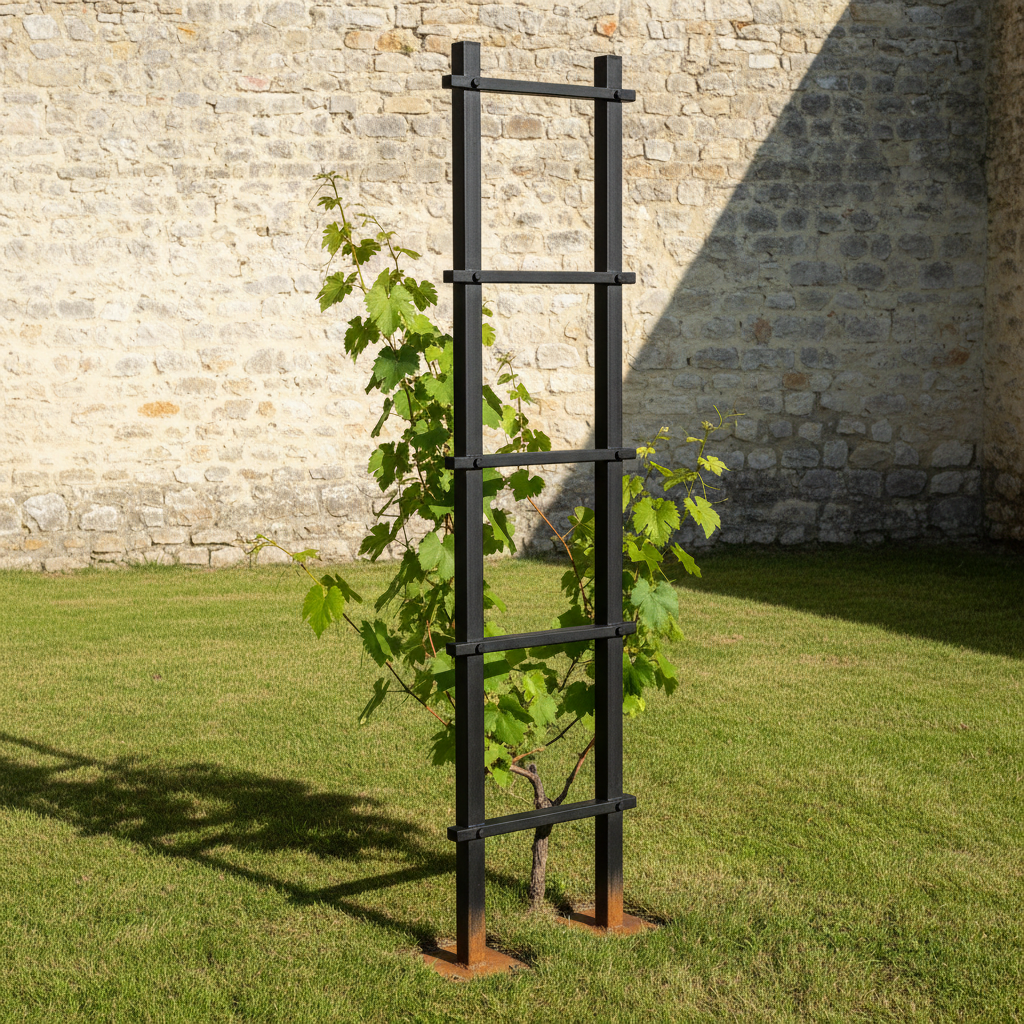
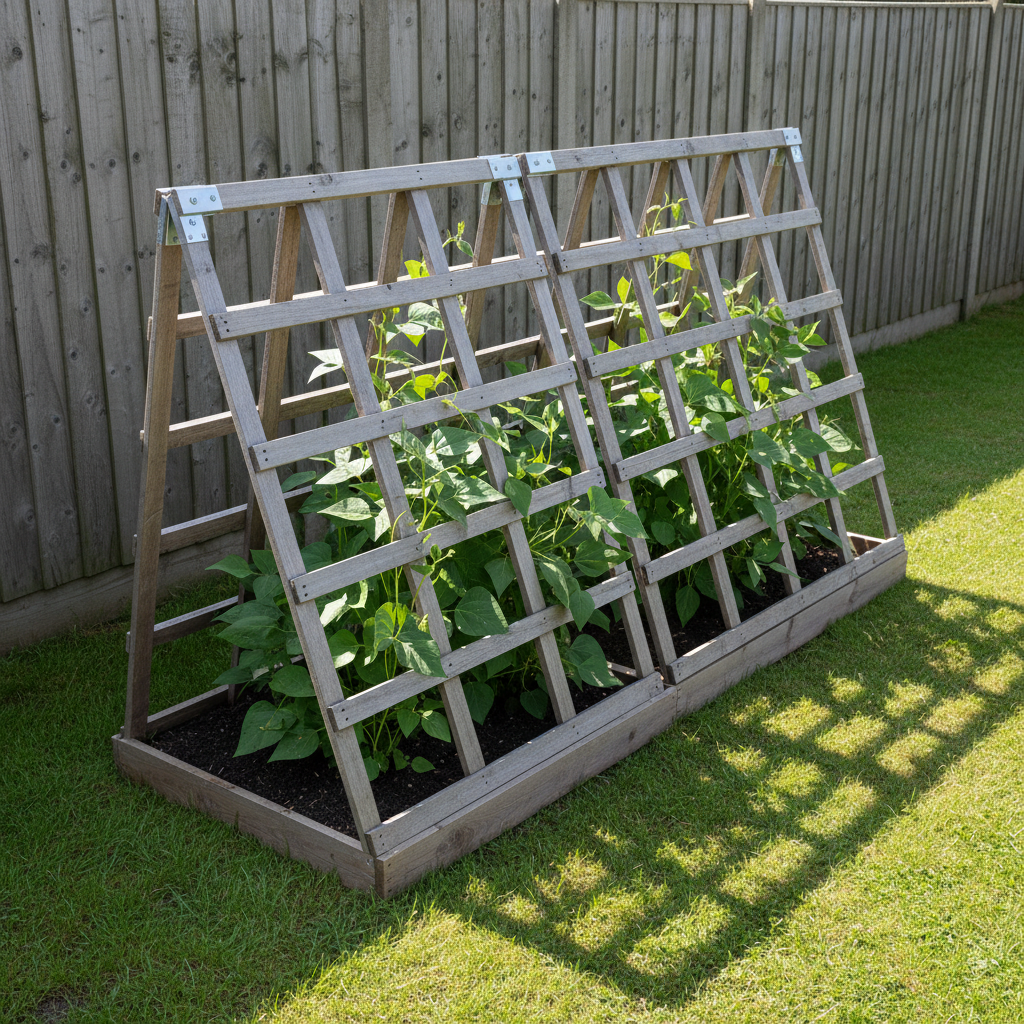
See the trellis standing against your own fence before you buy a single batten. This AI trellis design generator turns a description into a finished panel photographed where it stands, in about thirty seconds — weathered oak lattice, a timber obelisk, a painted planter screen, woven willow, matt black steel and an A-frame over a bean bed. All six results are below exactly as they came back, with what the prompt asked for and what actually arrived.
Design a Trellis FreeTry the AI Trellis Design Generator — Free
Pick a style, then use the box for what is specific to you — the timber or the metal, square or diamond lattice, a panel between posts or an obelisk, a planter underneath it, the paint or stain, the climber and the fence, wall or hedge you already have behind it. Each preset already carries the lattice rule that stops the battens floating, the fixings, the camera position and the no-lettering list.
AI Trellis Design Generator
Choose a style, name your timber, lattice, finish and climber, and get a photorealistic garden trellis standing on the grass. Up to 4K.
Six Trellises From the AI Trellis Design Generator, Shown Exactly As They Came Back
Nothing here was regenerated or retouched. Each caption says what the prompt asked for and what actually arrived, because the gap between those two is the part nobody publishes.
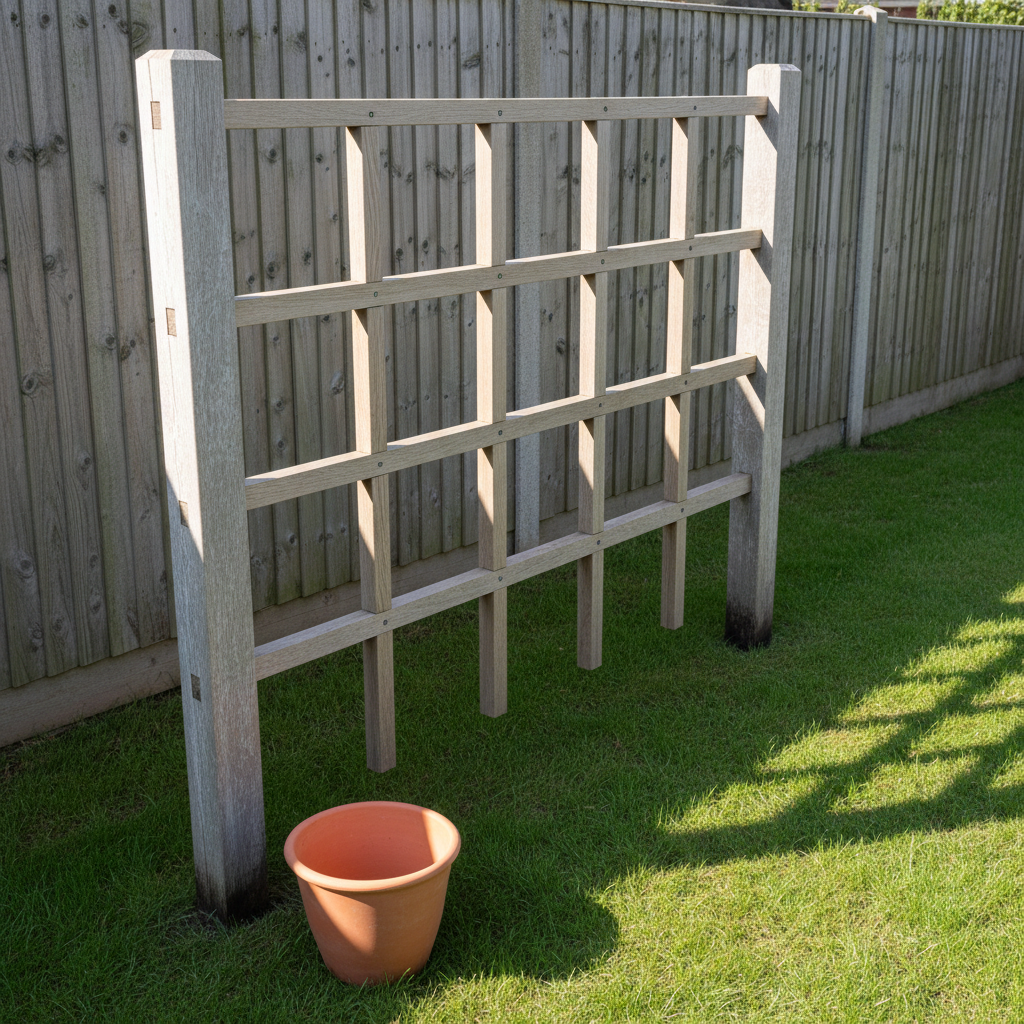
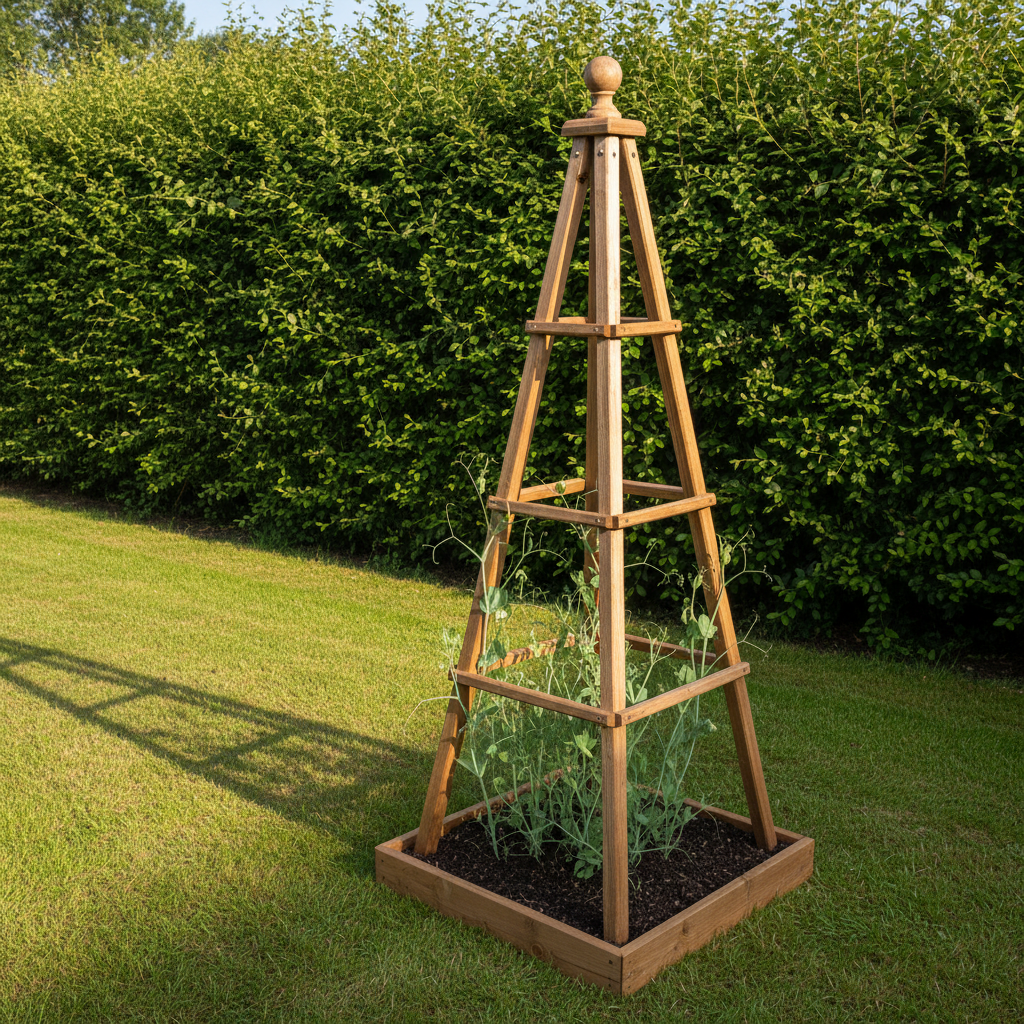
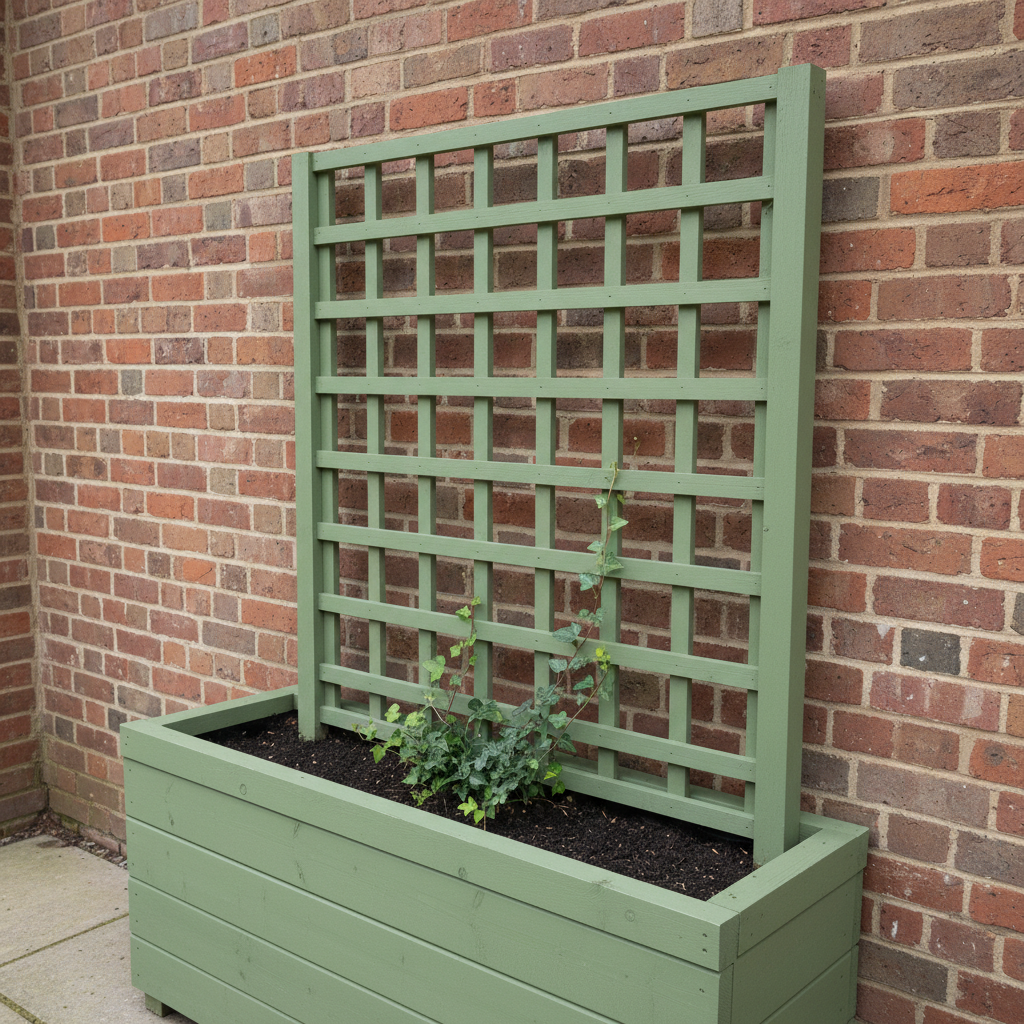
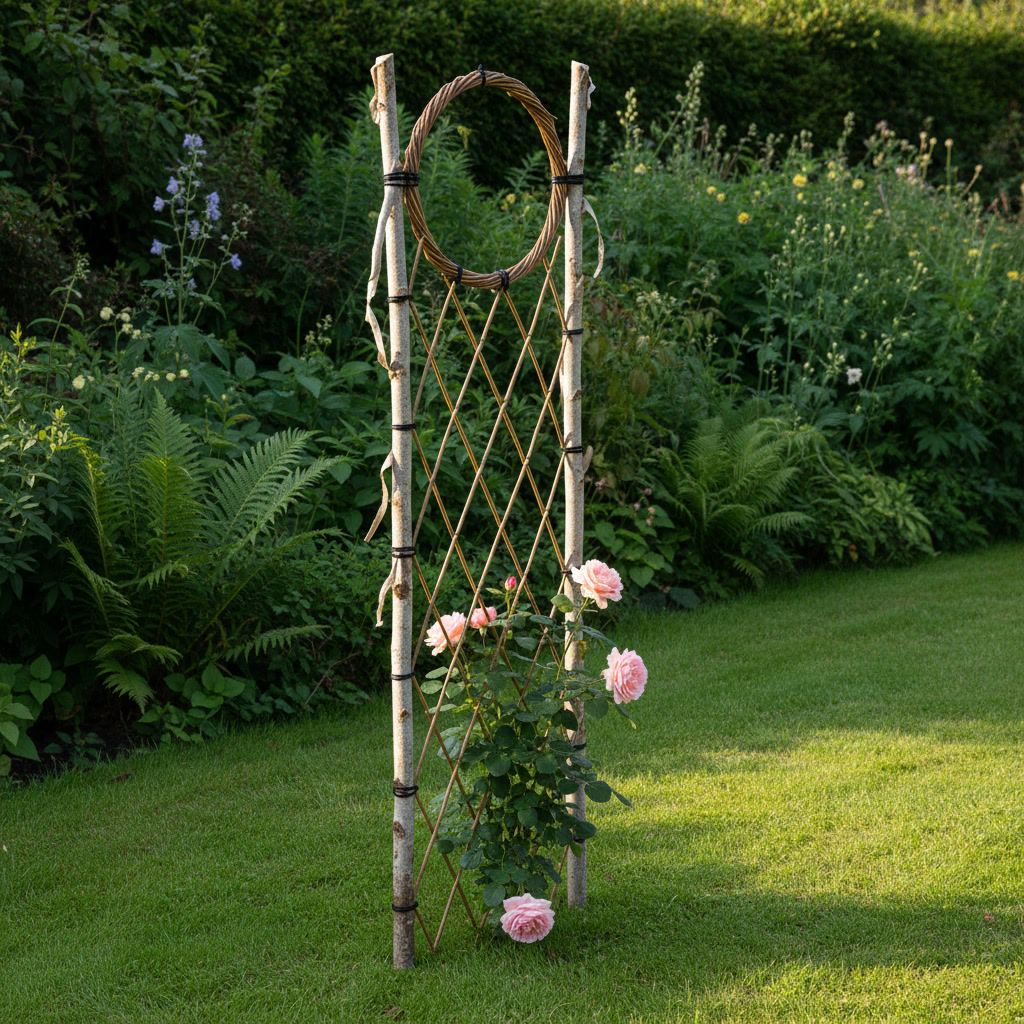
What the AI Trellis Design Generator Gets Right and Wrong
A trellis is mostly repetition — a dozen identical members and the gaps between them — and almost every interesting failure here comes from that repetition rather than from the structure.
Every batten needs both ends landed, not just the fixings
The finding this page was worth running for, and it happened twice in six frames. Battens described as crossing at right angles came back with their bottom ends dangling in mid air on the oak panel, and the willow rods poked out past the far pole with free ends. The both-ends rule was known for brackets and straps; it turns out to govern every repeated member of a lattice too. Say each upright runs from the top rail to the bottom rail and is housed into both, and that the lattice fills the whole opening.
Paving pulled the camera up, grass held it down
As clean an A/B as this project has produced, because only one variable changed inside one run. Five trellises stand on mown grass and all five held standing eye level with the identical camera paragraph. The sixth was put on a paved patio and is the only frame looking down into the planting. Patterned ground reads as a pattern worth photographing and lifts the lens over the subject. Every preset now stands the trellis on grass and says so.
Pin wear to a junction the design actually has
The obelisk lost its weathering completely, and the reason is sharper than fresh timber. Its legs stand inside a soil tray and never touch the grass, so staining pinned to where the leg meets the grass had nowhere to land and was dropped entirely. Wear needs a contact that exists in the build you described. Move it to where the leg meets the soil and it comes back.
Rust on a foot plate is the best base wear there is
Pinned to a junction between two named objects — the square steel foot plate where it meets the grass — and told to fade gradually upward onto the bar, it landed dead on both feet from one shared sentence, with no per-part repetition needed. Rust on steel appears to be easier than greying on timber, and wear pinned to an object pair lands where wear pinned to a surface drifts off its spot.
Pale deletes wear, whether it is paint or bark
The fresh-finish rule replicates for the fifth time and extends to a natural surface. Honey-brown treated larch lost every weathering clause; silver-grey weathered oak carrying the same clause kept it on both posts; and peeled hazel, pale because the bark was stripped rather than because of any finish, lost it too. On a pale surface ask for dirt and grime instead, which does land, rather than greying and staining, which does not.
Symmetry still beats the off-to-one-side camera clause
The steel trellis is two identical uprights with nothing lopsided about it, and it came back almost square on despite the same sentence that produced a true three-quarter everywhere else. The frames that took the angle all had something asymmetric — a planter at one end, a weave leaning to one side, a bed running away from the lens. Build the asymmetry into the object rather than asking the camera to find one.
A fixing the camera cannot see becomes catalogue hardware
A single bolt through both top rails of the A-frame, written end to end with the nut and washer visible, arrived as three galvanised straps screwed over the apex. End-to-end description is necessary but not sufficient: position matters. The apex is the one place on that structure the lens cannot look along, and an uninspectable joint gets the hardware the model already knows. Keep fixings low, visible, and ban the strap and angle bracket by name.
A curve survives as an object, never as an edge
The woven willow hoop came back a true circle, bound round on itself and lashed into the lattice as a separate ring-shaped thing. That is the third confirmation and the strongest. Ask for the same curvature as a profile — an arched top, a scalloped board, a fan-shaped panel — and it is ironed dead straight. If you want a curve, make it an object in its own right.
Counts hold on a convergence, not on a division
Four obelisk legs leaning inward to meet at one single point gave exactly four legs. Numbers survive when the reason for them constrains the structure — parts stacked one above another, or meeting at a point. Divide something across a flat face and the count drifts, usually upward. Nothing on this page was given a batten count for exactly that reason, and nothing needed one.
How It Works
Pick the style
Six presets for the trellis design generator: a weathered oak lattice panel pegged between two chunky posts, a four-legged timber obelisk standing in a tray of soil, a painted screen rising out of a planter box, a rustic woven willow panel on peeled hazel poles, a matt black square-bar steel frame, and an A-frame over a bean bed. Each already carries the lattice rule, the fixings, the camera position and the weathering.
Add your trellis
Put the specifics of your own garden trellis in the box: the timber or the metal, square or diamond lattice, batten widths described as fingers rather than millimetres, a planter underneath, the paint or stain colour, the climber you are growing, and the fence, wall or hedge behind it. Describe materials by how they behave rather than by naming a style, and say what every member lands on at both of its ends.
Check it, then download
About thirty seconds later you have a trellis photographed where it stands. Before you judge the look, check three things: does every batten actually reach a rail at both ends rather than dangling, does the lattice fill the whole opening between the posts, and did both posts come back the same. Then generate two or three more. Downloads go up to 4K.
Writing a Prompt That Produces a Buildable Trellis Design
Four habits that separate a design worth showing a joiner from one you regenerate, all learned from the six results in the gallery above.
Give every member a destination
Not battens crossing at right angles, but each upright batten running the whole way from the top rail down to the bottom rail and housed into both. A member given a direction floats; a member given two ends gets built. Add that the lattice fills the whole opening between the posts, or you get a weave covering a third of it with loose rods poking out past the frame.
Ask for the wear that gets drawn
A post stained dark and greyed where it goes into the ground lands, and fading gradually upward keeps it from arriving as a hard black band. Rust on a steel foot plate where the plate meets the grass is the most reliable of the lot. But pin it to a junction the design really has — the obelisk legs stand in a tray and never touch the grass, so the clause was simply dropped — and describe the timber as old first, because pale and fresh deletes the whole paragraph.
Stand it on grass and make it lopsided
Grass held the camera at standing height in five frames out of five; the one trellis put on paving is the one photographed from above. And since a symmetrical panel comes back square on no matter what the camera sentence says, build the asymmetry into the thing itself — one post taller, a planter at one end, the bed running away from the lens.
Put the fixing where the camera can see it
A peg driven right through the post and the batten it carries, both sawn ends proud on the face nearest the lens, is still the best fixing instruction there is. The same wording failed at the apex of the A-frame, because nothing up there is inspectable and an uninspectable joint comes back as catalogue straps. Keep fixings low on the structure, name what they pass through, and ban the strap, plate and angle bracket if the joint usually ships with them.
Who Uses an AI Trellis Design Generator
Weekend woodworkers
A trellis is the cheapest outdoor build there is and the easiest to get visually wrong, because batten width and hole size are the whole design and neither shows up in a cutting list. Seeing a two-finger batten with hand-sized holes next to a diamond weave answers in a minute what a plan never does.
Gardeners choosing a climber support
The support and the plant have to suit each other, and the catalogue photograph shows the panel empty against a white sweep. Seeing a rose on woven willow, sweet peas up an obelisk and a grapevine on black steel, all at eye level on grass, is a comparison nobody sells you.
Garden and landscape designers
Screening is the part of a plan clients cannot picture, because a trellis on a drawing is a hatched rectangle. A photographed panel against the real boundary is worth more in a presentation than a CAD block, especially when you are arguing for a painted screen instead of the orange softwood lattice everybody already imagines.
Renters and patio gardeners
If you cannot dig a post hole, the planter screen is the whole decision — how tall the box has to be, how much lattice sits above it, whether it looks deliberate or like a shop display. Generating two or three versions settles it before you order anything heavy you then have to carry.
Allotment and vegetable growers
Bean frames and pea obelisks get built out of whatever turns up, and the argument is always about form rather than looks: A-frame or obelisk, panel or wigwam, over the bed or along the edge. The A-frame preset exists because that is what most plots actually end up building.
Anyone commissioning a made-to-order panel
A joiner quoting a one-off needs the form settled before they price it: square or diamond, pegged or screwed, painted or left to silver, posts or a planter. Generating each option and putting them side by side is a faster way to settle that than a chain of emails, and it costs nothing but twenty minutes.
AI Trellis Design Generator FAQ
Related Design Tools
AI Pergola Design Generator
The structure a trellis usually grows into. Posts, beams, rafters and climbing planting, at the scale above the panel.
AI Garden Bench Design Generator
The same joinery thinking applied to seating. Weathered oak, reclaimed boards and a planter end, with the same weathering vocabulary.
AI Raised Garden Bed Design Generator
For what sits underneath the bean frame. Boarded sides, corner posts and soil written as a container so it draws inside.
See It Against the Fence Before You Buy the Battens
Six styles — weathered oak lattice, a timber obelisk, a painted planter screen, woven willow, matt black steel and an A-frame bean frame — each photographed where it stands in about thirty seconds, in your garden and in your light. Up to 4K. Free to start, from $2.99.
Design a Trellis FreeAn AI Trellis Design Generator for Woodworkers, Gardeners and Anyone Screening a Boundary
A trellis is the cheapest thing you can build in a garden and one of the easiest to get visually wrong, because everything that decides how it looks is invisible in the places people go for information. The plan gives you post centres and batten lengths and tells you nothing about how a two-finger batten with hand-sized holes reads against a brick wall. The garden centre photograph is an empty orange softwood panel shot square on against a white sweep, no grass, no climber and no weather. Neither answers the questions people actually have, which are whether square lattice or diamond suits the wall behind it, whether an obelisk looks better than a flat panel in a border, whether a planter screen reads as deliberate or as a shop display, and whether a painted finish will still look right once it has aged. That is the gap an AI trellis design generator fills. Describe the timber, the lattice, the finish, the climber and the fence behind it, and about thirty seconds later you have a photograph of the trellis standing there. Every preset on this page is written that way, and the six results above are published exactly as they came back, failures included.
The six styles cover the shortlist a real project actually has. A flat lattice panel in heavily weathered oak, pegged between two forearm-thick posts, which is what most people picture when they say trellis. A four-legged timber obelisk standing in a tray of soil with sweet peas running up it, for a border rather than a boundary. A painted screen rising out of a planter box, for a patio or a rented garden where digging a post hole is not an option. A rustic woven willow panel on peeled hazel poles, for a cottage or wildlife garden where a machined panel would look wrong. A matt black square-bar steel frame on foot plates, for a courtyard or a modern wall. And an A-frame over a vegetable bed, because that is what most allotments end up building for runner beans whatever they set out to build.
The pattern in what came back teaches more than a feature list, and on this subject it is mostly about repetition. A trellis is not one object, it is a dozen identical members, and the rule that governs a bracket turns out to govern every one of them: a member described only by its direction floats, and a member described by what it lands on at both ends gets built. Both failures of that rule are visible above — oak battens dangling clear of the grass, willow rods poking out past the far pole — and both are fixed by saying that each batten runs the whole way from one rail to the other and is housed into both, and that the lattice fills the whole opening. Weathering is solved in one direction only: a post stained dark and greyed where it goes into the ground lands, rust creeping up from a steel foot plate lands best of all, dirt on a pale pole lands, and a ring of wear never does. But weathering needs two things that are easy to miss — timber described as old before the wear is described at all, since a fresh or pale surface deletes the entire paragraph, and a junction that actually exists in the design, because the obelisk legs stand in a tray and never touch the grass, so the clause pinned to that contact was silently dropped.
The working rules follow directly, and they are all in the presets now. Give every member a destination at both ends rather than a direction. Stand the trellis on mown grass, because the one frame on this page shot from paving is the one frame photographed from above, and with every other variable held constant that is as clean a comparison as this project has produced. Build asymmetry into the object — one post taller, a planter at one end, a bed running away from the lens — because a symmetrical panel comes back square on however firmly the camera is told to stand off to one side. Write each matching part its own full sentence that never refers back to the other, which gave two correct A-frame panels and two correctly greyed oak posts here. Put every fixing somewhere the camera can look along it and keep it off the apex, because a bolt specified end to end at the top of the A-frame still came back as three galvanised straps screwed over the ridge. Pre-declare metal as plain and unstamped and it arrives blank. Make a curve an object rather than an edge, the way the woven willow hoop is, and it survives as a true circle; ask for the same curvature as an arched top or a scalloped board and it is ironed flat. And keep the whole no-lettering list in place, with the plant label, the seed packet and every empty holder, tag pocket and blank frame banned by name, because a garden scene wants printed things more than almost any other subject. Inside those limits this is a genuinely good way to spend twenty minutes before you spend on timber: the form gets settled, the household agrees on something it can point at, and the joiner gets a picture instead of an argument.