
AI Lamp Design Generator
A lamp is two designs at once: the object you see in daylight, and the light it makes when you switch it on. Most concept images only give you the first. This AI lamp design generator renders every lamp lit, in six real lighting types — table, floor and reading, pendant, wall sconce, sculptural diffuser and articulated task — so you can see where the light actually lands. About twenty seconds per design.
Start Designing FreeTry the Lamp Design Generator — Free
Choose the lighting type first, then describe the materials and the room. The type is the real decision: it settles where the lamp sits, how far the light reaches, whether you see the bulb, and whether the room ends up with a pool of light or a glow.
AI Lamp Design Generator
Pick a lighting type, describe the materials and the room, and get a lit lamp design at up to 4K
Lamp Designs Made With This Generator
Six lighting types rather than six shapes, generated with the presets above and left unedited. Read them as a set and they make one argument: the shade decides the light, and the light is the product. The linen table lamp glows as a body of light and washes the wall in the hourglass a drum shade always makes. The opaque steel floor lamp throws every lumen straight down into one hard-edged pool. The opal glass pendant hides the bulb, which is the whole reason it can hang in a sightline. The sconce splits its light up and down and rakes the plaster into relief. The five-shade row is the reality check — one lamp body, one bulb, five completely different rooms. And the task lamp shows the mechanism, because on a task light the joint that holds the angle is the design.
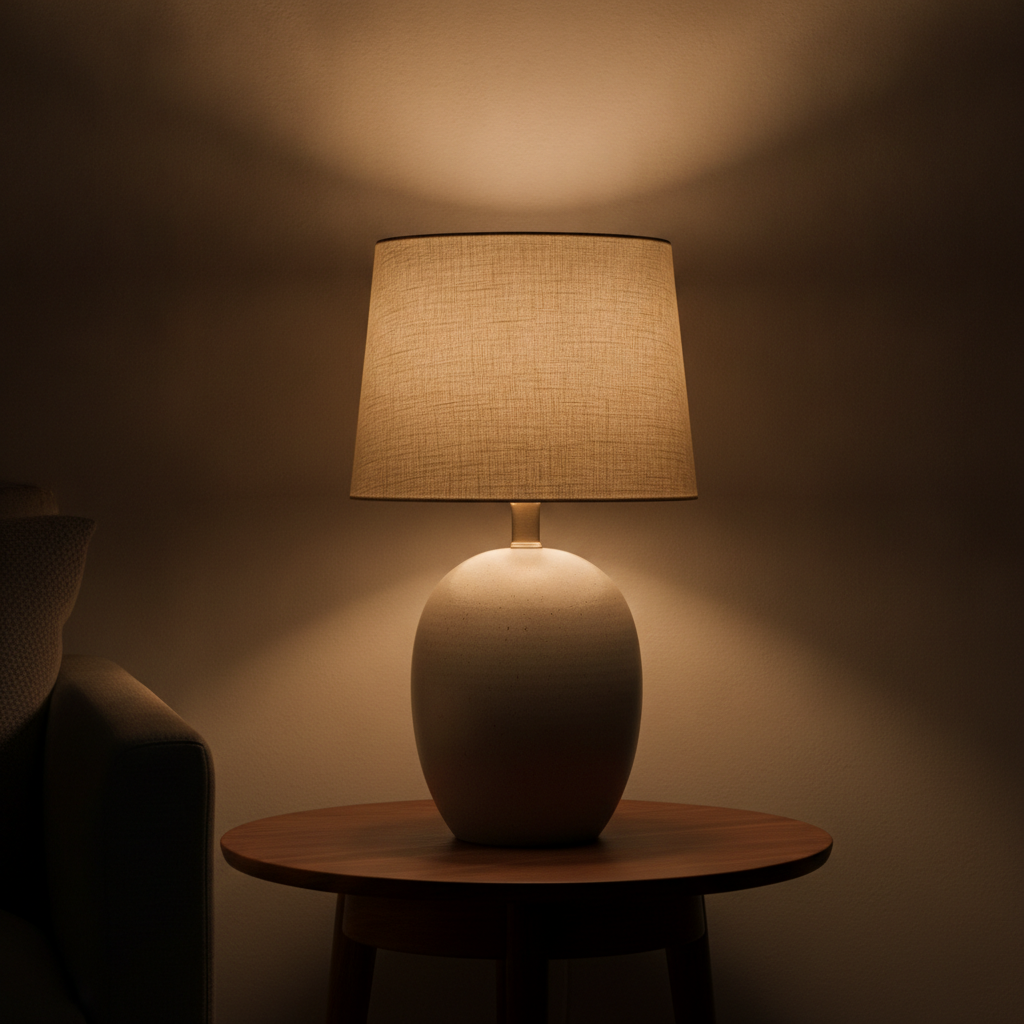
AI lamp design generator result: a speckled stoneware table lamp with a natural linen drum shade, lit at dusk so the shade itself becomes a soft body of light and the wall behind it carries the hourglass wash a drum shade always makes
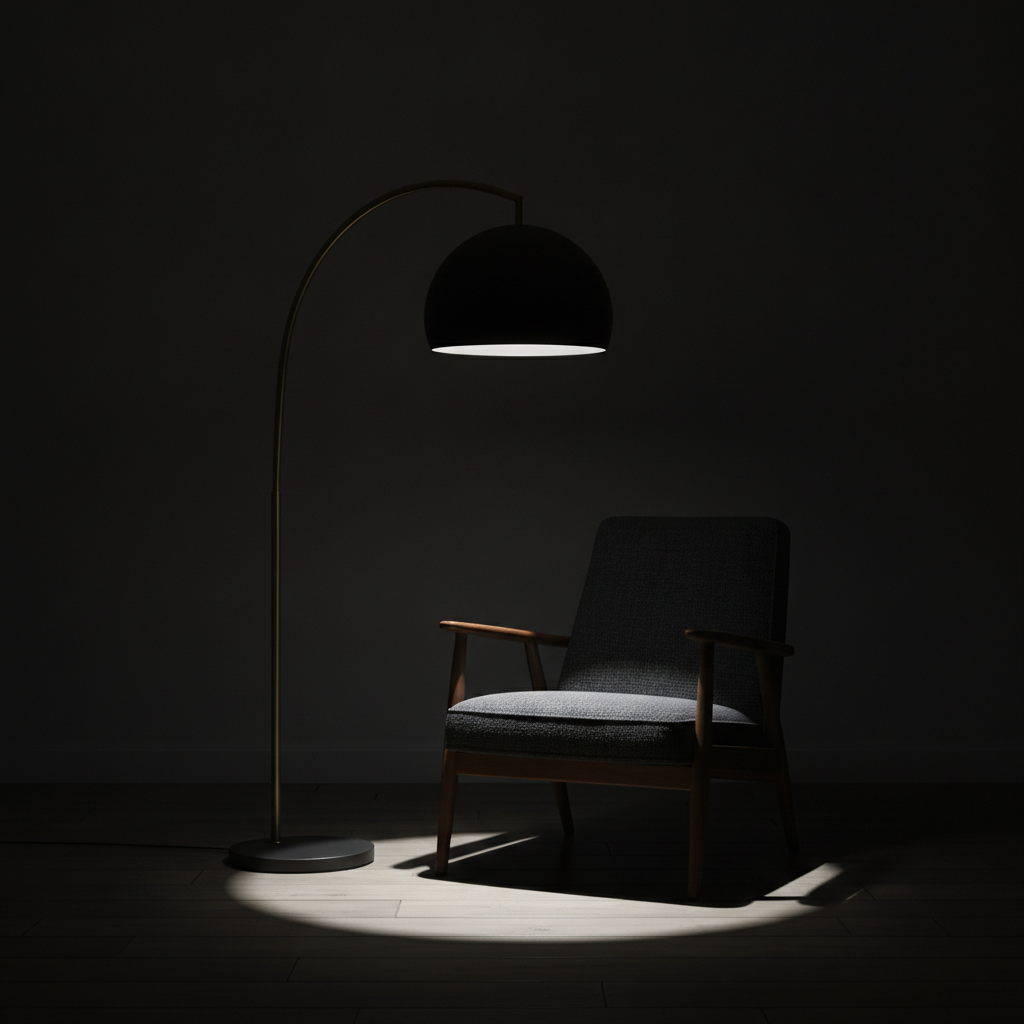
A floor lamp with a fully opaque charcoal dome shade arcing over an armchair: no light escapes through the shade, so it all lands as one hard-edged pool across the floorboards, catching the front of the chair and leaving the walls and the rest of the room black
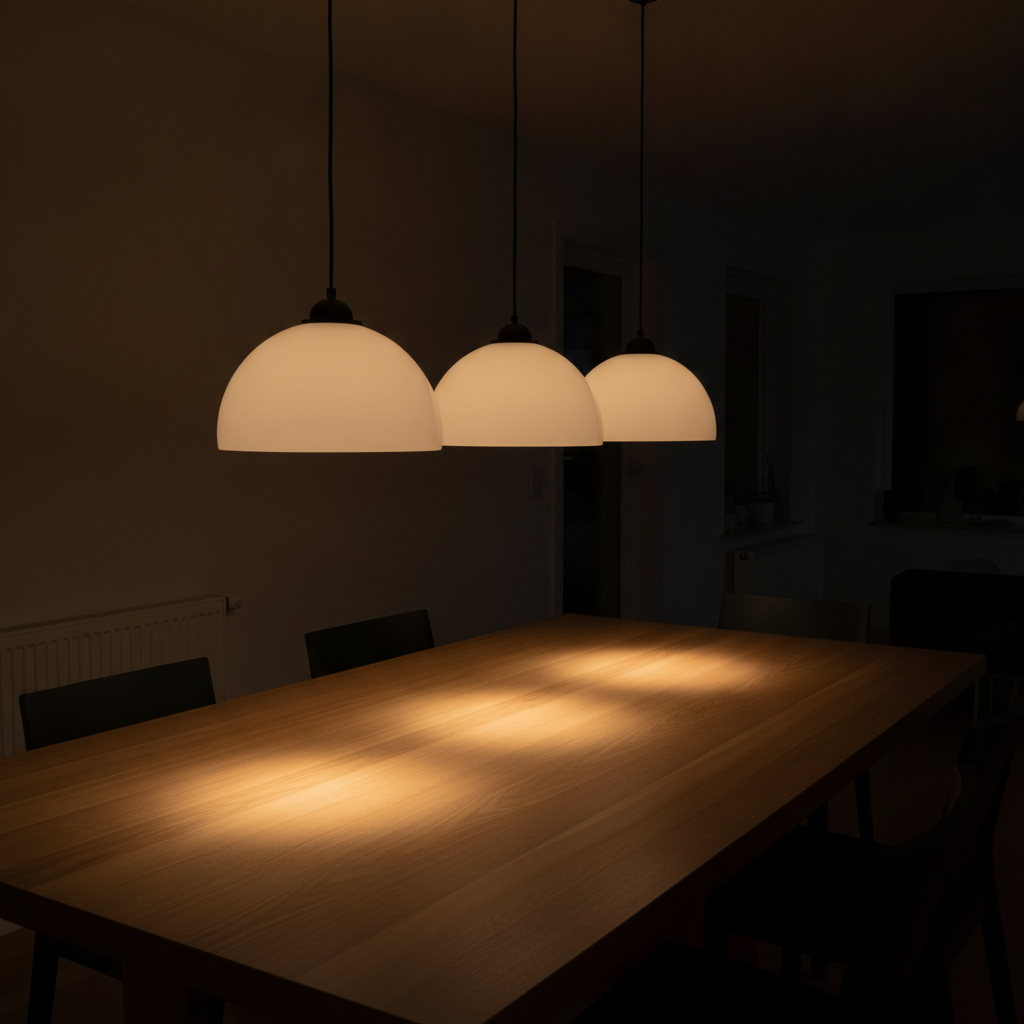
Three opal glass dome pendants over a dining table seen at seated eye level — thick milky glass with no visible bulb or hotspot, which is what stops a pendant glaring at the people sitting under it
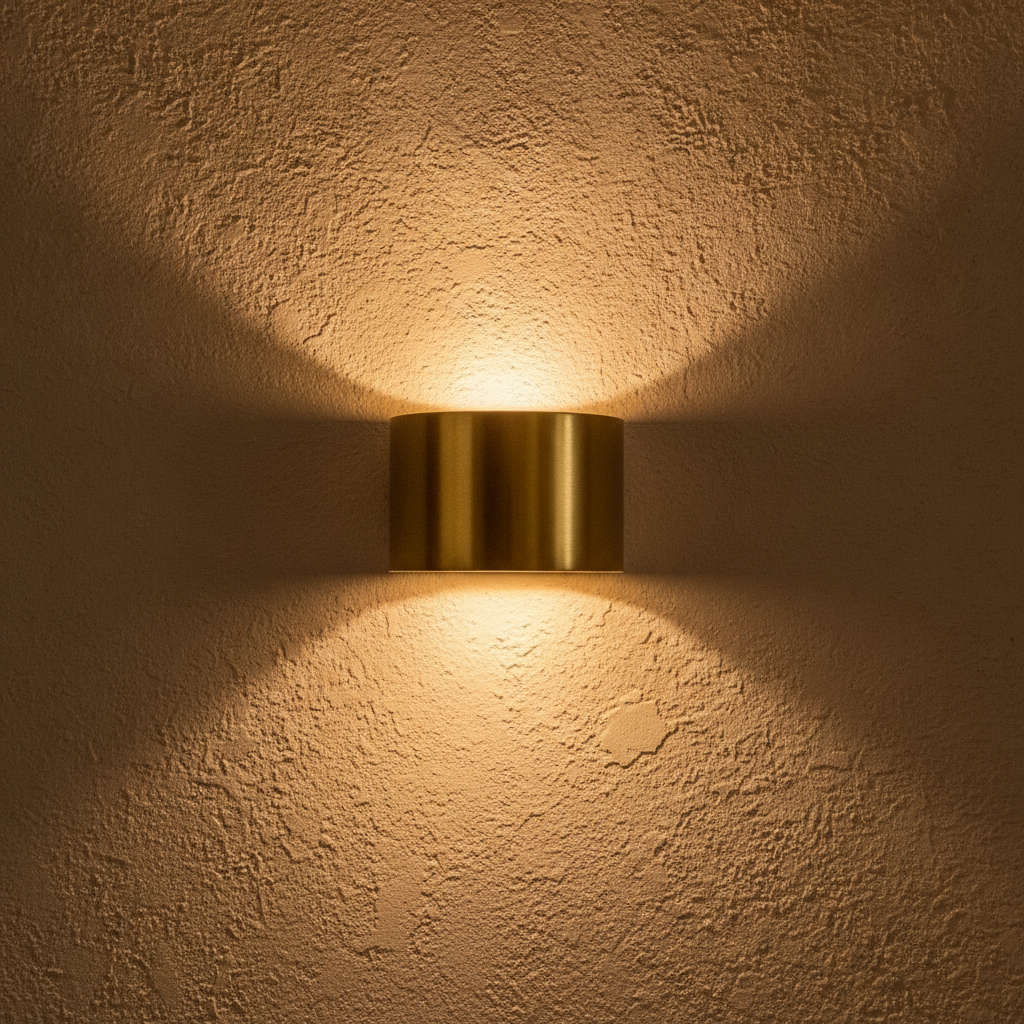
A brass half-cylinder wall sconce with a solid front, open top and bottom, throwing two clean triangles of light up and down a hand-troweled plaster wall and grazing the texture into relief
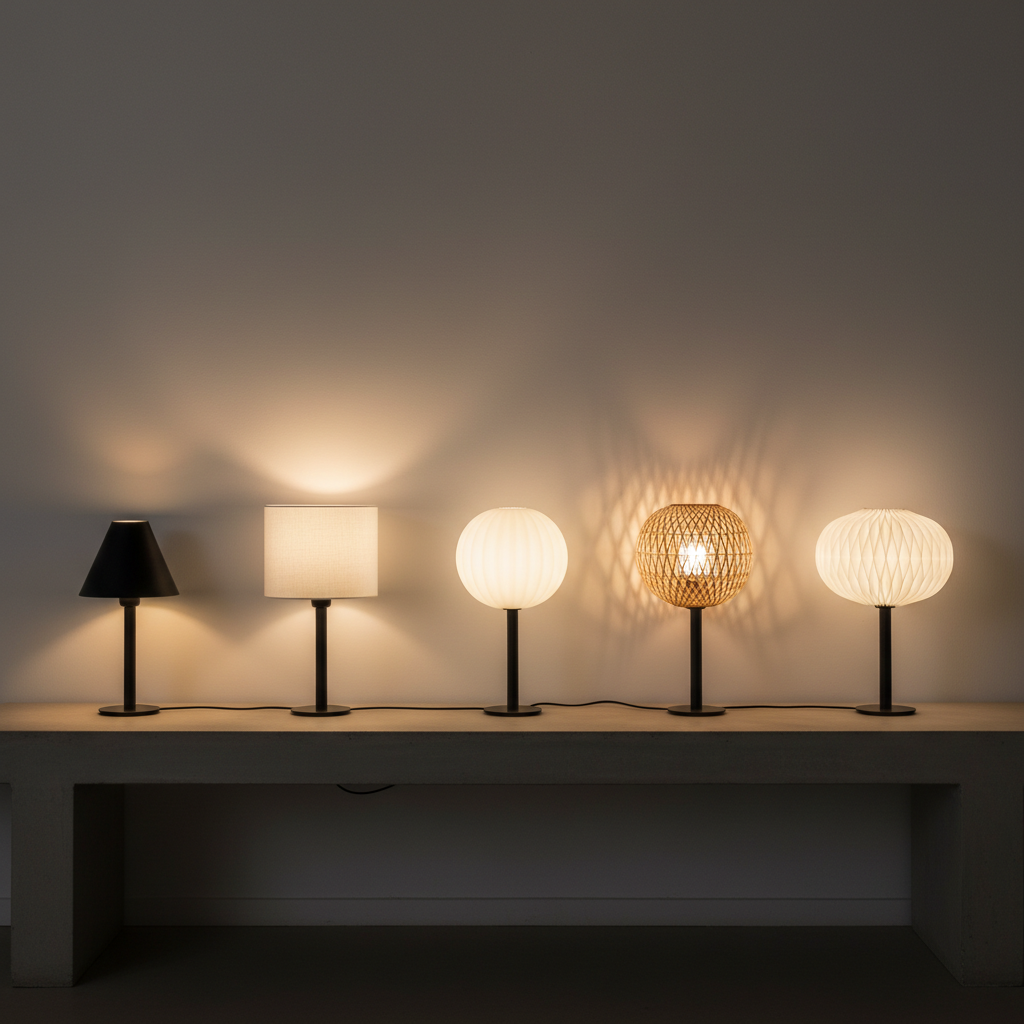
Five identical lamp bodies wearing five different shades and the same bulb, lit side by side against a plain wall: a black opaque cone that keeps its light low, a linen drum that glows, a ribbed opal globe lit evenly all round, an open rattan weave that shows the bare bulb and scatters a lattice of shadows across the wall, and a pleated paper lantern with no hotspot in it at all
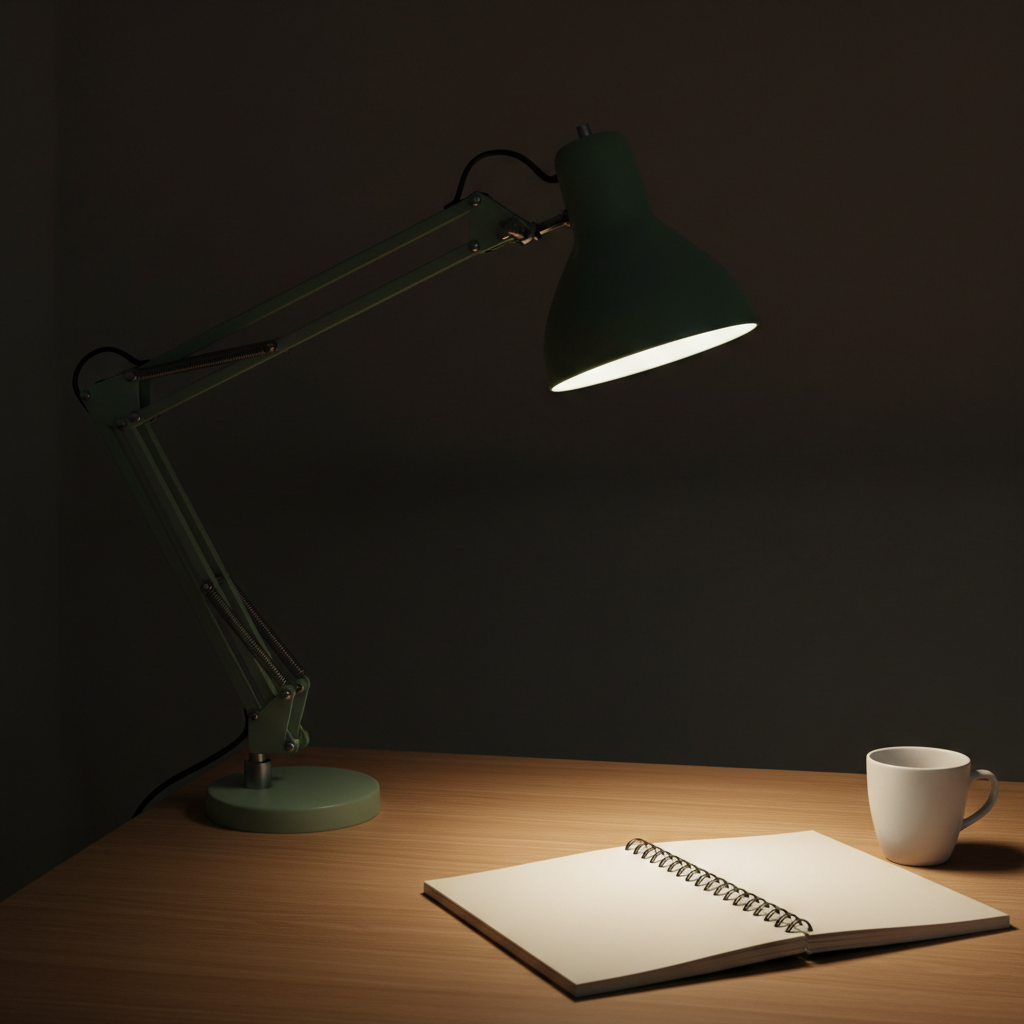
A sage green articulated task lamp on a weighted disc base, exposed springs and pivoting knuckle joints holding the angle, its conical head aimed down so the light lands on an open blank notebook and a plain cup while the desk and wall behind stay dark
How the AI Lamp Design Generator Works
Pick the lighting type
Table, floor and reading, pendant, wall sconce, sculptural diffuser or articulated task. This settles more than any material choice: it decides where the lamp lives, how far the light reaches, whether the bulb is ever visible and whether the room gets a pool or a glow.
Describe the materials and the room
Name the base material, the shade material and the wall it stands against. Shade material is the important half — opaque metal, translucent linen, diffusing glass and open weave are four different lamps even when the body is identical.
Take the render out as a brief
Designs come back in about twenty seconds at up to 4K. Read the shape of the light rather than its brightness, size the lamp against real mounting heights, then hand it to a maker with your dimensions, your bulb choice and your electrical spec.
What Actually Decides a Lamp Design
Six constraints separate a lamp from a picture of a lamp. They are why this AI lamp design generator renders lighting types with the light switched on, and why a beautiful render can still be a fitting nobody should wire up.
A lamp is two objects, and one of them is invisible in daylight
There is the thing on the table with the light off — a silhouette, a material, a proportion — and there is what happens when you switch it on, which is the reason anyone buys it. Concept images almost always design the first and leave the second to chance, which is how you end up with a handsome lamp that glares straight into the sofa. Every preset here specifies the lit state as carefully as the object: where the light goes, how hard the edge of it is, and how much of the room stays dark.
The shade material is the light distribution
Opaque metal or dense card sends everything out of the openings, so you get a defined pool with a hard edge and unlit walls, which is right for reading and wrong for atmosphere. Translucent fabric or paper turns the shade into a glowing surface and fills the room with soft ambient light. Diffusing glass hides the bulb, which is why pendants hanging in a sightline use it. An open weave or perforated shade turns the light itself into decoration by casting a pattern. One body, four unrelated rooms.
Glare is a design failure, not a bulb problem
The rule that decides whether a lamp is comfortable is simple: from the position where people actually sit or stand, can they see the bare bulb? A shade that clears the source at standing height can still expose it to someone seated, and a bright unshielded source in the field of view will make a whole room feel harsh no matter how good the fitting looks. So judge every render from the viewing position it will really be seen from, which is why the pendant preset is deliberately photographed at seated eye level rather than from above.
The bulb finishes the design, and the render does not choose it
Colour temperature, output and colour rendering are all decided after the lamp exists, and they change it completely: around 2700K is warm domestic light while 4000K reads as an office, watts no longer mean brightness so specify lumens, and low colour rendering makes skin and food look flat. Dimming needs both a dimmable bulb and a compatible dimmer. And an integrated LED fitting has no bulb at all, which means the day the LED fails, the lamp does too.
Scale and mounting height are not in the picture
A render is unitless, and lighting is unusually sensitive to that. A pendant over a dining table wants its bottom edge roughly 75 to 90 centimetres above the top; a sconce wants to shield the bulb from someone standing beside it; a table lamp works when the bottom of the shade sits near seated eye level. The same drawing at 30 centimetres and at 150 is two different products with different structures and different bases. Fix the numbers against the room before you fall in love with the proportions.
It is a mains product, and that part is regulated
Everything that makes a lamp safe is invisible in an image: a holder rated for the bulb, strain relief so a pull loads the housing rather than the terminals, clearance between live parts and touchable metal, earthing where the design needs it, no flammable material against a hot holder, and enough base weight that it cannot topple. A render cannot know any of it, old flex in a vintage base perishes invisibly, and anything sold as a product has standards, marking and testing to meet. Design the look here, then treat the electrics as its own job.
Why Use This AI Lamp Design Generator
Every lamp rendered switched on
The presets describe the lit state in as much detail as the object — where the pool lands, how hard its edge is, how much wall gets washed, how much of the room stays dark. You are choosing a light, not an ornament.
Six lighting types, not six silhouettes
Table, floor and reading, pendant, wall sconce, sculptural diffuser and articulated task. Switching preset changes where the lamp lives and what job it does, not just how it looks on a shelf.
Written so the light behaves
Opaque shades throw down, translucent shades glow, diffusing glass hides the bulb, open weaves cast patterns. Each preset states which it is, so the render obeys the physics instead of inventing a pretty glow.
Photographed from where you would sit
The pendant is shot at seated eye level and the sconce straight on at head height, because glare only shows up from the position the lamp is actually seen from. A render from above hides the one problem you needed to see.
No brand labels, no fake safety stickers
Photoreal renders of manufactured products arrive wearing a real brand identity unless you stop them. Every preset bans brand labels, maker plates, wattage stickers and swing tags by name, so you get a clean unbranded object to design from.
Cheaper than a prototype
About twenty seconds per design and plans from $2.99, so trying six shade materials against four bases costs less than the first sheet of metal you would have cut to find out you preferred the linen.
AI Lamp Design Generator FAQ
Related Design Tools
AI Furniture Design Generator
The rest of the room, as objects: chairs, sofas, tables, shelving and beds. Use it for the pieces a lamp has to sit on and stand beside, in the same materials.
AI Interior Design Generator
One level up. Settle the room — its surfaces, its palette and its dark corners — then come back here to design the fitting that has to light it.
AI Pottery Design Generator
Useful upstream of a lamp base. Design the ceramic form first, glaze and all, then bring it here to see what it looks like wearing a shade with the light on.
Design Your Lamp Now
Six lighting types, light that behaves the way light behaves, and 4K downloads to brief a maker from. Free to start, from $2.99 for more.
Start Designing FreeAbout This AI Lamp Design Generator
An AI lamp design generator has a stranger brief than most product tools, because half of what you are designing is not an object at all. A lamp exists twice: once as a shape on a table in daylight, and again as a distribution of light in a dark room, and it is the second one that people live with. That is why every preset here renders the lamp switched on and describes the lit result as carefully as the material — where the pool of light lands, whether its edge is hard or soft, how much of the wall gets washed, and how much of the room is left in shadow. Six lighting types cover the real decisions: table, floor and reading, pendant, wall sconce, sculptural diffuser and articulated task.
The constraint most concept renders miss is that the shade is not decoration on top of the lamp, it is the optics. A fully opaque shade in spun metal or dense card lets nothing through the sides, so every lumen leaves through the openings and lands as a defined pool with a hard edge — excellent over a reading chair, useless as room light. A translucent linen or paper shade turns the shade itself into a luminous surface, which is why a table lamp with fabric on it lights a whole living room softly and throws that familiar hourglass onto the wall behind. Diffusing opal glass sits in between and, crucially, hides the bulb, which is what makes a pendant tolerable hanging at eye level over a dining table. An open rattan weave or a perforated metal shade does something else again and turns the light into pattern. Change only the shade in this lamp design generator and you have changed the room.
Two practical things sit outside the picture and it is worth planning for them from the start. The first is scale: an image is unitless, and lighting is unusually unforgiving about that, since a pendant hangs roughly 75 to 90 centimetres above a dining table, a sconce has to shield its bulb from someone standing next to it, and the bottom of a table lamp shade wants to sit near eye level when you are seated so you never look into the source. The second is the electrics. A lamp is a mains-powered product, and the things that make one safe — a correctly rated holder, strain relief on the cord, clearance and insulation around live parts, earthing where required, a base heavy enough not to topple, nothing flammable against a hot lamp holder — are invisible in any render and regulated wherever lamps are sold. Design the look here, then treat the wiring as a separate job for certified components and a qualified electrician, and if you intend to sell, budget for the testing and marking that go with a finished product.
This lamp design generator runs on Nano Banana Pro, the same image model behind the other tools on this site, and it renders lit interiors convincingly: the gradient of a glowing linen drum, the hard rim of a pool thrown by an opaque dome, the even luminance of thick opal glass with no hotspot in it, the way a sconce grazes plaster into relief. Designs arrive in about twenty seconds at up to 4K, large enough to hand to a fabricator alongside your dimensions. Treat what comes back as the design settled rather than the lamp finished: it fixes the type, the proportion, the materials, the shade and the quality of light, which is the expensive part to discover by prototyping. What follows is yours — your measurements, your bulb, your maker and your electrician. It is free to start and paid plans begin at $2.99, so a whole shelf of variations costs less than the first shade you would have had made to reject it.