
AI Pottery Design Generator
Pottery is the one craft where you cannot design the surface without designing the form, because the glaze runs downhill and pools wherever the clay changes direction. This AI pottery design generator works in six real ceramic techniques — wheel-thrown stoneware, sgraffito carving, carved celadon, folk underglaze, hand-built slab and wood-fired ash — so what comes back is a pot you could decide to make, not a shape clay would refuse. About twenty seconds per design.
Start Designing FreeTry the Pottery Design Generator — Free
Choose the ceramic technique first, then describe the form, the clay and the palette. The technique is the real decision: it sets what the surface can hold, how many colours a single firing allows, and whether the piece belongs on a wheel or on a slab roller.
AI Pottery Design Generator
Pick a ceramic technique, describe the vessel and the glaze, and get a pottery design at up to 4K
Pottery Designs Made With This Generator
Six ceramic techniques rather than six colourways, generated with the presets above and left unedited. Read them as a set and they make one argument: on a pot the surface and the form are the same decision. The thrown vessels show one glaze thinning to warm ochre over every throwing ring, so the potter's finger marks draw themselves. The carved celadon bowl shows the same physics deliberately exploited — cut a groove and the glaze pools dark in it. The sgraffito jar is line work with no shading anywhere, because carving through slip cannot make a gradient. The test tiles are the reality check: one glaze at five thicknesses, five unrelated colours, the fifth thick enough to run off the tile. The slab bottle is the form a wheel cannot produce — its only round element is the small thrown neck added on top. And the wood-fired macro is the surface no designer controls at all.
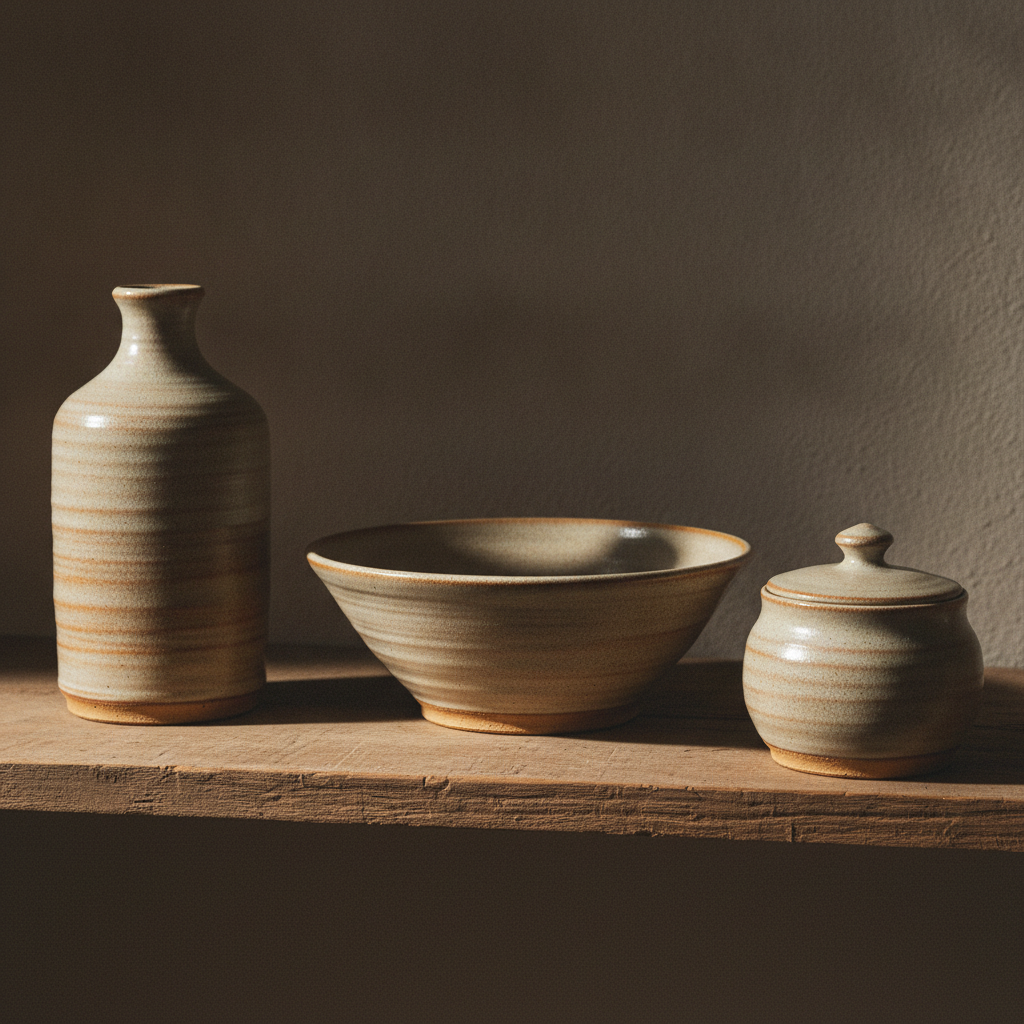
AI pottery design generator result: a tall bottle, a wide low bowl and a small lidded jar on a studio shelf, all in one satin oatmeal glaze that thins to warm ochre over every spiral throwing ring and along each rim, with the feet left as bare sandy clay
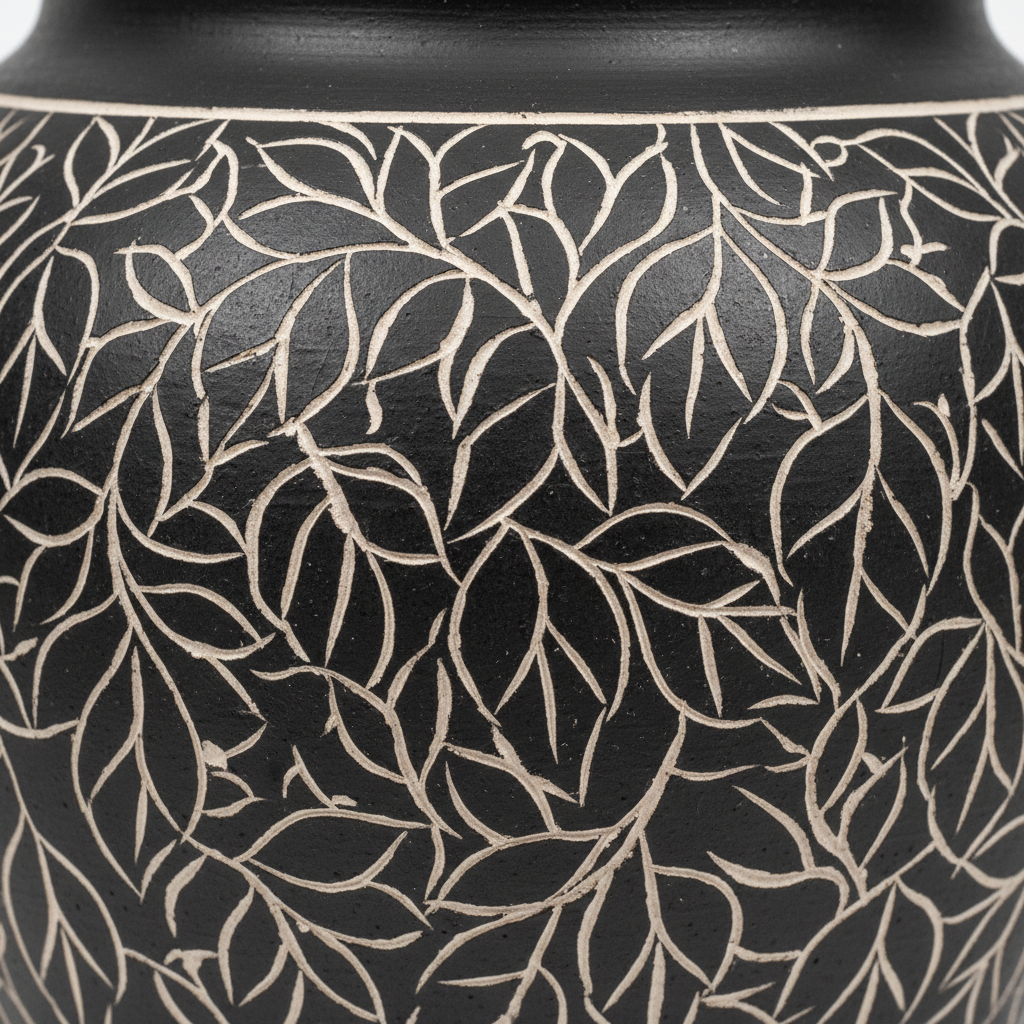
A thrown jar coated in matte black slip and carved through to the pale clay beneath: dense leaves and stems in continuous single-width lines with no shading anywhere, because carving through slip cannot make a gradient
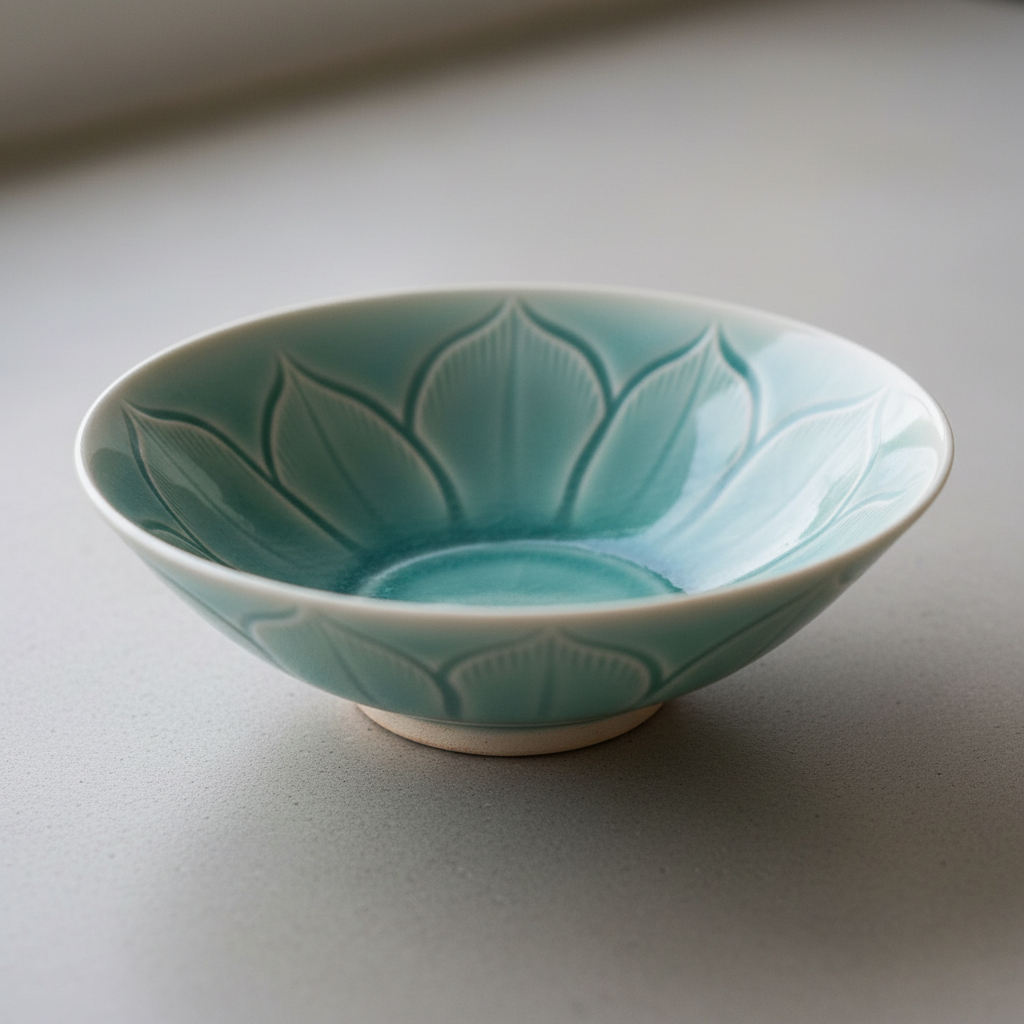
A shallow celadon bowl with lotus petals carved under the glaze, where the pale blue-green has run off the raised areas and collected darker in every carved line and pooled deepest in the well — on a glazed pot the form draws the pattern, not the brush
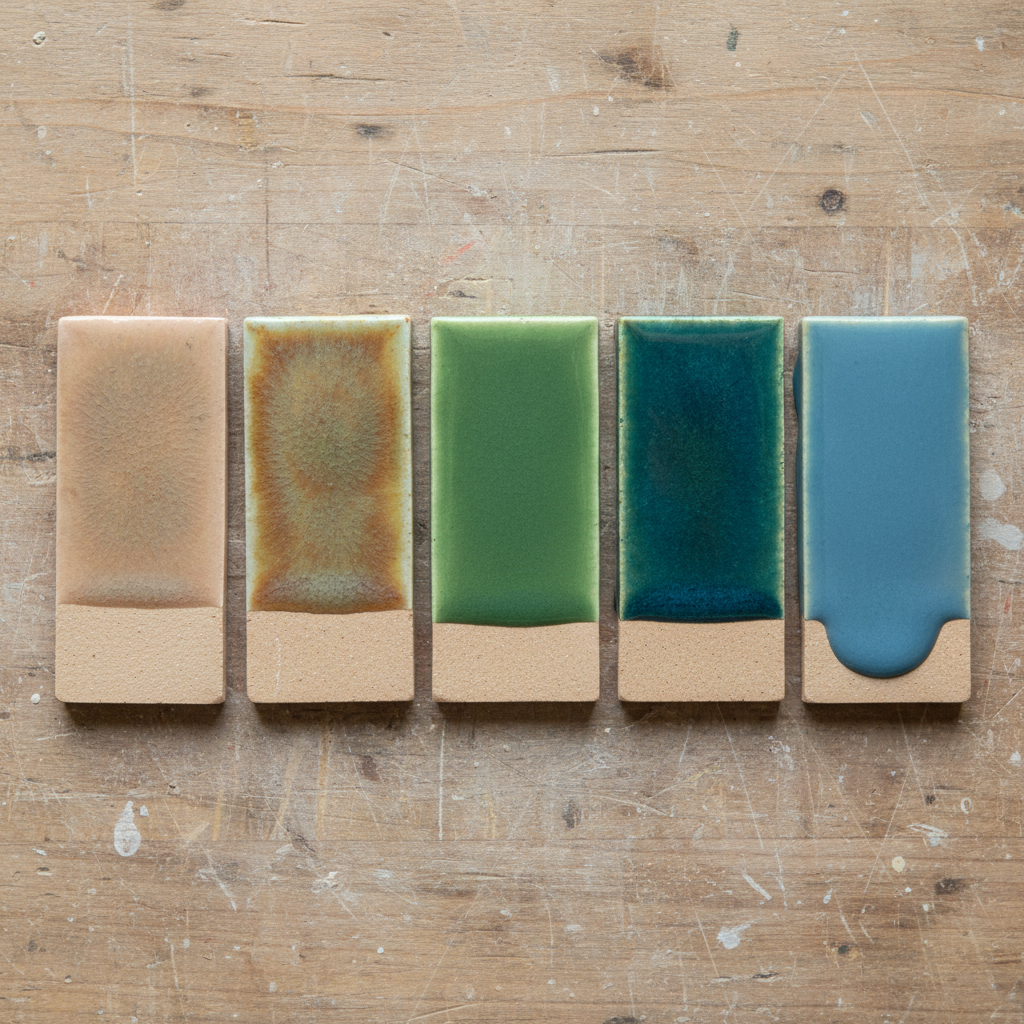
Five glaze test tiles in a row carrying the same glaze thinnest to thickest: dry translucent tan, crazed amber-olive, glossy green, deep teal, then an opaque blue thick enough to run down over the bare clay in a bead — why a rendered glaze colour is a target and not a recipe
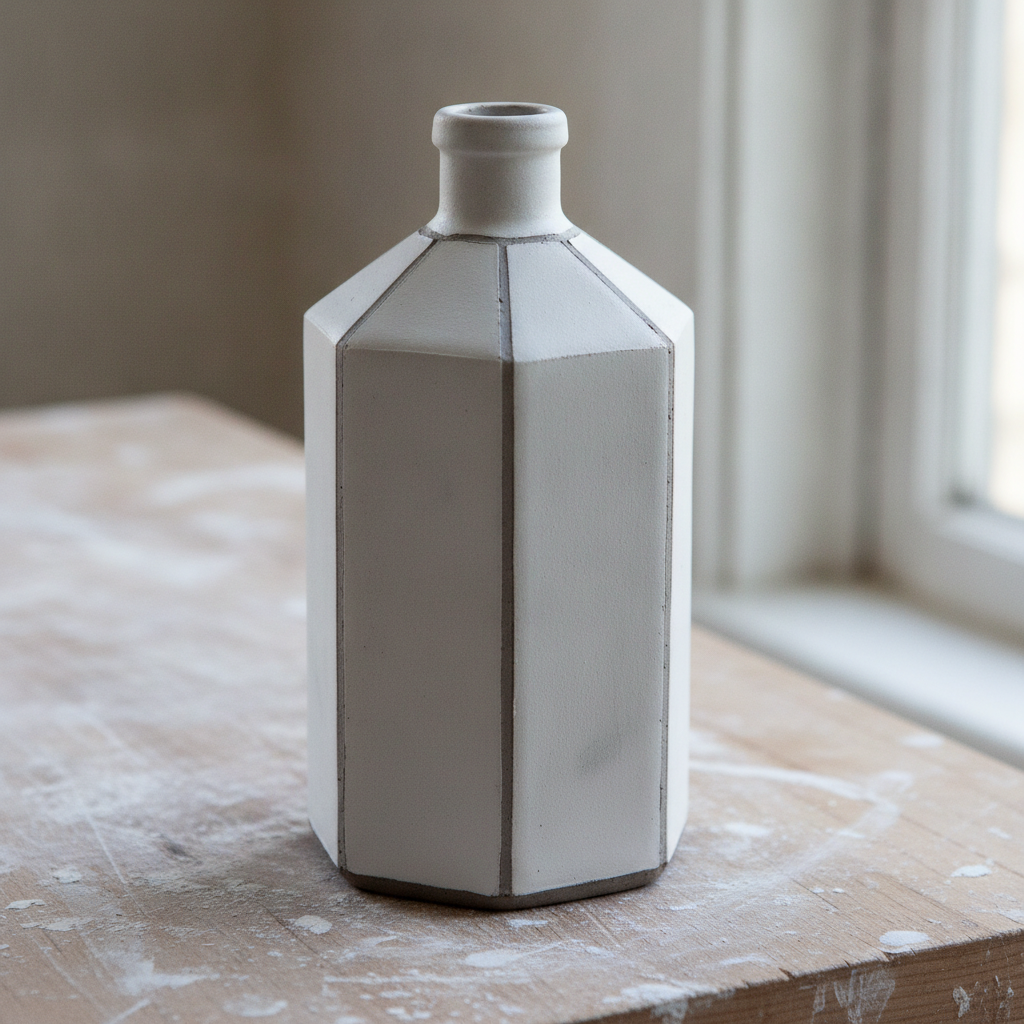
A hand-built slab bottle with six flat facets and fine grey seams under a chalky matte white glaze, its only round element the small thrown neck added on top — the form a wheel cannot produce
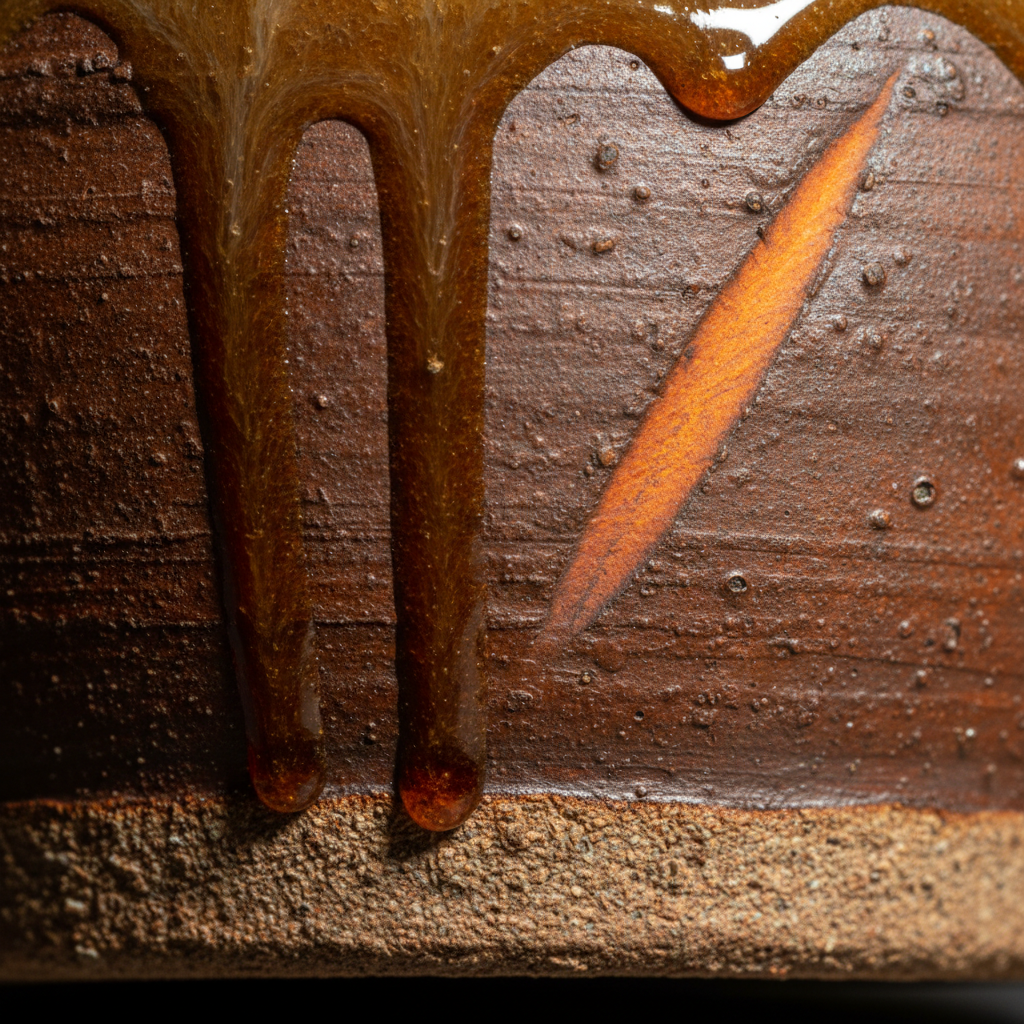
Extreme macro of a wood-fired jar cropped so tight the vessel is unreadable as a pot: amber ash glaze in thick rivulets stopping just short of a gritty unglazed foot, one bright orange flame flash across bare clay, melted ash specks scattered over the surface — a finish the kiln decides, not the designer
How the AI Pottery Design Generator Works
Pick the ceramic technique
Wheel-thrown, sgraffito, carved celadon, folk underglaze, hand-built slab or wood-fired ash. This settles more than any colour choice: it decides whether the piece is thrown or built, how many colours one firing allows, and what kind of mark the surface can carry.
Describe the vessel and the glaze
Name the form and its proportion, the clay you would use and the palette you are after. Keep the motif scale in mind while you write it — clay shrinks by roughly a tenth in the kiln, and the decoration shrinks with the pot.
Take it to the wheel with test tiles
Designs come back in about twenty seconds at up to 4K. Measure the profile off the image as a ratio, throw or build a test at your size, and chase the glaze with test tiles on your own clay at your own cone. The render settles the design; your kiln settles the colour.
What Actually Decides a Pottery Design
Six constraints separate a pot from a picture of a pot. They are why this AI pottery design generator renders techniques rather than filters, and why a beautiful render can still be a piece nobody can make.
The wheel only makes circles
A thrown pot is radially symmetric because the clay spins while your hands stay still, so every horizontal slice through it is a circle and the whole form is really one profile revolved. That single fact tells you which route a design belongs to. A pot that bulges on one side, twists, or has a square cross-section was not thrown — it is slabs, coils, pinching or a thrown form altered while soft. Both are legitimate, but the render will not tell you which one you are looking at, so check the profile before you sit down at the wheel.
Glaze runs downhill and pools in the low places
Molten glaze flows during firing. It thins over every rim, every raised throwing ring and every convex high point, and it collects and darkens in every carved line, hollow and inside corner. This is why the surface and the form are one decision on a pot and not two: carve a groove and you have drawn a dark line, throw a crisp ridge and you have drawn a pale one. Designs that treat a pot as a curved canvas to paint on are ignoring the strongest drawing tool the material has.
Glaze colour is a firing result, not a paint colour
Four variables decide what comes out, and none of them are visible in an image: the cone you fire to, the kiln atmosphere — copper is green in oxidation and red in reduction — the thickness of the application, and the clay body underneath. One glaze at five thicknesses can read as five different colours, which is exactly what the test tile image on this page shows. Treat a rendered glaze as a target to chase with test tiles on your own body at your own cone, never as a recipe.
Clay shrinks about a tenth of the way to the kiln
Pottery shrinks twice, once in drying and again in vitrifying, typically somewhere between about 8 and 14 percent in total depending on the body — porcelain at the high end, coarse grogged stoneware at the low end. Everything on the surface shrinks with the pot: a carved band gets narrower, a motif gets smaller, lettering gets tighter and less legible. Since a render is unitless anyway, use it for the ratio of height to width to rim, which is what makes a form look right, and take the absolute size from your own measured shrinkage.
Wet clay obeys gravity, and heat is worse
A form that looks fine as pixels can be impossible as clay. Walls too thin at the top slump while you throw, wide unsupported overhangs sag, a heavy handle pulls a soft wall out of shape, a wide flat base cracks across the bottom as it dries, and a lid needs a real seat to sit on rather than resting on an illusion. Joins happen at leather-hard or they crack apart. Add the practical bits early — foot ring, gallery, handle attachment, spout angle that actually pours — because the render is happy to skip all of them.
Function and food safety are invisible in a render
Gloss in a photograph implies nothing about safety. Functional ware needs a glaze that is vitrified and stable at its cone and that fits the body without crazing, since crazing is a network of cracks that traps bacteria and lets liquid into the clay. Some bright commercial low-fire reds and yellows get their colour from cadmium and are sold as decorative only. An unglazed interior seeps. Take food-safe status from supplier data or a tested recipe, and treat anything undocumented as decorative.
Why Use This AI Pottery Design Generator
Six techniques, not six colourways
Each preset is a different making route — thrown, carved through slip, carved under celadon, brushed underglaze, built from slabs, fired with wood — so switching preset changes what the pot is and how it would be made, not just its colour.
Written so the glaze behaves
Every preset states where the glaze thins and where it pools, because that is how a real glaze reads on a real form. The results look like fired ceramics rather than like a pattern pasted onto a vase.
Throwable forms stay throwable
The wheel presets specify radial symmetry and a revolved profile, and the slab preset deliberately does the opposite with visible seams and flat facets — so you can tell at a glance which route a design commits you to.
No lettering, no fake maker's mark
Text on a curved glazed surface is the one thing image models reliably ruin, and an invented chop stamp near the foot is worse than none. The presets ban both by name, which is also how good pottery decoration usually works.
4K for the studio wall
Downloads are large enough to pin up next to the wheel and work from: you can read the profile, the rim thickness, the width of a carved line and how far the glaze stopped above the foot.
Cheaper than a kiln load
About twenty seconds per design and plans from $2.99, so trying eight forms and four glaze palettes costs less than the clay you would have wedged to find out you preferred the second one.
AI Pottery Design Generator FAQ
Related Design Tools
AI Mug Design Generator
The opposite direction on the same object. That tool prints flat artwork onto a manufactured mug blank; this one designs the vessel itself, in clay, before anything exists to print on.
AI Stained Glass Generator
The nearest neighbour in spirit: another craft where the process dictates the drawing, since every colour needs its own piece of glass and every line is a lead came.
AI Pattern Generator
Useful upstream of a pot. Develop the repeating motif flat first, then bring it here to see how it survives being wrapped around a curved form and glazed over.
Design Your Pot Now
Six ceramic techniques, glaze that behaves the way glaze behaves, and 4K downloads to work from at the wheel. Free to start, from $2.99 for more.
Start Designing FreeAbout This AI Pottery Design Generator
An AI pottery design generator has a harder brief than it looks, because a pot is not a canvas that happens to be curved. Ceramics is the craft where the surface and the form are decided together: molten glaze runs downhill during the firing, thinning over every rim and every raised throwing ring and collecting dark in every carved groove and inside corner. That means the decoration is partly drawn by the shape itself. The six presets here — wheel-thrown stoneware, sgraffito carving, carved celadon, folk underglaze, hand-built slab and wood-fired ash — are written as making routes rather than visual styles, so choosing one settles whether the piece is thrown or built, what kind of mark its surface can hold and how many colours a single firing allows.
The constraint most concept images miss is the wheel itself. A thrown pot is radially symmetric because the clay spins while your hands stay still, so the whole form is one profile revolved and every horizontal slice through it is a circle. A render that shows a vessel bulging on one side only, twisting, or square in cross-section is showing you a hand-built piece whether it means to or not — slabs, coils, pinching, or a thrown form altered while soft. This pottery design generator makes that difference explicit: the wheel presets ask for a revolved profile and even throwing rings, and the slab preset asks for flat facets and visible straight seams. Knowing which of the two you are looking at is the difference between an afternoon at the wheel and an afternoon of frustration.
Materials set the rest of the rules, and two of them catch everybody. Clay shrinks twice on its way to a finished pot, in drying and again in vitrification, usually somewhere between about 8 and 14 percent in total depending on the body — so a form thrown at 10 centimetres arrives closer to 9, and every carved band and painted motif shrinks with it. Glaze, meanwhile, is a chemical result rather than a colour you choose: the cone you fire to, the kiln atmosphere, the thickness of the coat and the clay underneath all change the outcome, and a single glaze applied thinner to thicker can read as several unrelated colours, which is exactly what the row of test tiles in the gallery above demonstrates. So use a design from this generator for proportion, motif scale and palette intent, then chase the actual colour with test tiles on your own clay body at your own cone. Food safety works the same way — it comes from documented glaze data and a glaze that fits the body without crazing, never from how glossy a render looks.
This pottery design generator runs on Nano Banana Pro, the same image model behind the other tools on this site, and it renders fired ceramic convincingly: the way a satin glaze breaks rust over a throwing ring, the burr of dried slip along a sgraffito line, the pooled edge of celadon in a carved petal, the grit stuck to an unglazed foot. Designs arrive in about twenty seconds at up to 4K, large enough to pin up by the wheel and read a profile from. Treat what comes back as the design settled rather than the pot finished: it fixes the form, the proportion, the technique, the palette and the scale of the decoration, which is the expensive part to discover by throwing. What follows is yours — your clay, your cone, your kiln and your hands. It is free to start and paid plans begin at $2.99, so a whole shelf of variations costs less than the clay you would have wedged to reject them.