
AI Henna Design Generator
Say where the design goes and how far it should reach, and get a finished mehndi design about thirty seconds later. This AI henna design generator draws the part that takes an artist an afternoon to plan — the central medallion, the trails running out along each finger, the fine jaali netting filling the gaps — in bridal, Arabic, Moroccan and fine-line registers. Six designs are below exactly as they came back, including the one that stained metallic gold instead of henna and the pair of feet that refused to mirror each other.
Design Henna FreeTry the AI Henna Design Generator — Free
Pick a style, then use the box to say where the design sits and where it stops — back of the left hand, ending at the first knuckle; forearm to the elbow; palm only. Each preset already carries the density, the motif vocabulary, the stain colour and the anatomy rules, so placement is the only thing you have to supply.
AI Henna Design Generator
Choose a henna style, say where it goes, and get a finished mehndi design. Up to 4K.
Six Designs From This AI Henna Design Generator, Shown Exactly As They Came Back
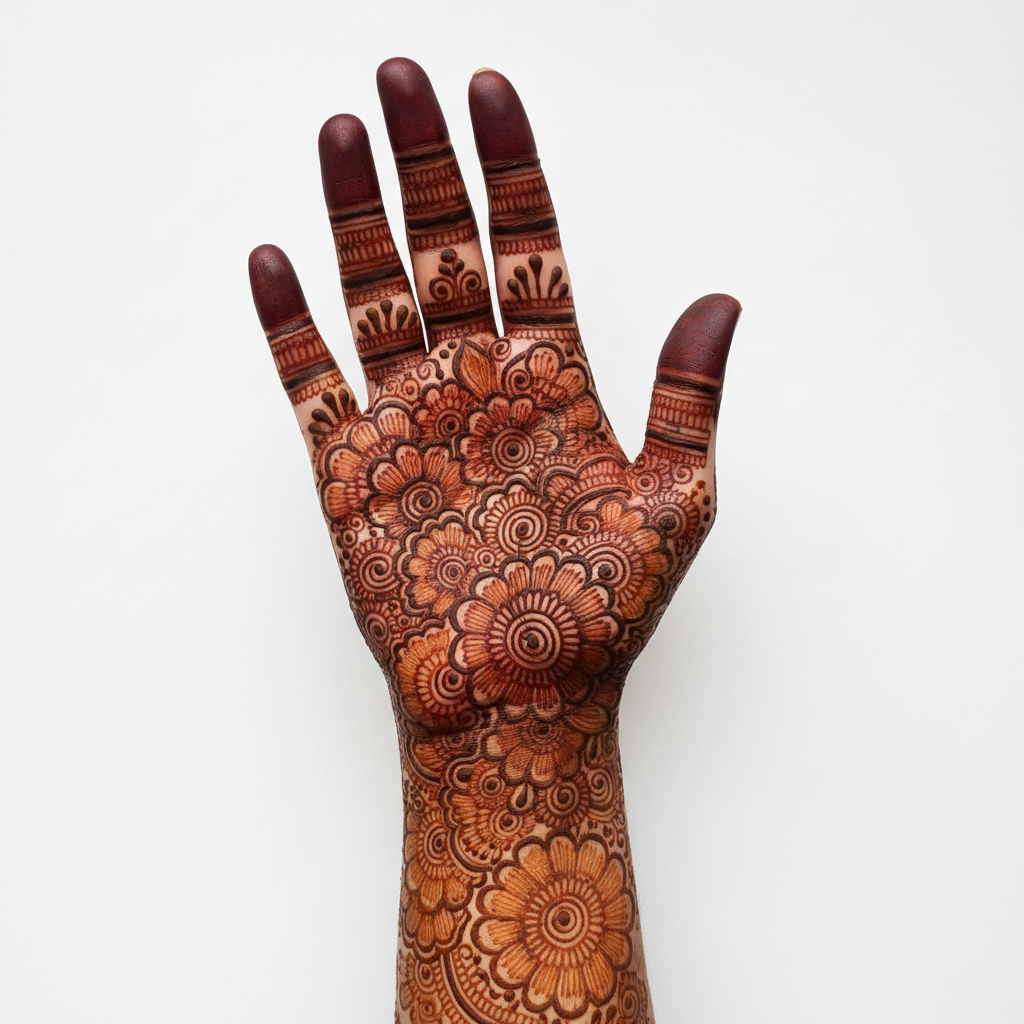
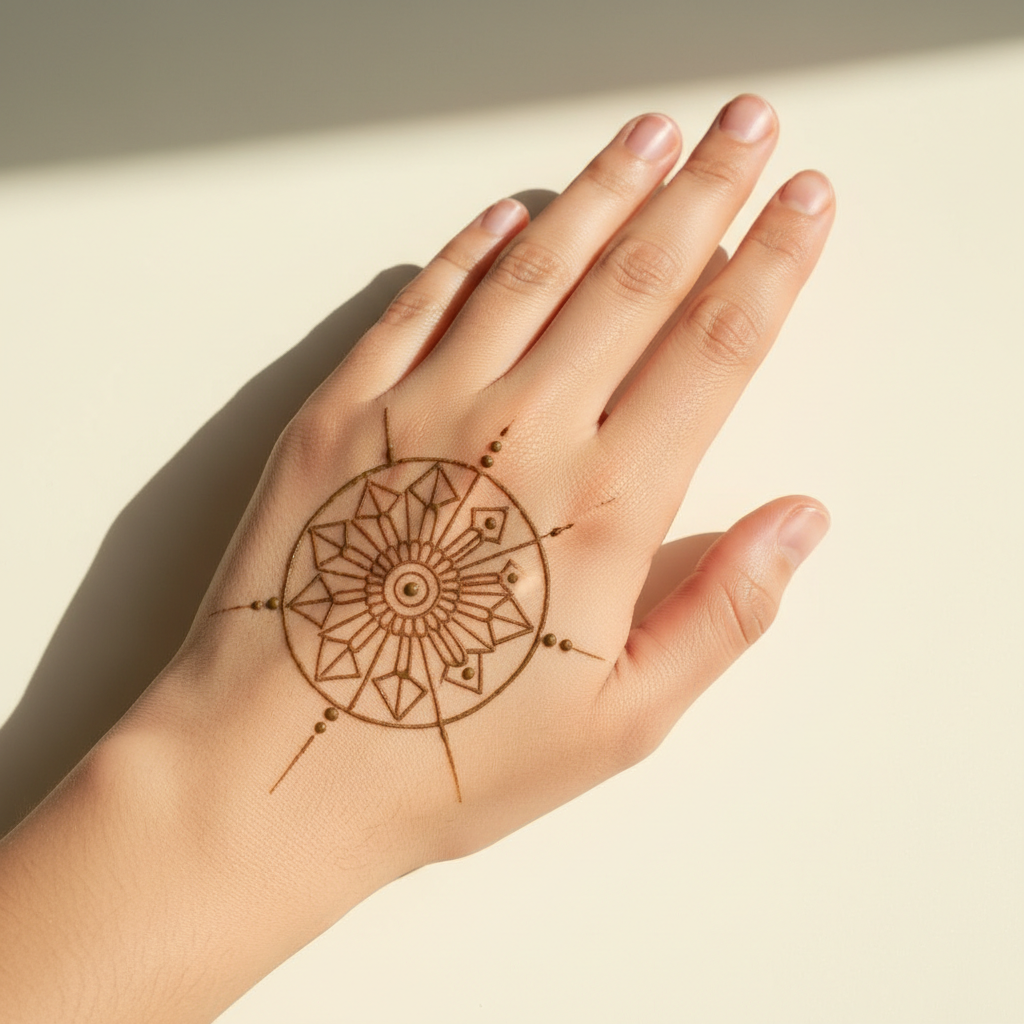
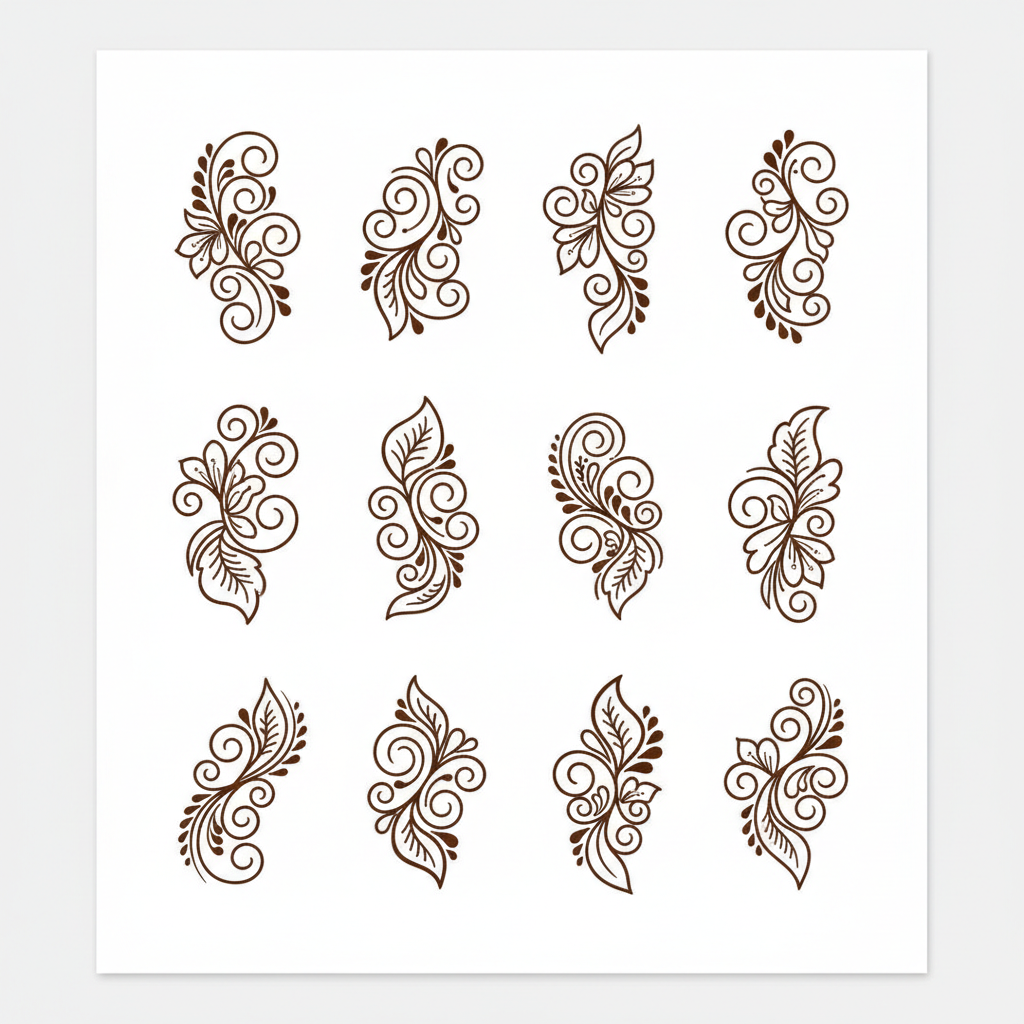
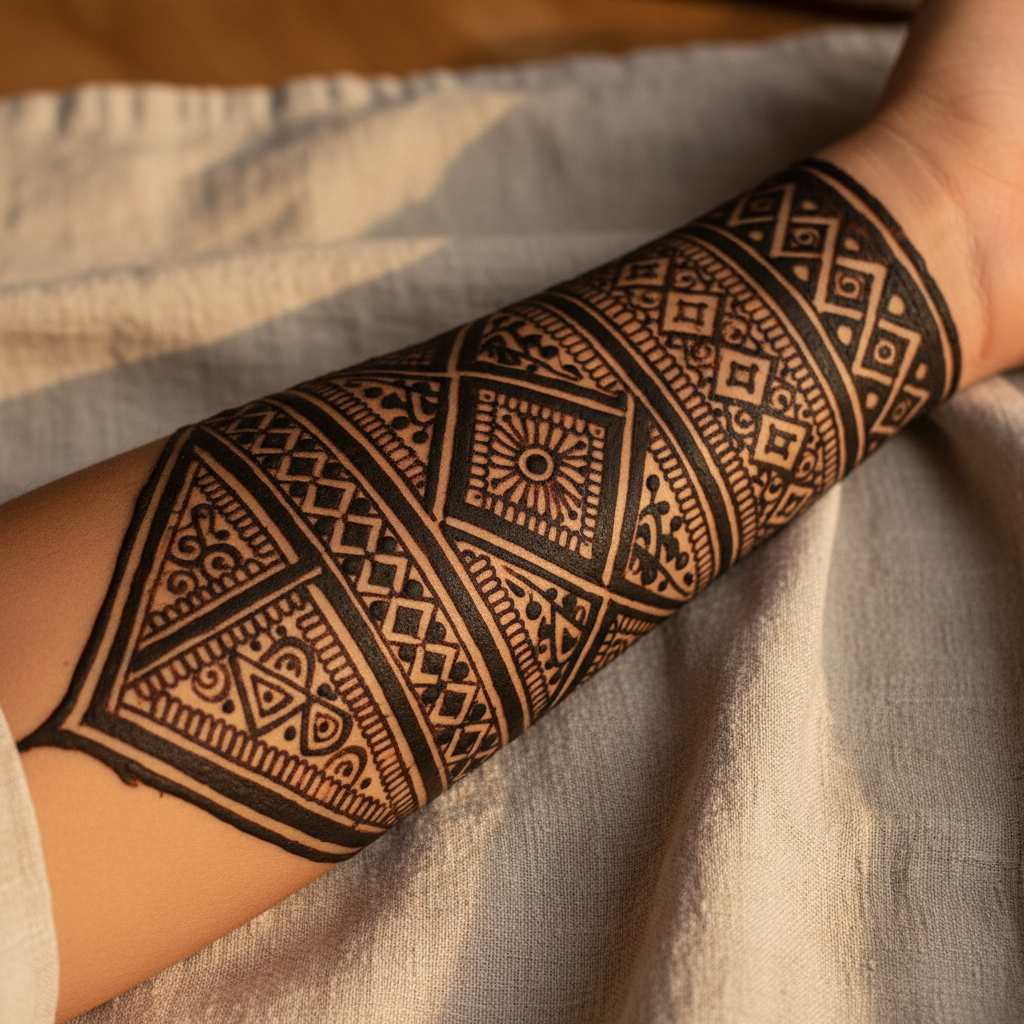
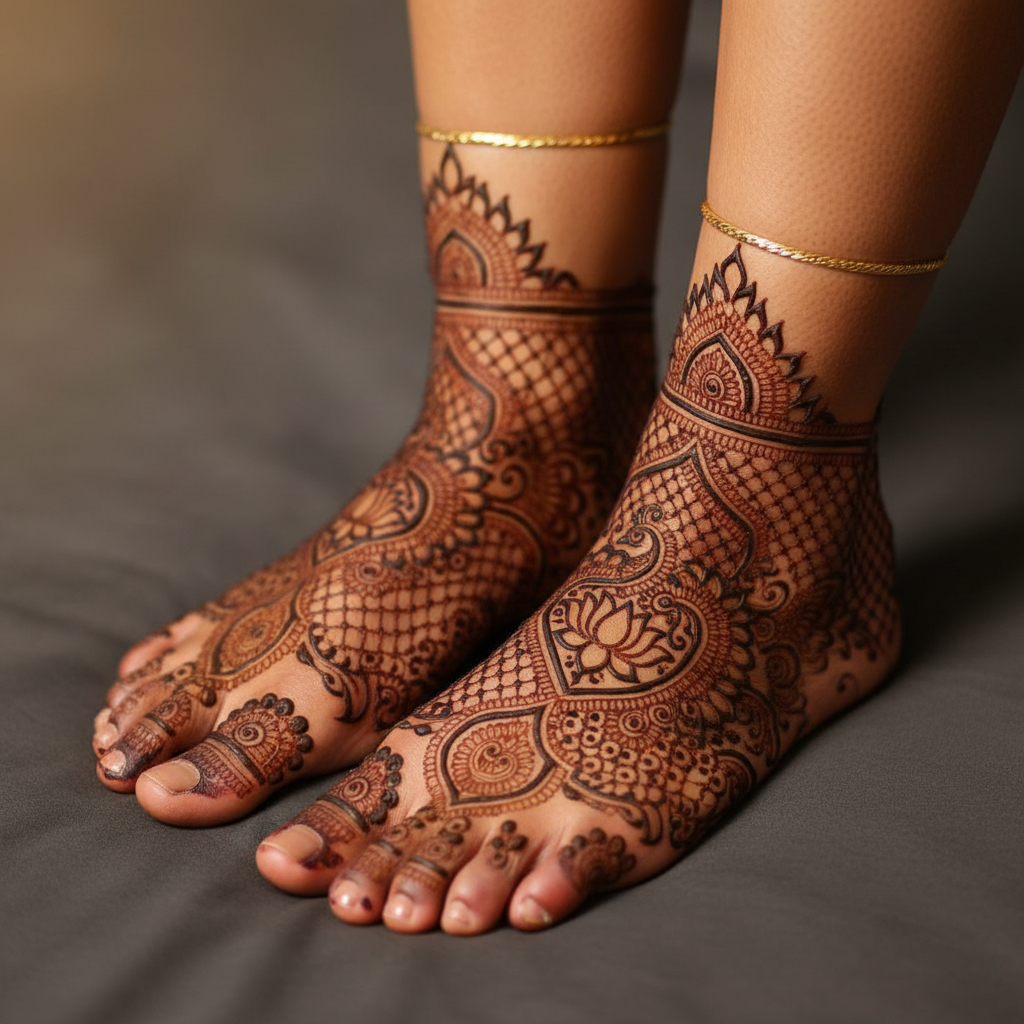
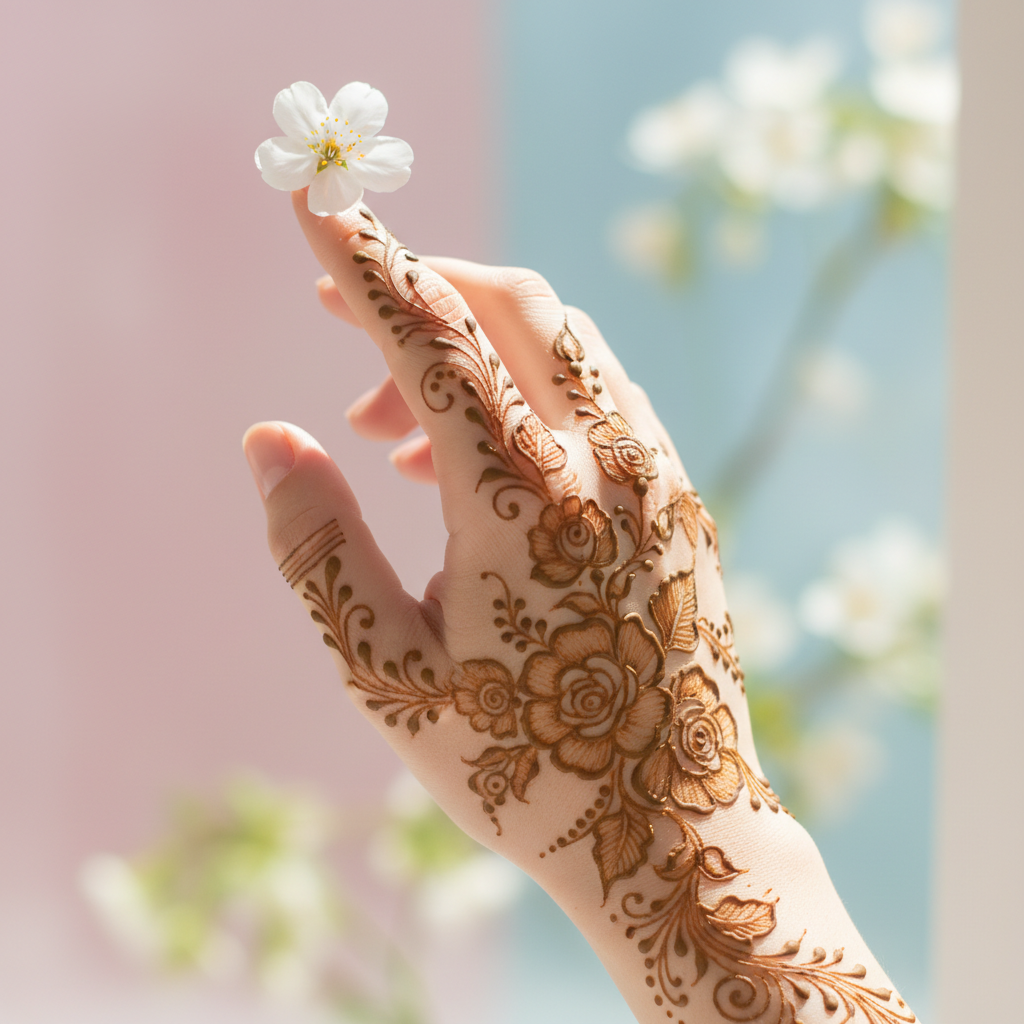
Nothing below has been retouched, recoloured or regenerated to flatter the tool. The ornament is strong on all six — density, flow and linework all hold up. What drifts is narrower and more predictable than you would guess: the stain colour, the specific motifs you name, and the parts of the body the pattern sits on. Read the note under each one.
What This AI Henna Design Generator Gets Right, and What It Gets Wrong
A henna design is three problems stacked: the ornament, the body it sits on, and the stain it is drawn in. The first is close to solved, the second is better than the internet will tell you, and the third is the one that quietly ruins results. Here is where the line falls, based on the six designs above rather than on a claim.
The ornament itself is excellent
Density, flow, line weight and filler work all convince on every one of the six. The Moroccan band wraps the forearm with correct foreshortening as the arm turns away. The jaali netting on the feet holds its spacing across a curved instep. The floral vine tapers properly as it runs down a finger. This is the half that used to take a designer an afternoon, and it comes back in about thirty seconds.
The stain colour drifts, every time it is not enforced
A dark reddish-brown Moroccan band came back near-black, which reads as blackwork tattoo rather than henna. A light brown floral vine came back metallic bronze, closer to gold leaf than to pigment. Only the bridal foot design landed a believable maroon. Name the colour, call it a stain rather than a paint, and add how many days after application you mean.
Hands hold up better than expected
The received wisdom is that image models cannot draw hands, and that is no longer quite true. The fine-line design returned four fingers and a thumb, all whole, separate and correctly proportioned. The bridal hand returned five correct fingers under dense pattern. One of the three failed: the floral vine hid the little finger and blurred the ring finger into the back of the hand. Check it, but expect to pass more often than not.
Named motifs get quietly substituted
The peacock asked for on the foot design never appeared. The paisley buta, lotus and mango motifs asked for on the bridal hand were replaced almost entirely by rosettes. A sheet of twelve motifs spanning vines, leaves and florals came back as twelve variations of one leafy swirl. The model reliably produces henna-shaped ornament and unreliably produces the specific ornament you named.
Symmetry and mirroring are not respected
Bridal work is usually symmetrical and a pair of feet or hands is usually mirrored. Neither happened. The two feet carry different designs. The bridal hand gives one finger two bands and its neighbour five. If matching sides matter to you, generate one side and mirror it yourself rather than asking for a pair.
Boundaries need to be stated or the pattern spreads
The design with no stated stopping point ran straight off the bottom edge of the frame. The one told to stop partway down the forearm stopped in a clean pointed edge with bare skin below, exactly as asked. That is the whole lesson: a named boundary is obeyed, an unnamed one is not, and it costs you four words to say.
How It Works
Pick the henna style
Six presets: dense traditional bridal mehndi, a fine-line minimal mandala, a bold Arabic floral trail, strict Moroccan geometry on the forearm, a flat printable motif sheet, and a peacock foot design. Each one already carries the things that are tedious to describe — which motifs belong to that tradition, how dense the filling should be, how the stain should read on skin, and the anatomy clauses this page learned to include after looking at the hands.
Say where it goes and where it stops
Put the placement in the box: back of the left hand ending at the first knuckle, palm only, forearm to the elbow, foot and ankle. Naming the boundary matters as much as naming the body part, because a design with no stated stopping point tends to keep spreading until it covers the whole limb. Adding the direction of flow — trails running from the wrist toward the fingertips — is the third thing worth a few words.
Count the fingers, then download
About thirty seconds later you have a design. Check the anatomy before you judge the pattern: five whole separate fingers, a thumb bending the way thumbs bend, a wrist that does not pinch where the design ends. That is where these go wrong far more often than the ornament does. Then download at full size, up to 4K, which is the resolution you want if you are going to work from the fine netting rather than just look at it.
Writing a Prompt That Produces a Usable Henna Design
Four habits that separate a design you can take to an artist from one you regenerate, learned from the six in the gallery.
Name the boundary, not just the body part
A henna design on a hand spreads to fill whatever it is given. Ending at the first knuckle, stopping at the wrist crease, three fingers up the forearm with bare skin above — a stated stopping line is the single most reliable way to control density, and it doubles as a check you can make on the result at a glance.
Defend the anatomy in words
Say that the hand has exactly five whole separate fingers of normal proportion and that no second hand enters the frame. It is not a magic clause and it does not always hold, but hands are the weakest thing in every one of these prompts and stating the constraint measurably beats leaving it implied.
Ask for stain, not paint
The word stain, plus a colour and a timeframe — a deep reddish-brown henna stain a few days after application — pulls the render away from the flat opaque paint and near-black chemical tones it otherwise drifts toward. If you want the raised wet paste still sitting on the skin, that is a different look and you have to ask for it by name.
Match the style to the endpoint
Going to an artist as a reference, or onto a salon feed? Use a hand or foot preset, because the design has to be seen on skin. Going onto a printer to practise from? Use the motif sheet, which is flat line art on white, and ask for fewer, larger motifs than you think you want.
Who Uses an AI Henna Design Generator
Brides planning a mehndi night
Deciding how far up the arm the design should go, whether the palms are covered, and how dense the filling should be — before the appointment rather than in the chair. Generating four versions of the same idea and pointing at one is a far better brief than describing it, and it costs an afternoon instead of a deposit.
Henna artists taking bookings
A visual menu without photographing every design you offer. Bridal, Arabic, Moroccan and fine-line versions of a house style, generated in a consistent look for a price list or a booking page, so clients pick a register before they arrive and the consultation starts from a shared picture.
Beginners learning to draw
The motif sheet preset is the one that matters here. A grid of large separated paisleys, lotuses and vines printed on plain white is what you tape beside you and repeat until the cone stops wobbling, and it is a lot easier to generate one at the density you need than to find one.
Festival and event stalls
Eid, Diwali, Karva Chauth, weddings and summer festival booths all need a board of quick designs with an obvious time and price attached. Small fine-line work for the ten-minute queue, an Arabic trail for the twenty-minute one, all rendered in the same style so the board reads as one set.
Temporary tattoo and jagua sellers
Listing artwork for print-on-demand transfers, stick-on sets and jagua stencils, in a house style and at a volume that photographing real applications cannot match. The fine-line and geometric presets translate best, because they survive being shrunk to sticker size.
Costume, film and editorial work
Reference for a make-up department, a fashion shoot or a character sheet that needs body art reading correctly at a glance. The generator is fast enough to explore a look across twenty variations in the time it takes to brief an illustrator on one.
AI Henna Design Generator FAQ
Related Body Art & Pattern Tools
AI Tattoo Generator
When the design is going on permanently rather than washing off in two weeks. Same placement-and-boundary rules, a different vocabulary of styles, and the same reason to count the fingers first.
AI Mandala Generator
The geometry underneath most bridal palm work, on its own and off the skin. A good place to settle the central medallion before you wrap a hand design around it.
AI Wedding Decoration Generator
The room the mehndi night happens in — marigold backdrops, low seating, lighting and table styling, in the same palette as the designs on the hands.
Design Your Henna Before the Cone Comes Out
Six henna styles — bridal mehndi, fine-line minimal, Arabic floral, Moroccan geometric, a printable motif sheet and a peacock foot design — each a finished design in about thirty seconds, placed where you say and stopping where you say. Up to 4K. Free to start, from $2.99.
Design Henna FreeAn AI Henna Design Generator for Brides, Artists, Beginners and Festival Stalls
Choosing a mehndi design is usually done by scrolling. You save forty pictures of other people's hands, none of them stop where you want the design to stop, none of them are the density you had in mind, and you end up describing the composite out loud to an artist who has to imagine it. An AI henna design generator inverts that: you say what you want in a sentence and look at it thirty seconds later, then again with the boundary moved, then again with the filling lighter. The point is not that the machine replaces the cone — it cannot, and nothing on this page pretends otherwise — but that the deciding happens before the appointment instead of during it.
The six presets here cover the henna people actually ask for: dense traditional bridal mehndi with medallions, trails and jaali netting; a fine-line minimal mandala for a first design or a festival queue; a bold Arabic floral trail that leaves broad bare skin either side; strict Moroccan geometry banding a forearm; a flat printable motif sheet in line art on white for practising from; and a bridal foot and ankle design. Each preset already carries the parts that are tedious to write out — which motifs belong to that tradition, how dense the filling runs, how the stain should read on skin, and the anatomy clauses this page added after looking at what came back — so the only thing you have to supply is where the design sits and where it stops.
The six designs in the gallery are shown exactly as they were generated, drifts included, because the pattern in them is more useful than a feature list. The ornament is the solved half: density, flow, line weight, filler work and the way a band foreshortens around a curved forearm all hold up across every result. Hands did better than their reputation, with two of three returning a complete correctly proportioned set of fingers under the pattern. Three things drift consistently. Stain colour runs dark and saturated unless you pin it down, giving a near-black Moroccan band and a metallic bronze floral vine where reddish-brown was asked for. Named motifs get substituted, so the peacock never arrived and the paisleys became rosettes. And symmetry is not respected — a pair of feet came back with two different designs rather than a mirrored set.
The working rule follows directly from that. Name the body part, then name the boundary, because the one design given a stopping line stopped cleanly and the one without ran off the edge of the frame. Say the colour as a stain rather than a paint and say how many days after application you mean. Ask for a style rather than a shopping list of motifs, and if one specific motif matters, make it the subject of the sentence instead of an item in a list. Count the fingers before you judge the pattern. Generate one side and mirror it yourself if the two hands have to match. Inside those limits this is an unusually good trade: you get to see the design on a hand, at the density and the boundary you chose, while there is still time to change your mind about all three.