
AI Gingerbread House Generator
Decide what you are building before the dough is rolled. This AI gingerbread house generator turns a description into a finished, decorated, photographed house in about thirty seconds — candy-disc roofs, piped lattice, icicle eaves, a whole snowy village — across six build styles. Six results are below exactly as they came back, including the manor whose roof drapes like cloth and the children's house that fell flat on the tray because the prompt asked for the wrong camera angle.
Design a Gingerbread House FreeTry the AI Gingerbread House Generator — Free
Pick a build style, then use the box for the details that are yours — the candy you actually have, a colour scheme, a chocolate button roof, a red and white theme. Each preset already carries the structure, the icing seams, the camera angle and the no-lettering rules, all hardened after looking at what came back the first time.
AI Gingerbread House Generator
Choose a build style, name your candy and colours, and get a photorealistic gingerbread house. Up to 4K.
Six Results From This AI Gingerbread House Generator, Shown Exactly As They Came Back
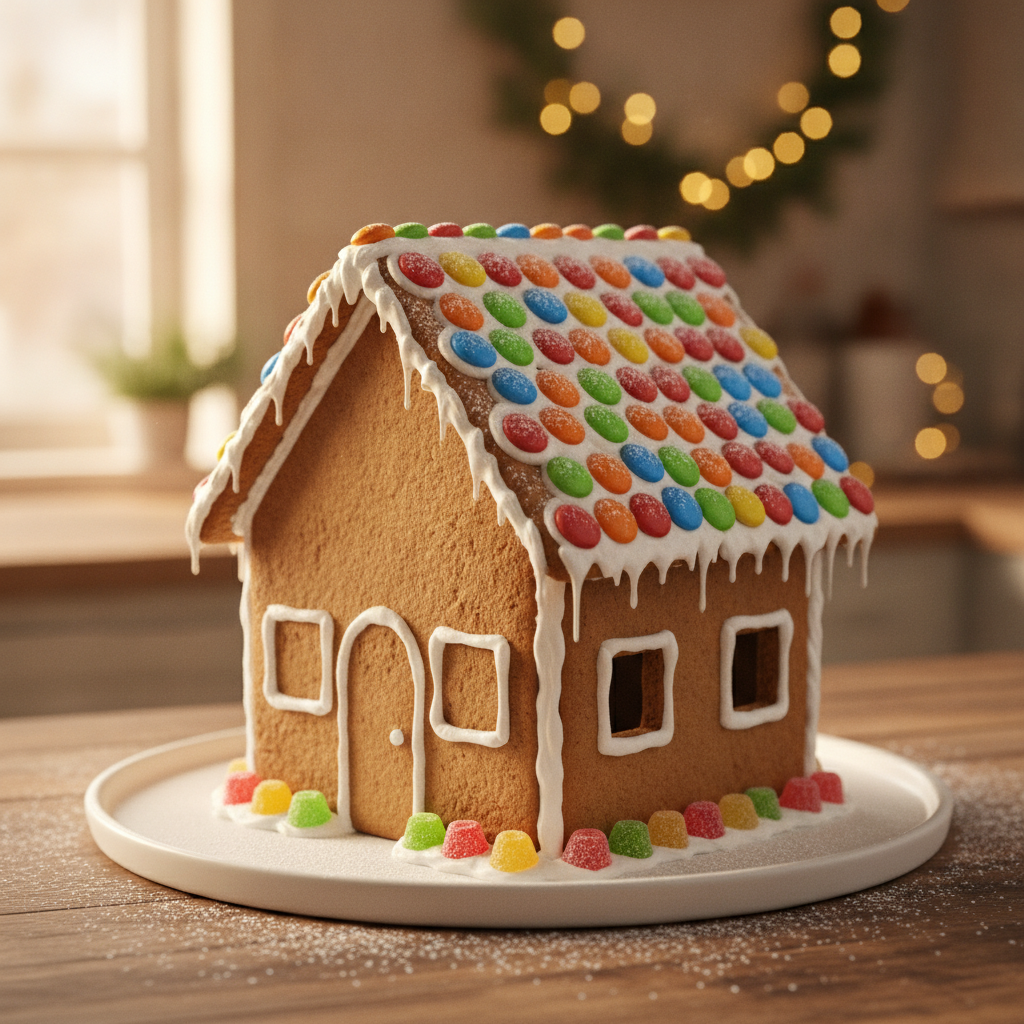
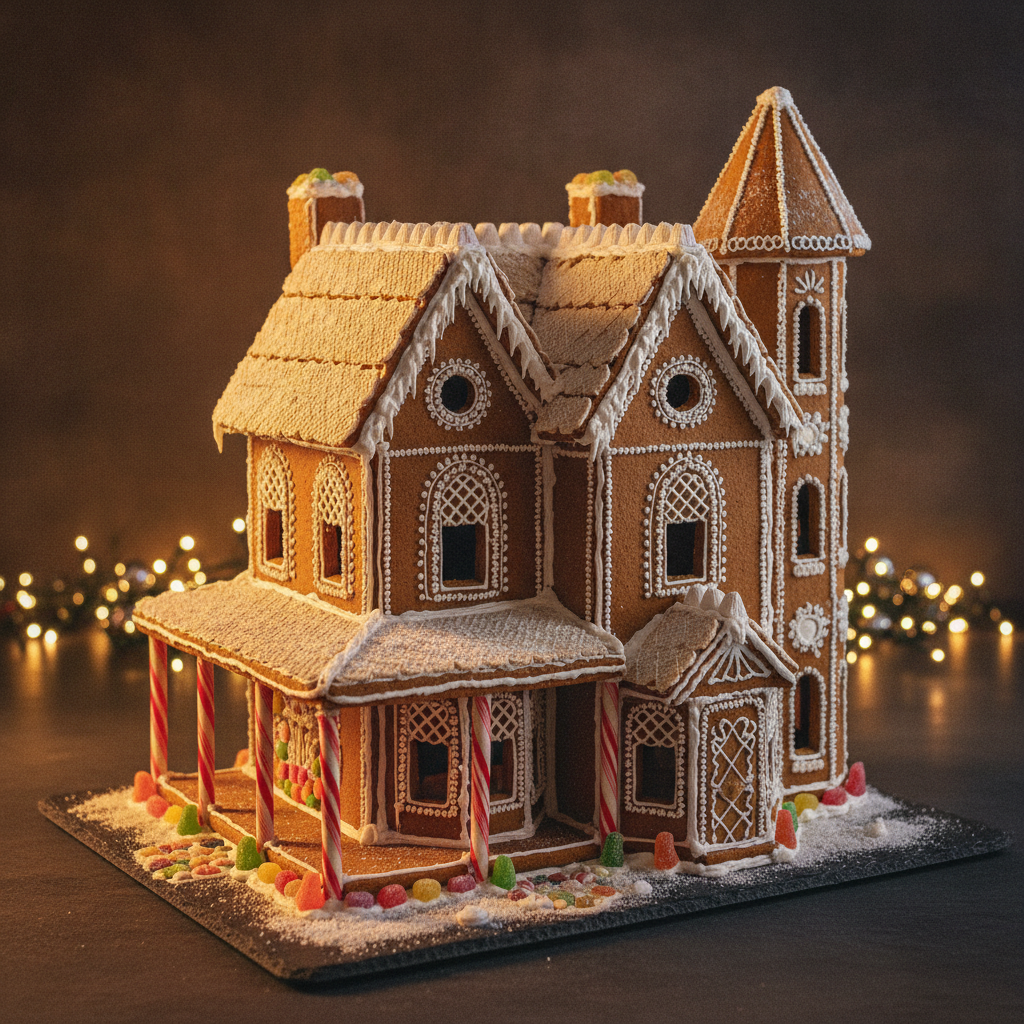
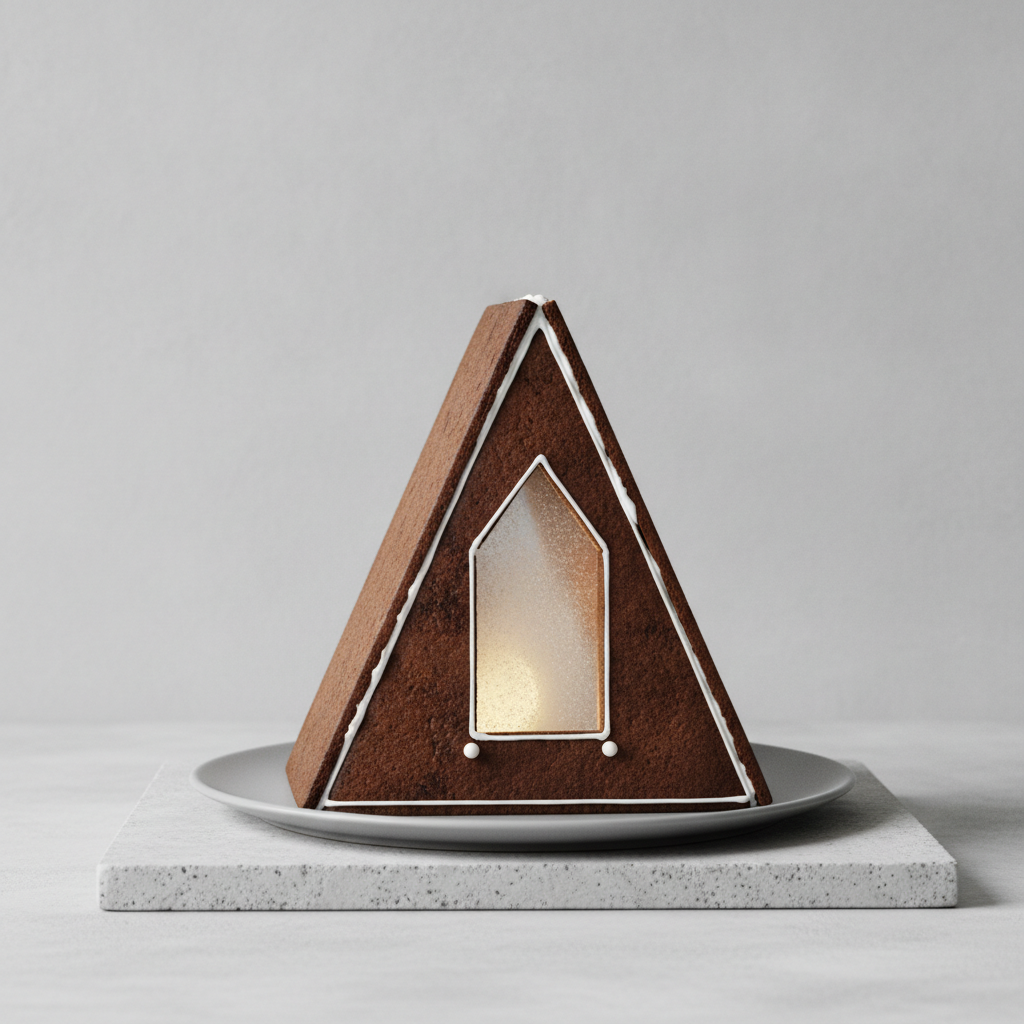
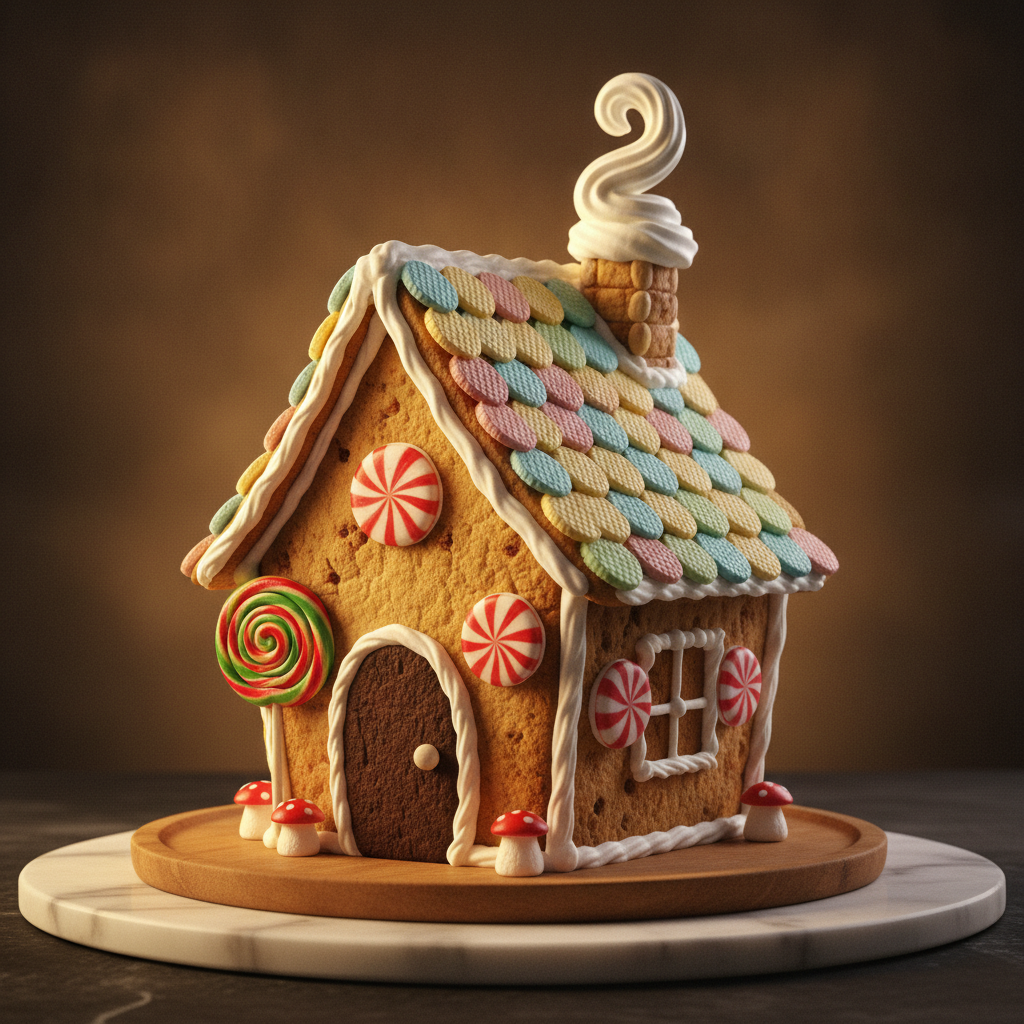
Nothing below has been retouched, recoloured or regenerated to flatter the tool, and one of the six is an outright failure that is left in because it teaches the most. The decoration is the solved half here: candy, icing, piping and light are all convincing. What drifts is the carpentry — whether the panels are rigid, whether the columns touch anything, whether the house is standing up at all. Read the note under each one.
What This AI Gingerbread House Generator Gets Right, and What It Gets Wrong
A gingerbread house is two problems wearing one coat: the confectionery, and the construction. Only the first one is solved. Once you know that, you stop admiring the candy and start checking the joints, which is where every real failure in the gallery above lives.
Icing and candy are genuinely excellent
The Victorian manor came back with beaded dot borders, lattice panels and scrollwork that look hand-piped by somebody with a steady hand and an hour to spare. Icicles hang off the classic cottage the way royal icing actually hangs. Gumdrops, peppermint swirls and candy discs all read as the specific sweets they are. This is the half people expect to fail, and it is the half that holds.
Baked biscuit behaves like cloth
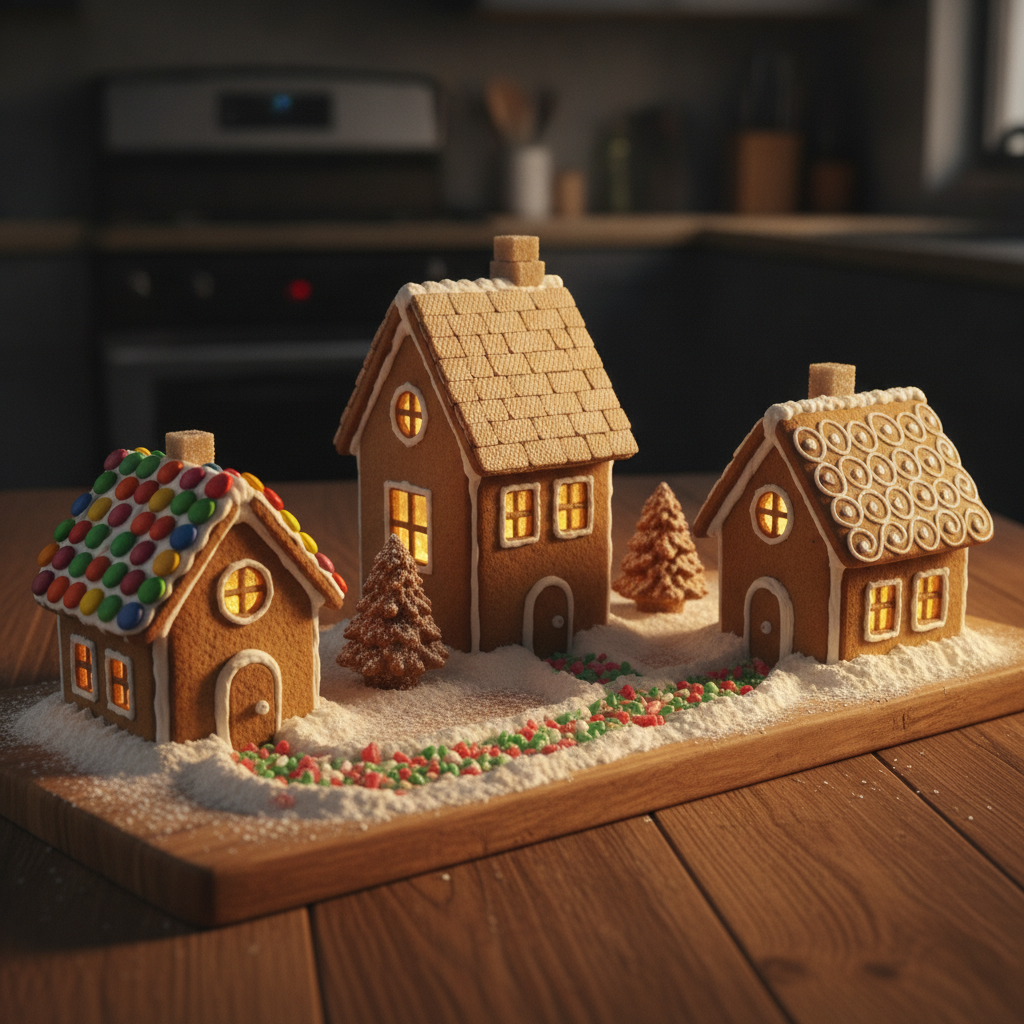
Two roof panels on the Victorian manor droop and curl at the eaves, which is the one thing gingerbread never does. The wafer shingles on that roof, on the storybook cottage and on the middle village house all rendered as a soft woven texture closer to knitted wool than to biscuit. Ask explicitly for rigid tiles with separated edges — the presets here now do.
Lighting is close to professional food photography
Warm window light with blurred fairy lights behind, candle-lit windows glowing through sugar glass in a dim kitchen, flat even daylight on a concrete slab. Naming the setting is the cheapest quality upgrade in the whole prompt, because where the light comes from is most of what separates a bake-sale snapshot from a magazine shot.
Structure gets drawn, not solved
A candy-cane porch column stands clear of the roof it should be carrying. A roof pitch lands on air. The tower asked for a cone and got a pyramid. The model is composing a picture, not checking whether anything would stand, so check every joint yourself before you commit a Saturday to building it.
Camera angle can destroy the subject
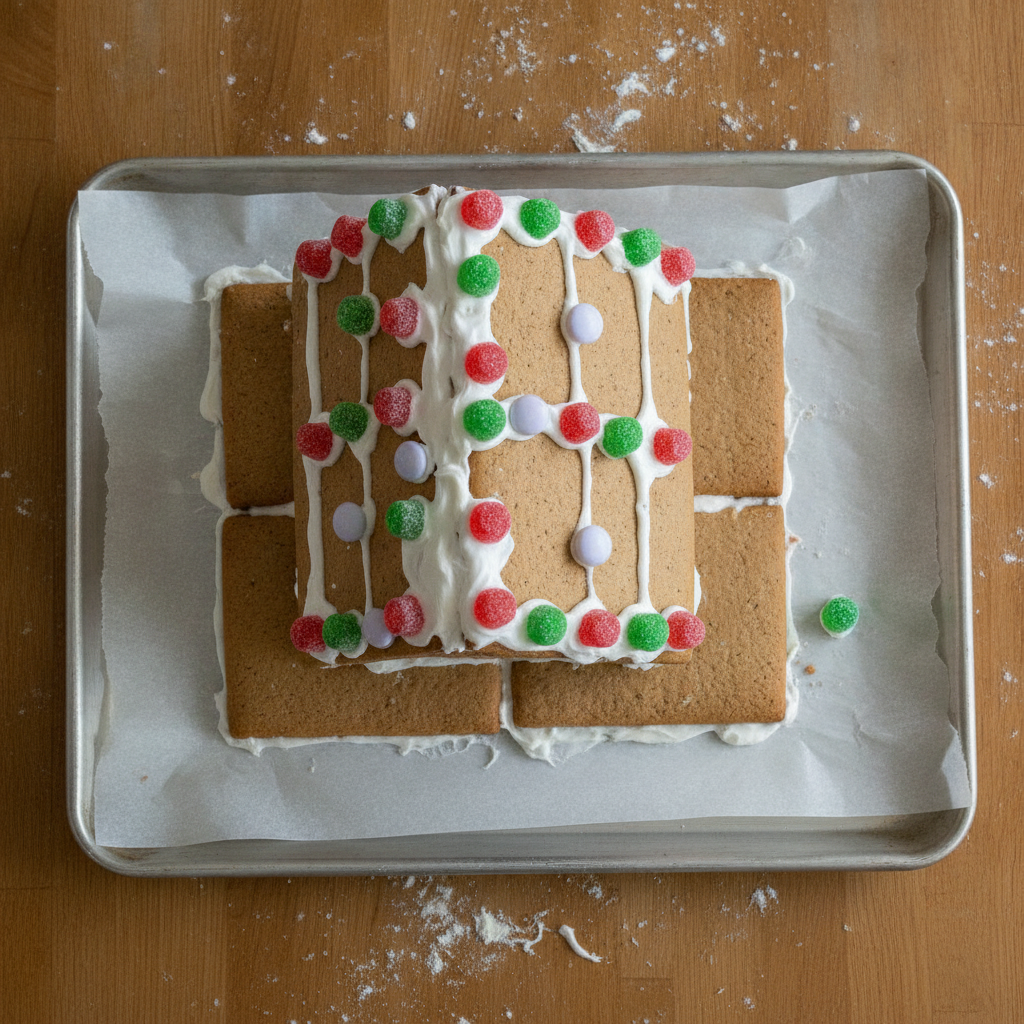
The word overhead in one prompt produced decorated panels lying flat on a tray instead of a house. Every other instruction in that prompt was obeyed exactly, down to the single fallen gumdrop. For any subject whose point is that it stands up, specify eye level or a three-quarter view and never a top-down one.
Counts are reliable, coverage is not
Asked for two or three small white candy accents on the A-frame, it placed exactly two. Asked for a candy-tiled roof on the cottage, it tiled one slope and left the other bare. Small explicit numbers are respected; instructions about covering a whole surface get treated as suggestions, so say edge to edge, on both slopes, with no bare gingerbread showing.
How It Works
Pick the build style
Six presets: a classic candy-disc cottage, an ornate Victorian manor on a porch, a minimalist Nordic A-frame, a crooked storybook cottage, a simple beginner build for children, and a three-cottage village on a board. Each already carries the shape, the roof treatment, the icing seams, the lighting and the camera angle, plus the rigidity and coverage clauses this page added after reviewing the first round.
Add the candy and the colours
Put the specifics in the box: the sweets in your cupboard, a red and white scheme, a chocolate button roof, blue icing snow, liquorice window frames. Name actual sweets rather than saying colourful, because gumdrops, peppermint swirls and candy canes build three different houses. Small explicit numbers are respected, so say how many if it matters.
Check the joints, then download
About thirty seconds later you have a house. Before you judge the decoration, check three things: every panel meets another panel along a straight edge, every column touches what it holds up, and the roof lands on a wall rather than on air. That is where these go wrong, not in the candy. Then download at full size, up to 4K, which is what you want for anything printed.
Writing a Prompt That Produces a Buildable Gingerbread House
Four habits that separate a design you can actually bake from one you regenerate, all learned from the six results in the gallery.
Never ask for a top-down angle
This is the single most expensive mistake available, and the fifth gallery image is the proof: the word overhead turned a house into a flat lay of decorated panels. Say eye level, or three-quarter view, or standing upright on the board, and the house stays a house.
Say the material is rigid
Drooping eaves and knitted-wool shingles are the recurring texture failure. Spell it out: rigid baked biscuit that holds a straight edge, individual overlapping tiles with separated edges and visible shadow lines, nothing that drapes, curls or folds like fabric.
Describe coverage, not just decoration
A candy roof became one tiled slope and one bare one. If a surface should be fully covered, say edge to edge, on both slopes, with no bare gingerbread showing. The same applies to windows: say cut right through as real openings, or you get icing outlines painted on a solid wall.
Put a size limit on every soft detail
A curl of icing smoke grew as tall as the roof. Anything decorative you mention can expand until it dominates the frame, so bound it when you name it: no wider than the chimney, no more than half the height of the roof, sized to match the sweets on the other houses.
Who Uses an AI Gingerbread House Generator
Families deciding before they bake
Four versions on a screen settle an argument that a warm tray of panels never will. Children pick the roof, the colours and the sweets while the design is still free to change, and everyone arrives at the actual build already agreeing on what it is meant to look like.
Bakeries planning a seasonal range
Concept images for a Christmas counter display, a pre-order menu or a shop window, generated in a consistent house style weeks before any dough is mixed. Cheaper than building three prototypes to find out which one customers point at.
Cake decorators and sugar artists
Testing piping schemes and roof treatments against a shape before committing hours of royal icing. The lattice and beadwork the model draws are genuinely usable as reference, even when the structure underneath them is not.
Teachers and activity leaders
A handout showing what a class is aiming for, at a difficulty level matched to the group. The beginner preset is deliberately simple and unpolished, which is far more useful to a room of eight-year-olds than a competition-grade manor.
Competition builders
Rapid concept sketching for gingerbread contests, where the design is decided long before construction starts. Generate the silhouette and the decoration scheme, then engineer the structure yourself, because that half is still your job.
Hosts and party planners
Invitation art, place cards, table styling and social posts for a decorating party, in the same visual scheme as the event itself. All the festive imagery, none of the weekend spent building a house that only gets photographed once.
AI Gingerbread House Generator FAQ
Related Festive & Baking Tools
AI Christmas Card Generator
Put the house you designed on the card that announces it. Festive card art in the same palette, so the bake and the mailing list share one look.
AI Christmas Ornament Generator
The same problem at a smaller scale — a small object that has to read as a real handmade thing. Baubles, hanging decorations and tree-top designs.
AI Cake Design Generator
The other bake everyone wants to see before committing. Same piping, same icing, fewer structural problems, because a cake does not have to stand up in panels.
See the House Before You Bake the Walls
Six build styles — classic candy cottage, Victorian manor, Nordic A-frame, storybook cottage, a simple kids build and a three-house village — each a finished, decorated, photographed house in about thirty seconds, in your candy and your colours. Up to 4K. Free to start, from $2.99.
Design a Gingerbread House FreeAn AI Gingerbread House Generator for Families, Bakeries and Anyone Who Has Ever Watched a Roof Slide Off
Gingerbread houses are decided in the worst possible way: at the table, with warm panels in one hand and a piping bag in the other, while somebody argues about where the sweets go. By the time the design is settled the icing has set wrong and the roof is sliding. An AI gingerbread house generator moves that decision to the evening before, when it costs nothing. You describe the shape, the roof, the candy and the light, look at the result thirty seconds later, then look again with a steeper pitch, a pastel palette or a porch on the front. The building still has to be done by hand. The deciding does not.
The six presets cover what people actually make. A classic four-wall cottage with a candy-disc roof and icicle eaves, which is the house most families are really after. An ornate Victorian manor with a wrap-around porch and piped lattice, for the decorator who wants to spend a whole Sunday on it. A minimalist Nordic A-frame in dark spiced gingerbread with one glowing sugar-glass window, which is the easiest build here and the most photogenic. A crooked storybook cottage with peppermint walls and marshmallow toadstools. A deliberately simple beginner build with thick messy icing and crooked sweets, for children. And a three-cottage village on a board, for anyone whose ambition outran their evening.
The gallery shows all six exactly as they came back, including one outright failure, because the pattern in them is more useful than a feature list. Decoration is the solved half: the Victorian piping is remarkable, the icicles hang correctly, the candies read as the specific sweets they are, and not one image contained a stray letter or a misspelled sign, which is rarer than it sounds for a scene this full of surfaces that invite lettering. Construction is the unsolved half, and it fails the same way every time. Roof panels that droop and curl like fabric. Wafer shingles that render as knitted wool. A porch column standing clear of the roof it should hold. A roof tiled on one slope and bare on the other. Windows piped onto a solid wall rather than cut through. A curl of chimney smoke that grew as tall as the house. And, most instructively, an entire house laid out flat on a baking tray because the prompt asked for an overhead angle.
The working rules follow directly. Check the joints before you admire the candy, because the candy will be fine and the joints often will not. Never give a top-down camera to a subject whose whole point is that it stands up. Say the material is rigid and holds a straight edge, since the texture failures all come from the model treating biscuit as cloth. Describe coverage explicitly — edge to edge, both slopes, no bare gingerbread — because instructions about whole surfaces are treated as suggestions while small explicit counts are obeyed precisely. And bound every soft decorative detail when you name it, or it will expand to fill the frame. Inside those limits this is a genuinely good trade for anyone who bakes at Christmas: you get to see the house, in your candy and your colours, while there is still time to change your mind about all of it.