
AI Flower Arrangement Generator
Name the blooms, the vessel and the palette, and see the finished arrangement about thirty seconds later. This AI flower arrangement generator handles the part that costs a florist a morning and a bucket of stems to test — how the focal flowers mass, where the foliage falls, whether the colour story holds under candlelight — across bouquets, centerpieces, ikebana, farmhouse pitchers, sympathy tributes and tropical statements. Six results are below exactly as they came back, including the vase that turned out to be empty and the pitcher that grew a second handle.
Design Flowers FreeTry the AI Flower Arrangement Generator — Free
Pick a style, then use the box to name your blooms and palette — blush garden roses and white ranunculus; burgundy dahlias with copper beech; all white and green. Each preset already carries the vessel, the lighting, the density and the botanical rules, so the flowers and the colour story are the only things you have to supply.
AI Flower Arrangement Generator
Choose a floral style, name your blooms and palette, and get a photorealistic arrangement. Up to 4K.
Six Results From This AI Flower Arrangement Generator, Shown Exactly As They Came Back
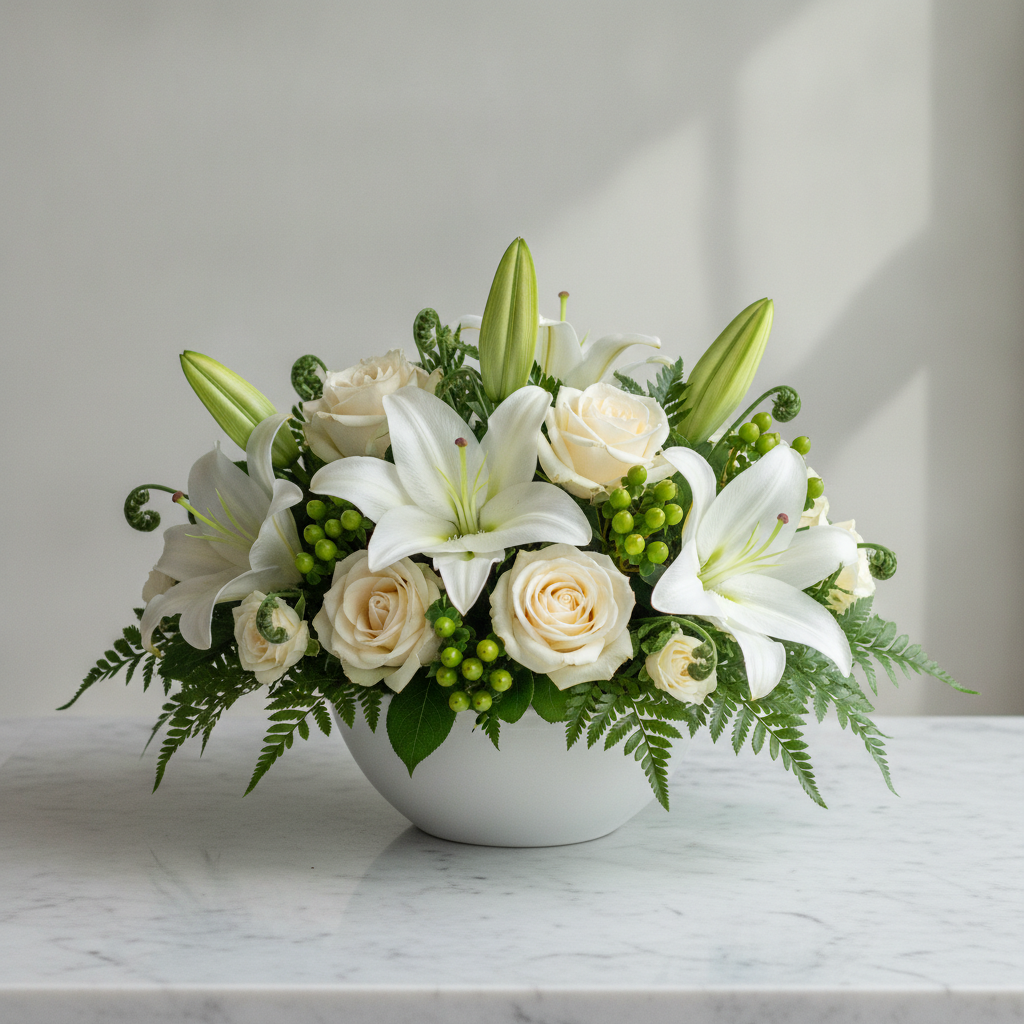
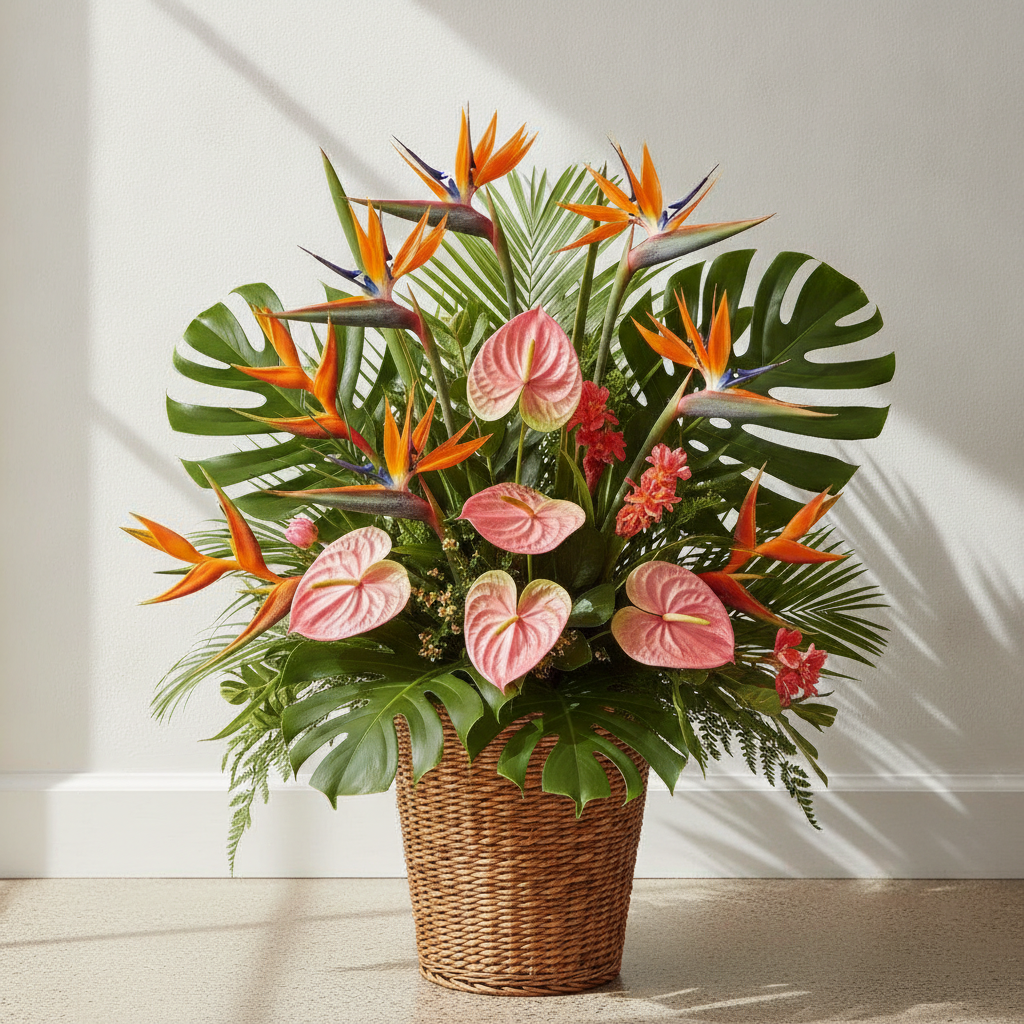
Nothing below has been retouched, recoloured or regenerated to flatter the tool. The flowers themselves are excellent in all six — species form, petal structure, colour and light all hold up under close inspection. What drifts is narrower than you would guess, and it is almost never botanical: it is the vessel, the stems and the physics of how the thing stands up. Read the note under each one.
What This AI Flower Arrangement Generator Gets Right, and What It Gets Wrong
A floral photograph is three problems stacked: the flowers, the structure holding them, and the light falling on them. Two of those are close to solved. The middle one is where every failure in the gallery above lives, and knowing that changes what you check first.
The botany is genuinely reliable
Oriental lilies came back with correct six-petal form and visible stamens. Peonies carried the heavy ruffled centres that separate them from roses. Bird of paradise had the right orange sepals and blue tongue. Garden roses opened in properly layered petals with colour variation from bud to bloom. This is the half people expect to fail and it is the half that consistently holds.
Vessels and stems are where it breaks
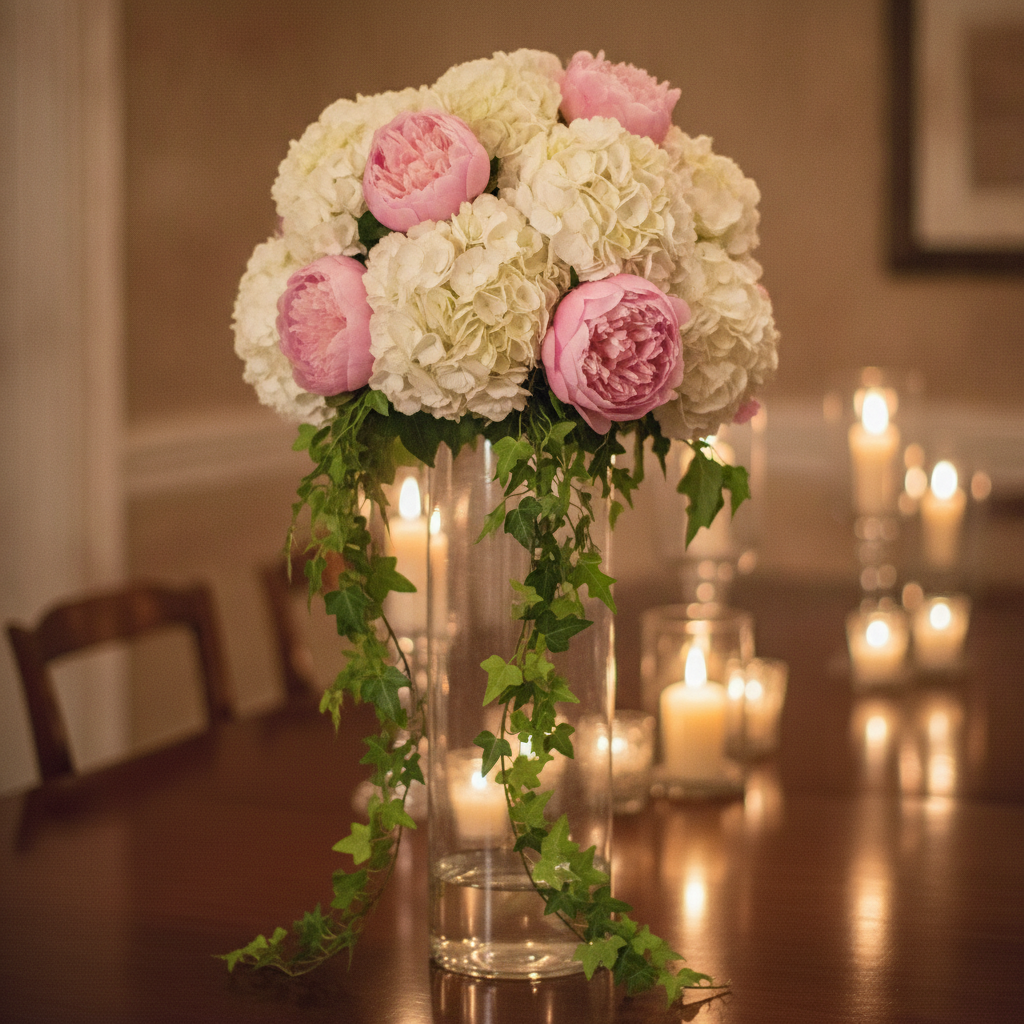
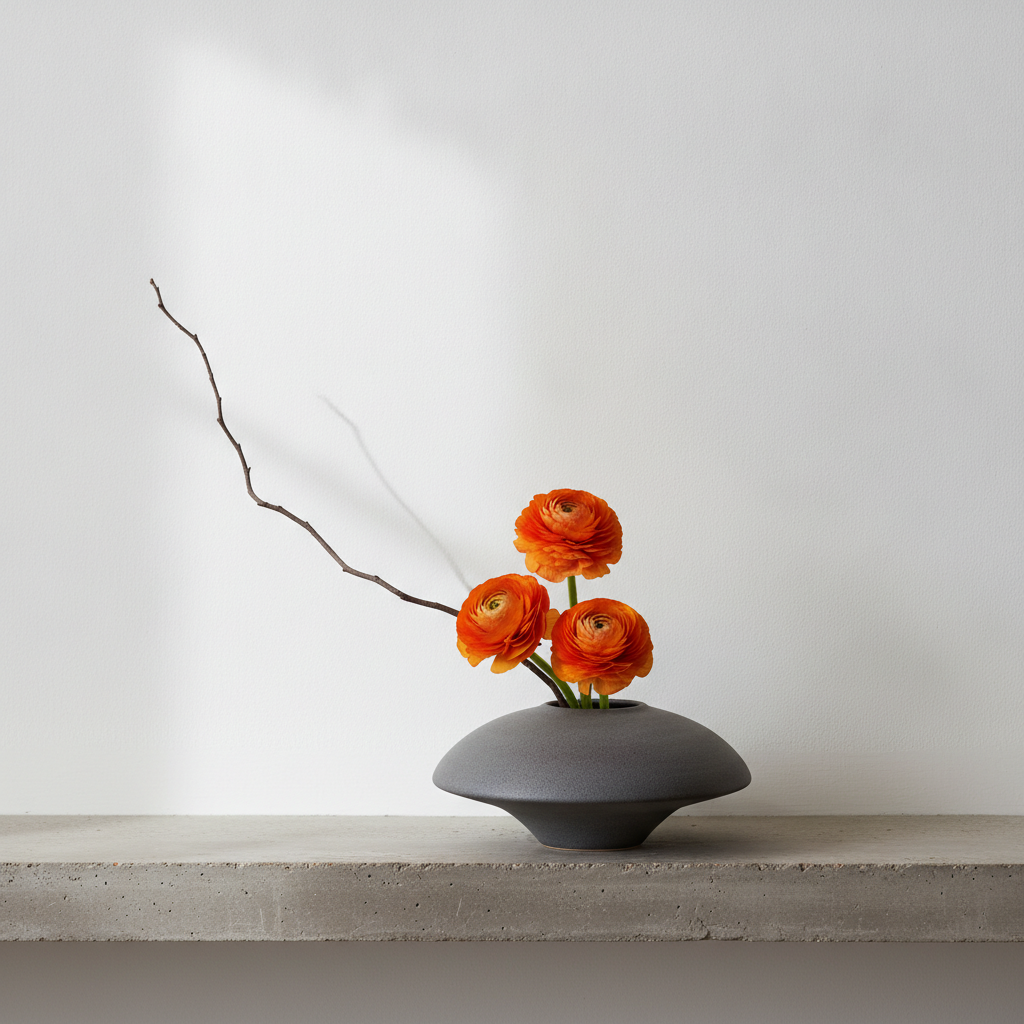
The glass cylinder came back empty — no stems, no waterline — so the arrangement floats on the rim. The ikebana branch never visibly reaches the vessel. The tropical display fans out flatter and wider than the basket under it could balance. Check the container and the base before you look at anything else, because that is where the image stops being buildable.
Light and setting are close to professional
Candlelight behind a glass centerpiece, hard afternoon sun raking across a white wall, soft diffused side light on marble — the lighting in all six reads as a florist shoot rather than a snapshot. Naming the setting is the cheapest quality upgrade available, because most of what separates professional floral photography from amateur is where the light comes from.
Containers get quietly redesigned
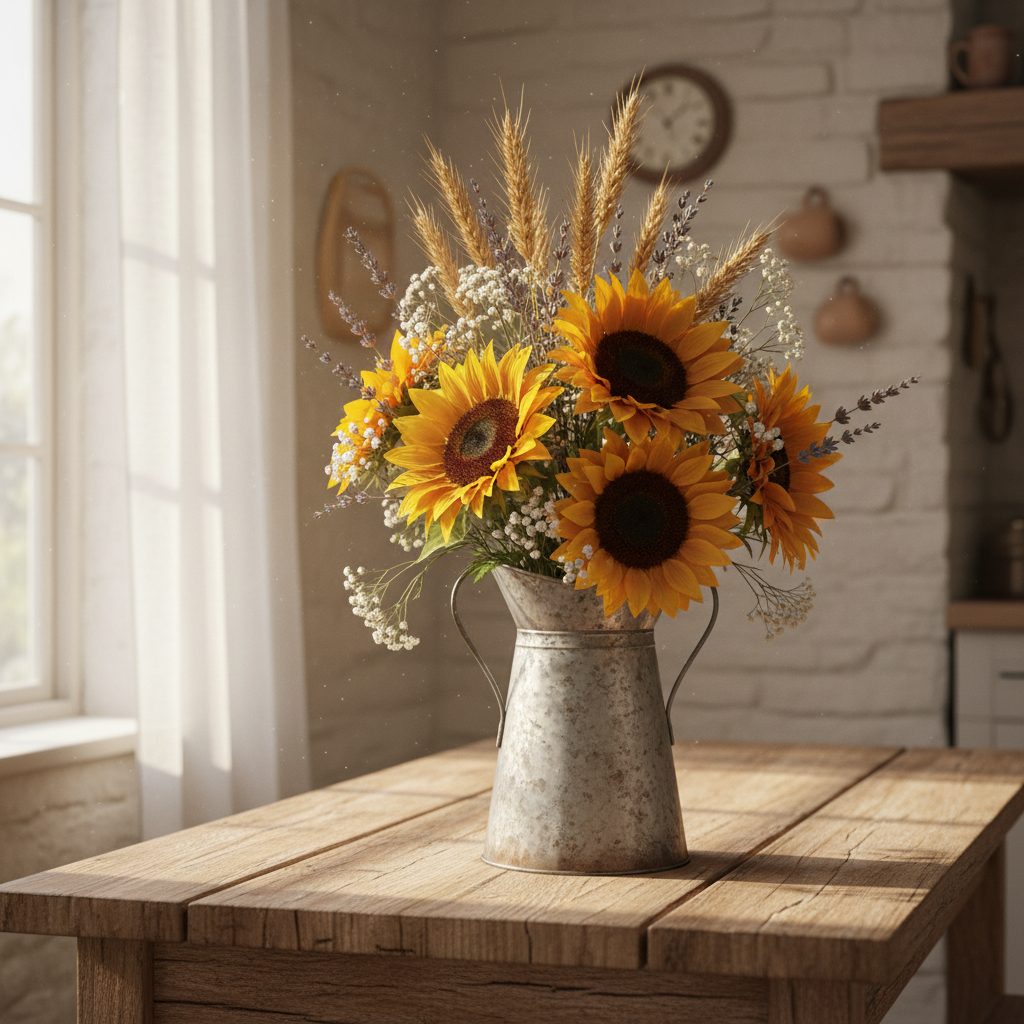
A galvanized pitcher came back with two handles, which is no longer a pitcher. Ask for a specific vessel and you get something close to it rather than exactly it. If the container matters — a client owns it, or you are selling it alongside the flowers — describe it in more detail than feels necessary, or crop it out.
Accessories expand to fill the frame
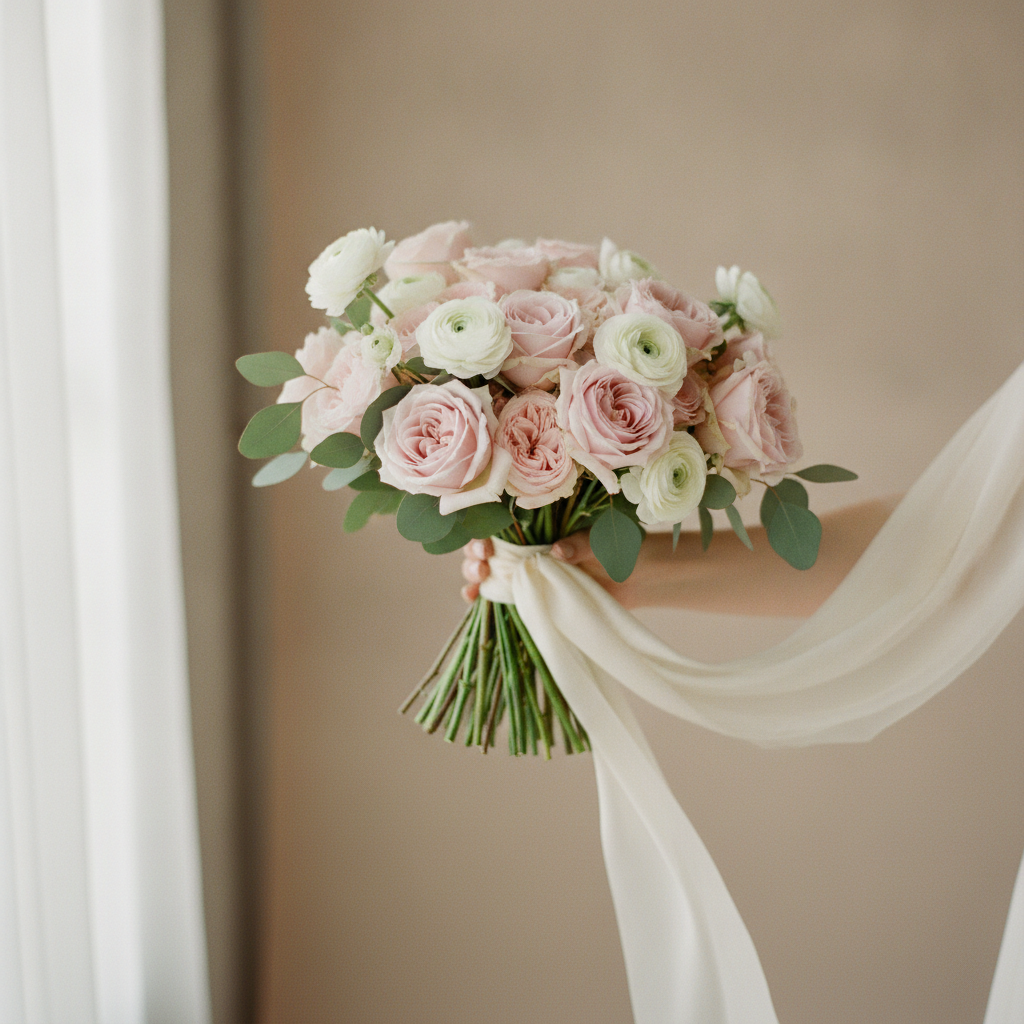
A narrow silk ribbon around a bouquet binding became a sweep of fabric filling half the picture. Anything you mention as a small detail can be promoted to a main subject. Say small, narrow, or closely wrapped, and say where it stops, the same way you would constrain any other element you do not want taking over.
Hands are still the weak point
The held bouquet returned two ambiguous fingertips behind the stems rather than a hand. This is the one failure mode shared with every other image tool, and the fix is the same: do not ask for a held bouquet unless you need one. A bouquet resting on a surface or standing in a vase goes wrong far less often.
How It Works
Pick the floral style
Six presets: a spiral hand-tied bouquet, a tall glass table centerpiece, a minimalist ikebana line, a loose farmhouse pitcher, a low all-white sympathy tribute, and a bold tropical statement in a basket. Each one already carries the vessel, the silhouette, the density and the lighting, along with the botanical and structural clauses this page added after looking at what came back the first time.
Name the blooms and the palette
Put the flowers in the box by species rather than by mood — blush garden roses and white ranunculus, burgundy dahlias with copper beech, white hydrangea with trailing ivy. Two or three named colours beat any adjective. If a particular bloom is the point of the arrangement, make it the subject of the sentence instead of one item in a list, because named flowers buried in a list are the ones most likely to be quietly substituted.
Check the vase, then download
About thirty seconds later you have an arrangement. Look at the container and the stems before you judge the flowers: is the vessel actually holding anything, do the stems reach it, could the base support the spread above it. That is where these go wrong far more often than the botany does. Then download at full size, up to 4K, which is what you want for anything going to print.
Writing a Prompt That Produces a Usable Flower Arrangement
Four habits that separate an arrangement you can show a client from one you regenerate, learned from the six in the gallery.
Name the vessel before the flowers
The container sets the silhouette, and the silhouette is most of the design. The same five blooms produce four unrelated arrangements in a low compote, a tall glass cylinder, a metal pitcher and a rattan basket. Choose the vessel first and the rest of the composition follows it.
Describe the mechanics, not just the look
Say the stems are visible through the glass in water with a clear waterline, or that the branch is inserted into the vessel with its base showing at the mouth. Empty vases and floating stems are the most common failure here, and they mostly stop happening once the support is part of what you asked for rather than something assumed.
Prefer opaque containers when it matters
A ceramic bowl, a woven basket or a metal pitcher hides the hardest part of the picture, which is everything below the waterline. Clear glass is the most demanding request you can make, so save it for when the glass itself is the point and expect to regenerate more often.
Name the light and the surface
Soft window light on marble, candlelight behind dark wood, hard afternoon sun on a white wall. This is the cheapest upgrade in the whole prompt and it is what makes the difference between an arrangement that looks catalogued and one that looks photographed.
Who Uses an AI Flower Arrangement Generator
Florists pitching a wedding
Four palette options for a consultation in about two minutes, so the couple points at one instead of describing a feeling. Blush and ivory, deep burgundy and brass, all white and green, sun-bleached terracotta — generated in the same vessel and light so the difference between them is the only thing on the table.
Event and venue planners
Testing centerpiece height against table size and lighting before committing a floral budget. Whether a room reads better with low compotes or tall glass is an expensive thing to discover on the day, and an easy thing to look at months ahead.
Flower shops filling a feed
Seasonal and holiday concept posts between real orders, in a consistent house style. Valentine, Mother Day, autumn and festive ranges can be visualised and posted as concepts long before the stems are ordered, which is when customers are actually deciding.
Couples and hosts planning ahead
Working out what you want before the consultation rather than during it. Bouquet shape, how far the colour leans warm, whether the tables need height — all easier to settle by looking than by talking, and free to change your mind about.
Interior stylists and photographers
Placeholder florals for a room render, a moodboard or a set plan, matched to a palette already chosen for the space. Faster than sourcing real stems for a mockup that exists only to test whether the colour works.
Teachers and floral students
Reference images for design principles that are hard to photograph on demand: the difference between a symmetrical tribute and an asymmetric ikebana line, or how a spiral hand-tied base differs from a gathered bunch. Generate the contrast rather than hunting for it.
AI Flower Arrangement Generator FAQ
Related Event & Decor Tools
AI Wedding Decoration Generator
The room the flowers go into — ceremony arches, tablescapes, backdrops and reception styling, so the scheme and the stems get decided in the same palette.
AI Wreath Design Generator
The same botanical material worked into a circle instead of a vessel. Seasonal door wreaths, dried ranges and festive designs, with the structure problem largely solved by the frame.
AI Cake Design Generator
The other thing every event client wants to see before committing. Pair it with a bouquet in the same colours to show a whole scheme rather than one piece of it.
See the Arrangement Before You Buy the Stems
Six floral styles — hand-tied bouquet, glass centerpiece, minimalist ikebana, farmhouse pitcher, sympathy tribute and tropical statement — each a finished arrangement in about thirty seconds, in your blooms and your palette. Up to 4K. Free to start, from $2.99.
Design Flowers FreeAn AI Flower Arrangement Generator for Florists, Planners and Anyone Choosing a Palette
Choosing flowers is normally done in words, which is a strange way to decide something entirely visual. A client says soft and romantic, a florist hears blush and ivory, and the two pictures in their heads stay different until a bucket of stems has already been bought. An AI flower arrangement generator closes that gap by making the picture cheap: you describe the blooms, the vessel and the palette, look at the result thirty seconds later, then look again with the colour pushed warmer or the vase swapped for something lower. The point is not that it replaces the florist — it cannot hold water, it knows nothing about seasonality, and some of what it draws could not physically stand up — but that the deciding happens before the order instead of after it.
The six presets cover the arrangements people actually ask for. A spiral hand-tied bouquet for weddings and gifting. A tall glass centerpiece for long reception tables, lit by candles the way it will actually be seen. A minimalist ikebana line for restrained, sculptural work with real negative space. A loose farmhouse pitcher for the cottage and market-flower look. A low all-white sympathy tribute built the way a florist sets one, with a fern collar spreading below the rim. And a bold tropical statement in a basket. Each preset already carries the vessel, the silhouette, the density and the lighting, along with the botanical and structural clauses added after reviewing the first round of results, so the only things you have to supply are the flowers and the colour story.
The six results in the gallery are shown exactly as they came back, drifts included, because the pattern in them is more useful than a feature list. The flowers themselves are the solved half: species form, petal structure, the way a peony differs from a rose, the glossy spathe of an anthurium, the correct sepals on a bird of paradise — all of it holds up under close inspection. Lighting is nearly as strong, with candlelight, raking sun and diffused side light all reading as professional floral photography. What fails is structural, every time. A clear glass cylinder rendered empty, so the arrangement floats on the rim. An ikebana branch that never reaches its vessel. A tropical display fanned wider than the basket beneath it could balance. A galvanized pitcher with two handles. A narrow ribbon that expanded into half the frame. And a held bouquet whose hand dissolved into two fingertips.
The working rule follows directly from that. Check the container and the stems first and the flowers second, because the botany will usually be fine and the mechanics usually will not. Name the vessel before the blooms, since the vessel sets the silhouette and the silhouette is most of the design. Say the support out loud — stems visible through the glass, a clear waterline, a base gathered inside the mouth of the vase — because what you do not describe gets assumed away. Prefer opaque containers unless the glass is the point. Name the light and the surface, which costs four words and buys most of the professional look. And avoid held bouquets when a surface will do. Inside those limits this is an unusually good trade for anyone who sells, plans or buys flowers: you get to see the arrangement, in your palette and your vessel, while there is still time to change your mind about all of it.