
AI Perfume Bottle Design Generator
A perfume bottle is one of the few products where the material is the design. Nothing is printed on it — you are shaping a piece of moulded glass and deciding what it does to the light and the liquid inside. This AI perfume bottle design generator is built around that: six presets that change the glass treatment, the juice, the cap mass and the way the bottle is lit, rather than six colour swaps on the same render.
Start Designing FreeTry the Perfume Bottle Design Generator — Free
Pick the direction first, then add the details that only you know — the family the fragrance sits in, the colour of the juice, the metal on the cap. Each preset sets a different glass treatment and a different lighting setup, because those two things decide more about a bottle than its silhouette does.
AI Perfume Bottle Design Generator
Choose a bottle direction, describe the glass, juice and cap, and get concept renders at up to 4K
Bottle Concepts Made With This Generator
Six directions rather than six colourways, generated with the presets above and left unedited. The second image is the one worth studying: one silhouette, one cap, one liquid, and only the glass finish changing along the row. That single variable does more to the product than any silhouette change would, and it is the decision most new brands make last instead of first. The rest are worth reading for what drifted — a screw cap where a spray was implied, a threaded neck instead of a crimp flange, a cap sitting proud where it was asked to sit flush. Every one of those is the manufacturing standard reasserting itself, which is exactly the conversation a concept render exists to start.
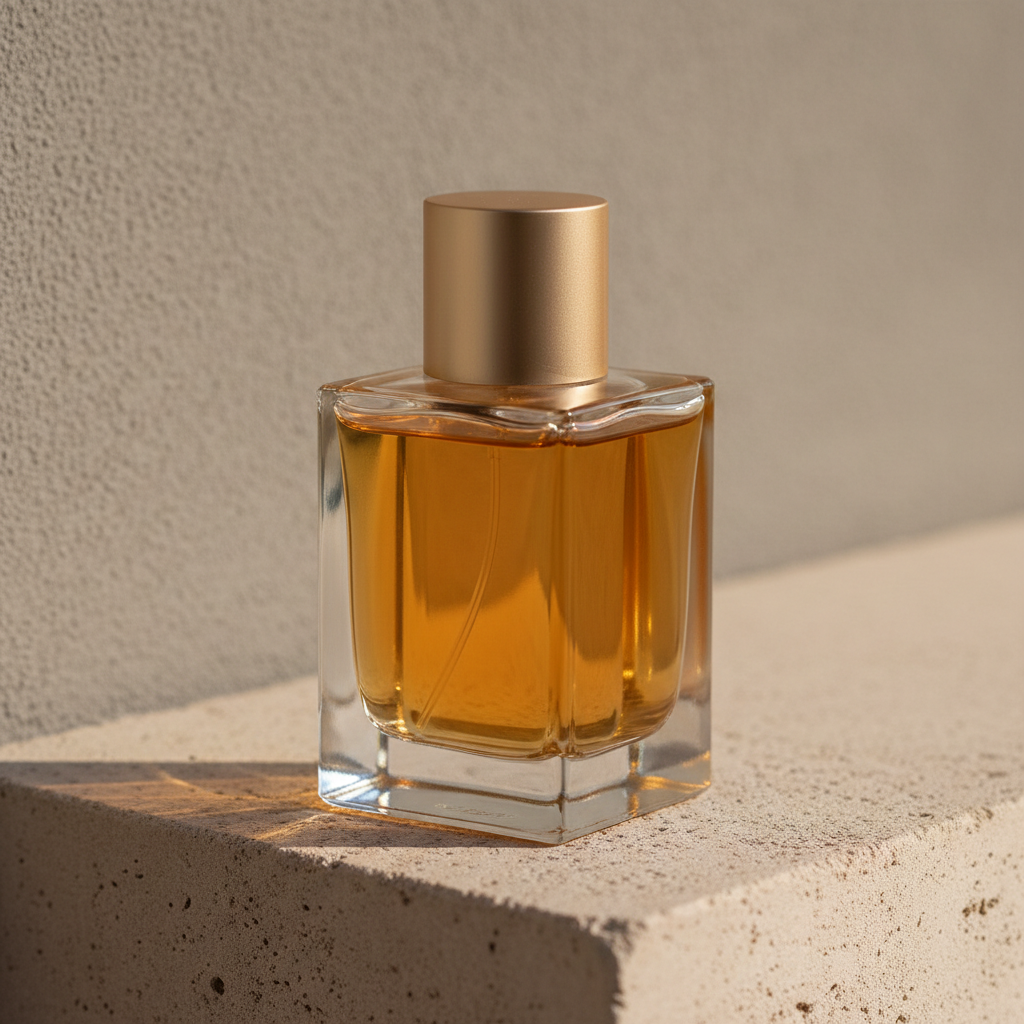
AI perfume bottle design generator result: a squat square flacon in thick clear glass on a rough pale concrete ledge, filled almost to the shoulder with amber liquid and capped with a brushed champagne-gold cylinder. The whole design is in the base — glass thick enough to read as a solid block under the juice, throwing a warm amber pool of light across the concrete. That block is where the weight in the hand comes from, and it is also the most expensive glass in the bottle
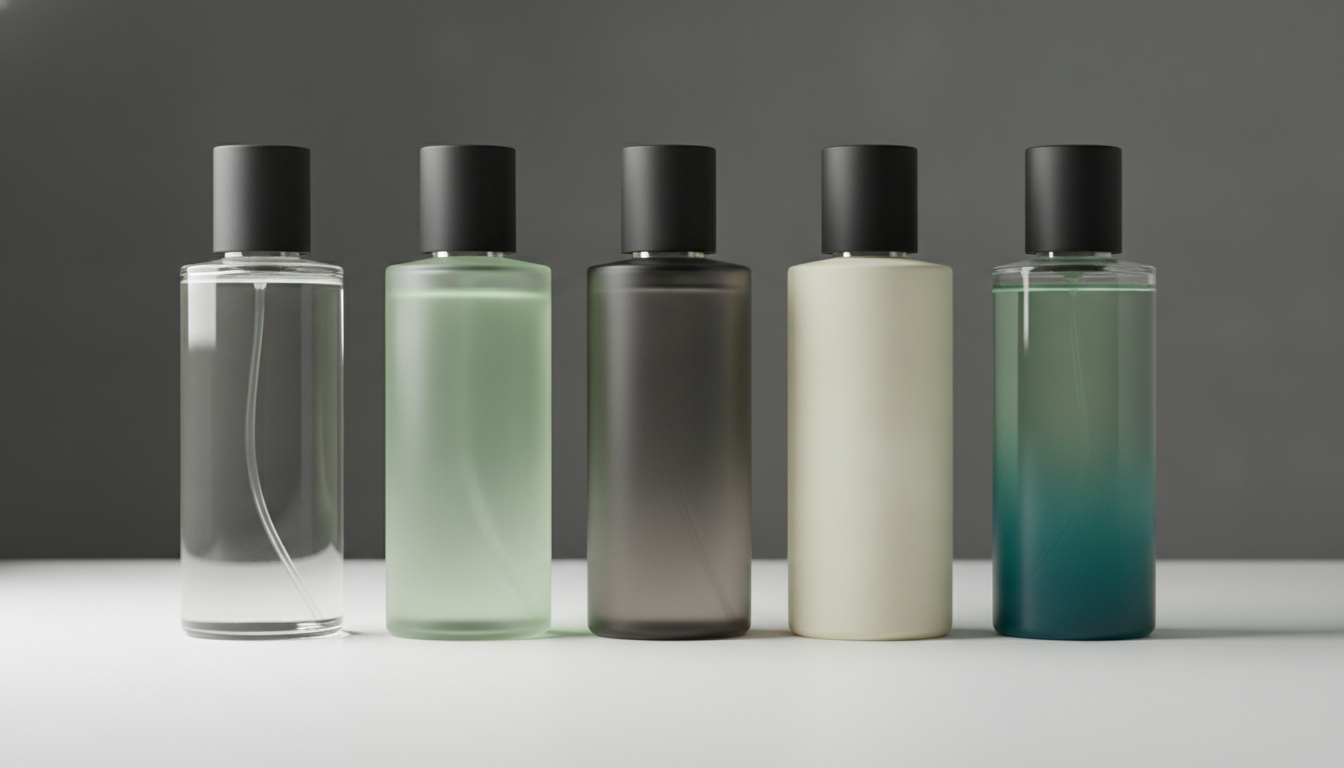
Five bottles in a row, same silhouette and same black cap, differing only in how the glass is finished: polished clear, acid-etched frosted, smoke-grey tinted, opaque ivory lacquer, and a spray gradient running from clear at the shoulder to deep teal at the base. One variable, five different products. The clear one also shows what clear glass cannot hide — the dip tube running to the bottom is part of the design whether you wanted it or not — and the pale green juice asked for in all five is only actually readable in two of them
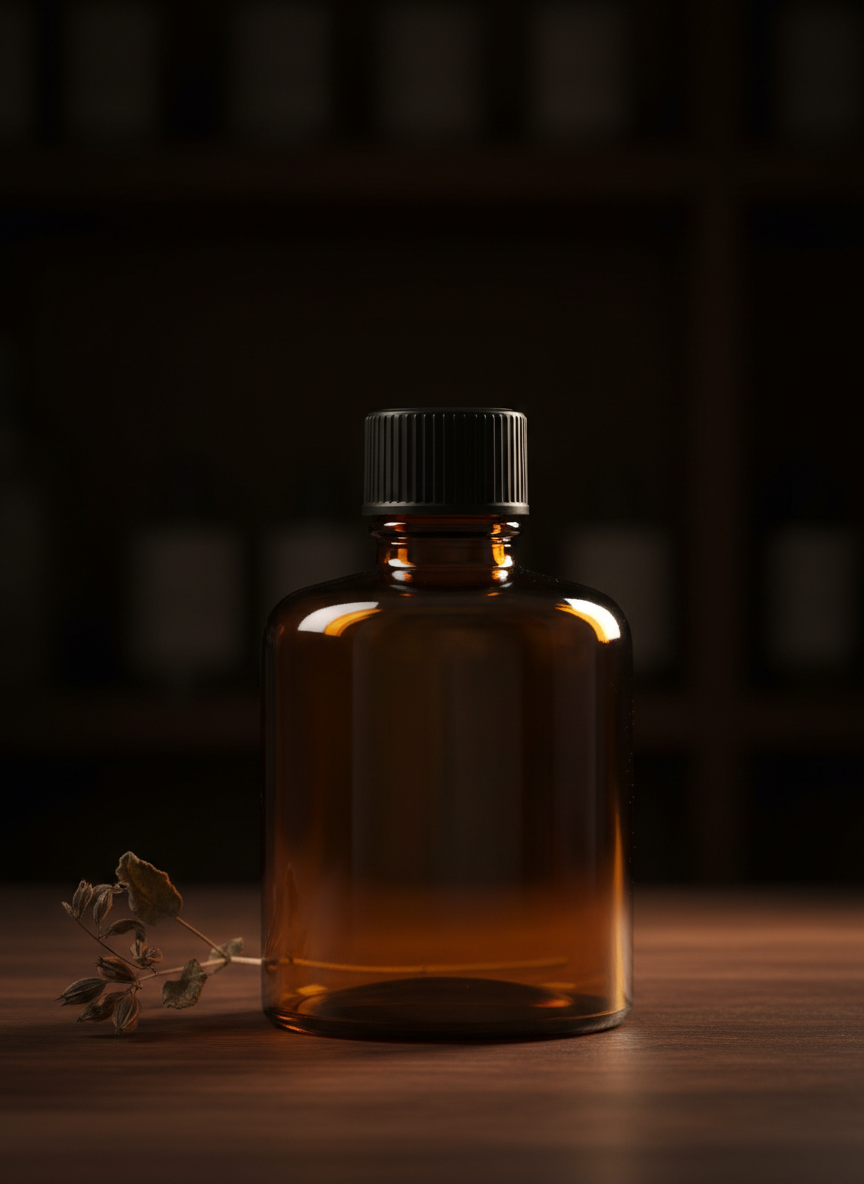
A squat apothecary bottle in thick amber glass with a black ribbed cap, lit by a single low lamp on dark wood with blurred shelves behind it. Amber glass has a function as well as a look — it filters the light that oxidises a fragrance — and it also hides the fill level completely, so nobody ever sees how much is left. Note the closure the model chose: a threaded screw cap, which makes this a splash bottle rather than a spray
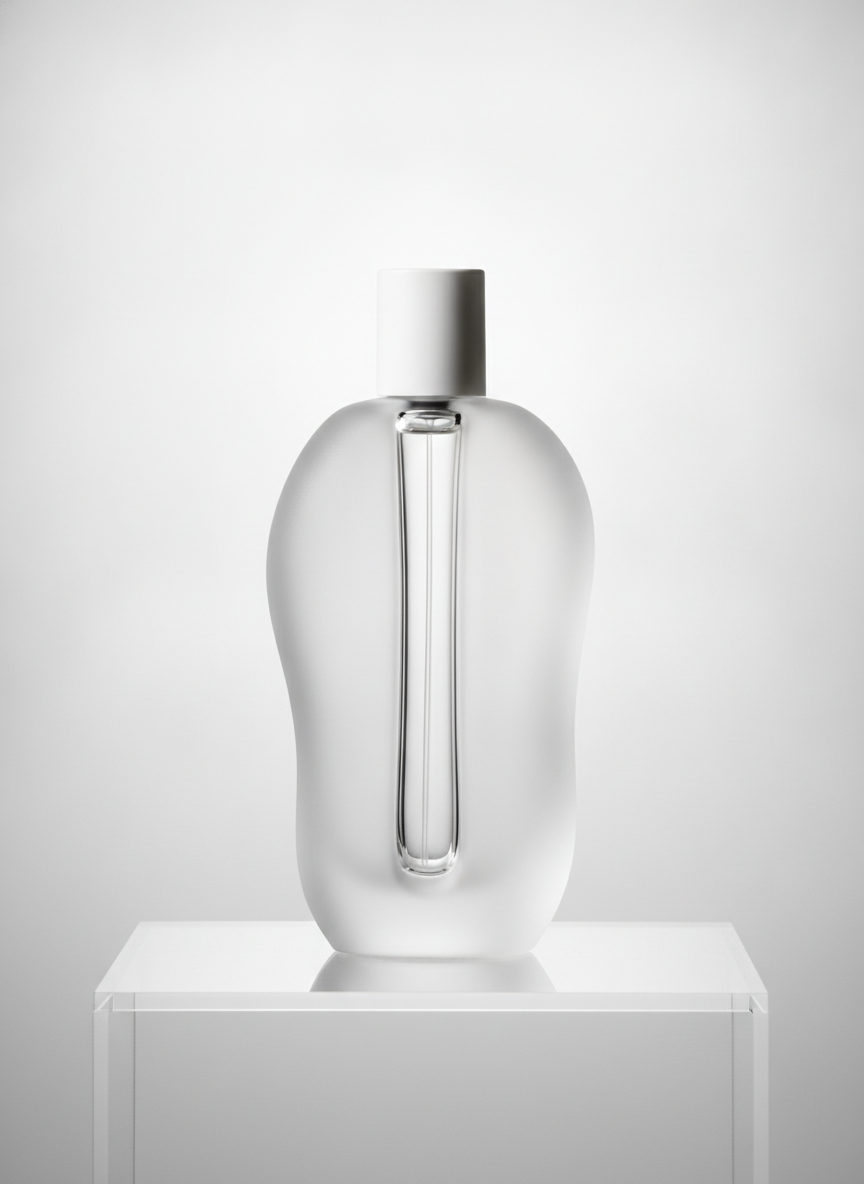
A sculptural bottle where the glass is the entire design: a soft organic form in frosted white with one polished clear window running down the centre, on a white plinth under flat gallery light. Two things to price before falling for it — an asymmetric blown form, and a masked frosting step that leaves that centre strip clear, which is a second decoration operation on top of the bottle. The cap was asked to sit flush with the silhouette and came back sitting proud on a conventional neck, which is roughly what happens in real life too
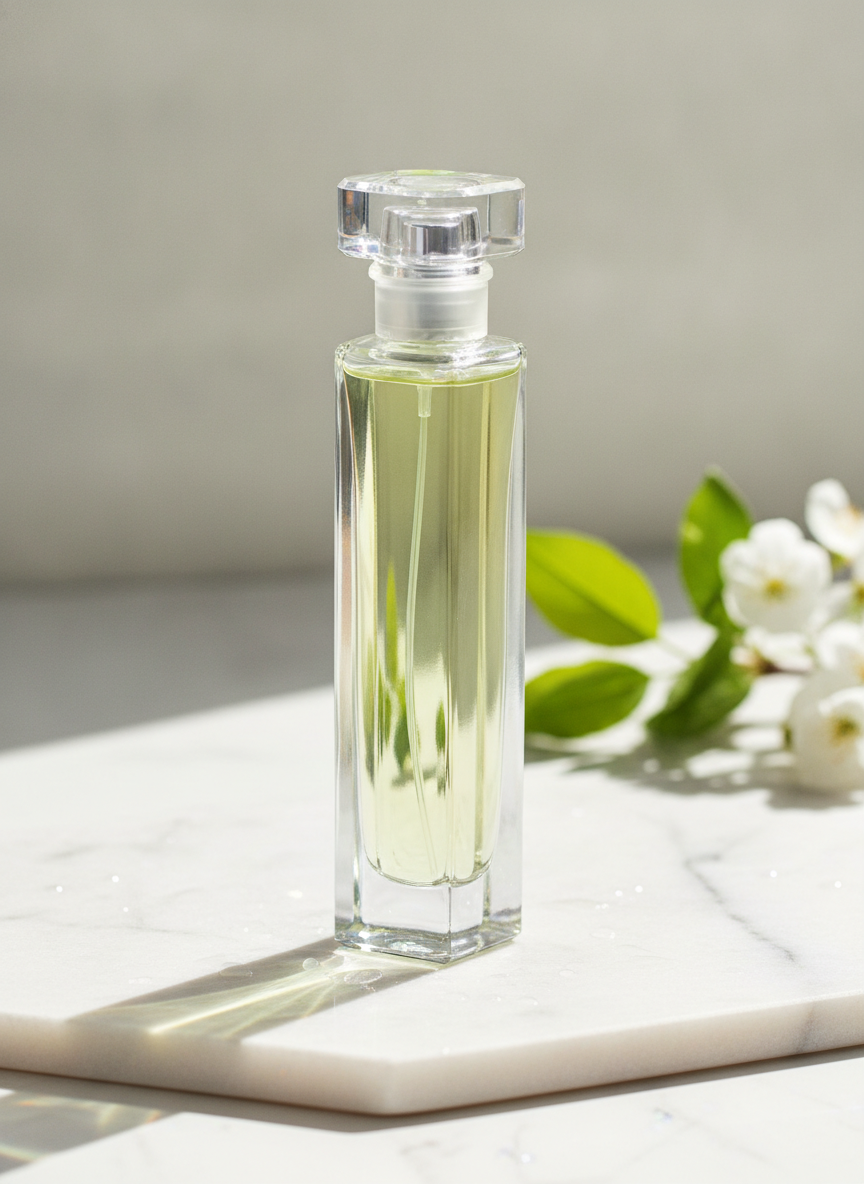
A tall square column of clear glass on white marble, pale yellow-green juice, a thick stepped clear cap and a heavy base. This is the best argument on the page for clear glass: sunlight through the bottle throws a shadow tinted the colour of the fragrance, so the juice describes the scent before anyone smells it. It came back plainer than the sharply faceted prism that was asked for, and with clear glass that is survivable — the base thickness carries the design instead
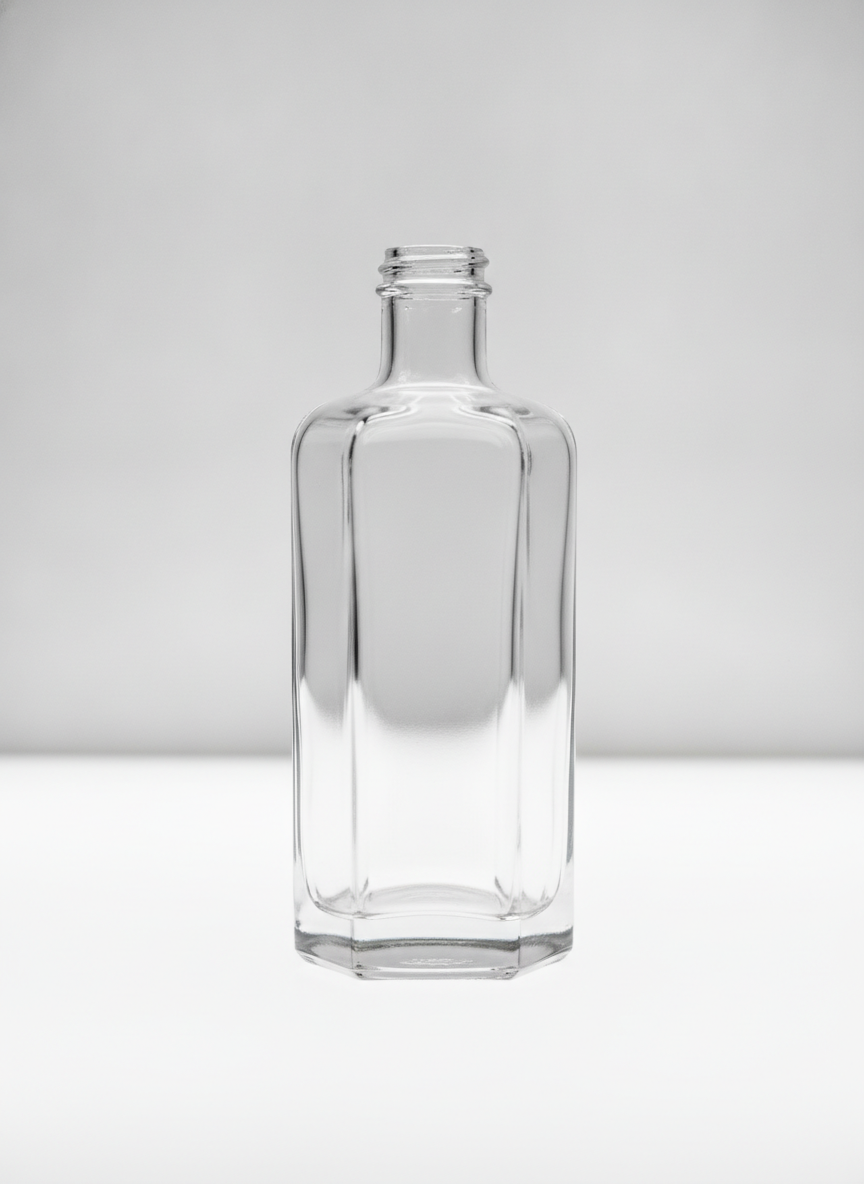
An empty moulded bottle blank with no cap fitted, showing the thick uneven glass in the base, the faint vertical seams up the corners where the two mould halves met, and small embossed marks on the underside. The neck came back with a screw thread rather than the crimp flange fine fragrance usually uses — a useful reminder that the top few millimetres of a bottle are a bought standard rather than a design decision
How the AI Perfume Bottle Design Generator Works
Pick the direction
Classic flacon, niche minimal, sculptural couture, fresh citrus, dark oud or refillable travel. The preset sets the glass treatment and the lighting together, which is what separates a department-store bottle from a chemist-shop one long before the silhouette does.
Add the juice, the cap and the family
Name the fragrance family, the colour you expect the liquid to be and the material and weight of the cap. Keep the same wording across several runs and change one variable at a time — that is how you find out which decision is actually carrying the design.
Take it into a real brief
Renders arrive in about twenty seconds at up to 4K. Attach the one you like to a brief with capacity, neck finish and a target unit cost, and hand it to a stock-bottle supplier, a decorator or an industrial designer — the render settles direction, the drawing settles the bottle.
What Actually Decides a Perfume Bottle Design
Six things settle a fragrance bottle, and only one of them is the silhouette everyone argues about. They are why this AI perfume bottle design generator changes the glass and the lighting between presets, and why a render is a direction rather than a specification.
The glass treatment decides everything
Clear glass makes the liquid the product, so the juice colour has to carry the design. Frosted glass turns the bottle into a soft object and hides the fill level entirely. Tinted glass changes the colour of the fragrance without touching the formula. Opaque lacquer removes the liquid from the conversation. A spray gradient does half of both. Same shape, same juice, five different products — which is what the second gallery image shows in one frame.
The base is where the quality lives
People judge a bottle with their hands within a second of picking it up, and what they are reading is weight and balance. That comes from a base far thicker than the walls, which is also the part of the design a render shows off best, because thick glass bends light and throws caustics. It is also the most expensive glass in the bottle — heft and unit cost are the same decision.
The cap is mass, not decoration
A cap has to be heavy enough to feel deliberate and light enough not to make the bottle top-heavy on a shelf edge, and it has to seat cleanly on a neck it did not choose. Weighted metal, solid resin, wood veneer and magnetic closures all change how the bottle sounds and feels as much as how it looks. Design the cap and the shoulders as one problem.
The neck finish is a standard you inherit
Pumps, collars and over-caps are bought components in fixed sizes — fine fragrance most often uses a crimp neck such as FEA 15. That fixes the diameter and height of the top of the bottle before any design work starts. A render will happily draw an elegant neck that no pump fits, so treat the top few millimetres as a given and design around it.
Glass has to leave the mould
Two-part moulds mean no undercuts, a slight taper on vertical faces, minimum wall thicknesses, and a faint parting line down two opposite sides of almost every commercial bottle. Sharp corners chip and complex asymmetry raises the reject rate and the price. Sculptural is possible; sculptural is just more expensive per bottle, and it is better to know that at the render stage.
It is judged on a shelf, not on a plinth
Studio light flatters every bottle. Retail light comes from overhead, the bottle stands among forty competitors, half of it is behind a cellophaned carton, and most customers see the box before the glass. Test a direction by imagining it small, lit badly and in a row — the designs that survive that are usually the ones with one strong silhouette and one strong material idea.
Why Use This AI Perfume Bottle Design Generator
Six directions, not six filters
Classic flacon, niche minimal, sculptural couture, fresh citrus, dark oud and refillable travel differ in glass treatment, cap mass, liquid visibility and lighting — so switching preset changes what kind of brand the bottle belongs to, not just its colour.
The glass is described, not assumed
Every preset names the finish explicitly — polished, acid-etched, tinted, lacquered, anodised — because that is the variable a generic prompt leaves to chance, and the one that does the most work in the finished product.
Portrait canvas from the first render
The tool renders at 3:4 rather than square, so a tall bottle is composed as a tall bottle instead of being squeezed into a square frame and cropped through the cap at the export stage.
Unbranded by default
The presets explicitly ban wordmarks, engraved caps, neck labels and cartons, and instruct the model not to resemble any existing house — which keeps the render about the glass, and keeps a trade dress problem out of your pitch deck.
Consistent across a range
Nano Banana Pro holds a described style across separate generations, so reusing the same glass and cap wording while changing only the juice gives you a three-bottle range that reads as one family rather than three unrelated products.
Cheap enough to kill an idea early
About twenty seconds per render and plans from $2.99 means finding out that your sculptural favourite looks awkward beside the simple one costs an evening, not a design retainer and three weeks.
AI Perfume Bottle Design Generator FAQ
Related Design Tools
AI Label Generator
The flat artwork that goes onto the glass or the neck. Different job, different file — a die line, real type and legible ingredient text rather than a moulded form.
AI Packaging Design Generator
The carton the bottle is sold in, which most customers see before they ever see the glass. Design the two together and the range holds; design them apart and it usually does not.
AI Product Photo Generator
Once the bottle exists, this is where the listing shots come from — the same object relit for a storefront rather than a concept render for a brief.
Design Your Perfume Bottle Now
Six directions, the glass treatment described rather than left to chance, a portrait canvas from the first render and 4K downloads to attach to a real brief. Free to start, from $2.99 for more.
Start Designing FreeAbout This AI Perfume Bottle Design Generator
An AI perfume bottle design generator is doing something unusual for a design tool: there is nothing to print. A doormat, a label or a carton is artwork applied to a surface, and the design lives in the artwork. A fragrance bottle has no artwork at all until a label is added — it is a moulded glass object, and the design lives in the material. That is why the six presets on this page change the glass treatment first and the silhouette second. Polished clear glass makes the liquid the product. Acid-etched frosting turns the bottle into a soft solid object and hides the fill line. Tinted glass restates the colour of the fragrance without touching the formula. Opaque lacquer takes the juice out of the conversation entirely. The same bottle with the same liquid in it becomes five different products depending on which of those you choose, which is exactly what the comparison image in the gallery above was generated to demonstrate.
The second thing a perfume bottle design generator has to be honest about is that a beautiful render is not a bottle. Glass is pressed or blown into a two-part mould, so the form has to release cleanly: no undercuts, a slight taper on vertical faces, minimum wall thicknesses, a base considerably thicker than the walls, and a faint parting line down two opposite sides that is visible on nearly every commercial bottle once you know to look. The top few millimetres are not yours either — pumps and collars are bought components in standard sizes, most often a crimp neck such as FEA 15, so the neck finish is inherited rather than designed. And an image has no units, so the same render reads as a 5 ml purse spray or a 100 ml statement bottle depending only on what you decide. None of that makes the render useless. It means the render settles direction and the technical drawing settles the bottle, and knowing which document is doing which job is most of what separates a smooth first production run from an expensive one.
For most new brands the realistic path is not a custom mould at all. Glass suppliers hold large catalogues of stock bottles, and a custom tool only pays for itself at tens of thousands of units, so the usual route is to find the catalogue shape closest to your render and put the budget into decoration instead — frosting, spray coating, silkscreen, hot stamping, a custom cap. That is a genuinely good use of a concept render: hand it to a supplier and ask which of their existing bottles is nearest, then discuss what decoration closes the gap. The same render works as a brief for an industrial designer, as the visual for a founder deck or a crowdfunding page, and as a way of killing an idea in an evening rather than after three rounds of paid design. Just label it as a concept when you show it to anyone.
This perfume bottle design generator runs on Nano Banana Pro, and the capability that matters most here is holding a described style across separate generations — reuse the glass and cap wording, change only the juice, and a three-bottle range comes back looking like one family instead of three unrelated products. Renders arrive in about twenty seconds at up to 4K on a 3:4 portrait canvas, unbranded by default, with the presets instructing the model not to resemble any existing house, because established bottle silhouettes are protected trade dress. The fragrance inside is a separate compliance question involving IFRA standards, allergen declarations, cosmetic notification and flammable-goods shipping rules, and no design tool touches any of it. It is free to start and paid plans begin at $2.99, which is less than the shipping on a single sample bottle.