
AI Etsy Listing Image Generator
Etsy gives you ten photo slots and most small shops fill three. This AI Etsy listing image generator builds the six that are hardest to shoot on a kitchen table — the clean first photo, the linen flat lay, the hand held scale shot, the worn shot, the variation lineup and the shop banner — in about twenty seconds each. The light it returns is genuinely lovely. This page is also straight with you about the two things it broke every single time: it redrew the product between frames, and it could not count.
Start Creating FreeTry the AI Etsy Listing Image Generator — Free
Pick the slot you are filling, then describe your actual piece in the box below in as much physical detail as you can bear — material, exact finish, dimensions, closure, where the joins fall. Paste that same description into every preset without changing a word. That habit is the whole difference between six photographs of one product and six photographs of six products, and it is the thing the gallery further down this page is a record of.
AI Etsy Listing Image Generator
Pick a listing slot, describe your handmade piece, and get square listing images at up to 4K
Six Listing Photos, Nothing Retouched
These six came straight out of the presets above with no cropping and no cleanup, from one paragraph of product description pasted into each preset unchanged. The captions say what each frame gets right and what it quietly changed. Taken one at a time most of them are lovely. Taken as a set, the way a buyer swipes them, the problem is impossible to miss.
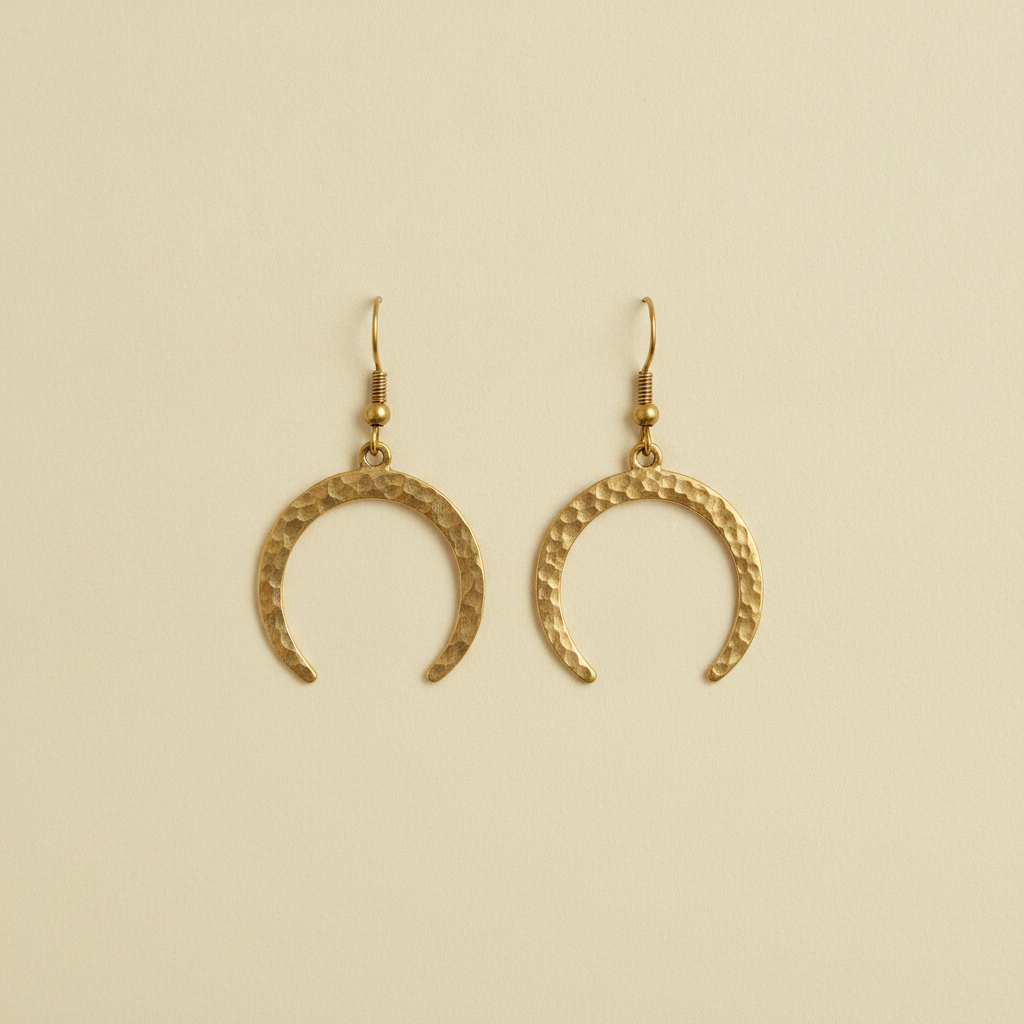
AI Etsy listing image generator result: a pair of hand hammered brass crescent earrings hanging side by side, dead centre, against a seamless warm ivory paper background with nothing else in the square frame. Everything about the craft of this frame is right. The hammered dimpling reads as real planished metal rather than as a texture map, the two earrings genuinely mirror each other, they hang at exactly the same height, the brass is a warm satin rather than a plastic gold, and the frame is completely clean with no prop, no bust, no stand and not one letter anywhere. The single failure is the one number in the brief. The pair was specified to fill about eighty percent of the frame height and came back filling roughly forty, marooned in a wide field of empty ivory. On a marketplace where your first photo is shown as a small square tile next to sixty other small square tiles, that is the whole ballgame, and it is a ten second crop you must remember to do every time.
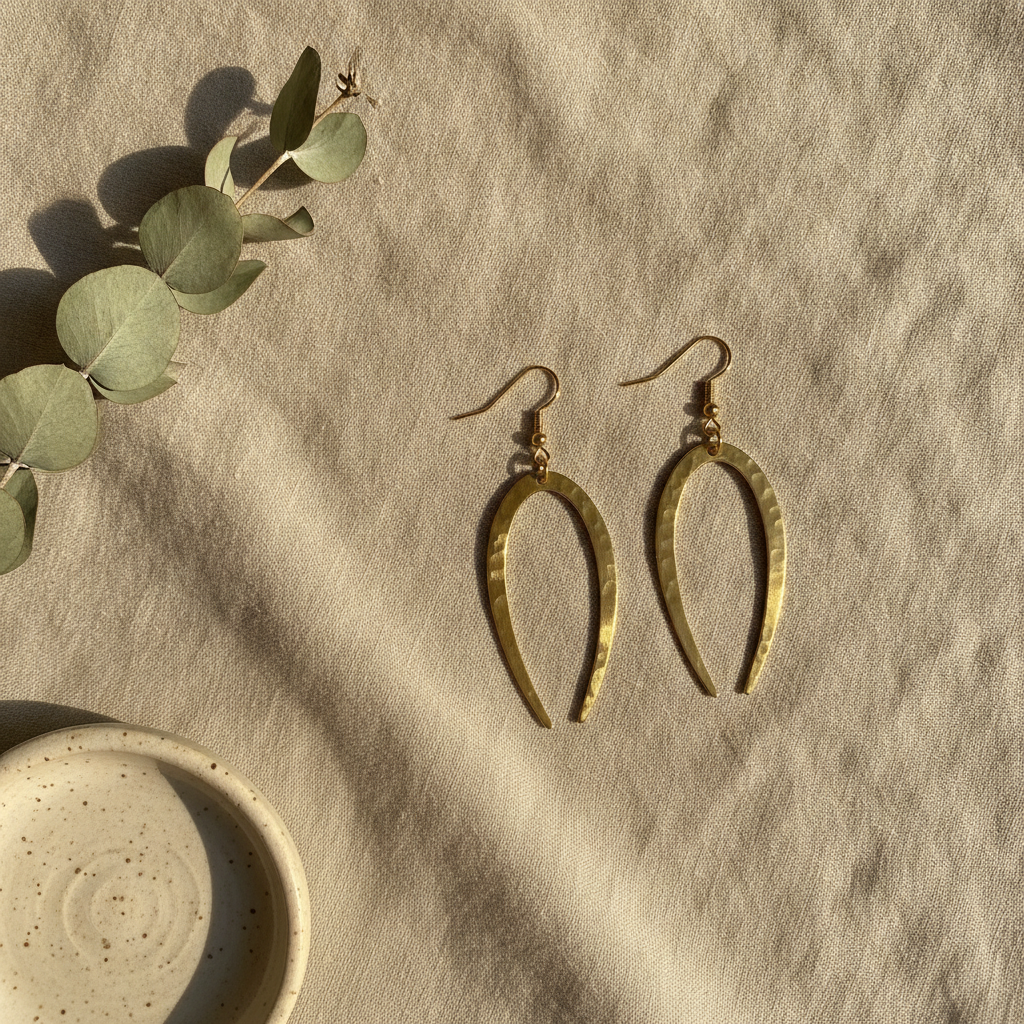
AI Etsy listing image generator result: an overhead flat lay of the brass earrings lying on rumpled oatmeal linen, a dried eucalyptus sprig running across the upper left and a small speckled cream stoneware dish in the lower left, lit by warm low afternoon sun that throws long soft shadows across the cloth. This is the frame you would actually put second in a listing. The light is genuinely raking and directional, the linen creases read as woven cloth rather than as noise, the eucalyptus leaves have the dusty sage bloom that dried eucalyptus really has, and the prop discipline is perfect: exactly the two props asked for arrived and nothing else crept into the frame. Then look at the product. The wide open crescent from the first photo has become a long narrow wishbone, taller, thinner and pointed, with the hammering flattened to almost nothing. Frame one and frame two are already two different earrings.
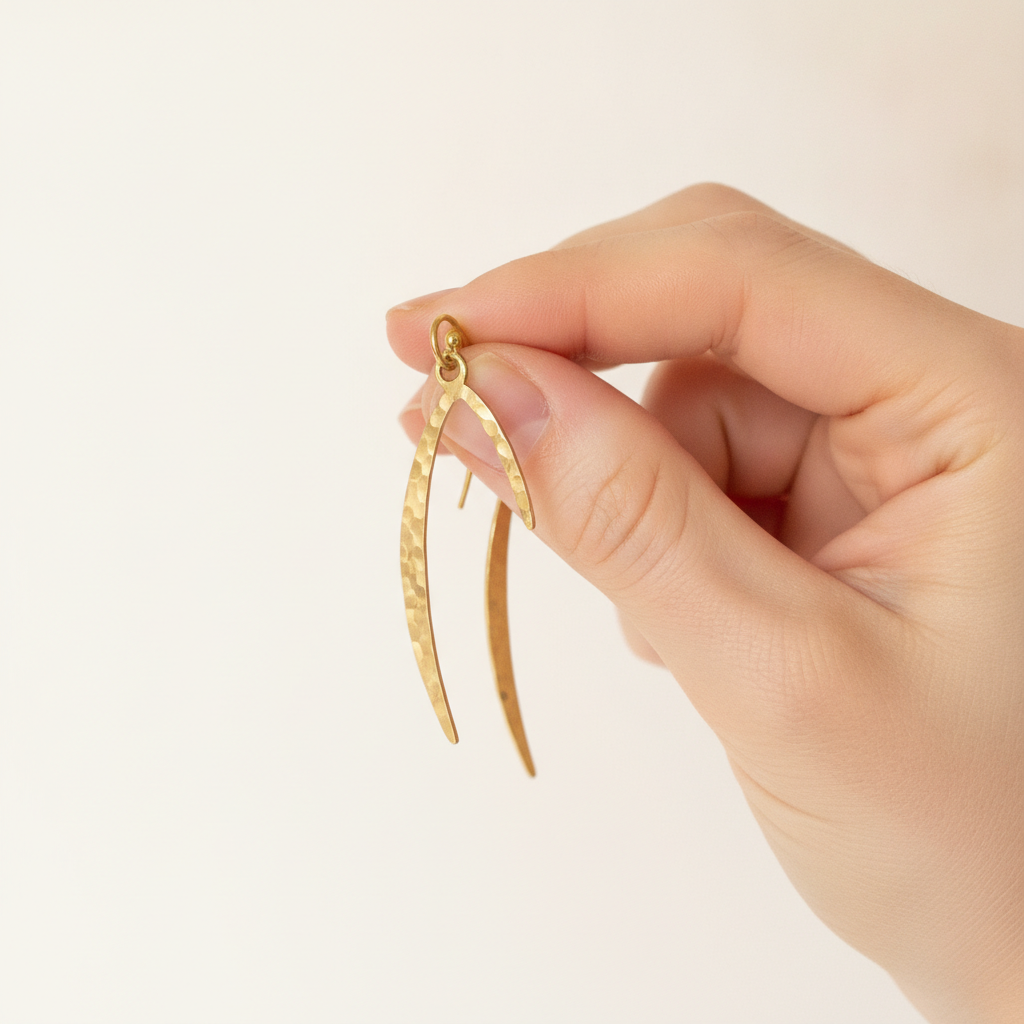
AI Etsy listing image generator result: a scale reference shot with a hand pinching one earring between thumb and forefinger against a plain warm off white background, the second earring hanging just behind it and slightly out of focus. The hand is the part everyone expects to fail and it did not: correct anatomy, believable knuckles and nail beds, a natural pinch grip, no melted sixth finger, no jewellery, no sleeve, and it gives an immediate honest sense of how small the piece is. The background is clean and the brief held on everything it banned, with no ruler, no coin, no tape measure and no lettering anywhere. What it lost was the product again, and this time completely. The closed crescent has become two separate thin curved slivers, the ear wire has vanished behind the fingers on the front earring, and the shape now shares nothing with the first frame except the colour of the metal.
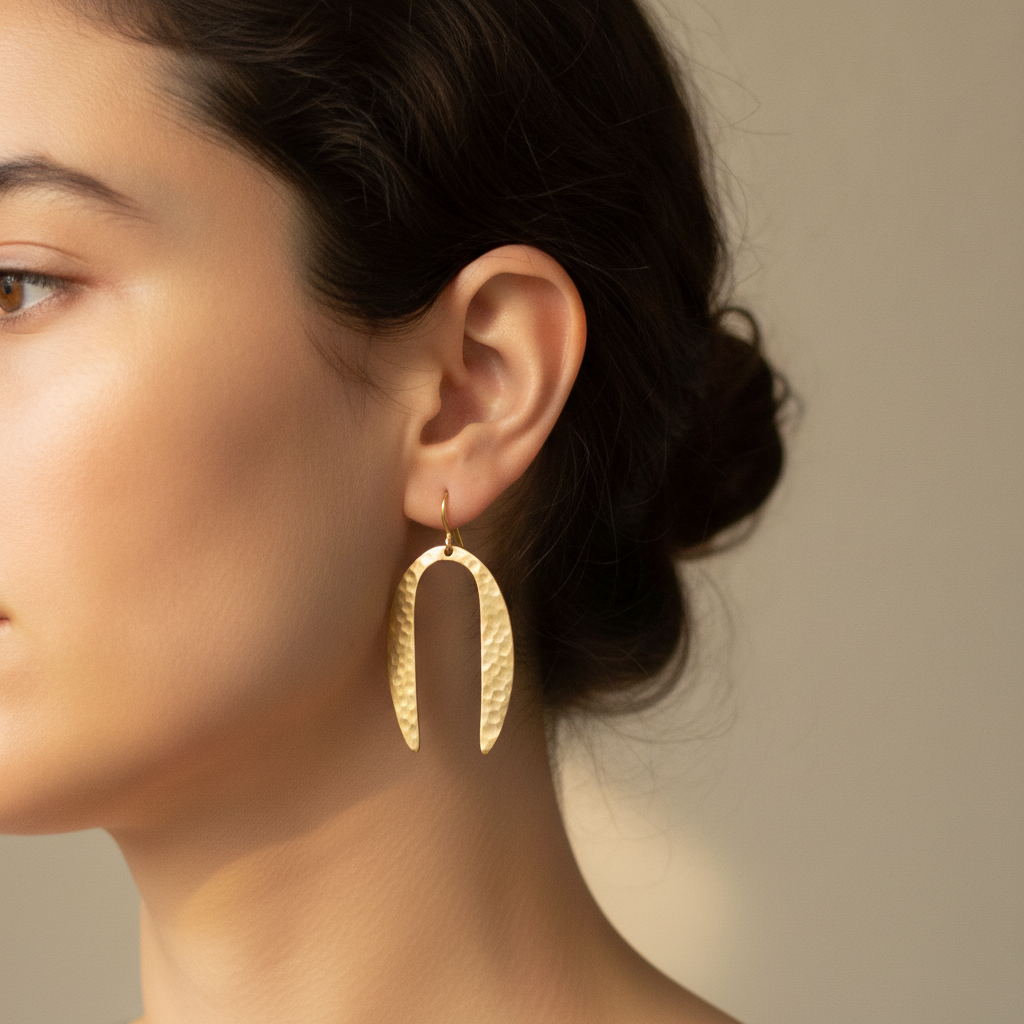
AI Etsy listing image generator result: a worn shot cropped to the side of a head, showing one brass earring hanging from the ear against dark hair pulled back into a low bun, with a soft blurred greige wall behind. As a photograph it is the strongest frame on the page. The window light is soft and directional, the skin has real pores and fine texture instead of the airbrushed plastic this kind of model usually returns, the hair has flyaway strands that catch the light, and the earring sits and hangs the way real metal hangs. Two things are wrong and one of them matters legally rather than aesthetically. The brief said explicitly to turn the face away so that no eyes, no nose and no mouth were visible, and it returned a clear three quarter portrait of an identifiable looking person anyway. And the earring has changed again, into a wide flat inverted horseshoe with the points hanging down, the fourth distinct shape in four frames.
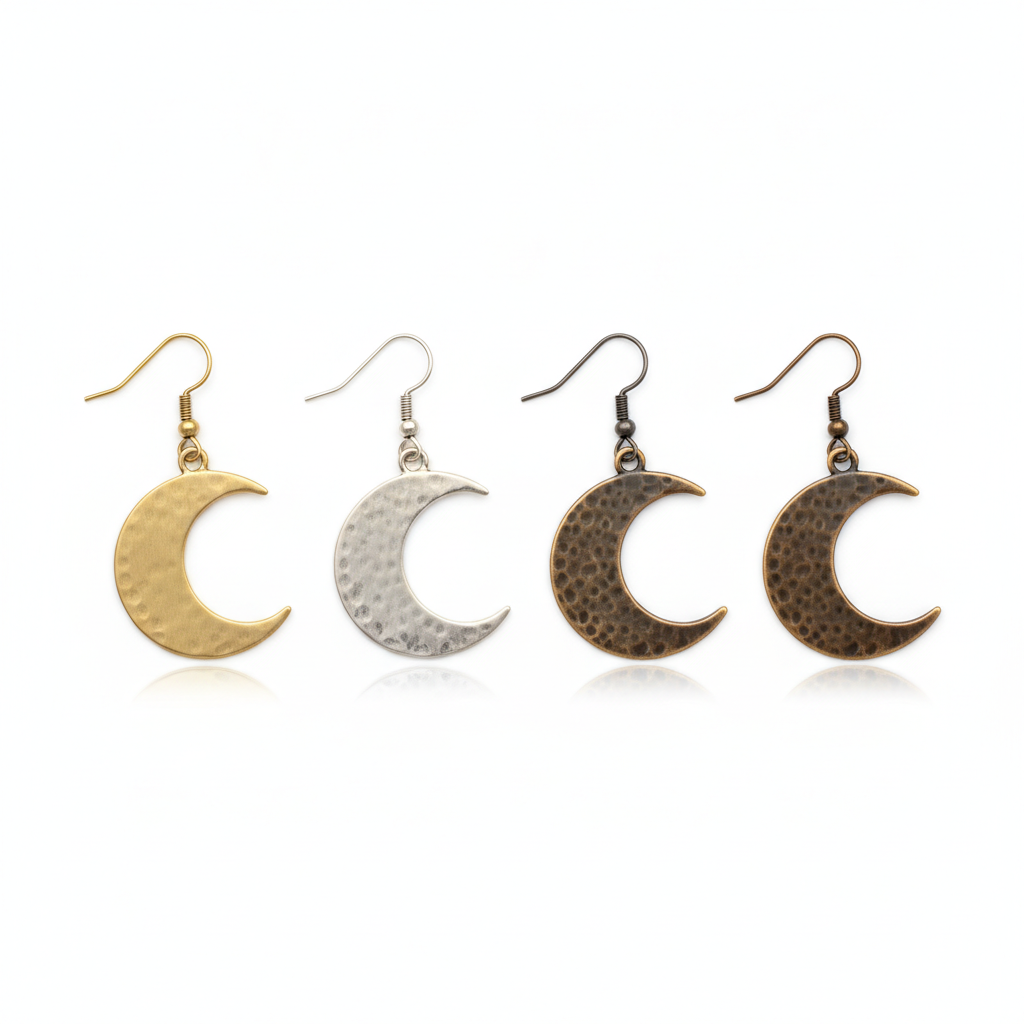
AI Etsy listing image generator result: a variation lineup on pure white showing four single earrings in a row, one polished brass, one brushed silver and two in near identical antiqued bronze. The render quality is genuinely good. The white is flat and even, all four hang at the same height, the lighting is identical across the row, each has its own soft contact shadow, the three finishes are clearly and correctly distinct as metals, and there is no text, no swatch label and no dividing line anywhere. The arithmetic is entirely wrong. Three pairs were asked for, which is six earrings arranged as three tidy couples, and four unpaired singles arrived, two of which are the same bronze finish rendered twice. This is the most reliable failure in the whole series: this model counts fixed fittings well and merchandise badly, so any frame whose job is to show how many things you get needs counting by eye before it goes anywhere near a listing.
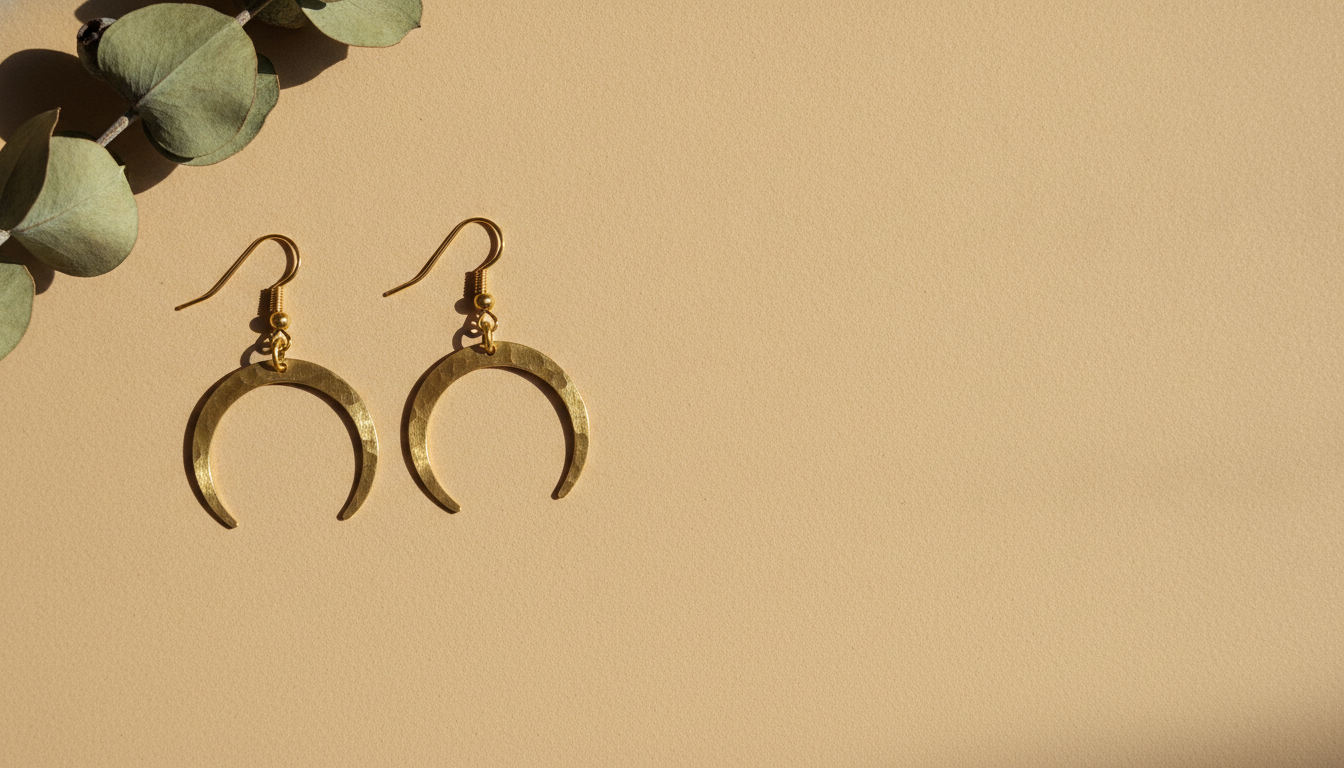
AI Etsy listing image generator result: a wide shop banner with the brass earrings lying flat in the left portion of a warm sand plaster surface, a dried eucalyptus sprig in the top left corner, and the entire right side left as clean empty plaster for a shop name to be typed in later. This is the frame that vindicates the whole approach. The negative space brief held completely: the right two thirds are unbroken warm plaster with no object, no stray shadow, no decorative flourish and, most importantly, not one invented letter. That matters because a banner is the one asset that is supposed to carry your shop name, and a model that renders text will hand you a beautifully lit misspelling of it. The earrings here are also back to the wide open crescent of the first photo, so the set finally has two frames that agree. Two caveats: the piece sits nearer the middle than the left third that was asked for, and this came out at sixteen by nine rather than the wide strip a shop banner needs, so plan on cropping.
How the AI Etsy Listing Image Generator Works
Write the object, not the mood
Material, exact colour and finish, real dimensions in millimetres, the shape of every join, closure and fitting, what the back looks like. Handmade pieces live on those details and they are exactly what the model invents when you leave them out. Write the paragraph once, keep it in a note, and paste it into every preset without editing a single word.
Generate the slot you are missing
First photo, styled flat lay, scale, worn, variations, banner. Each preset is written to a different job rather than a different filter, because a first photo that has to read as a small square tile in search and a banner that has to leave room for your shop name are opposite problems. Run each slot two or three times and pick per slot.
Then crop, count and check the set
Crop the first photo in so the piece actually fills the tile. Count the items in any frame that promises a quantity. Then lay all your finished photos side by side at thumbnail size and hunt for the frame where the product stopped being the product. Regenerate that one. This last pass is fifteen minutes and it is the whole job.
What This AI Etsy Listing Image Generator Nails, and What It Breaks
Every page in this series ends up naming the one thing renders drop. On a marketplace listing for a handmade object it is identity and quantity — which is to say, the two things a buyer is actually paying for.
Five products from one description
This is the headline finding and it deserves the specifics. One paragraph of physical description, pasted unchanged into six presets, produced a wide open crescent, a long narrow wishbone, two thin curved slivers, a flat inverted horseshoe, a solid filled moon, and finally the wide open crescent again. Only frames one and six agree with each other. Every frame is individually convincing, which is precisely what makes it dangerous, because you notice the drift only when the photos are side by side in a listing. Repeat the description verbatim, generate more than you need, and throw away every frame showing an object you do not make.
It cannot count your merchandise
The variation preset asked for three pairs, six earrings, arranged as three couples with a gap between each. It returned four unpaired singles, two of them in the same bronze finish. This matches every other page in this series: fixed fittings and architectural elements get counted correctly, and loose merchandise almost never does. Anything whose job is to communicate how many items a buyer receives — a set, a bundle, a multipack, a colour range — needs counting by eye before it goes near a listing, because a photo showing four when you ship six is a case waiting to be opened.
It will not fill the frame
The first photo preset spelled out eighty percent frame fill in plain words and delivered roughly forty, with the pair adrift in a wide field of empty ivory. On Etsy your first photo competes as a small square tile in a grid of small square tiles, and the one that reads at that size is the one that gets the click. This failure was completely consistent across regenerations, so build the crop into your process rather than hoping. It is ten seconds and it is the highest value ten seconds on this page.
It gave a face we asked it not to
The worn shot brief said, in plain words, to turn the face away so no eyes, no nose and no mouth were visible. It returned a clear three quarter portrait of a plausible looking person. That is worth knowing before you publish, because a listing photo carrying an invented human face raises questions a handmade shop does not want to answer, and because Etsy updates its rules on AI generated content regularly. If you want a worn shot with no model in it, crop hard yourself after the fact, or photograph your own ear.
The text ban held on every frame
The presets carry an unusually long prohibition naming shop names, logos, monograms, hallmarks, stamped maker marks, swing tags, price tickets, thank you cards, packaging print and ruler markings, and across all six frames there is not one letter anywhere. The banner is the proof: asked for a large clean empty area on the right, it returned unbroken warm plaster with nothing written on it. That is the win, because your shop name misspelt in a beautiful serif is the single worst thing a banner can carry.
The craft, honestly, is excellent
The hammered metal reads as planished brass rather than as a texture map. The linen creases behave like cloth. The dried eucalyptus has the dusty sage bloom it really has. The raking afternoon light in the flat lay is directional in a way that is genuinely hard to build at home. The hand in the scale shot came back anatomically correct, which is the classic failure mode. Prop discipline was perfect: exactly the two props requested, nothing invented. What you are buying here is styling and light, and it is worth having.
Etsy Listing Photos in Numbers
The styling is the enjoyable part and these are the parts that decide whether anyone ever sees it. Etsy revises its guidance and its policies regularly, so treat these as the shape of the problem and confirm the current figures in the seller handbook before a launch.
Ten slots and a video
Etsy gives every listing ten photo slots plus a short video. Most small shops upload three. The gap between three and ten is the cheapest conversion available on the platform, and it is mostly made of the shots that are awkward to take at home: scale, worn, variations, packaging and process.
Pixels and shape
At least 2000 pixels on the shortest side, square is the safe shape, sRGB, JPEG or PNG. Your first photo gets cropped differently in search, on the listing page and in the app, so keep the piece away from the edges and never let a crop line fall through the part a buyer needs to see.
The order that works
Clean first photo, styled flat lay, scale shot with a hand, worn or in use, detail macro, variation lineup, packaging as it arrives, maker or process shot. Scale is the slot most shops skip and it answers the question every jewellery and homeware listing gets asked in messages.
Handmade means the photo is the item
Etsy exists because a person made the thing, and the photographs are the promise. Generate freely for backgrounds, banners, mood and planning. For the frames a buyer actually buys from, photograph the real piece, and check Etsy's current policy on AI generated content before you publish.
Why Use This AI Etsy Listing Image Generator
Presets built around the ten slots
Not six filters, six jobs. A clean first photo that has to survive being shrunk to a tile, a styled flat lay that sets a mood, a scale shot, a worn shot, a variation row and a banner. Each preset is written to the constraints of its slot rather than to a look.
A banner with the text space planned in
The banner preset holds two thirds of the frame as clean empty surface and writes nothing on it, so you set your shop name yourself, in your own font, spelled correctly. That is the right division of labour, not a limitation, and it is the only safe way to make a banner with a model that cannot spell.
Styling you cannot buy at home
Rumpled linen, dried eucalyptus, speckled stoneware and low raking afternoon sun. The prop palette that makes handmade listings look expensive takes a shelf full of things and a good window. Here it takes twenty seconds, and the prop discipline held exactly to the brief.
Scale shots with a believable hand
The hardest thing to fake and the slot most shops leave empty. The scale preset returned a correct hand with a natural pinch grip, which answers the how big is it really question that otherwise arrives in your messages three times a week.
Honest about what it cannot do
This page publishes the failures: five different products from one description, four singles when six were asked for, a first photo at half the specified fill, and a face in a frame that explicitly banned one. You should know all of that before you upload, not after a buyer does.
Cheap enough to fill every slot
About twenty seconds an image and plans from $2.99 means the seven empty slots on your best selling listing stop waiting for a free Saturday and good weather. Free to start, square by default, and up to 4K so there is headroom to crop.
AI Etsy Listing Image Generator FAQ
Related Handmade & Marketplace Tools
AI Amazon Listing Image Generator
The opposite rule set. Amazon wants pure white, the product filling eighty five percent of the frame and absolutely no props, where Etsy rewards exactly the styling this page leans on. Use that one when you are cross listing.
AI Jewelry Design Generator
The step before this one. That page designs the piece — silhouette, stone setting, metal and finish — while this page photographs a piece you already make and turns it into a listing. Design there, list here.
AI Product Photo Generator
The general purpose version without the marketplace slots bolted on. Reach for it when you are exploring how a product could be shot rather than filling a specific listing photo slot to a specific set of constraints.
Fill Your Empty Photo Slots
Six handmade listing assets: a clean first photo on seamless ivory, a linen and eucalyptus flat lay in low afternoon sun, a hand held scale shot, a worn in context shot, a variation lineup on flat white, and a wide shop banner with two thirds of the frame left clean for your shop name. All square by default, all up to 4K, all in about twenty seconds. Free to start, from $2.99 for more.
Start Creating FreeAbout This AI Etsy Listing Image Generator
An AI Etsy listing image generator is doing a narrower job than a general product photo tool, and the narrowness is what makes it useful. A listing on a handmade marketplace is not a gallery, it is ten slots that get read in order, and each slot answers a different question. The first photo has to survive being shrunk to a small square tile in a grid of competitors and still say what the thing is. The flat lay sets a mood and tells a buyer what kind of shop this is. The scale shot answers the single most common message a jewellery or homeware seller receives. The worn shot puts the piece on a body. The variation row shows the choice. The banner carries the shop name. Those are six different sets of constraints, and the six presets on this page are written to the constraints rather than to six different aesthetics.
The clearest finding on this page only appears when you stop looking at pictures one at a time. Every individual frame in the gallery above is good, and two or three are better than anything most small shops manage on a kitchen table. The hammered brass reads as real planished metal. The linen creases behave like cloth under raking afternoon light. The dried eucalyptus has the dusty sage bloom that dried eucalyptus actually has. The hand in the scale shot is anatomically correct, which is the thing this class of model is most notorious for ruining. And then you lay all six side by side, the way a buyer swipes them, and the earring is a wide open crescent, then a long narrow wishbone, then two thin curved slivers, then a flat inverted horseshoe, then a solid filled moon, then a wide open crescent again. Five distinct products from one paragraph of description in one sitting. A listing photo set is a continuity exercise before it is a photography exercise, and continuity is exactly what a model that treats every generation as a fresh invention will never hand you for free.
The second finding is arithmetic, and it repeats on every page in this series. The variation preset asked for three pairs, six earrings, arranged as three couples with a clear gap between each, and it returned four unpaired singles with one finish rendered twice. This model counts fixed fittings and architectural elements reliably and counts loose merchandise almost never. If a frame exists to tell a buyer how many things arrive in the parcel — a set of six, a bundle, a colour range — count the objects in the render yourself, every time, before it goes anywhere near a live listing. The related and equally consistent slip is frame fill: the first photo preset specified eighty percent and returned about forty, floating in dead space. Crop it in. Ten seconds, every time, and it is worth more than any prompt you could rewrite.
What went right deserves stating just as plainly, because it is most of the value. The text ban held on all six frames. These presets carry an unusually long prohibition naming shop names, logos, monograms, hallmarks and stamped maker marks, swing tags, price tickets, printed thank you notes, packaging print and ruler markings, and there is not one letter anywhere in the set. The shop banner is the proof of the method: it was asked to leave two thirds of a wide frame as clean empty plaster and it did exactly that, with no object, no stray shadow and no invented lettering, which is the only safe way to build a banner with a model that cannot spell. You generate the background with the negative space planned in, then set your shop name over it yourself, in your own font. Prop discipline held too — exactly the two props requested in the flat lay, nothing invented, which is rarer than it sounds.
The last point is about Etsy specifically rather than about rendering. Etsy exists because a person made the thing, and your listing photographs are the promise that the object in the picture is the object that will arrive wrapped in tissue. A render that invents a silhouette you do not make, a finish you cannot produce or a stone you do not set is a misrepresentation, and on a marketplace built on trust it comes back as a case rather than as a stern email. Etsy also updates its rules on AI generated content and on what counts as handmade, so check the current seller handbook before you publish anything from here. So use this AI Etsy listing image generator for what it is genuinely excellent at: planning the shoot before you clear the table, building the styled backdrop and mood, designing a shop banner with room left for your name, testing whether a clean first photo or a styled one earns more clicks, and filling a draft listing while the real photos are still on the camera. Take the composition, the light and the prop palette from here. Take the item itself, on the frames a buyer buys from, from a photograph of the real piece you made.