
AI Duvet Cover Design Generator
A duvet cover is the only thing you design perfectly flat and then never see flat again. It gets folded back at the head, draped over two sides, pushed into hills by whatever is underneath and half-buried under pillows — and that is the only state anyone ever judges it in. This AI duvet cover design generator is organised around the two decisions that survive all of it: repeat scale and placement. Six layouts, up to 4K, about twenty seconds each.
Try the AI Duvet Cover Design Generator Free
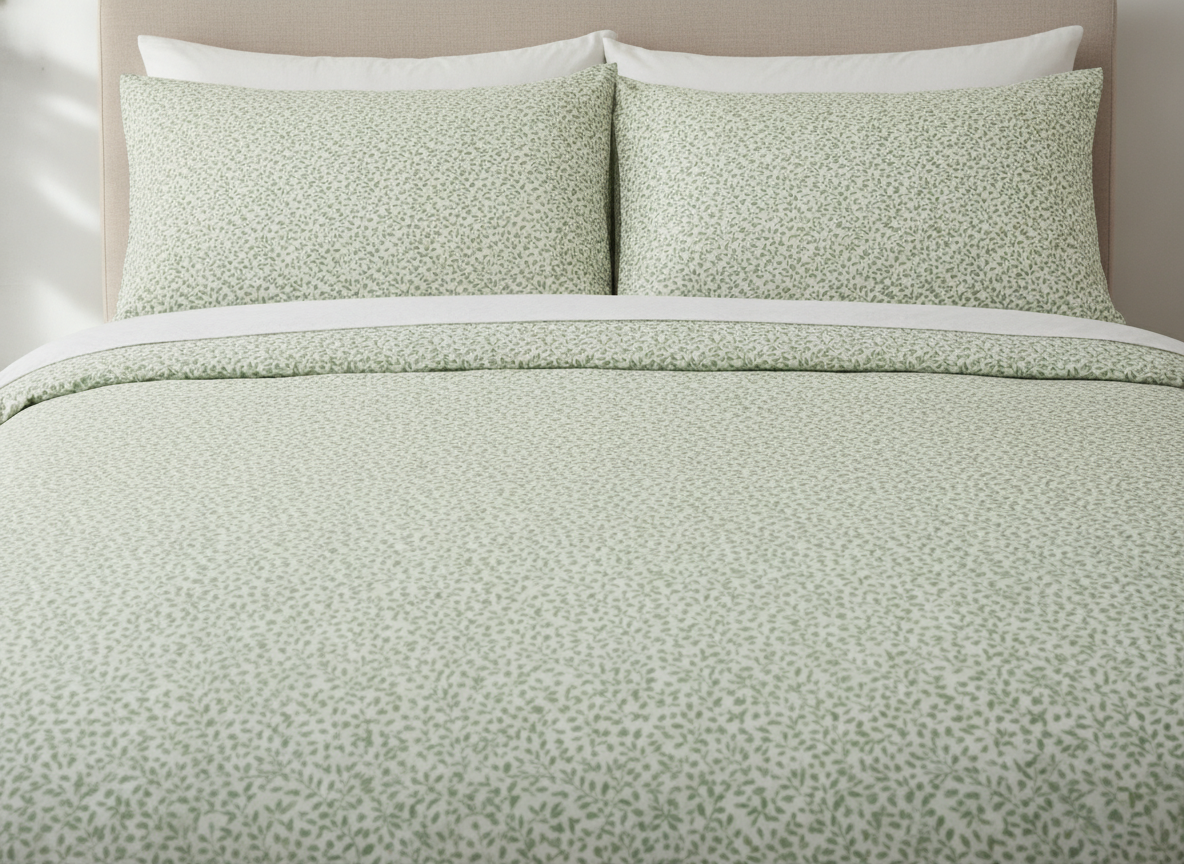
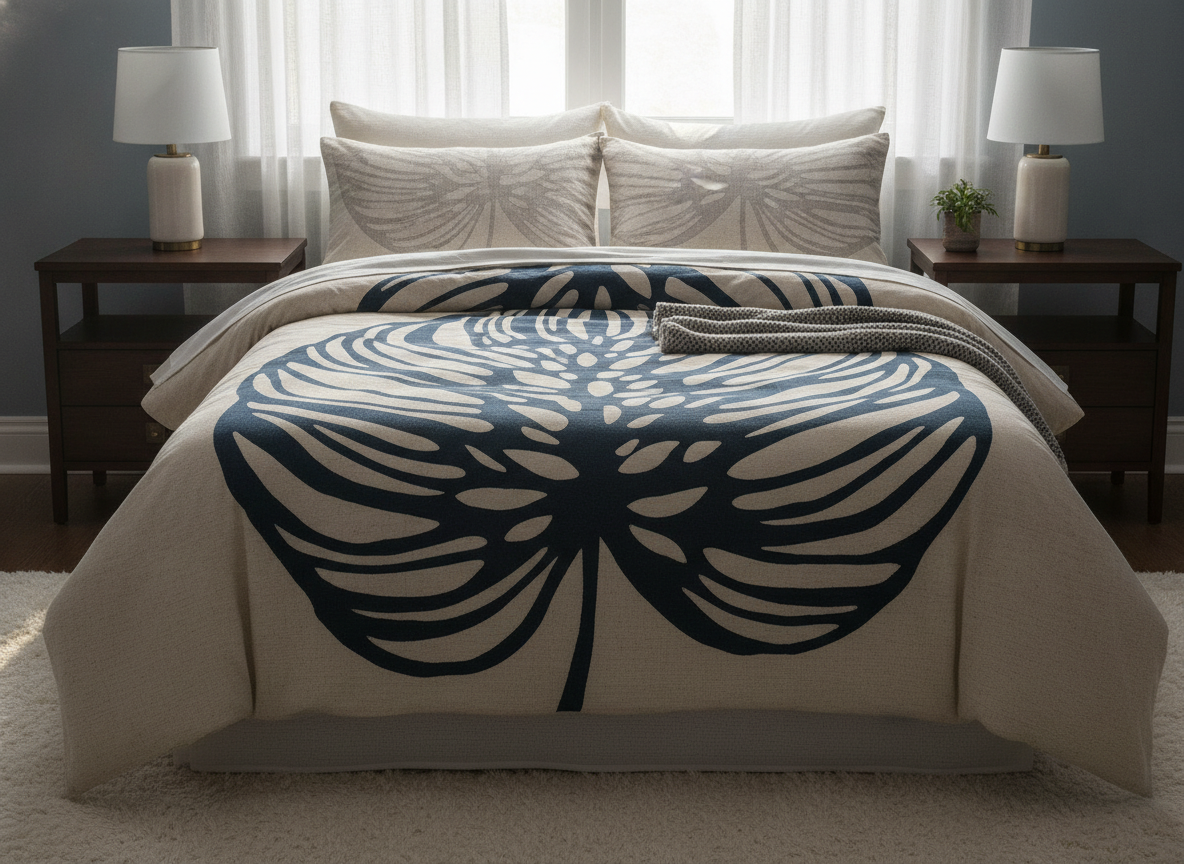
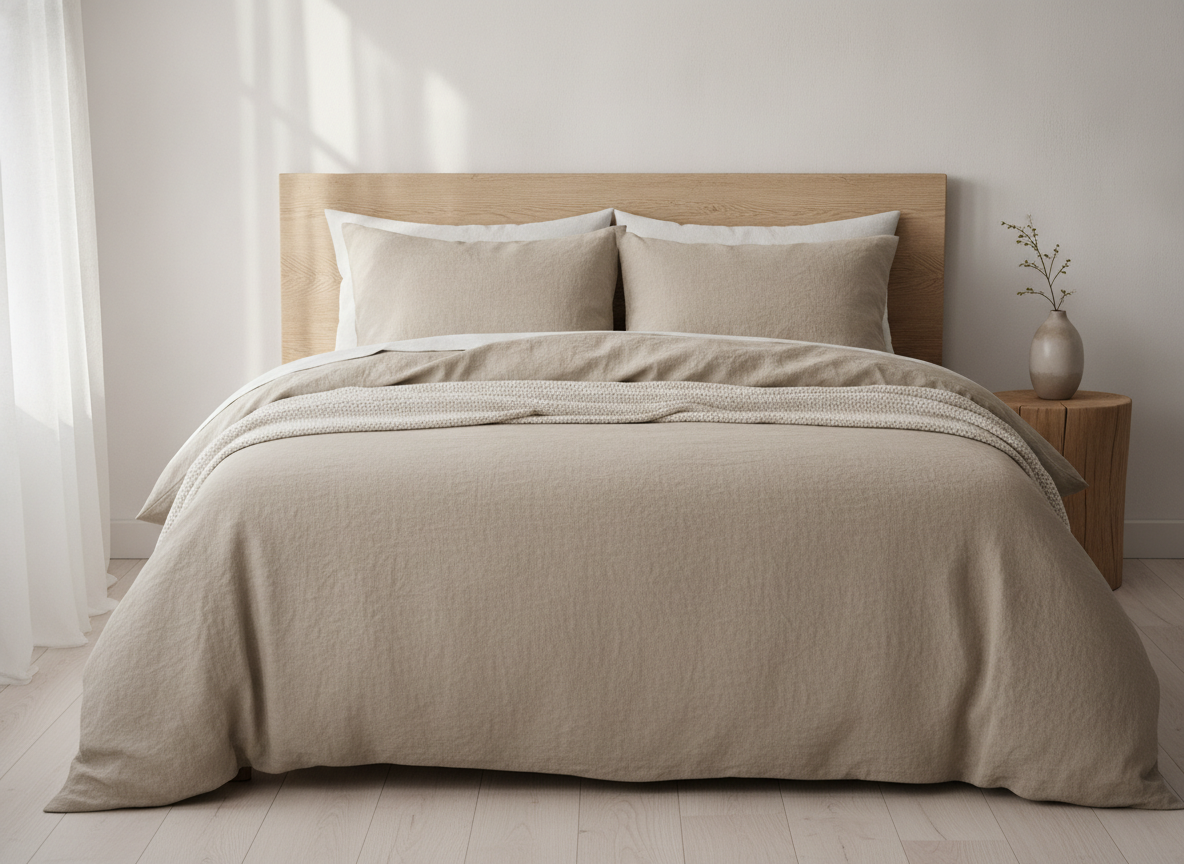
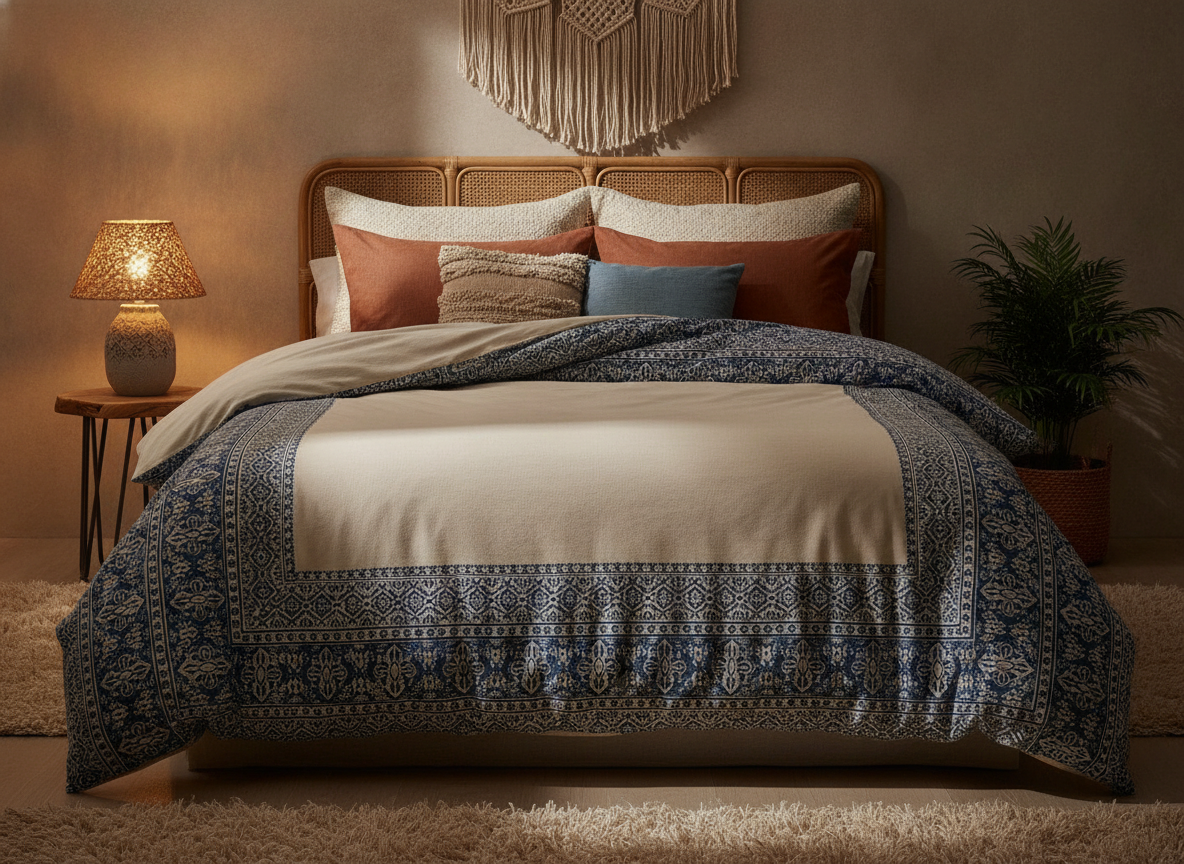
Pick a layout by how much of the bed you want the pattern to carry, not by which thumbnail is prettiest. Ditsy all-over is the forgiving one and the one most retail bedding actually is. Large-scale statement is the risky one. Tonal linen behaves like a plain and reads as expensive. Five presets give you the flat printable surface; the last one styles a coordinated set on a bed so you can judge the drape. Add your own motifs and palette in the box to steer any of them.
AI Duvet Cover Design Generator
Choose a bedding layout, describe your motifs and palette, and get flat duvet cover artwork at up to 4K
What the AI Duvet Cover Design Generator Produces
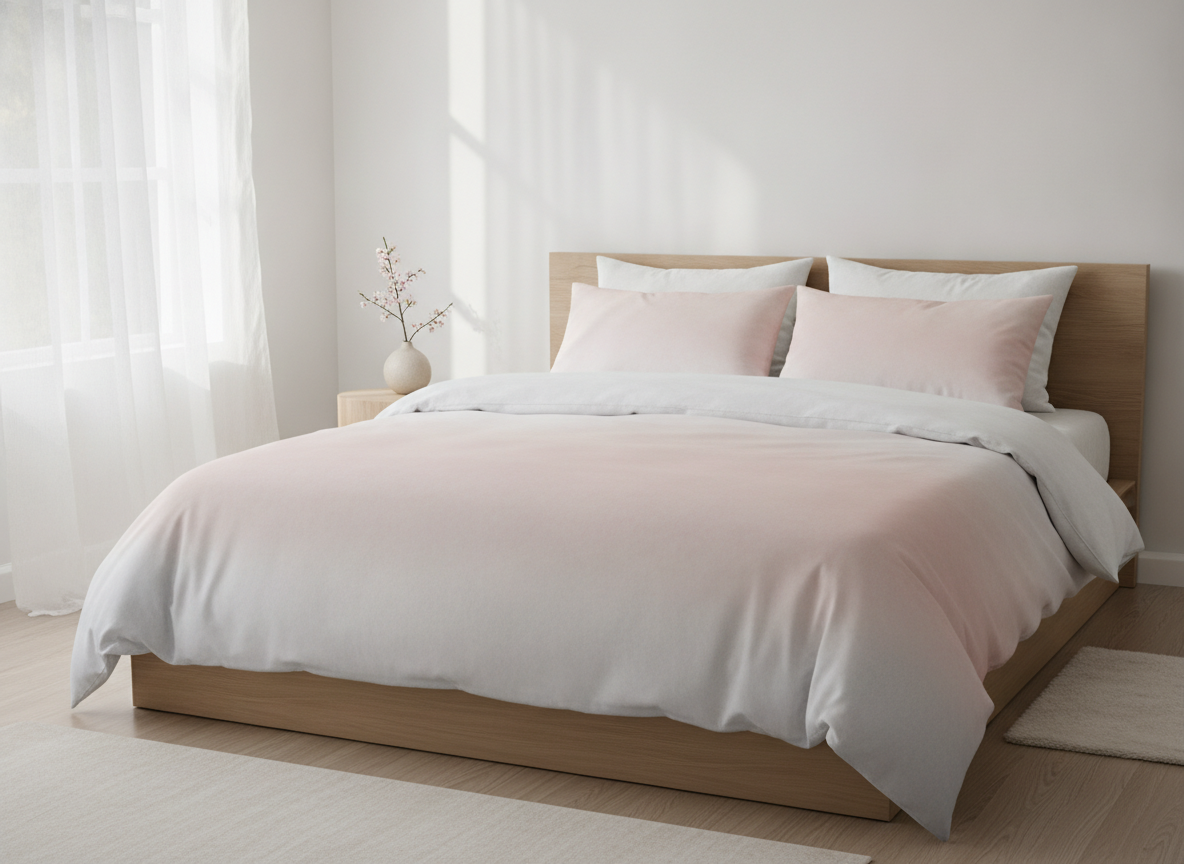
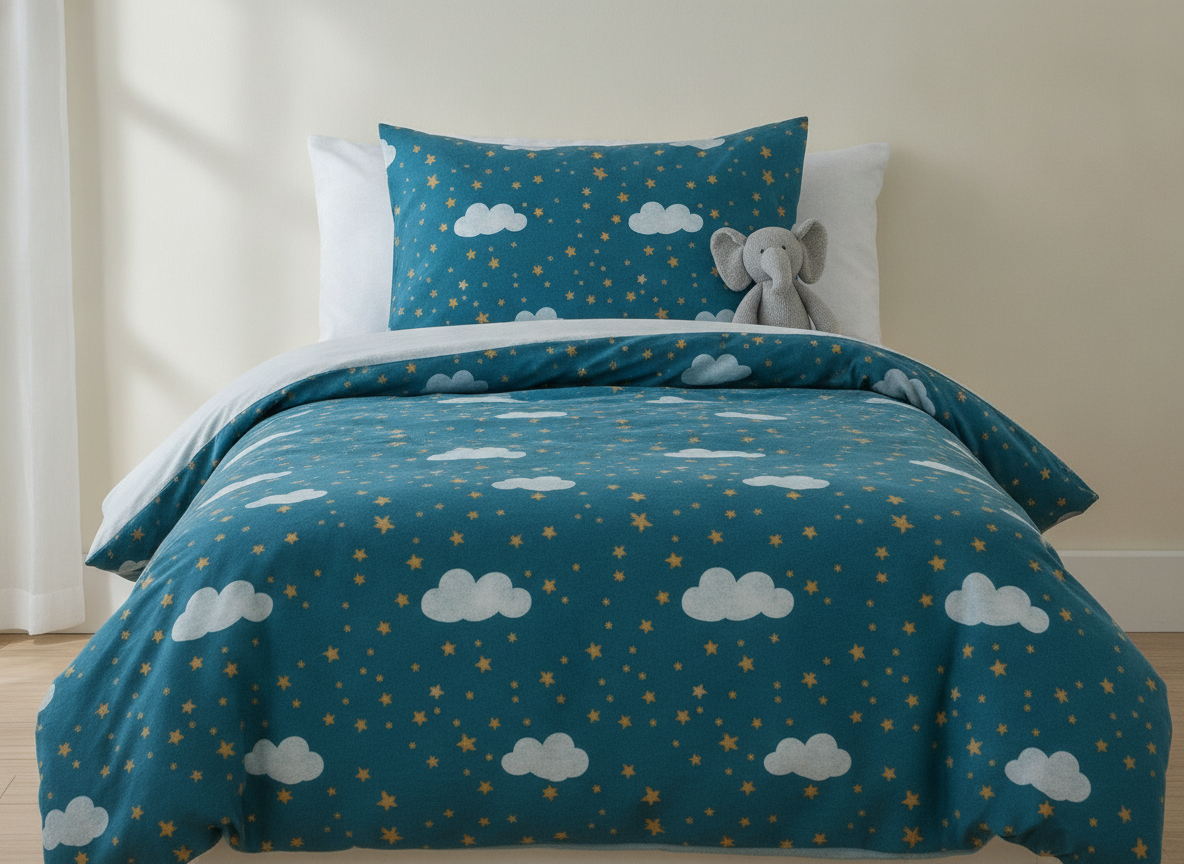
Six layouts, deliberately shown made up on a bed rather than as flat swatches — because a flat swatch is the one view that flatters every design equally and tells you nothing. Watch what the fold at the head and the drape down the sides do to each one.
How the AI Duvet Cover Design Generator Works
Pick a Layout and a Palette
Choose one of six layouts by how much of the bed the pattern should carry, then describe your motifs and colours in the box. Leave it blank and the layout generates its own. Bedroom palettes are quieter than you think — that is a feature.
Judge It at Bed Size, Not Screen Size
Each design takes about twenty seconds. Before you commit, print a section at true scale on paper and lay it on the bed. Almost every first attempt comes back too large, and this is the cheapest possible moment to find that out.
Upscale, Repeat and Send to Print
Download at up to 4K and upscale. For the repeating layouts, your print service steps one tile across the full width rather than printing a single giant file — so the tile is what you supply, plus a coordinating reverse if they offer one.
Why Use This AI Duvet Cover Design Generator
Any image generator can make an attractive pattern. Very few of them are set up for two square metres of cloth that spends its whole life folded, draped and slept under.
Six Layouts, Not Six Styles
Each preset is a different relationship between the pattern and the bed — dense ditsy repeat, oversized statement, near-plain tonal weave, one-sided border with an open field, continuous gradient, and a coordinated set. The palette is yours to choose; the layout is the decision that actually matters.
Built Around Repeat Scale
The single most common mistake in custom bedding is a motif that looked charming on a laptop and arrives the size of a dinner plate. Every preset states its intended real-world scale in the prompt, so the model composes for two metres of fabric rather than for a thumbnail.
Flat Artwork, Plus a Drape Preview
Five presets give you the flat printable surface, which is what a bedding print service actually asks you to upload. The sixth styles a coordinated cover and pillowcases on a made bed, so you can see how a design behaves once it is folded before you order anything.
Designed for the Turn-Back
The top of a duvet cover is folded over, which means the inside of the fabric is permanently on show and the top band of your artwork is not. The border layout is built for that fold specifically, and the set preset renders a coordinating reverse rather than pretending the back does not exist.
It Makes Artwork, Not a Sewn Product
Said plainly because it saves a wasted upload: there is no manufacturer template, no seam allowance, no closure and no size chart baked in. This tool settles what the fabric should look like. Your bedding service handles panels, hems, buttons or zip, corner ties and sizing.
4K Output for a Two-Metre Print
Resolution matters more here than almost anywhere else on this site, because the finished object is wider than a person is tall. Start at the highest resolution your plan allows, upscale, and let the printer step your tile across the width rather than stretching one small render.
What Makes a Good Duvet Cover Design
Five things that decide whether your bedding looks like a product or looks like a printed bedsheet.
You design it flat and you will never once see it flat
This is the whole problem in one sentence. A made bed turns your rectangle back over itself at the head, hangs two long strips of it vertically down the sides where they are seen almost edge-on, lifts the middle into soft hills and then parks two pillows on the part you were probably most proud of. Every instinct that serves a poster — centre the subject, balance the composition, leave breathing room — puts your best work somewhere it cannot be seen. All-over repeats win in this category because they have no right way up and no wrong fold.
Repeat scale is the entire decision, and everyone gets it wrong the same way
A double cover is about two metres square; a king is wider than most sofas are long. A motif judged at fifteen centimetres on a screen lands on the bed four or five times that size, which is how a delicate floral becomes wallpaper. Under five centimetres reads as texture from the doorway and is the safe choice. Ten to twenty centimetres is where most retail bedding sits. Over thirty centimetres is a statement that needs placing rather than repeating. Print one section at true size and put it on the bed — it costs a sheet of paper and it settles the argument.
The reverse is not hidden, it is the top of the bed
Because the cover folds back over the quilt, the inside face is on display along the entire head end whenever the bed is made — often thirty or forty centimetres of it, right where the eye lands first. Print services frequently leave the reverse plain white, which passes unnoticed under a pale design and looks like an error under a deep one. The retail convention is a coordinating reverse rather than a matching one: the same motif at a smaller scale, or a flat tone lifted from the palette. Deciding this on purpose is most of what makes a set look designed.
The print method sets the palette before taste does
Print-on-demand bedding is usually dye sublimation onto polyester microfibre — brilliant saturated colour edge to edge, fine detail held cleanly, but a warmer night and a slight sheen. Cotton percale and sateen are reactive-dye printed, breathe far better and survive years of hot washing, but return colour a little softer and more muted than your screen promised. Neither process has white ink: white in your file is simply undyed fabric. That makes a pale ground the cheapest and most predictable choice, and a deep saturated ground the one most likely to show wear along the fold lines first.
You have to sleep next to it, and wash it every week
Bedding is judged twice — once in a listing photograph in bright styled daylight, and every night afterwards in a dim room by someone trying to stop thinking. High-contrast graphic designs win the first test and lose the second, which is why the whole category skews tonal, mid-scale and quiet even though the bold ones photograph better. Then there is laundry: a duvet cover is the most-washed large textile in a house, so mid-tones and slightly broken grounds age gracefully where a flat expanse of deep indigo shows every fade line.
Tools That Pair With This One
Pillow Design Generator
Cushions are the other half of a bedding set, and they are where a scaled-down version of your duvet motif belongs.
Pattern Generator
For the seamless repeat tile itself, when you want the motif and the tiling worked out apart from any one product.
Image Upscaler
Take a 4K tile up to the pixel width a two-metre bedding print asks for before you hand it to a fabric printer.
AI Duvet Cover Design Generator FAQ
Settle the Pattern Before You Order the Fabric
Twenty seconds and no sign-up to see whether your idea holds together at two metres across. Considerably cheaper than finding out from a delivered sample.
Start Designing FreeAbout the AI Duvet Cover Design Generator
This AI duvet cover design generator creates the printed surface a custom duvet cover is made from, using Nano Banana Pro. Choose one of six layouts — ditsy all-over, large-scale statement, tonal linen, border and open field, gradient wash, or a coordinated bedding set — describe your motifs and palette if you have them in mind, and the model produces flat artwork at up to 4K in about twenty seconds. It is free to start with no account required, and what comes back is what a print-on-demand bedding service asks you to upload: the design itself, with panels, hems, closures and sizing left to the manufacturer.
What separates a duvet cover design generator from a general pattern tool is that bedding is a whole-surface product with no focal point and no margin. Two square metres of fabric get folded back at the head, hung down two sides and slept under, so the composition you approve on screen is never the composition anybody sees. That is why the presets here are organised by repeat scale and placement rather than by art style. A ditsy repeat is forgiving because it has no correct orientation; an oversized motif is a genuine risk that has to be placed on purpose; a tonal linen behaves like a plain and reads as expensive; a one-sided border is designed around the turn-back; and a gradient runs head to foot, so it is the one layout with a fixed direction.
People use this AI duvet cover design generator for three broad jobs. Home makers design one cover for their own bedroom, usually because nothing in the shops matches a wall colour or a headboard they already own. Print-on-demand sellers develop a coordinated bedding range — cover, pillowcases and a coordinating reverse — across several colourways without commissioning a surface designer for each one. And interior designers and stylists generate options at speed to show a client what a scheme feels like before anything is sourced, which is the same job the bedroom design generator does for the whole room rather than the textile.
Two limits are worth stating plainly. First, this produces artwork rather than a sewn product: there is no manufacturer template, no seam allowance and no size chart in the file, so your bedding service handles construction and you handle the surface. Second, scale and resolution deserve real attention, because a king cover is roughly 230 by 220 centimetres and a 150 dpi file at that width runs past 13,000 pixels — well beyond a single generation. The professional route is a seamless tile that a printer steps across the width, which is also why a design that looks perfect on a laptop so often arrives at four times the intended size. This AI duvet cover design generator settles what the fabric should look like; print one section at true scale, lay it on the bed, and let that decide before you order.