
AI Aquarium Design Generator
Settle the layout before you buy forty kilos of stone. This AI aquarium design generator turns a description into a finished aquascape photographed in a real glass tank in about thirty seconds — Iwagumi, Dutch, reef, nano, driftwood forest and blackwater. All six results are below exactly as they came back, including the forest that was asked for seven trees and grew ten.
Design an Aquarium FreeTry the AI Aquarium Design Generator — Free
Pick a layout, then use the box for what is specific to your build — the tank you already own, the wood in your garage, the fish you actually keep. Each preset already carries the hardscape placement, the substrate slope, the water and refraction rules, the camera height and the no-lettering list, all tightened after reviewing what came back the first time.
AI Aquarium Design Generator
Choose a layout, name your hardscape, plants and fish, and get a photorealistic aquascape built in a real glass tank. Up to 4K.
Six Results From This AI Aquarium Design Generator, Shown Exactly As They Came Back
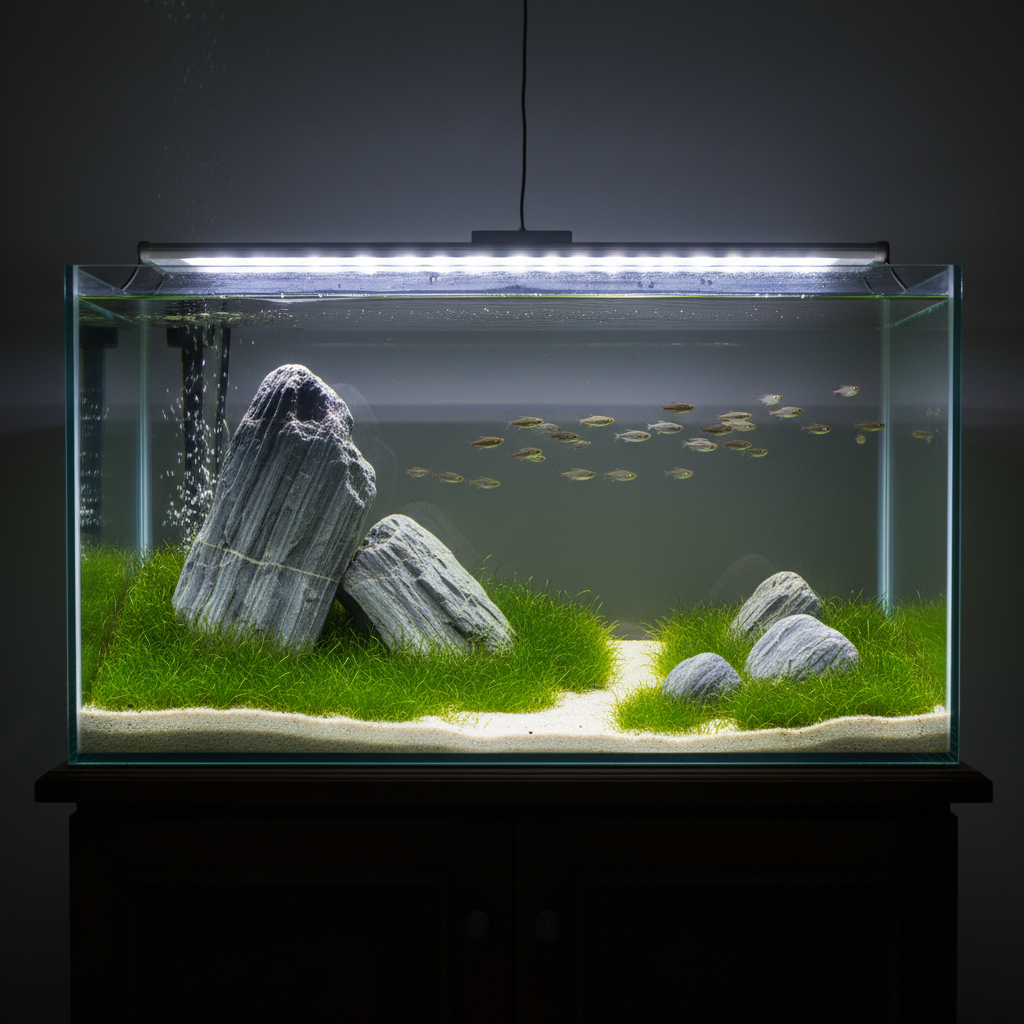
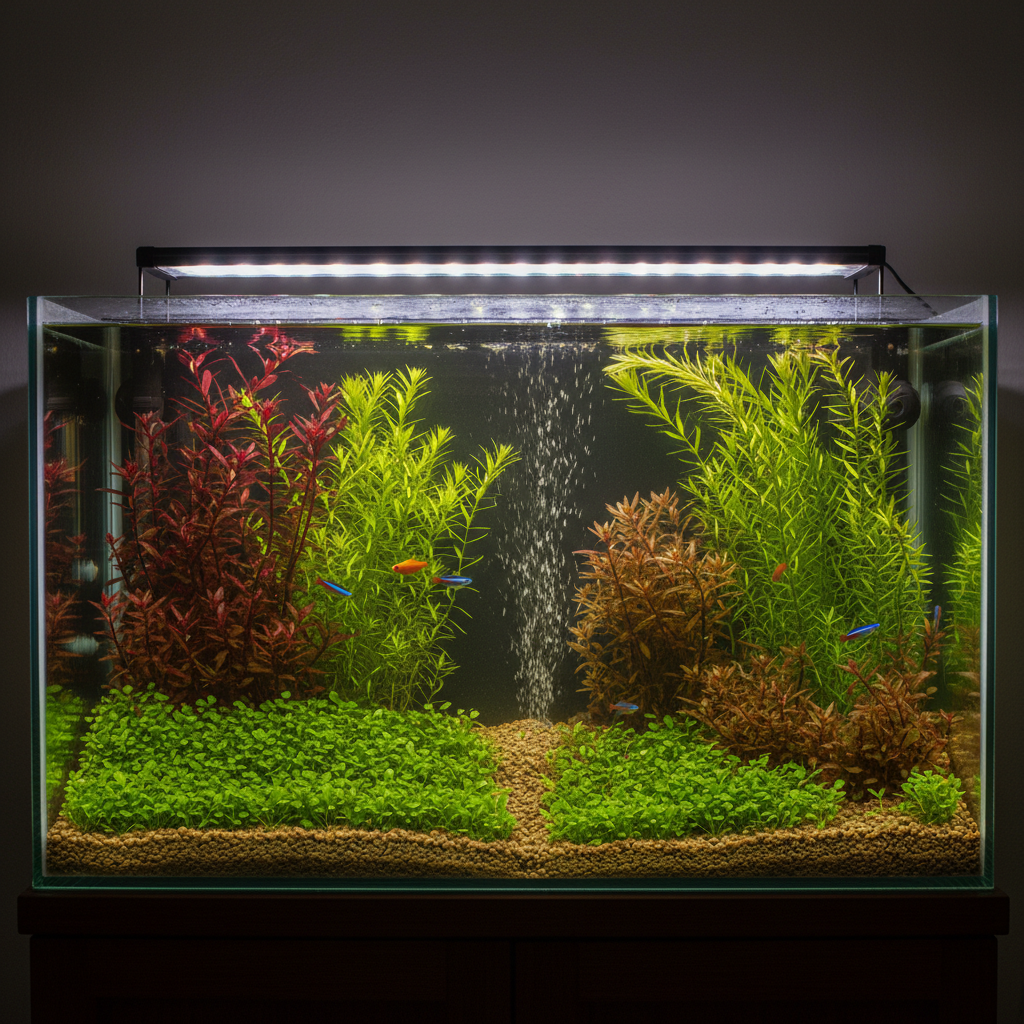
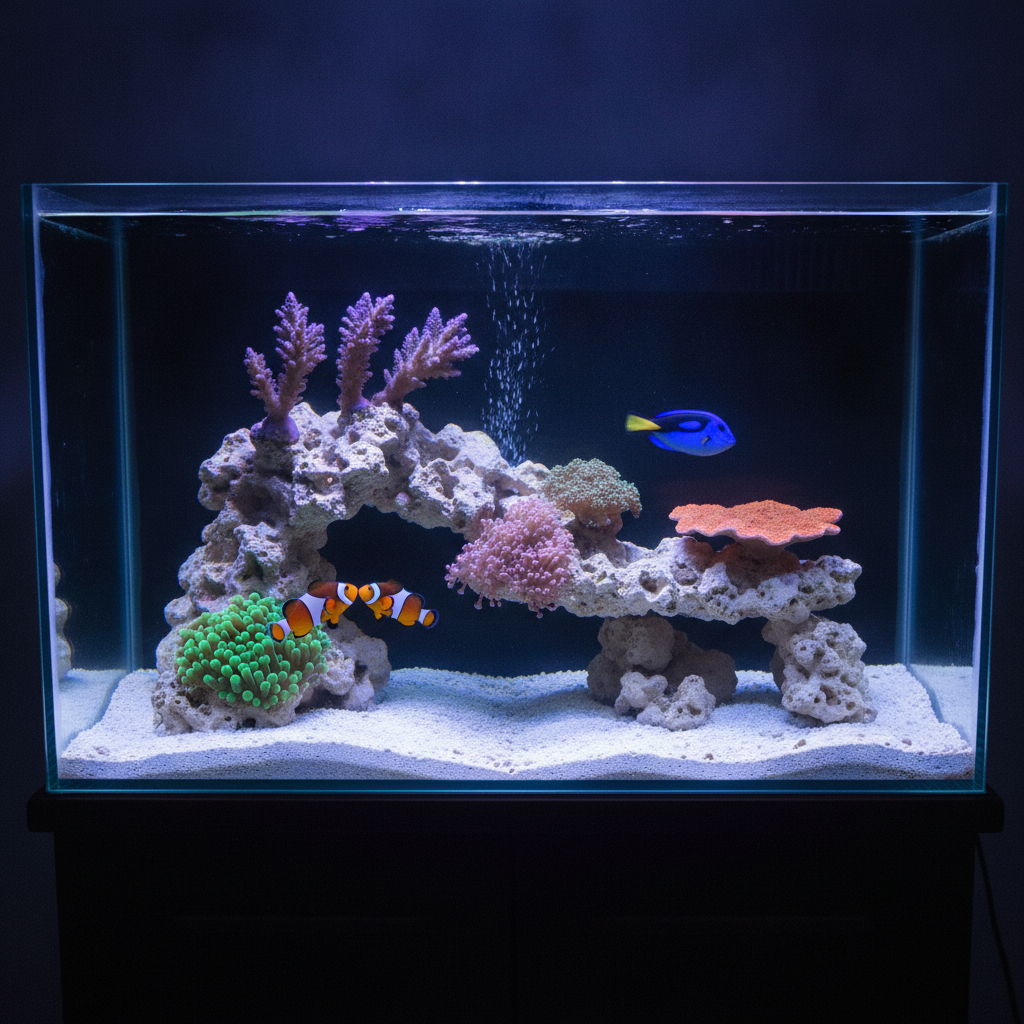
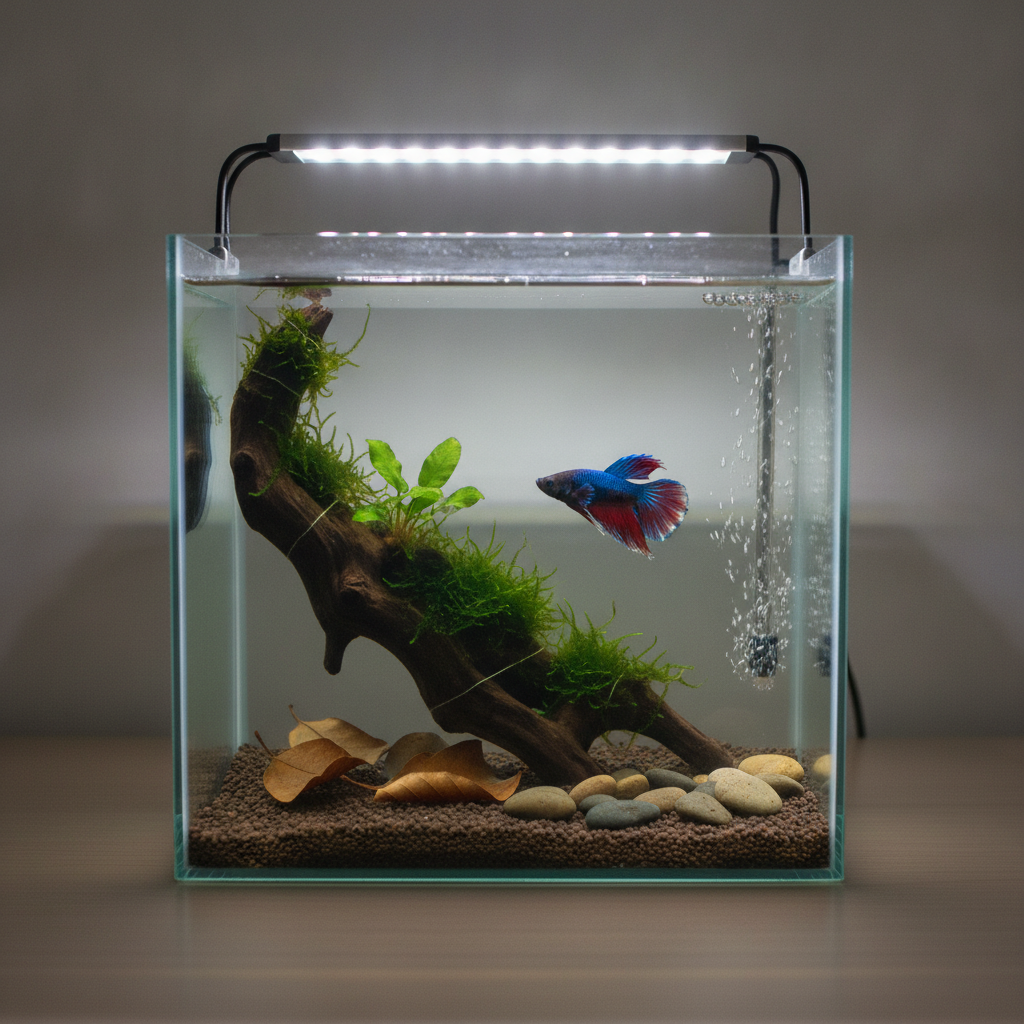
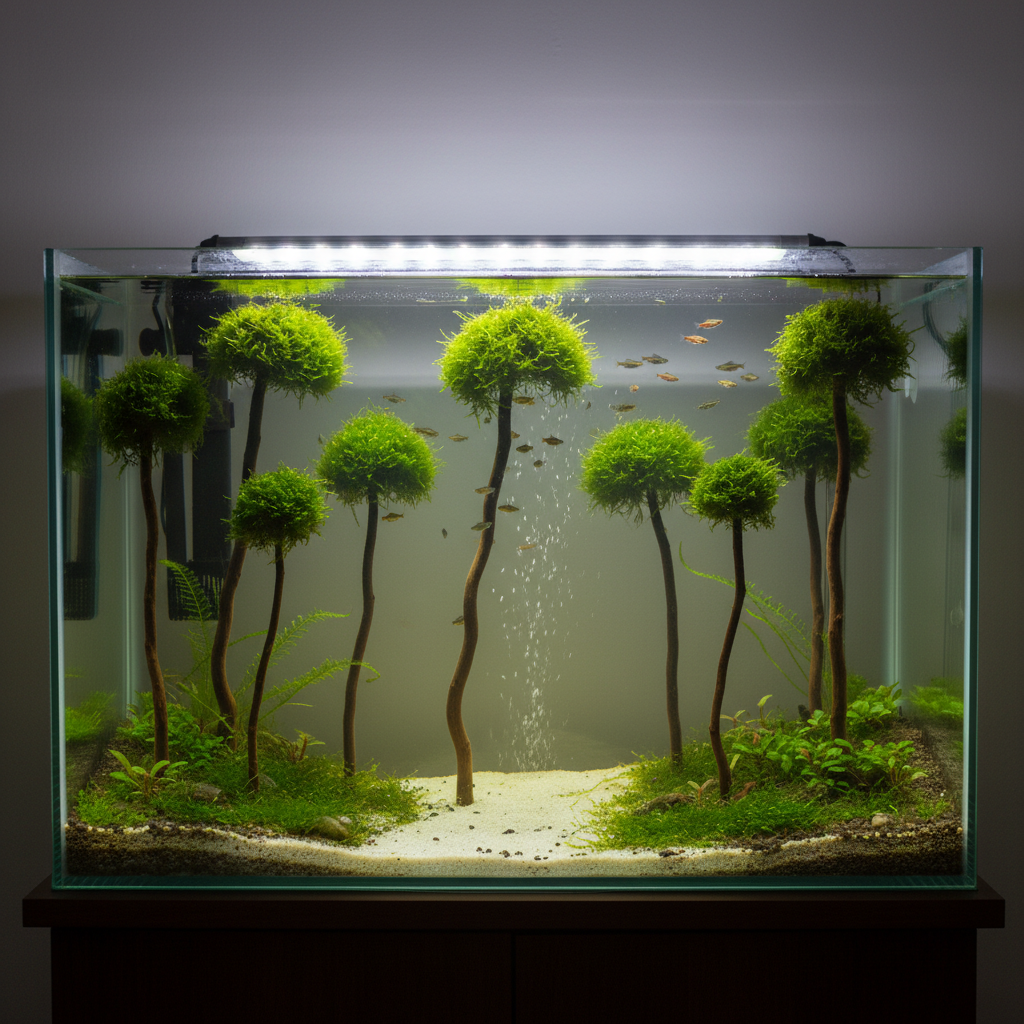
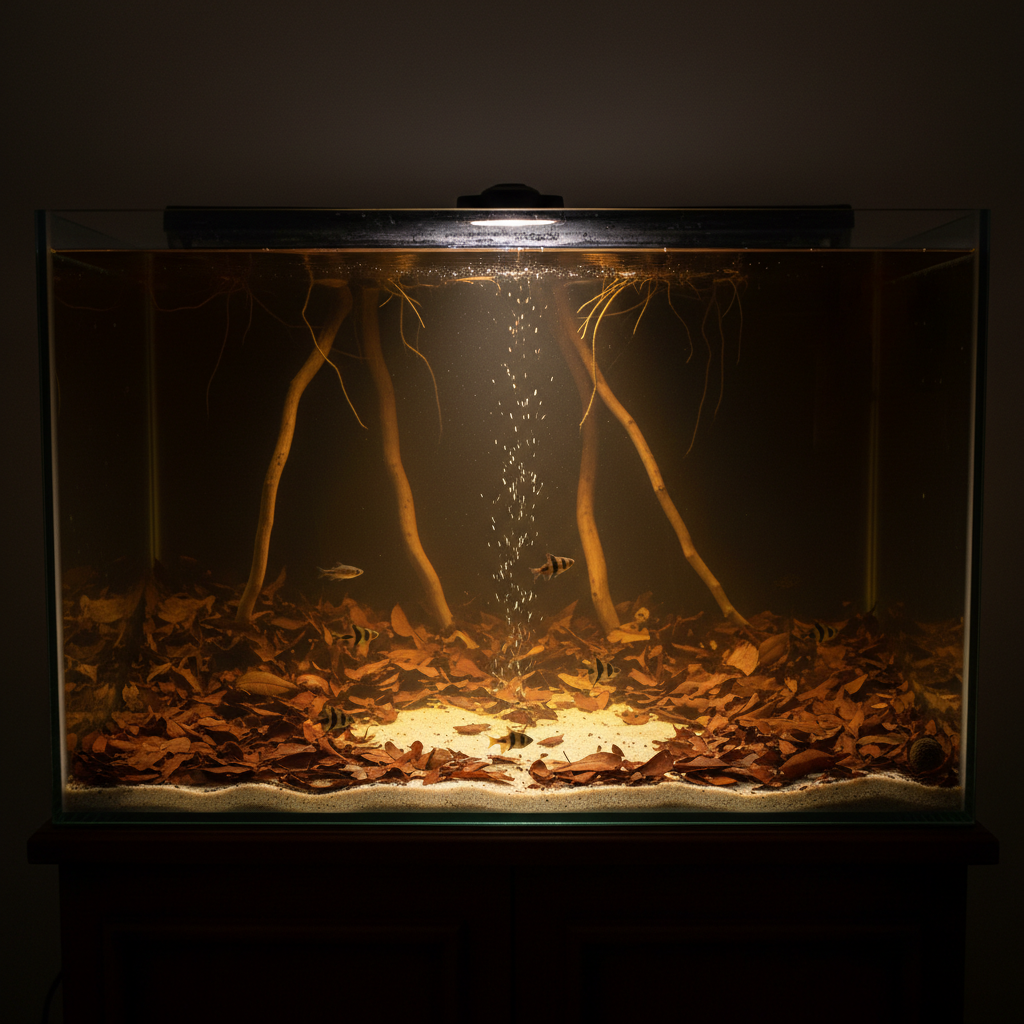
Nothing below has been retouched, recoloured or regenerated to flatter the tool. The photography is the solved half: a real waterline, refraction through the front pane, individual grains in the substrate, silicone seams in the corners, bubbles that wobble as they rise. What drifts is the brief — how many of a thing arrived, how tall it grew, and whether a named material came back as that material. Read the note under each one. Every preset above has since been rewritten to close the specific gap its image exposed.
What This AI Aquarium Design Generator Gets Right, and What It Gets Wrong
An aquascape is two problems in one photograph: the tank, and the layout. The tank is solved — water, glass and light come back convincing every time. The layout — how many, how tall, made of what — is where every real failure in the gallery above lives.
Water behaves like water
The thing everyone expects to fail simply holds. Six out of six have a correct waterline two centimetres below the rim, a rippled surface lit from above, bubble streams that wobble as they rise, and visible refraction where the softened underwater view meets the sharp front pane. The substrate carries individual grains and slopes up towards the back. This is the half of the job you no longer have to think about.
Counts hold until they become a pattern
Five stones, two clownfish, three dried leaves, one betta and only one — every count landed while the objects stayed individually distinct. Seven trees in a row became roughly ten, because a repeating group stops being counted and starts being filled in. The threshold is about five, and it drops to zero the moment the objects read as a grove or a shoal.
Named materials arrive as generic ones
Seiryu stone is angular grey slab rock with deep vertical grain. Ask for it by name and three of the five stones came back as smooth rounded river pebbles, because the name means less to the model than a description does. The fix is to spend a clause on the physical material — sharp broken edges, grain lines cut into the face, never egg-shaped — every time the material is the point.
Relative size limits get ignored
The nano tank was told the driftwood must reach no higher than half the tank. It came back nearly touching the surface. Proportional constraints stated as a limit are consistently dropped, in the same way coverage instructions are. Restate them as a positive fact about what is empty — the entire upper half of the water is open and empty — and they survive.
Negative instructions are unusually strong here
No green plants anywhere in the blackwater tank, and there are none. No hardscape in the Dutch tank, and there is none. No lettering on the equipment, the cabinet or the wall across six images, and there is not one stray letter. Naming what must be absent works far better on this subject than on most, so use it as the primary tool rather than the fallback.
Fish are the weakest objects in the frame
The reef clownfish came back glossy and hard-edged, more resin ornament than animal, and the schooling fish in the larger tanks are indistinct at full size. Fish are small, numerous and in motion, which is the worst combination. Ask explicitly for matte scales, soft fin edges and slight motion blur, and keep the named species to two or three.
How It Works
Pick the layout
Six presets: a five-stone Iwagumi over a hairgrass carpet, a Dutch tank of trimmed plant streets with no hardscape at all, a blue-lit reef with an open rock arch, a nano cube built around one piece of mossy wood, a driftwood forest of mossy trees, and a blackwater biotope buried in leaf litter. Each already carries the placement, the substrate slope, the water and refraction rules, the camera height and the no-lettering list.
Add your tank and your stock
Put the specifics in the box: the tank dimensions you actually own, spider wood instead of stone, a species you keep, a warmer light, a shallower slope. Describe materials physically rather than naming them, anchor everything to a part of the tank, and give counts only to things that stay individually distinct.
Check it, then download
About thirty seconds later you have a finished aquascape in a glass tank. Before you judge the composition, check three things: did the right number of objects arrive, did anything grow past the height you set, and is the stone still the stone you asked for. That is where these go wrong, not in the photography. Then download at full size, up to 4K, for the proposal.
Writing a Prompt That Produces a Buildable Aquarium Design
Four habits that separate a layout you can take to a shop from one you regenerate, all learned from the six results in the gallery above.
Count objects one at a time, out loud
This is the expensive omission, and the forest is the proof. Seven trees as a number produced ten. One and two and three on the left, a fourth alone in the centre, five and six and seven on the right, with open water between the groups, produces seven. Enumerate anything whose quantity matters and give each item a position, because a bare number attached to a repeating shape is read as an approximation.
Describe the stone, do not name it
The word Seiryu produced smooth river pebbles. An angular grey slab with sharp broken edges and deep vertical grain lines cut into its face, never egg-shaped, produces Seiryu stone. The same is true of spider wood, dragon stone and lava rock: any hardscape you name rather than describe arrives as the model's average of that word, which is almost always a rounded boulder.
State empty space as a positive fact
No higher than half the tank was ignored and the wood grew to the surface. The entire upper half of the water is completely open and empty was obeyed. Limits phrased as ceilings get dropped; the same constraint phrased as a description of what occupies the space survives. Open water is a design element, so give it its own sentence.
Say what must not be in the tank
Negative instructions are the strongest tool on this subject. No green plants, no rock, no open gap in the middle, no thermometer, no brand name on the light — each one held across six images. Before you add detail to what you want, spend a line ruling out the thing the style is defined by not having.
Who Uses an AI Aquarium Design Generator
Aquascapers planning a rescape
Try four hardscape arrangements before committing to one, and see how a layout reads at a distance rather than from above with your hands in the water. The stone in an aquascape is bought once and regretted for years, so an afternoon of free layouts is cheap insurance.
Beginners buying their first tank
See what a 60cm tank actually looks like fully planted before spending on substrate, light and plants that do not suit each other. The nano and the Iwagumi layouts are the two most achievable first builds in this set, and both show you how much open water a real scape leaves.
Aquarium shops and maintenance firms
A style board of six layouts in one visual language, generated in a few minutes, lets a customer point at a tank rather than describe one. Useful for quoting installs, for shop displays and for settling what a client means by natural.
Interior designers specifying a tank
Show a client how an aquarium sits in a room at the right scale and light level, in the palette the rest of the scheme uses. Easier to approve than a plan drawing and far quicker than commissioning a render from the installer.
Reef keepers planning a coral layout
Rockwork is structural and hard to change once it is cured and stocked. Testing an arch, a shelf or an island scape as an image first is a low-cost way to see whether the sand channel you imagined actually leaves room for flow and for fish.
Hobby content creators
Thumbnails, style comparisons and seasonal posts produced between tank maintenance rather than during it. Thirty seconds an image means a month of content is an afternoon, and the same images carry straight over to a build log.
AI Aquarium Design Generator FAQ
Related Design Tools
AI Living Room Design Generator
The room the tank stands in. Work out the wall, the cabinet and the lighting around an aquarium rather than designing it in isolation.
AI Landscape Generator
The same composition problem at full size. Useful for testing how a hardscape idea reads as a landscape before you shrink it into a tank.
AI Interior Design Generator
Whole-room schemes for anywhere a large aquarium is going, in the palette the rest of the space already uses.
See the Aquascape Before You Buy the Stone
Six layouts — Iwagumi, Dutch, reef, nano betta, driftwood forest and blackwater biotope — each built in a real glass tank in about thirty seconds, with your hardscape and your stock. Up to 4K. Free to start, from $2.99.
Design an Aquarium FreeAn AI Aquarium Design Generator for Aquascapers, Shops and Anyone About to Buy Forty Kilos of Stone
Aquascaping is agreed in the worst possible way. Someone says natural, someone else pictures a stone island in a hairgrass lawn, a third person pictures a tangle of wood in brown water, and nobody finds out they disagreed until the substrate is wet and the stone is unreturnable. An AI aquarium design generator moves that conversation to the week before, where it is still free. You describe the tank, the hardscape and where it sits, the planting, the light and the fish, look at a finished scape in a glass tank thirty seconds later, then look again with wood instead of stone, or a lower slope, or half the planting. The silicone still has to cure and the plants still have to grow in. The deciding does not.
The six presets cover the layouts a real style board carries. A five-stone Iwagumi over a hairgrass carpet, the discipline every aquascaper starts with and the one where placement is everything. A Dutch tank of trimmed plant streets with no hardscape at all, which is the hardest style to describe in words and the easiest to show. A blue-lit reef built around an open rock arch, where the structure is poured in place and effectively permanent. A nano cube built on one piece of mossy wood, the most common first tank in the hobby. A driftwood forest of mossy trees. And a blackwater biotope buried in leaf litter, for anyone who has tried to explain tannin-stained water to a partner.
All six are shown above exactly as they came back, because the pattern in them is worth more than a feature list. The photography is the solved half: a correct waterline below the rim, a rippled surface, bubbles wobbling as they rise, refraction softening everything behind the glass, individual grains in a substrate that slopes up towards the back, silicone seams in the corners, and not one stray letter across six images despite an aquarium being covered in objects that normally carry brand names. What failed was the brief. Seven trees became ten. Seiryu stone became river pebbles. Wood capped at half the tank height grew to the surface. A Dutch tank, defined by having no open space, opened a sand corridor up its middle. And two clownfish arrived at exactly the right count looking like resin ornaments.
The working rules follow directly. Enumerate anything whose quantity matters, one item at a time with a position each, because a bare number attached to a repeating shape is read as an approximation. Describe hardscape physically rather than naming it, since any named material arrives as the model's average of that word. State empty water as a positive fact rather than as a height limit, because ceilings are dropped and descriptions are kept. And lean hard on negatives, which work unusually well on this subject: no plants, no rock, no gap, no label. Inside those limits this is a genuinely good trade for anyone who scapes tanks — the layout gets settled, the client gets to point at a picture, and the stone gets bought once.