
AI vs Traditional Video Editing
Speed, Cost, Quality, and Creative Control Compared
AI vs traditional video editing is the question every video editor, filmmaker, YouTuber, and marketing team is asking in 2026 — and the honest answer depends on which project, which deadline, and which budget. This page breaks down AI vs traditional video editing across the five things that actually matter: time-to-finished-cut, total cost, learning curve, output quality, and creative control. AI video editing wins on speed, cost, and consistency for everyday social and YouTube content. Traditional video editing in Premiere Pro, DaVinci Resolve, and Final Cut still wins for narrative film, broadcast, and signature creative work. Below you can also try a free AI image generator to produce custom visuals — thumbnails, B-roll stills, channel art — for whichever editing approach you choose.
Generate Visuals for Either Editing Workflow
Whether you stick with traditional video editing in Premiere Pro and DaVinci Resolve or switch to AI video editing — every cut still needs custom thumbnails, B-roll, and channel art. Generate them free here in seconds.
AI Video Editing Visuals Generator
Generate custom thumbnails, B-roll stills, channel art, and explainer graphics for AI video editing or traditional video editing projects.
AI vs Traditional Video Editing in Pictures
Visual snapshots of both video editing worlds — the late-night manual edit suite and the streamlined AI editing dashboard — plus the speed, feature, and workflow gaps between AI vs traditional video editing.
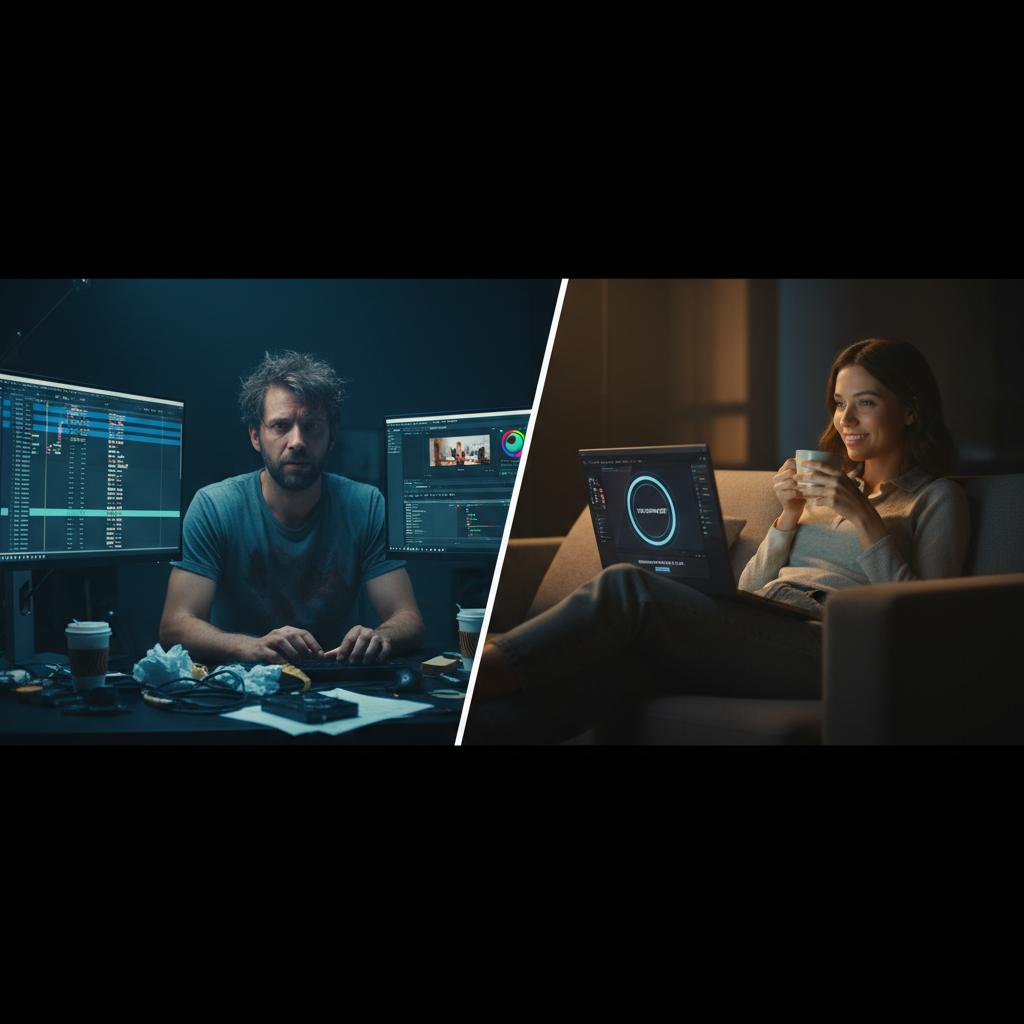
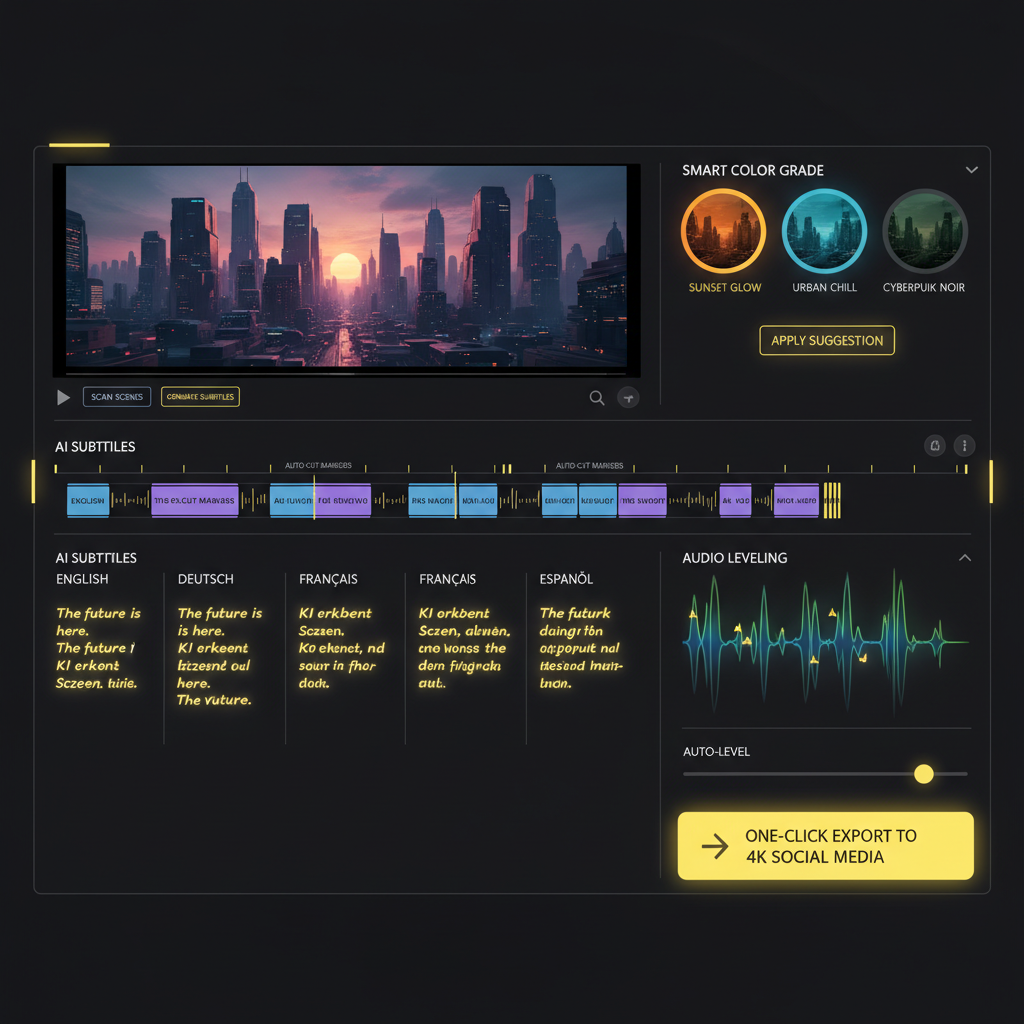
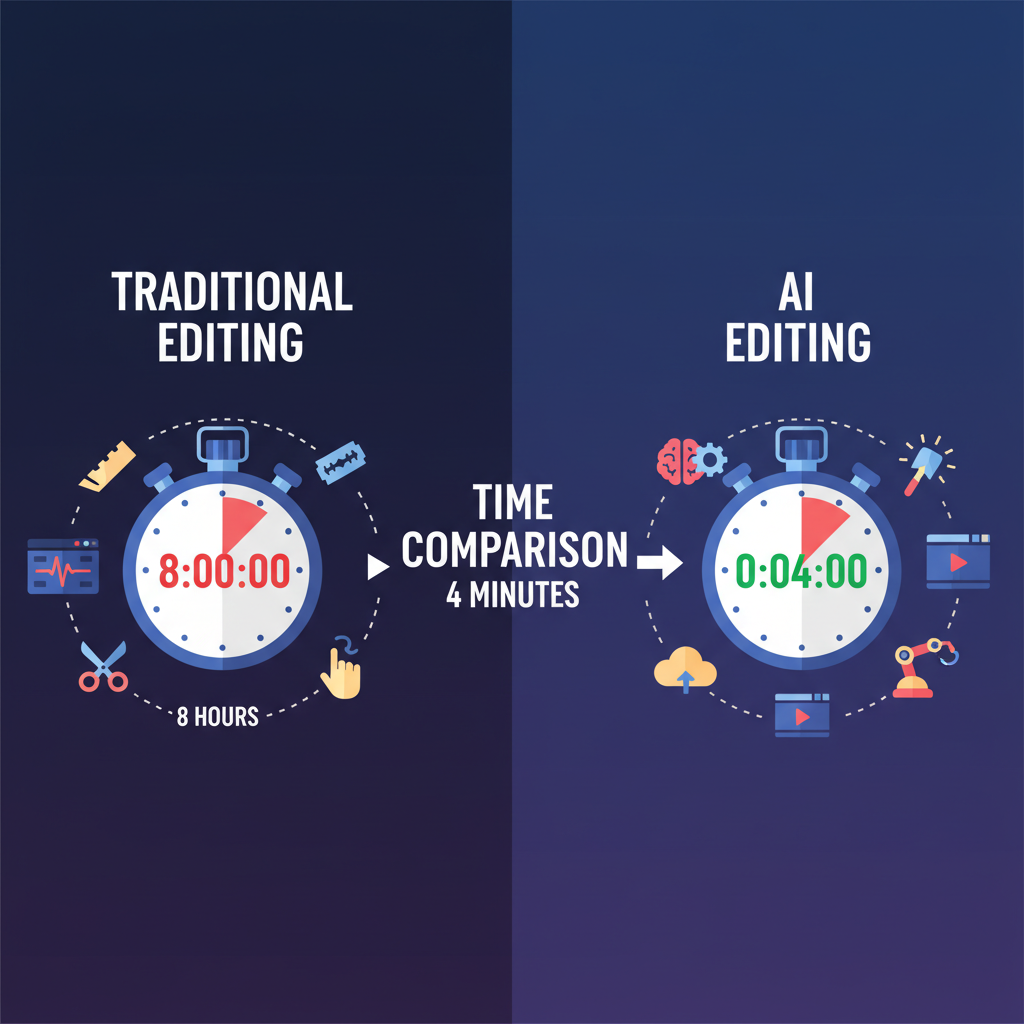
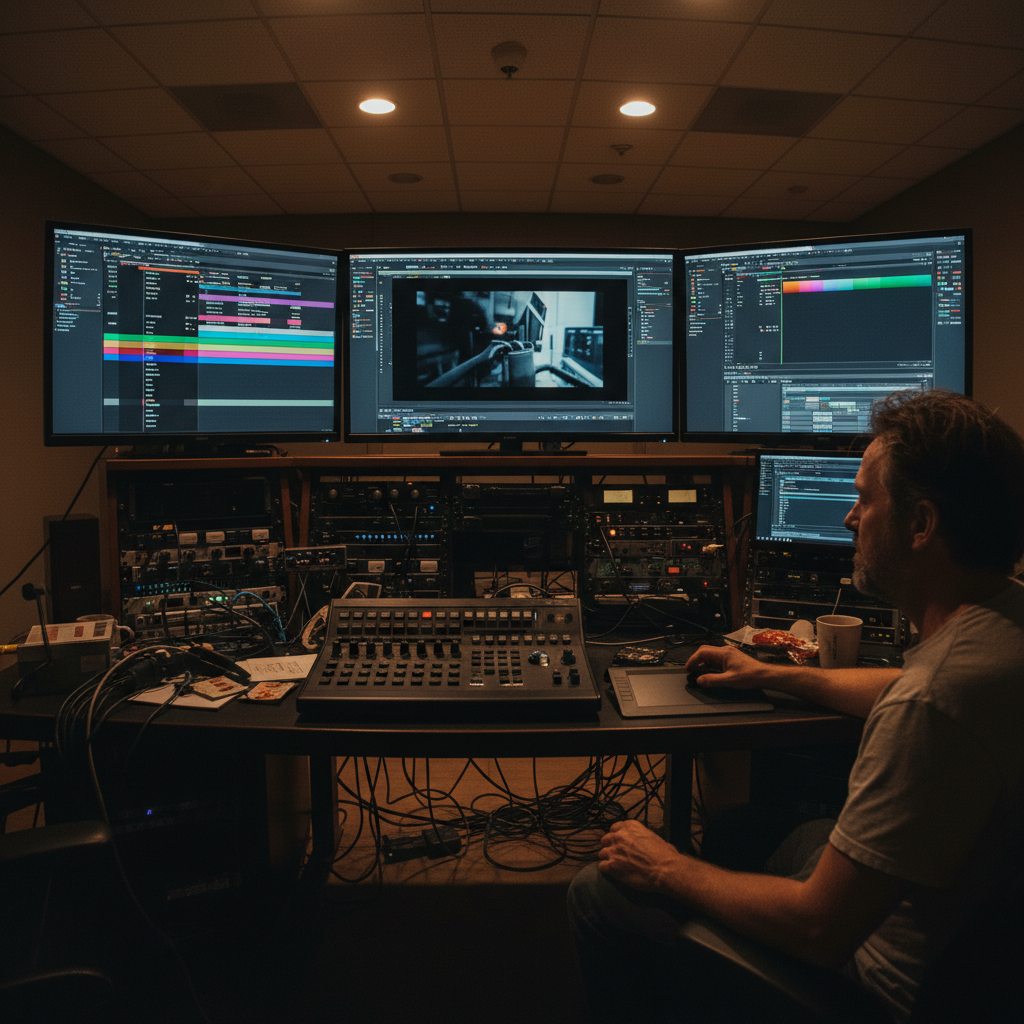
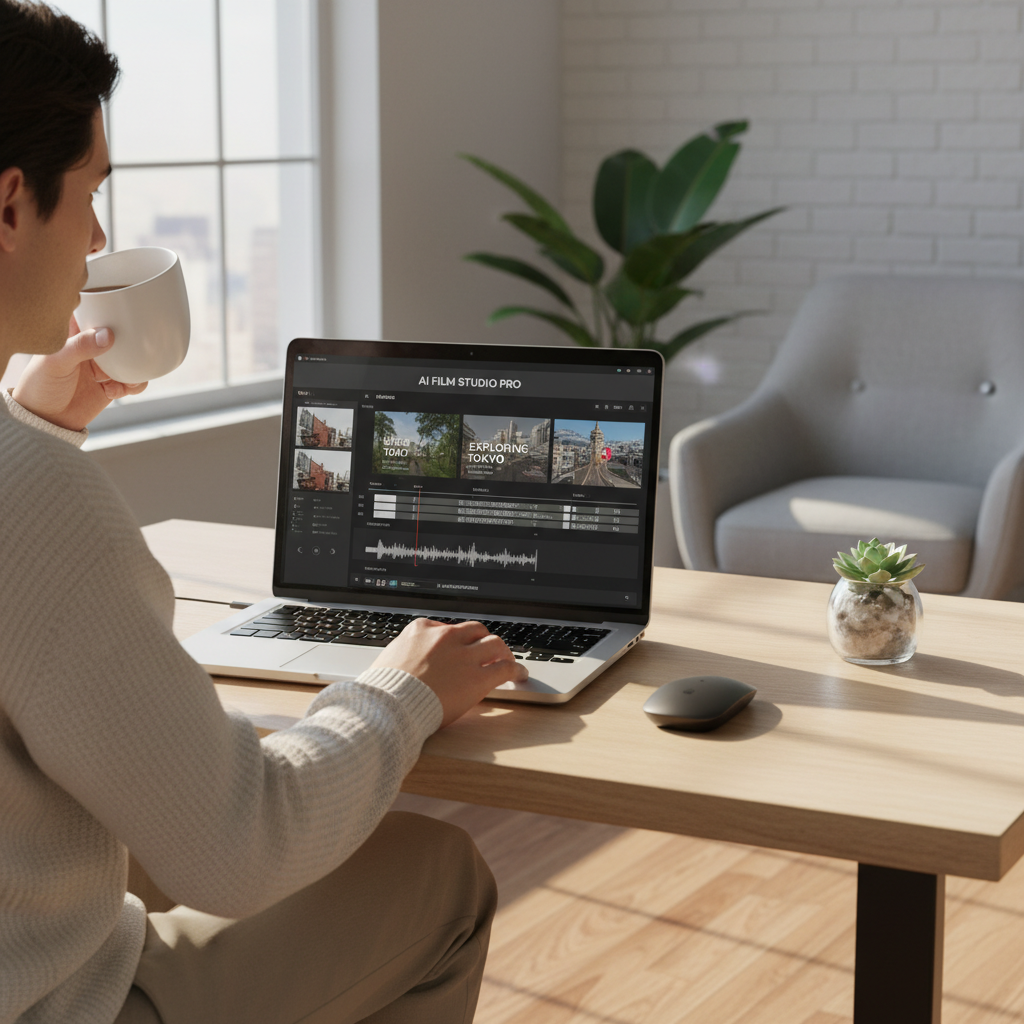
AI vs Traditional Video Editing — Side-by-Side
The five comparisons that decide which editing approach fits your project — speed, cost, learning curve, quality, and creative control.
| Criterion | AI Video Editing | Traditional Video Editing |
|---|---|---|
| Time per 10-min cut | 4–15 minutes (auto-cut, auto-subs, auto-color) | 6–10 hours (manual cut, manual subs, manual color) |
| Monthly cost | From $2.99 / month | $59.99/mo Adobe + plugins + hardware |
| Learning curve | 10–30 minutes (drag, prompt, export) | 40–200 hours (NLE, color, audio, codecs) |
| Output quality baseline | Pro-baseline 4K, clean subs, leveled audio | Pro-baseline + signature creative ceiling |
| Creative control | Preset / prompt-driven, fast iteration | Frame-precise, full timeline access |
| Auto subtitles in 30+ languages | Built-in, 1 click | Plugin or manual transcription |
| AI-generated B-roll | Built-in | Stock footage license + manual placement |
| Multi-format social export | One-click 9:16 / 1:1 / 16:9 | Manual reframe + re-export per format |
| Best for | YouTube, social, training, marketing, podcast clips | Narrative film, broadcast, music videos, agency work |
How AI vs Traditional Video Editing Workflows Differ
Three steps for each path — from raw footage to a finished, exportable video. The difference in steps, hours, and required skill is the core of the AI vs traditional video editing decision.
Ingest Your Raw Footage
Both AI vs traditional video editing workflows start the same: drop your raw clips into a project. Traditional video editing in Premiere Pro or DaVinci Resolve asks you to organize bins, transcode proxies, and tag selects — typically 30–60 minutes of pre-edit prep before you cut a single frame. AI video editing skips proxies entirely. Drag clips into the AI editor and the model already knows what is in each shot, who is talking, and where the natural cut points are. The AI vs traditional video editing time gap starts before the timeline opens.
Cut, Color, Caption, Mix
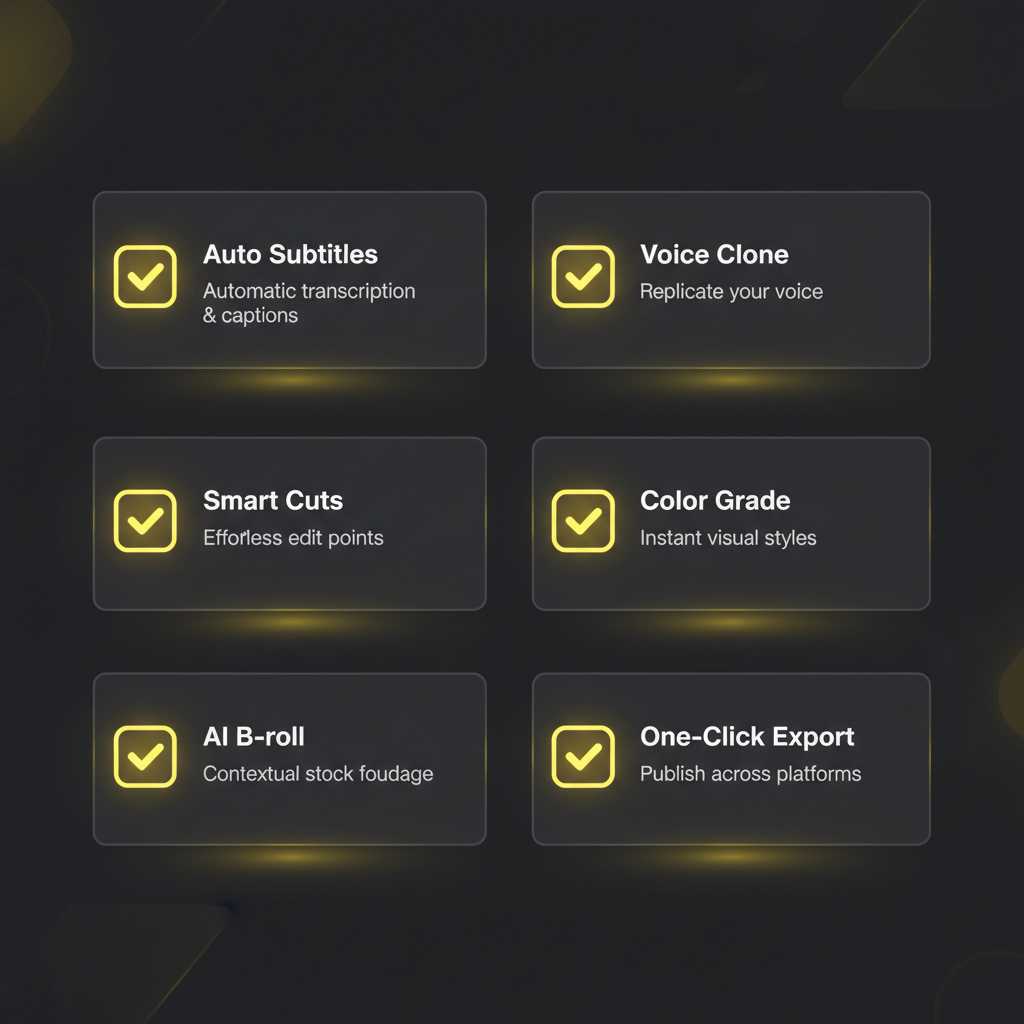
Traditional video editing is hours of timeline work — cutting on dialogue beats, color-grading every clip to match, mixing audio levels, transcribing and styling subtitles, sourcing music, and adding lower thirds. Skilled work, but slow. AI video editing collapses this into one prompt-driven pass: auto-cut on dialogue, auto-color match across clips, auto-level audio, AI-generated subtitles in 30+ languages, AI-suggested music, and template-based titles. The AI vs traditional video editing middle stage is where AI editing is 20–60× faster than manual editing for typical YouTube and social content.
Export for Every Platform
Traditional video editing means manually reframing the timeline for 16:9 YouTube, 9:16 Reels and Shorts, 1:1 Instagram, then setting codec, bitrate, and color space for each — and re-rendering each one. AI video editing offers one-click export to every format from the same project, automatically reframing the subject and preserving safe zones. For creators publishing the same content across platforms, this single AI vs traditional video editing difference saves hours per video and removes the most error-prone step in the workflow.
Why AI Video Editing Is Winning the AI vs Traditional Video Editing Debate
Six specific advantages that explain why most weekly content creators have already shifted at least 80% of their editing pipeline from traditional video editing to AI.
Auto-Cut on Dialogue and Filler Words
Traditional video editing in Premiere Pro means scrubbing through hours of footage cutting around ums, ahs, and dead air. AI video editing detects filler words and dead pauses automatically and trims them — a 60-minute talking-head recording becomes a tight 12-minute cut in under three minutes. AI vs traditional video editing on this single feature alone saves most YouTubers 4–8 hours per upload.
AI Subtitles in 30+ Languages
Traditional video editing requires either an expensive transcription service or hand-keyed captions. AI video editing transcribes, translates, and styles subtitles in 30+ languages in under a minute, with frame-accurate timing and ready-to-burn-in styling. For international creators, this is the AI vs traditional video editing difference that turns a one-language channel into a global one without a translator on staff.
Smart Color Match Across Cameras
Multicam shoots in traditional video editing means matching iPhone footage to a Sony FX3 to a GoPro by hand — hours in a color panel. AI video editing color-matches every clip to a chosen reference shot in seconds. AI vs traditional video editing on multicam color is one of the strongest reasons solo creators can now produce content that looks like a small studio.
AI-Generated B-roll On Demand
Traditional video editing pulls B-roll from stock libraries — license fees, search time, and clips that almost-but-not-quite fit. AI video editing generates B-roll on demand from a text prompt, perfectly matched to the narration. AI vs traditional video editing on B-roll has flipped from a sourcing chore to a one-line prompt — and the AI clip is guaranteed unique, no stock-footage repetition across creators.
One-Click Multi-Format Export
Traditional video editing means re-cutting a project for 16:9 YouTube, 9:16 Reels and Shorts, and 1:1 Instagram — three separate timelines, three exports, three re-checks. AI video editing exports all formats from one project in a single click, auto-reframing the subject and protecting safe zones. AI vs traditional video editing on multi-platform export is a daily time saver for any creator publishing across YouTube, TikTok, Instagram, and LinkedIn.
Cost: $2.99 vs $60+ Per Month
Traditional video editing pencils in at $59.99/month for Adobe Creative Cloud, $300+ for plugins, and a workstation that can render 4K timelines. AI video editing starts at $2.99/month and runs in any browser. For a small creator team or solo YouTuber, AI vs traditional video editing on price alone is a 20× monthly savings. Combined with the time savings, AI editing typically replaces $2,000–8,000/month of either software-plus-plugin spend or freelance editor labor.
The Honest Verdict
AI vs traditional video editing — when each one wins.
Pick AI Video Editing When:
- ✓You publish weekly YouTube, Reels, Shorts, or TikTok content
- ✓You need subtitles in multiple languages
- ✓You are a solo creator or small team without an editor on staff
- ✓You need the same content repurposed for 9:16, 1:1, and 16:9
- ✓You are publishing course videos, marketing explainers, podcast clips, or product demos
- ✓Your monthly editing budget is under $100
Stick With Traditional Video Editing When:
- ✓You are working on narrative film, scripted drama, or documentary
- ✓You are delivering broadcast-quality TV or theatrical work
- ✓You need frame-precise creative pacing or signature visual style
- ✓You are doing complex VFX, motion graphics, or compositing
- ✓You are color-grading a commercial or music video
- ✓You are managing a multicam concert or sports production
Most creators land on a hybrid AI vs traditional video editing workflow: AI handles the rough cut, captions, color baseline, and social exports. Traditional editing handles the final 20% — signature creative pacing, hero shots, and brand polish. The combined workflow is faster than pure traditional editing and more creative than pure AI editing.
AI vs Traditional Video Editing FAQ
Honest answers to the seven questions every video editor and creator asks before switching.
Try AI Visuals Free
Whether you commit to AI video editing, stay with traditional video editing in Premiere Pro and DaVinci Resolve, or run a hybrid workflow — every project still needs custom thumbnails, B-roll stills, and channel art. Generate them free in seconds with the AI image tool above. No sign up, no credit card, powered by Nano Banana 2.
Start Generating FreeAI vs Traditional Video Editing: A Practical 2026 Breakdown for Creators, Editors, and Marketing Teams
What AI vs Traditional Video Editing Actually Means in 2026
Two years ago, AI vs traditional video editing was a fair comparison: both approaches required hours of work, both produced roughly comparable output, and AI editing was mostly experimental. In 2026, the AI vs traditional video editing gap has widened to the point where the question is no longer which tool is better — it is which tool fits which project. AI video editing now produces professional-baseline 4K cuts with auto-subtitles, smart color matching, and one-click social exports in minutes. Traditional video editing in Premiere Pro, DaVinci Resolve, and Final Cut still owns the high creative ceiling — narrative film, broadcast TV, signature commercial work, music videos, and complex VFX where every frame is a creative decision.
The honest AI vs traditional video editing comparison breaks down on five axes. On speed, AI editing is 20–60× faster than traditional editing for everyday content — a 10-minute YouTube vlog cuts in 4–15 minutes instead of 6–10 hours. On cost, AI editing starts at $2.99/month against $60+/month for Adobe Creative Cloud plus plugins and hardware. On learning curve, AI editing is 10–30 minutes against 40–200 hours for traditional NLE proficiency. On output quality, AI editing matches a professional baseline; traditional editing keeps the creative ceiling. On creative control, traditional editing wins — frame-precise pacing, custom motion graphics, and signature visual style still need a human editor in a real timeline. AI vs traditional video editing in 2026 is not a winner-takes-all fight; it is a workflow split.
Whether you searched ai vs traditional video editing, ai video editing benefits, ai video editor vs premiere, ai video editing comparison, ai vs davinci resolve, ai vs manual video editing, video editing tools comparison, traditional video editing drawbacks, ai editing benefits, manual video editing limitations, or ai video editing for content creators — this page is built to give you the honest comparison and a working AI image tool above to start producing video visuals today.
Video Editors, Filmmakers, and Content Creators Choosing Between AI vs Traditional Video Editing
Solo YouTubers and TikTok creators publishing 3–7 videos a week have almost universally moved their rough-cut, subtitle, color, and social-export pipeline to AI video editing — the time savings are too large to ignore. Marketing teams publishing weekly product explainers, course creators recording new lessons every week, podcast hosts cutting clips for social, and small business owners running real estate or product walkthroughs have made the same shift. For these projects AI vs traditional video editing is decided on speed and consistency, not on creative ceiling. Professional video editors at agencies and post houses are using AI video editing to speed up the first 80% of any cut — paper edit, dialogue selects, rough color, captions — then using traditional video editing in Premiere Pro or DaVinci Resolve for the final 20% of creative refinement. That hybrid AI vs traditional video editing workflow makes editors 3–5× more productive without sacrificing creative quality.
Filmmakers working on narrative shorts, indie features, music videos, and commercial brand work still rely primarily on traditional video editing. The creative decisions — story pacing, frame-precise rhythm, signature visual style — are not yet a job AI editing can do better than a skilled human editor. AI vs traditional video editing for narrative work is decided in favor of traditional editing today, but even narrative editors are bringing AI in for transcription, auto-translation, behind-the-scenes social cuts, and rapid pitch-reel iteration. Documentary editors are using AI editing to power through hundreds of hours of interview footage at the assembly stage, then traditional editing for the final cut. The AI vs traditional video editing decision is no longer binary — it is a workflow choice per project, per stage, per deliverable.
Looking for related AI tools across the rest of your video pipeline? /tools/ai-video-generator creates entire video clips from text prompts, /tools/text-to-video converts written scripts into AI-generated video, and /tools/image-to-video animates still images into dynamic video clips. All three pair well with the AI video editing visuals tool on this page — generate the thumbnails and B-roll stills here, then use AI video tools to assemble or animate them, and let your AI vs traditional video editing decision settle into the workflow that fits your project.
AI vs traditional video editing — AI wins on speed, cost, and consistency for everyday content; traditional editing keeps the creative ceiling for narrative, broadcast, and signature work. Most creators run a hybrid AI vs traditional video editing workflow today. Generate AI thumbnails and B-roll stills free above. Optional plans from $2.99 only when you want unlimited.