
AI Image Generator vs DaVinci Resolve
Two Tools, One Hybrid Pipeline — Honest Comparison
AI image generator vs DaVinci Resolve is the wrong framing for serious filmmakers in 2026 — these tools sit at different stages of the pipeline and the right answer is using both. AI image generators handle film concept art, character designs, environment plates, key visuals, and marketing posters at speeds and prices traditional concept artists cannot match. DaVinci Resolve handles editing, color grading, audio finishing, and the actual post-production of the footage you shoot. We compare both tools on cost, speed, and creative range — then hand you a free AI film concept art generator powered by Nano Banana Pro so you can judge AI quality on your own project before committing budget.
Try the AI Side — Free
Generate cinematic film concept art, character designs, and key visuals — judge AI image generator vs DaVinci Resolve quality on your own project before committing budget
AI Film Concept Art Generator
Pick a film concept type and generate cinematic concept art, character designs, environment plates, or key visuals — production-ready for pitch decks and pre-production
AI Image Generator vs DaVinci Resolve — Visual Range Showcase
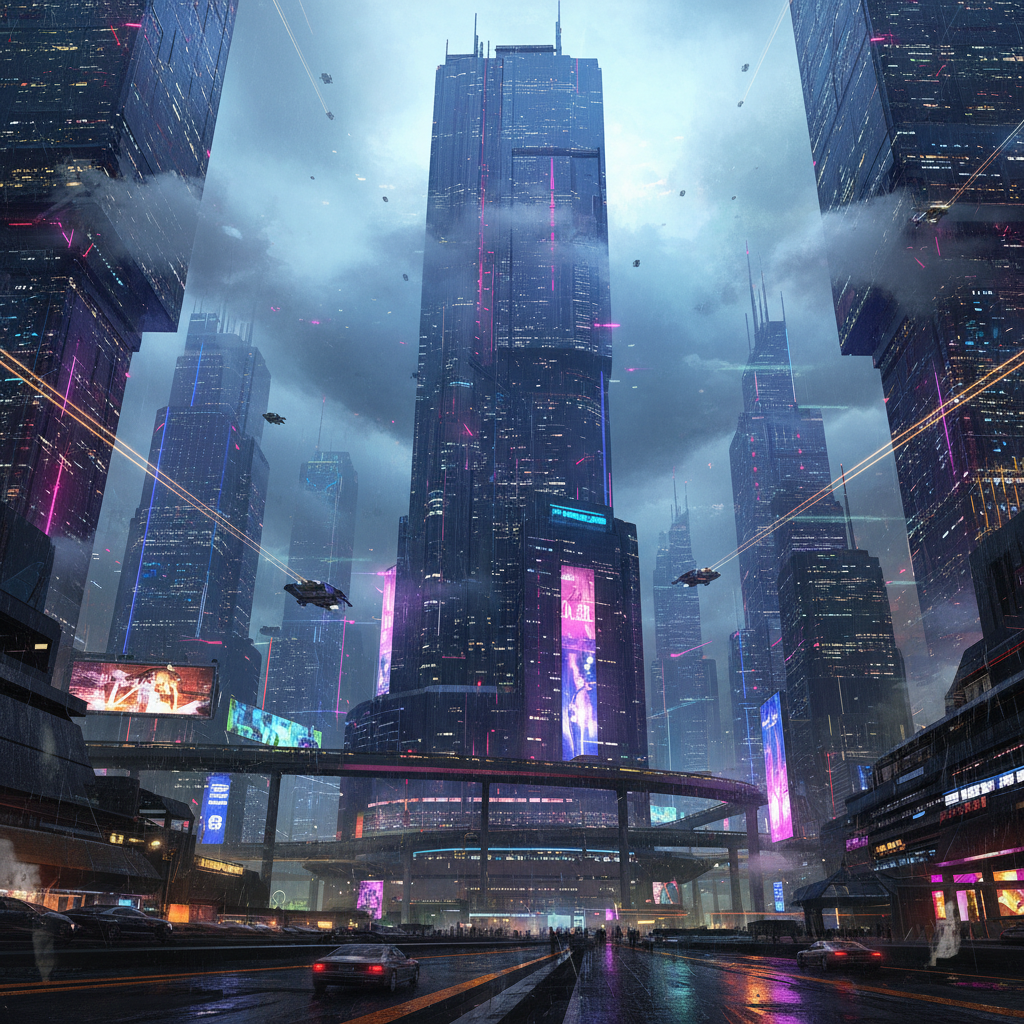
Six examples spanning the AI image generator vs DaVinci Resolve workflow — concept art, key visuals, storyboards, and the hybrid pipeline modern indie filmmakers actually use
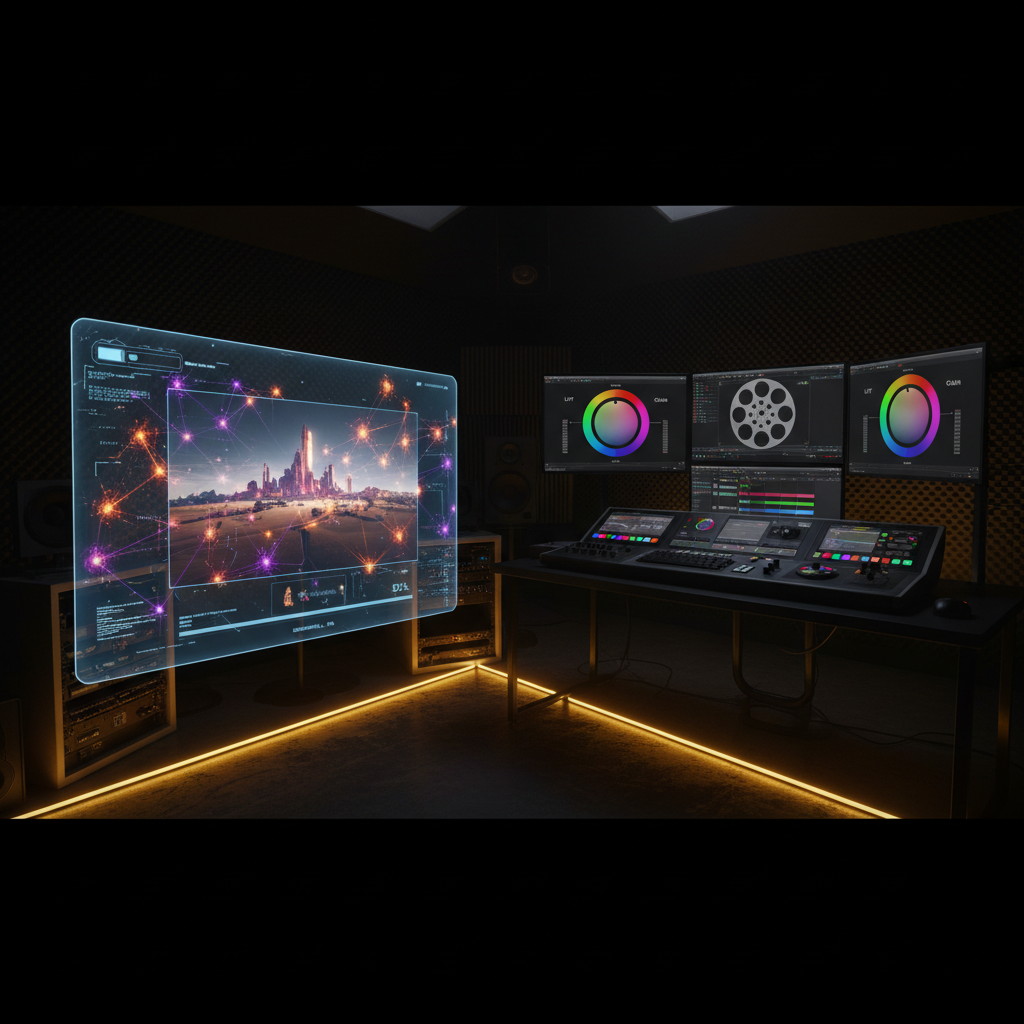
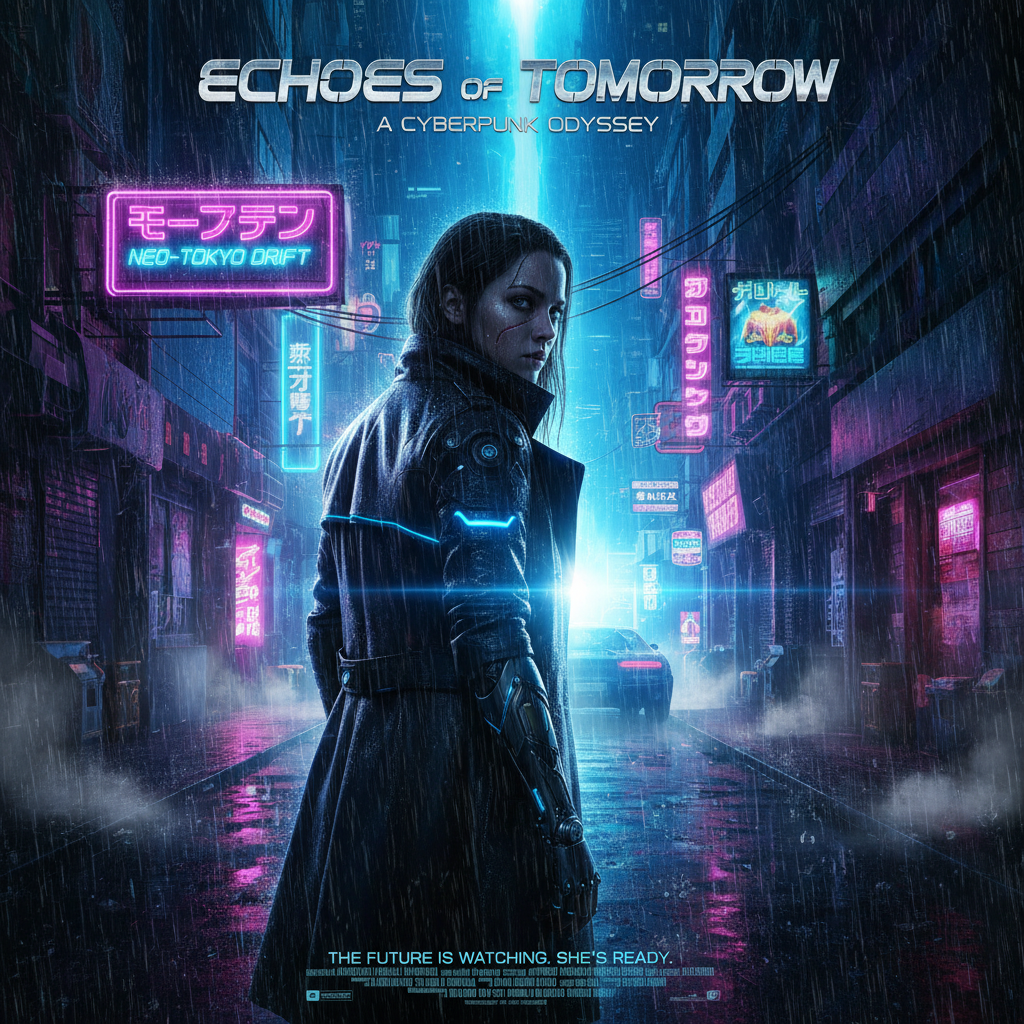
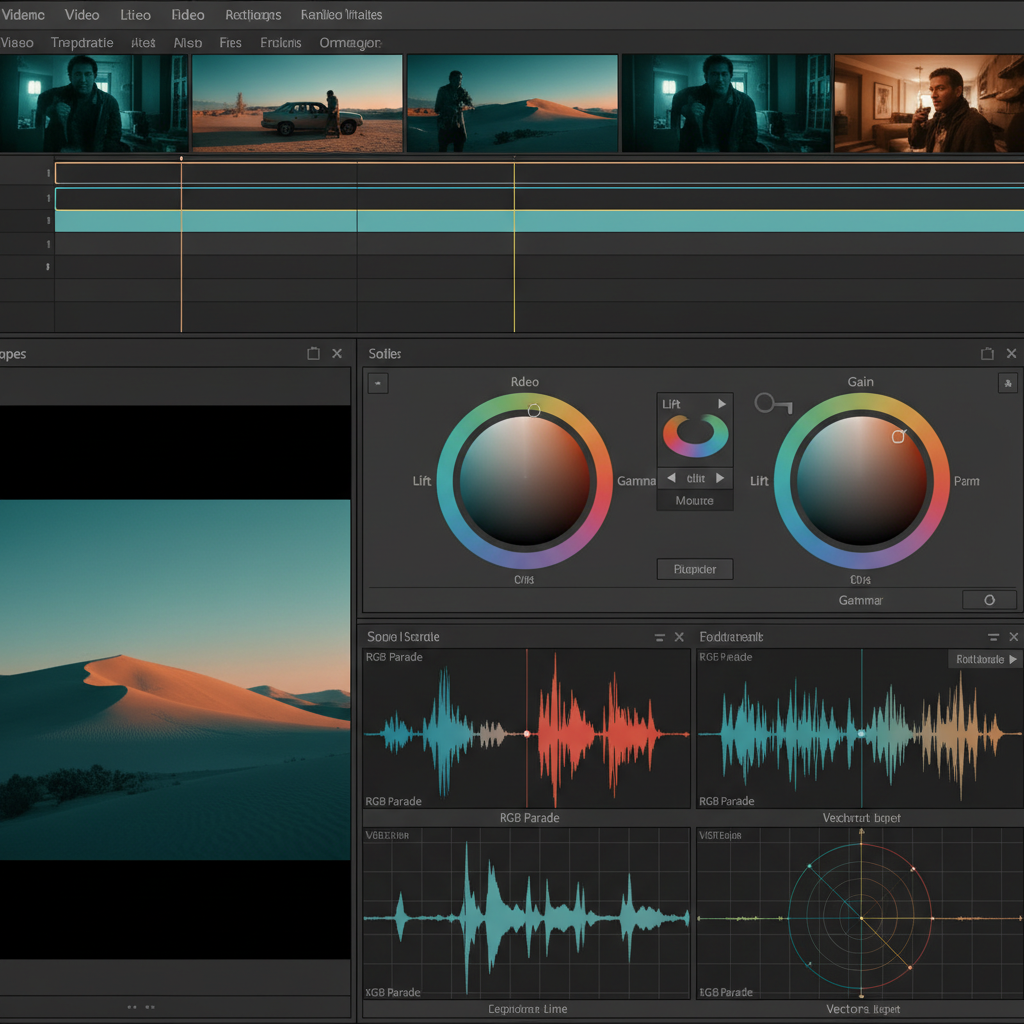
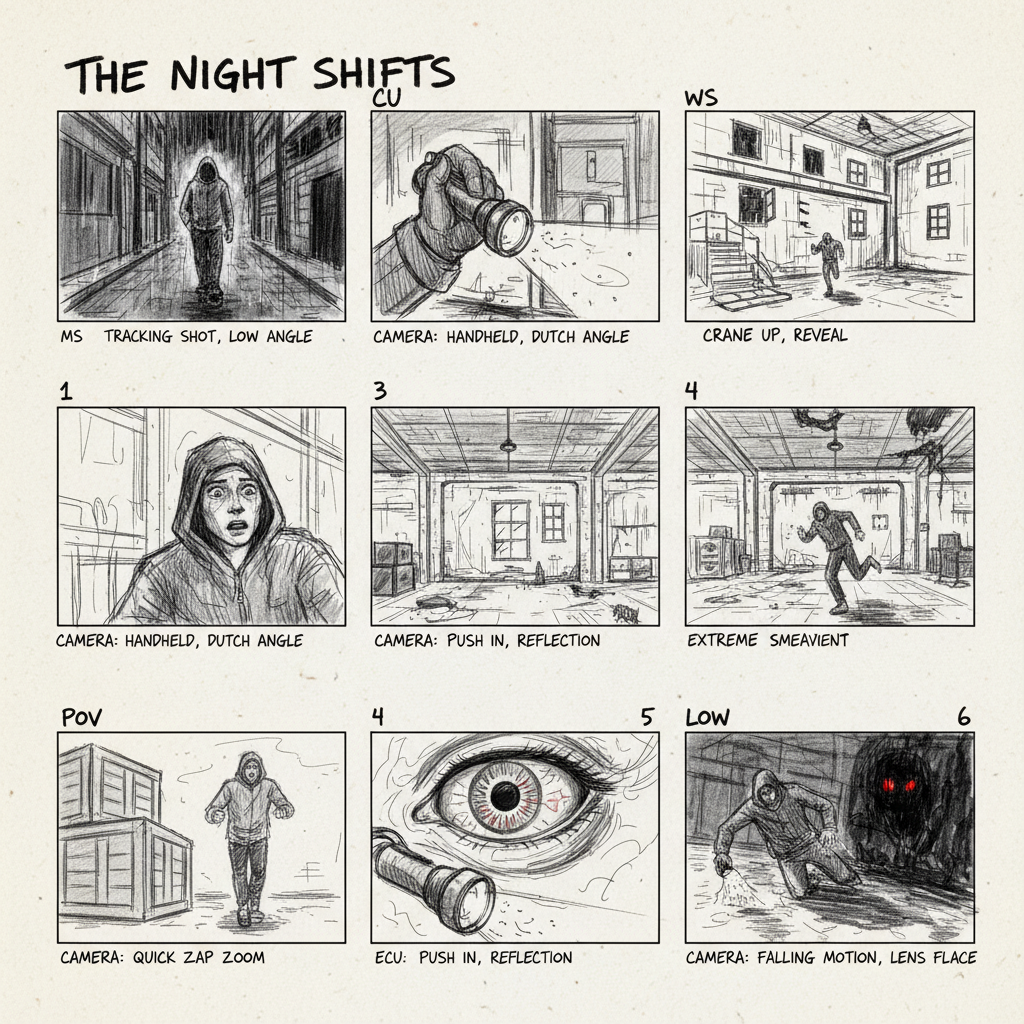
AI Image Generator vs DaVinci Resolve — The Honest Scorecard
Side-by-side on the metrics that actually decide where modern film production budgets go
| Metric | AI Image Generator | DaVinci Resolve |
|---|---|---|
| Primary purpose | Generate still imagery from text prompts | Edit, color grade, finish video footage |
| Pricing | $2.99 – $29.99 / month | Free tier, $295 one-time Studio |
| Concept art per piece | Cents per image, seconds per piece | N/A — requires hiring a concept artist |
| Color grading | Limited — color reference frames only | Industry-leading — full DaVinci color page |
| Video editing | N/A — generates stills, not motion | Full NLE — multi-cam, timeline, transitions |
| Audio post-production | N/A | Full Fairlight DAW built in |
| VFX / compositing | Generate matte plates and elements | Full Fusion node-based compositor |
| Best for | Concept art, key visuals, storyboards, posters | Editing, color, finishing, audio mix |
AI image generator vs DaVinci Resolve is not a head-to-head fight — it is a hybrid workflow decision. Use both at what they do best.
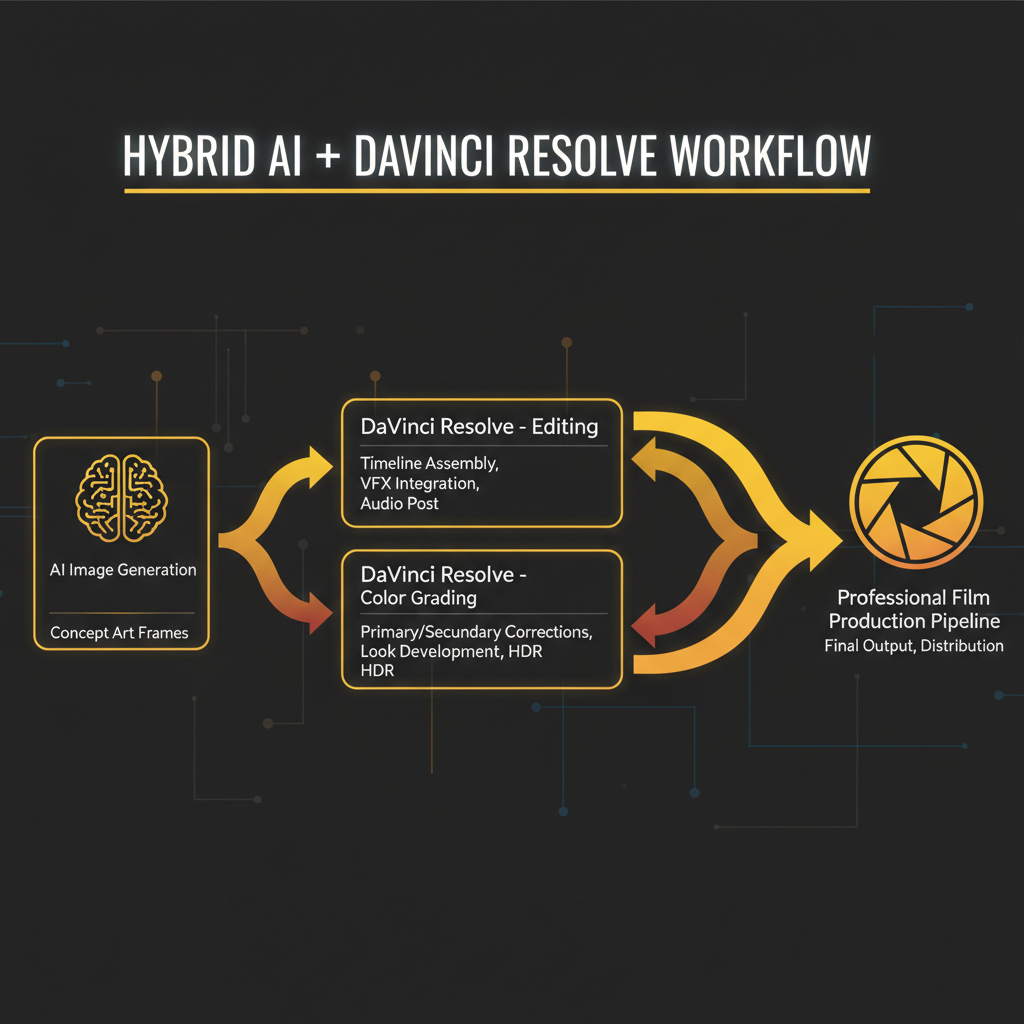
AI Image Generator vs DaVinci Resolve — The Hybrid Workflow
How modern indie filmmakers and brand teams use AI for visual development and DaVinci Resolve for finishing — three steps
AI Generates Visual Development
Use the AI image generator above to produce all your pre-production visual development — film concept art, character designs, environment plates, storyboard frames, key visuals, marketing posters, color reference frames. AI image generator vs DaVinci Resolve at this stage is one-sided — DaVinci does not generate net-new imagery. AI absorbs the entire pre-production concept artist budget category for indie filmmakers, brand-team explainer-video producers, and festival short directors.
Shoot Footage Using AI as Reference
Hand AI-generated concept art and color reference frames to your cinematographer, gaffer, and production designer as on-set reference. The AI image generator vs DaVinci Resolve workflow gives your crew a clear visual target to match in-camera, so the footage that comes back to post is already aligned with the look your director wants. Modern indie crews ship cleaner footage when pre-production has nailed the visual language with AI concept art before the cameras roll.
DaVinci Resolve Finishes the Film
Edit, color grade, audio mix, and finish your footage in DaVinci Resolve — the industry-standard post-production tool no AI image generator can replace. AI image generator vs DaVinci Resolve at this stage is one-sided in the other direction — AI does not edit motion footage. DaVinci Resolve handles the cut, color page, Fairlight audio, Fusion VFX, and final delivery to festival, broadcast, or streaming spec. Use AI concept art as look-development reference for your colorist on the timeline.
Where AI Image Generator Wins the DaVinci Resolve Comparison
Six concrete categories where AI image generators absorb work DaVinci Resolve cannot do — at a fraction of the traditional pre-production budget
Film Concept Art in Seconds
AI image generator vs DaVinci Resolve on concept art is one-sided — DaVinci does not generate imagery. AI tools produce cinematic film concept art in seconds for cents per piece, replacing concept artist day rates of $300-$1,500. A complete concept art portfolio for an indie short — character lineup, environment plates, key visuals, color frames — that traditional pre-production would charge $5,000-$15,000 to produce now ships in an afternoon for a few dollars in AI credits.
Marketing Key Art at Pitch Quality
Movie posters, festival submission key art, IMDb hero images, social-media campaign assets, kickstarter pitch reels — AI image generator vs DaVinci Resolve on marketing material is again one-sided. AI generates pitch-quality theatrical posters in minutes that would otherwise require hiring a key art designer at $1,000-$10,000 per concept. Indie filmmakers in 2026 use AI for the entire marketing material pipeline before any frame of footage is shot.
Storyboards and Animatics Fast
Storyboarding a five-minute short the traditional way costs $2,000-$8,000 and takes 1-2 weeks. AI image generator vs DaVinci Resolve on storyboard production: AI generates complete sequence storyboards in hours, then you import the frames into DaVinci Resolve for the actual animatic edit. Hybrid workflow — AI for the frames, DaVinci for the timing — gives indie filmmakers Pixar-quality animatic boards at a fraction of traditional pre-production cost.
Environment Plates and Matte Paintings
AI image generators produce photorealistic environment plates and matte paintings ready to composite into live-action footage. AI image generator vs DaVinci Resolve hybrid workflow: AI generates the matte painting plate, then DaVinci Resolve Fusion composites the plate behind your live-action subject. This single workflow can replace the entire matte painting department on indie productions, freeing budget for additional shoot days or higher-end gear rentals.
Color Reference Frames for the Colorist
AI generates cinematic color reference frames in any palette — teal-and-orange, sepia warm, blue-and-amber, blade-runner neon, Wes Anderson pastels. AI image generator vs DaVinci Resolve hybrid workflow: hand AI color reference frames to the colorist on the DaVinci color page as look-development targets. The colorist then matches the AI reference in DaVinci Resolve grading, achieving director-approved looks faster than working from word-only briefs.
Pitch Decks That Sell Projects
AI image generator vs DaVinci Resolve on the pitch-deck side is one-sided in AI’s favor — DaVinci is not designed for pitch deck imagery. AI tools generate the entire visual development portfolio for a film pitch in a single afternoon: hero key visual, character lineup, environment portfolio, style frames, mood board references. Indie producers and brand-team filmmakers are closing more pitches in 2026 because AI gives them theatrical-quality pitch material at a fraction of traditional concept art cost.
AI Image Generator vs DaVinci Resolve in Real Workflows
Where indie filmmakers, brand teams, and post houses split work between AI and DaVinci Resolve in 2026
Indie Feature Pre-Production
Indie feature directors run AI image generator vs DaVinci Resolve as a complementary pipeline — AI generates the entire visual development portfolio (concept art, character designs, environment plates, color frames), then DaVinci Resolve handles the actual edit, color, and finish on shot footage. The cost saving on the pre-production side alone is enough to fund extra shoot days or upgraded camera packages.
Festival Short Submissions
Festival short directors use AI image generators for the entire pitch-deck and key art package required for festival submissions, then DaVinci Resolve for the actual short edit, color grade, and DCP delivery. AI image generator vs DaVinci Resolve on the festival workflow is purely complementary — neither tool can do the other’s job, and the combined pipeline ships festival-ready submissions in weeks instead of months.
Brand Explainer Videos
Brand video producers use AI image generators for storyboard frames, environment plates, and key visuals — then DaVinci Resolve handles the explainer video edit, motion graphics integration, color grade, and Fairlight audio mix. AI image generator vs DaVinci Resolve in the brand video workflow saves the concept art and storyboarding budget categories entirely while DaVinci handles every shot of finished motion content.
Music Video Production
Music video directors run AI for visual concept boards, character designs, and look reference frames — then DaVinci Resolve cuts, color grades, and finishes the music video to broadcast and streaming spec. AI image generator vs DaVinci Resolve for music videos is hybrid — AI nails the visual language fast and cheap, DaVinci finishes the actual deliverable to spec for label and platform delivery.
Documentary Filmmaking
Documentary filmmakers use AI image generators for animated reconstruction frames, archival visualization plates, character portrait references, and pitch deck key visuals — then DaVinci Resolve handles every frame of the actual documentary edit, color grade, and Fairlight audio finish. AI image generator vs DaVinci Resolve in documentary work is purely additive — AI fills creative gaps that DaVinci editing cannot fill from existing footage alone.
Post-House Color Grading
Professional post-houses doing color grading work for indie films receive AI-generated color reference frames from directors as look-development targets, then match those references in DaVinci Resolve color page. AI image generator vs DaVinci Resolve in the colorist workflow speeds up look-development sessions dramatically — a single afternoon of AI-generated reference frames can replace days of word-only look-development meetings.
Frequently Asked Questions
Everything you need to know about AI image generator vs DaVinci Resolve in 2026
Try the AI Side of the Comparison — Free
No signup. No credit card. Generate cinematic film concept art, character designs, environment plates, and key visuals — judge AI image generator vs DaVinci Resolve quality on your own project before committing budget. Premium plans start at $2.99 for more credits and batch generations.
Start Creating NowAI Image Generator vs DaVinci Resolve — The 2026 Verdict
Where AI Image Generator Wins the DaVinci Resolve Comparison
AI image generator vs DaVinci Resolve in 2026 is the wrong framing if you treat it as a head-to-head fight — these tools sit at fundamentally different stages of the film and video production pipeline, and the right answer for any serious filmmaker is using both in a hybrid workflow. AI image generators absorb the entire concept artist, key art designer, storyboard artist, and matte painting categories of pre-production budget — work that DaVinci Resolve has never done and was never designed to do. A complete pre-production visual development portfolio for an indie short film — character lineup, environment plates, color reference frames, key visuals, marketing posters, festival submission art — that traditional concept art pricing would bill at $5,000-$15,000 now ships in a single afternoon for a few dollars in AI credits.
The cost gap on the AI side of the AI image generator vs DaVinci Resolve comparison is wide enough that entire categories of indie filmmaking are now economically viable that previously were not. Indie feature directors who could not afford a concept art department can now hand their cinematographer and production designer a complete visual development portfolio before the cameras roll. Brand video producers can ship pitch-quality storyboards and key art on timelines that traditional pre-production simply cannot match. Festival short directors can submit complete pitch packages — hero key visual, character lineup, environment portfolio, color frames — that look like studio-funded work for the cost of a streaming subscription.
Iteration speed is where AI image generator vs DaVinci Resolve breaks open even further on the AI side. A traditional concept art revision pass — change the protagonist costume color, swap a location style, adjust a lighting mood — costs days of an artist’s time. AI image generators iterate in seconds. Generate twenty character costume variations in five minutes and pick the strongest. Generate fifteen environment style options in ten minutes and pick three for the director. AI image generator vs DaVinci Resolve on creative iteration speed is the practical reason modern indie filmmakers run AI-first workflows for everything pre-shoot, even on projects that will be finished entirely in DaVinci Resolve from the first cut to delivery.
Where DaVinci Resolve Still Wins
DaVinci Resolve still wins everything downstream of the camera — and the win is decisive, not close. AI image generator vs DaVinci Resolve on editing, color grading, audio finishing, and visual effects compositing of actual motion footage is one-sided in DaVinci’s favor. DaVinci Resolve is the industry standard for theatrical color grading, festival short DCP delivery, music video color, broadcast finishing, and streaming platform spec delivery. The DaVinci color page, Fairlight audio DAW, Fusion node-based compositor, and edit page together cover every post-production task on every type of motion content from indie shorts to feature films to brand explainer videos. AI image generators are not designed to compete with any of these capabilities, and probably will not in any near-term horizon a working filmmaker should plan around.
The hybrid workflow is the practical 2026 answer to the AI image generator vs DaVinci Resolve question. Modern indie film crews, brand video teams, and festival short directors run AI image generators for everything before the camera rolls — concept art, character designs, environment plates, storyboard frames, marketing key art, festival pitch decks, color reference frames for the colorist. Then DaVinci Resolve handles every frame downstream of the camera — editing the rough cut, color grading on the DaVinci color page, mixing audio in Fairlight, compositing VFX in Fusion, delivering to festival DCP, broadcast HD, or streaming 4K spec. The teams shipping work fastest in 2026 are running this hybrid pipeline rather than trying to make either tool do the other’s job — a fight neither tool was designed to win.
Try our AI film concept art generator above before you commit budget either way. Generate cinematic film concept art, character designs, environment plates, storyboard frames, key visuals, and color reference frames at up to 4K resolution and royalty-free for commercial use. The free tier covers enough credits to judge AI image generator vs DaVinci Resolve hybrid workflow quality on your own project before committing. Premium plans start at $2.99 for more credits, batch generations, and priority processing — a fraction of what a single concept artist day rate would cost on any traditional production budget. Use AI for everything before the camera rolls, then DaVinci Resolve for everything after, and ship indie work that punches at studio weight.
AI image generator vs DaVinci Resolve is not a head-to-head fight — it is a hybrid pipeline question. Use AI for visual development, DaVinci Resolve for finishing. No signup, no credit card, no watermarks. Royalty-free film concept art with full commercial rights. Premium plans from $2.99 for more credits and batch generations.