AI Face Paint Design Generator
Build the design board before you open a single paint pot. This AI face paint design generator turns a description into a finished design photographed on a real face in about thirty seconds — butterflies, tigers, sugar skulls, superhero masks, unicorns and Halloween webs. All six results are below exactly as they came back, including the half-face spider web that came back covering the whole face.
Design a Face Paint Look FreeTry the AI Face Paint Design Generator — Free
Pick a design, then use the box for what is specific to your job — a birthday colour scheme, a school theme, the split cake you actually own. Each preset already carries the placement, the symmetry rule, the paint-on-skin texture, the camera height and the no-lettering rules, all tightened after reviewing what came back the first time.
AI Face Paint Design Generator
Choose a design, name your colours and details, and get a photorealistic face paint design on a real face. Up to 4K.
Six Results From This AI Face Paint Design Generator, Shown Exactly As They Came Back
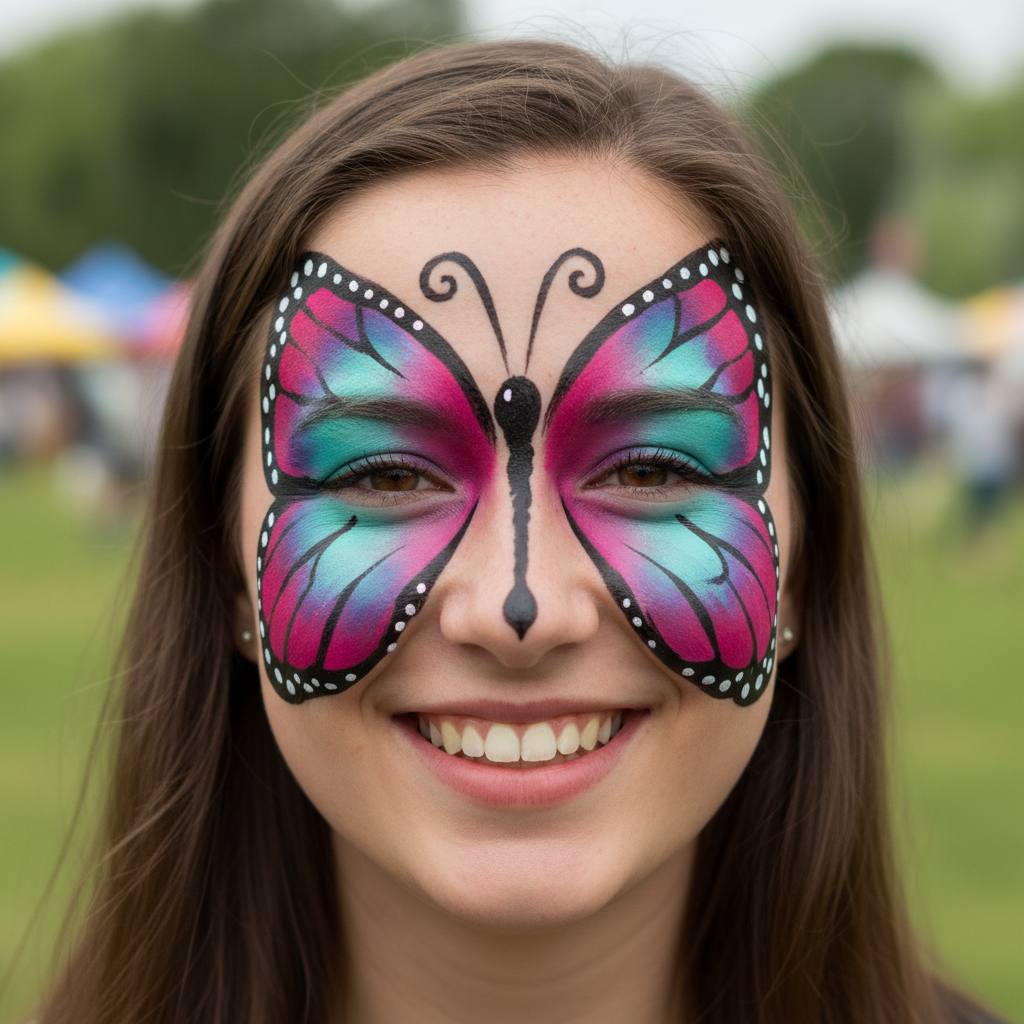
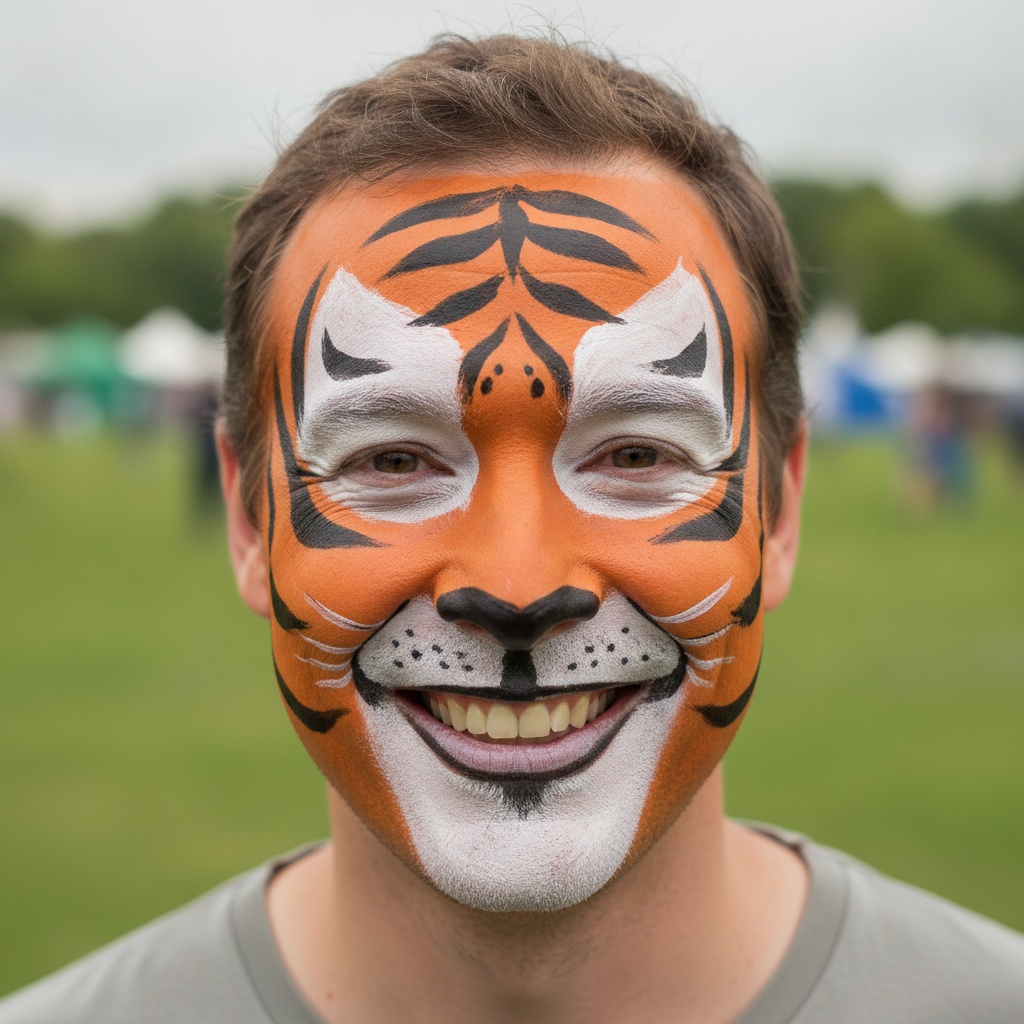
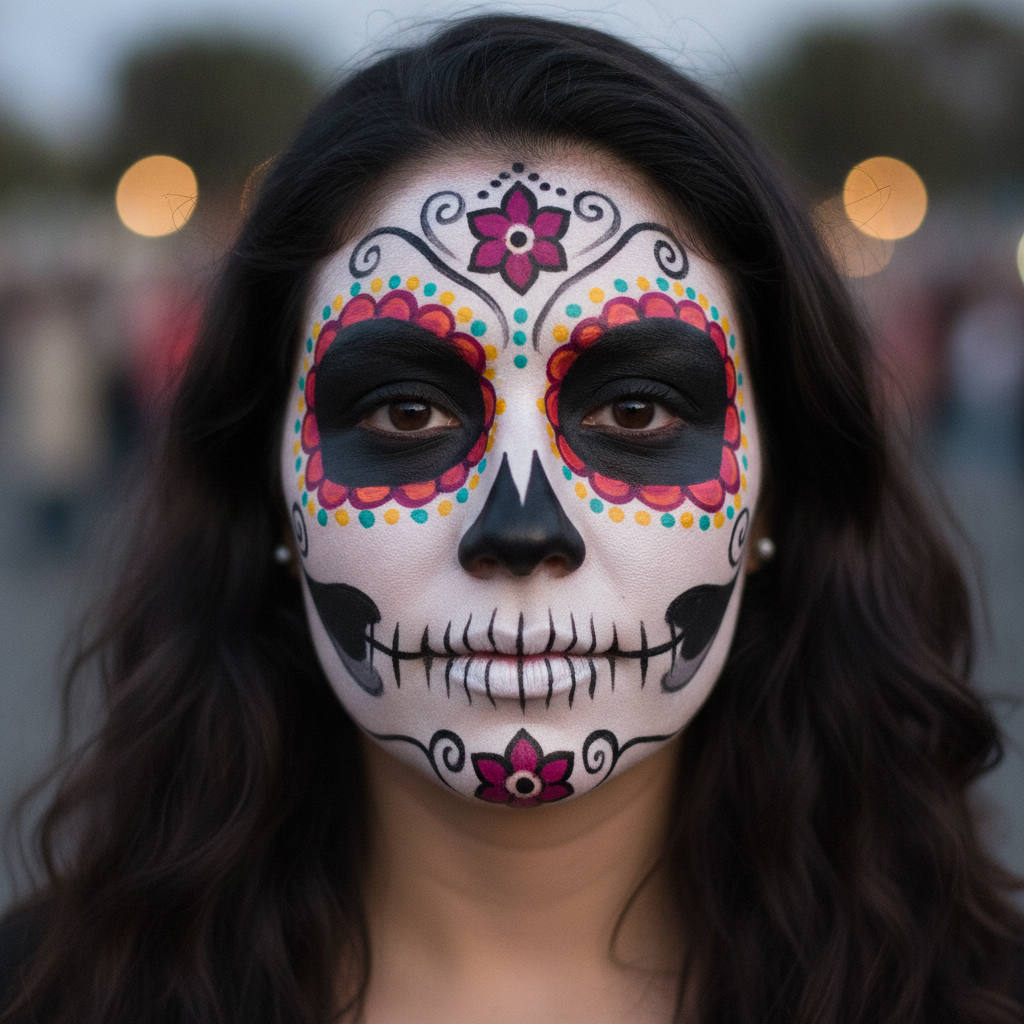
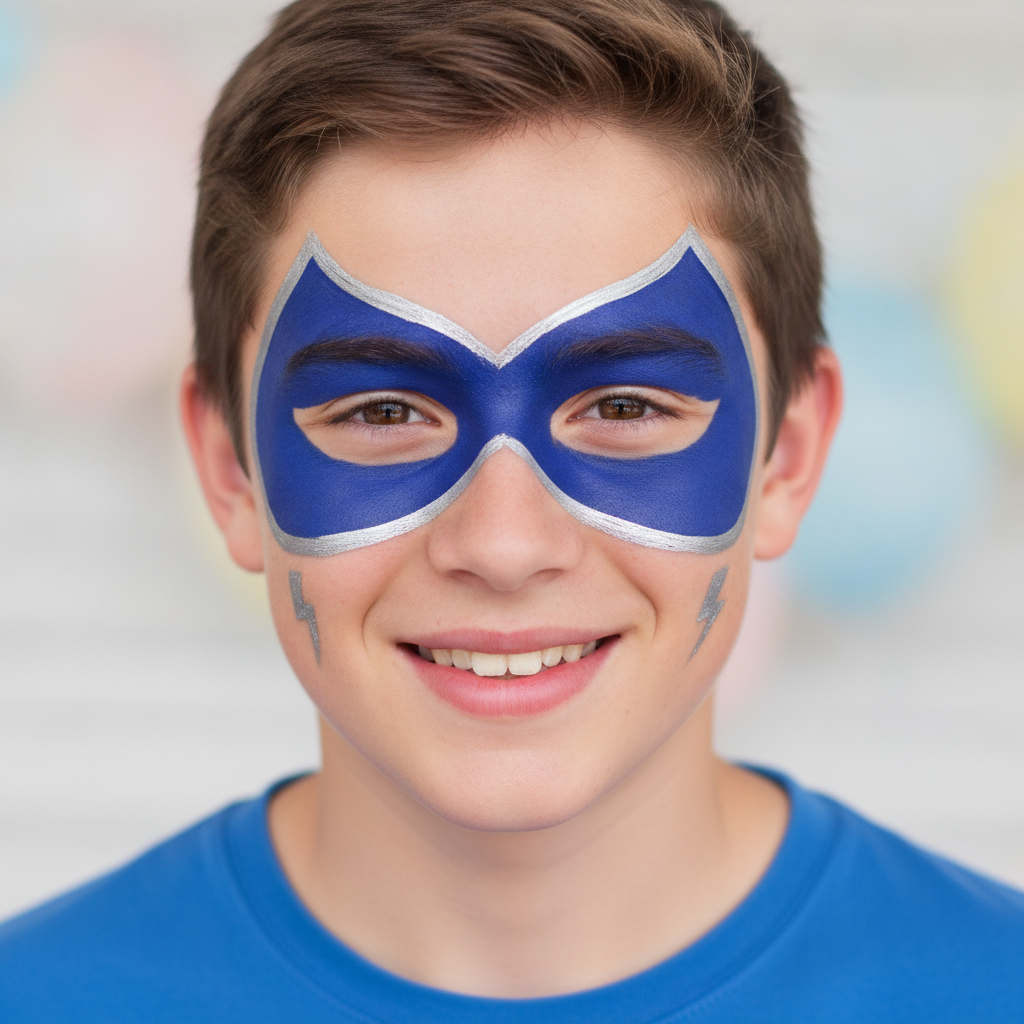
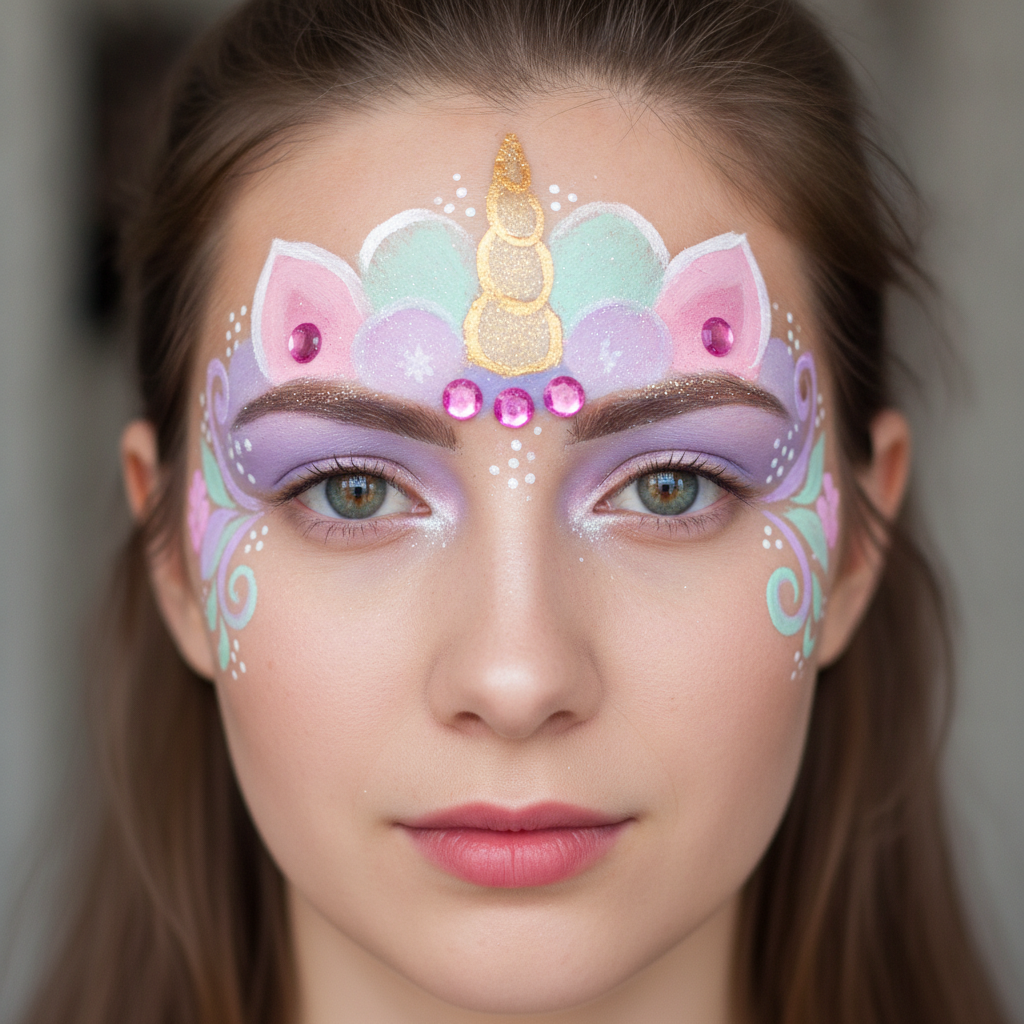
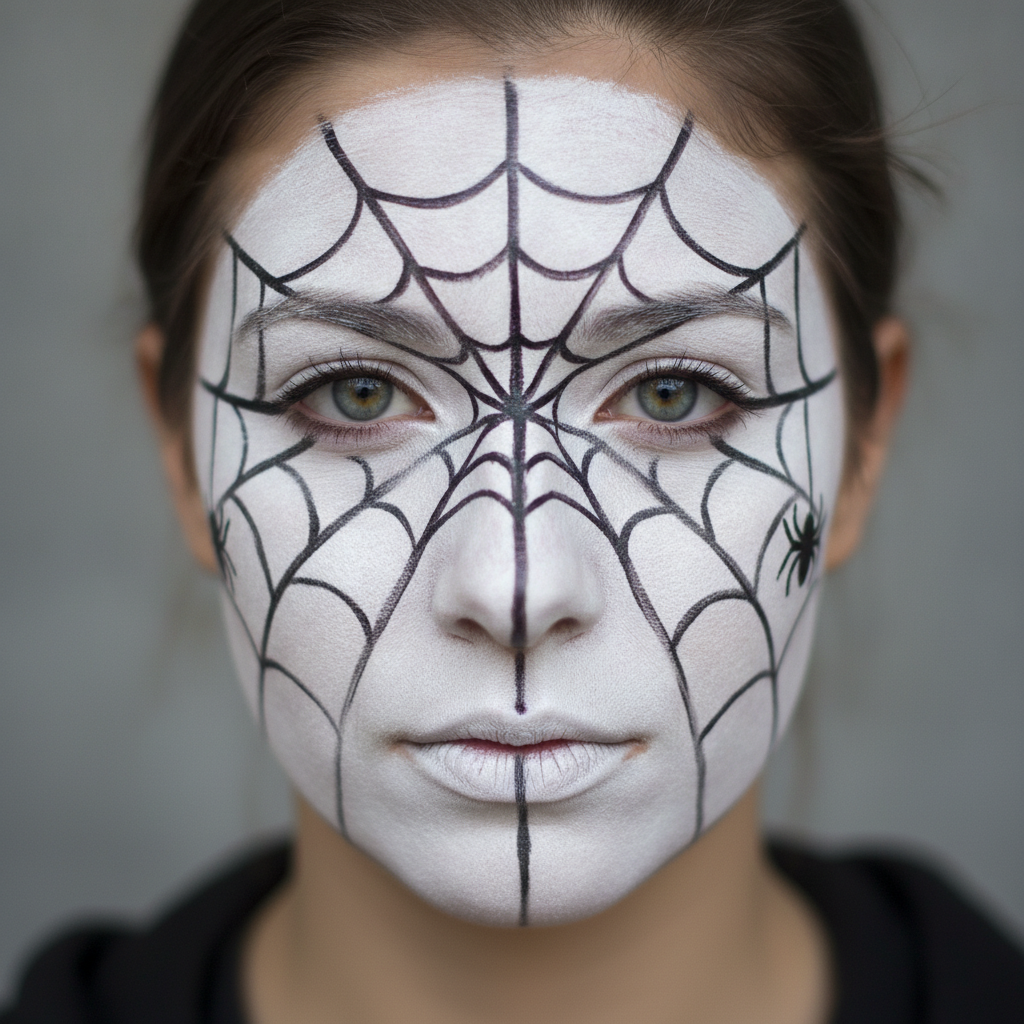
Nothing below has been retouched, recoloured or regenerated to flatter the tool. The painting is the solved half: sponge blending, brush line weight, glitter that behaves like real glitter, and skin that still looks like skin underneath. What drifts is the brief — where the paint stops, what stays bare, and whether a named object comes out the shape you described. Read the note under each one. The designs are the classics from a children's party board, shown here on adult models.
What This AI Face Paint Design Generator Gets Right, and What It Gets Wrong
A face paint design is two problems in one photograph: the artwork, and the recipe. The artwork is solved. The recipe — where it stops, what stays bare, whether the two halves agree — is where every real failure in the gallery above lives.
Paint looks like paint on skin
The thing everyone expects to fail mostly holds. Colour fields carry sponge mottling, brush lines vary in weight the way a loaded brush does, pores and fine hairs show through the thinner washes, and the glitter on the unicorn is scattered physical specks catching real light rather than drawn star shapes. Five of six read as a painted face rather than a digital filter.
Coverage instructions are ignored outright
This is the headline failure. A half-face spider web, described with a centre line and a bare left side, came back covering the entire face including the lips. Not partially followed — replaced. The same drift shows up mildly elsewhere: the tiger muzzle crept onto the chin, a butterfly wing ran into the hair. Whatever should stay bare needs its own sentence.
Symmetry is better than the reputation suggests
Face painters assume a machine cannot match two sides, and three of the six are near perfect: the sugar skull matches dot for dot around both eyes, the superhero mask peaks at the same height on both brows, the tiger stripes agree. The butterfly is the exception, with one wider, higher wing and mismatched antennae. Check the outer tips, not the centre line.
Named objects drag their own iconography in
Ask for a unicorn design and you get unicorn ears you never requested, because the word carries a whole picture with it. The same instinct added a black goatee to the tiger. If your design is meant to be a horn and clouds and nothing else, say what is absent by name, the way the hardened preset on this page now does.
Counts land, placement does not
Five gems were asked for and five gems arrived — the count is respected almost every time. Two of them landed on the invented ears instead of above the brows. Numbers are obeyed, positions are treated as suggestions, so anchor each one to a landmark on the face: above the left eyebrow, at the base of the horn, on the outer cheekbone.
Large solid fields lose their texture
The superhero mask is the one image that reads as a moulded vinyl object rather than paint, because a big unbroken area of dark colour gives the model nothing to texture. The fix is to describe the application rather than the colour: damp sponge, matte, uneven at the edges, with eyebrow hairs standing up through it.
How It Works
Pick the design
Six presets: a full-face butterfly across both eyes, a tiger with a white muzzle and black stripes, a Day of the Dead sugar skull, an original superhero eye mask, a pastel unicorn with a glitter horn, and a half-face Halloween spider web. Each already carries the placement, the symmetry rule, the paint-on-skin texture, the camera height and the coverage clauses this page added after reviewing the first round.
Add your colours and details
Put the specifics in the box: a birthday colour scheme, a school team palette, the split cake you actually own, a detail like small stars along the brow line. Name real colours rather than saying pastel, give counts for anything repeated, and say plainly which parts of the face must stay bare, because that is the instruction most likely to be dropped.
Check it, then download
About thirty seconds later you have a finished design on a face. Before you judge the colours, check three things: do the two sides match at the outer tips, does the paint stop where you said it stops, and did anything arrive that you never asked for. That is where these go wrong, not in the artwork. Then download at full size, up to 4K, for the design board.
Writing a Prompt That Produces a Paintable Face Paint Design
Four habits that separate a design you can put on a board from one you regenerate, all learned from the six results in the gallery above.
Give the bare skin its own sentence
This is the expensive omission, and the spider web is the proof. Do not say half the face is painted and leave the rest implied. Write a separate sentence about the unpainted half listing what is absent from it: no base, no line, no web, bare skin from the centre of the nose to the ear. Coverage you do not defend is coverage the paint will fill in.
Describe shapes physically, not by name
The word horn produced a stubby stack of gold blobs. A long slim cone, as tall as the forehead, tapering to a fine point, with a spiral ridge winding up it, produces a horn. Any object you name rather than describe gets rendered as the model's average of that word, which is rarely the one in your head.
Mirror the two sides explicitly
Saying symmetrical is not enough for anything with wings, flames or scrolls. Say the left and the right are exact mirror images with the same outline, the same size, the same height on the face and the same colours in the same order counting outwards from the nose, and say that neither side runs into the hairline.
Name the application, not the colour
A big field of one dark colour is where paint stops looking like paint. Say it is applied with a damp sponge, matte, mottled, thinner at the edges, with eyebrow hairs visible through it. The difference between a painted face and a rubber mask is texture, and texture only appears if you ask for it by name.
Who Uses an AI Face Paint Design Generator
Face painters building a design board
A queue moves twice as fast when children point at a board instead of describing a butterfly. Six designs generated in a few minutes gives you a printable menu in one visual style, and you can swap the colourways to match whatever split cakes are actually in your kit this season.
Parents planning a party
See what a tiger, a unicorn and a superhero mask actually look like before the kit arrives, and pick two designs that work with the theme rather than improvising on the day. The tiger and the mask are the two most achievable first attempts in the set.
Halloween and event planners
Sugar skull and spider web looks worked out ahead of the night, in the colours the rest of the event uses. Useful for staff briefs, for costume coordination, and for showing a client what the door team or the face painting stand will actually look like.
Schools, fetes and fundraisers
Poster and flyer imagery for a face painting stall without photographing a real child, which sidesteps the consent paperwork entirely. Generate the designs on adult models, print the board, and let the images do the advertising.
Costume and cosplay makers
Test a makeup concept before buying pigment for it. Seeing the design on a face at full size settles arguments about whether a pattern reads at a distance, and it costs nothing to try the version with more black in it.
Face painting businesses posting content
Seasonal social content produced between bookings rather than during them, in a consistent house look. Thirty seconds an image means a month of posts is an afternoon of work, and the same images carry straight over to a booking page.
AI Face Paint Design Generator FAQ
Related Party & Costume Tools
AI Halloween Costume Generator
The rest of the look. Upload a photo and see yourself in a full witch, vampire or sugar skull costume rather than designing the face paint alone.
AI Balloon Arch Generator
The room the face painting stand sits in. Balloon garlands, backdrop walls and arches in the same party palette.
AI Invitation Maker
Put the theme on the invitation before anyone arrives. Invitation art that matches the designs on your board.
See the Design Before You Open a Paint Pot
Six designs — butterfly, tiger, sugar skull, superhero mask, unicorn and half-face spider web — each painted on a real face in about thirty seconds, in your colours. Up to 4K. Free to start, from $2.99.
Design a Face Paint Look FreeAn AI Face Paint Design Generator for Painters, Parents and Anyone Working a Queue of Forty Children
Face painting is agreed in the worst possible way: a child says butterfly, an adult pictures one thing, the painter pictures another, and nobody finds out they disagreed until there is wet paint on a face. An AI face paint design generator moves that conversation to the week before, where it is still free. You describe where the design sits, what shape it is, which colours it uses and what stays bare, look at a finished design on a face thirty seconds later, then look again in teal, or with more black in the outlines, or without the glitter. The painting still has to be done by hand on a moving target. The deciding does not.
The six presets cover what a working board actually carries. A full-face butterfly across both eyes, which is the design most requested at every fair. A tiger with a white muzzle and bold stripes, the most reproducible design in the set and the best first attempt for a parent. A Day of the Dead sugar skull for the adults. An original superhero eye mask that deliberately resembles no existing character, which matters if you are printing a board and selling from it. A pastel unicorn with a glitter horn and gems. And a half-face Halloween spider web for October, when half the bookings in the year arrive at once.
All six are shown above exactly as they came back, because the pattern in them is worth more than a feature list. The painting is the solved half: sponge mottling in the colour fields, brush lines that vary in weight, skin texture and stray hairs still visible through the thin washes, glitter that behaves like real glitter rather than drawn sparkles, and not one stray letter anywhere in six images. Symmetry, the thing painters assume a machine will fail at, mostly held — the sugar skull matches dot for dot around both eyes. What failed was the brief. A half-face web came back as a full face. A unicorn arrived wearing ears nobody ordered. A tiger grew a black goatee. Five gems were counted correctly and then placed wrongly. And one large field of dark blue lost its texture and turned into what looks like a moulded vinyl mask.
The working rules follow directly. Give the bare skin its own sentence and list what is absent from it, because coverage is the first instruction to be dropped. Describe shapes physically rather than naming them, since a named object arrives as an average of that word. Spell out the mirroring for anything with wings or scrolls, and check the outer tips rather than the centre line. Anchor every count to a landmark on the face, because numbers are obeyed and positions are not. And name the application — damp sponge, matte, mottled, hairs showing through — whenever a design has a large solid field in it. Inside those limits this is a genuinely good trade for anyone who paints faces for a living: the board gets built, the colourways get tested and the parents get to point at a picture, all before the first pot is opened.